



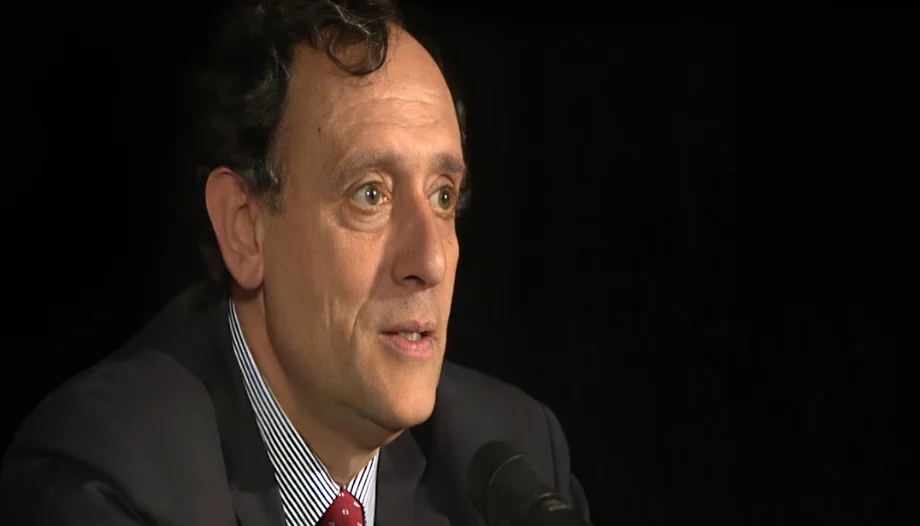
A year ago, in February 2025, the French academic world bid farewell to one of its own. Aurell, born in Barcelona, but a central figure in the French intelligentsia, left behind a legacy that transcends libraries, as evidenced by the numerous testimonies of his colleagues.
Aurell was not a romantic of an idealized past, but a rigorous and passionate scholar. His masterpiece for the general public, Ten misconceptions about the Middle Ages, summarizes his thought and enlightens the reader influenced by biased visions. With the rigor that gave him the authority to direct the prestigious Centre d'Études Supérieures de Civilisation Médiévale, Aurell dismantled the «black legend» that presents the Middle Ages as an era of stagnation.
For Aurell, the Middle Ages was not an era of dark fanaticism: it was the time of the invention of the individual, the birth of universities and a respect for women - embodied in figures such as Eleanor of Aquitaine, to whom he dedicated a masterful biography - that modernity would take centuries to recover. Likewise, his intellectual curiosity led him to delve into complex and less traveled topics, such as the Christians who opposed the Crusades.
Coherence and faith
What made Martin Aurell special in the complex French university ecosystem was his consistency and his humility. In an academic world that can easily nurture arrogance, he stood out for his kindness. As a Christian, he understood his work as a historian as a search for God through truth. He did not need to «Christianize» history; it was enough for him to let the facts speak for themselves to show how the Church was the engine of a vibrant civilization.
His faith not only moved his intellect, but also his immense capacity for dialogue. He avoided sectarianism and earned the respect of agnostics and believers alike. He demonstrated that faith is not an obstacle to scientific excellence, but a horizon that broadens the gaze and deepens the understanding of history as the fruit of human freedom and Providence.
At a time when Europe seems to forget its roots, Aurell's legacy resonates as a necessary reminder: the Old Continent is not a child of emptiness, but heir to a tradition that knew how to unite the Catholic faith with Greek philosophy and Roman law.
The master of the Chileans
Why would a young man from Santiago or Valparaiso want to devote his life to studying 12th century chivalry or the Gregorian reform? Aurell had the answer. Through his thesis direction and his generosity, he trained a key group of Chilean historians.
His role as a trainer was not merely technical; it was a personal transformation. He inspired Chilean students to feel that they were not «outsiders» to European history, but legitimate heirs to it. Under his guidance, many discovered that scientific rigor and faith are driving forces in the search for truth.
Aurell helped to understand that Chile is, to a great extent, a child of that «medieval light». Chilean institutions - the university, civil law and municipalities - have their origins in the centuries he studied so much. The language and faith that shape Chilean culture are mature fruits of the Hispanic Middle Ages. Even current political debates such as the dignity of the individual and the limits to power were born in the controversies between faith and reason in the 13th century.
As the Chilean historian José Miguel de Toro, who did his doctorate under the tutelage of Martin Aurell, points out, his professor's contribution was vast and profound: “his studies covered various aspects of medieval life such as political power, social composition, literature and myths, court life, among others. His works on Eleanor of Aquitaine, the Plantagenet dynasty and King Arthur deserve particular mention.” «He put all his professional rigor at the service of historical truth, demolishing absurd fables,» De Toro points out.
The humility of a giant
His impact in Chile was the result of an extraordinary personal commitment. Benjamín Franzani tells how a simple orientation email ended up in a doctoral thesis address: «He became completely involved in my case when I didn't even speak French. For years he answered emails and proposed solutions to the ups and downs of scholarships and paperwork».
This availability knew no limits. Franzani recalls how, on one occasion, Aurell made a lightning trip to Paris: he arrived from Poitiers in the afternoon for an interview on Radio France and left early the next morning to receive recognition in a city in the south of France for his biography on Eleanor of Aquitaine. With this schedule, it seemed impossible to respond positively to Franzani's request for a meeting. However, Aurell never said no when he could help someone: where no one else would have seen any possibility, Aurell invited him to breakfast and to walk together to the train platform: «This allowed me to talk with him for at least half an hour, and to receive his advice. The train station represents well that facet of his of being there for everyone.”.
For his part, Professor José Manuel Cerda, who met him at Oxford in 2004, has a memory that is as human as it is revealing: a soccer match near Keble College. «I was surprised that behind that erudition was a person who enjoyed sport so much. Despite all he knew, he did not humiliate his students, but corrected them with kindness,» Cerda recounts.
Aurell was a man of clear convictions and admirable openness. Cerda remembers his face flushed with shyness when witnessing furious debates among colleagues: «He had the esteem of those who did not share his ideas». He never left an email unanswered. Today, his students bid him farewell knowing that, thanks to his generosity, they can now see farther because they walk «on the shoulders of a giant» who never felt bigger than the humblest of his students.




 Español
  English
  Italiano