



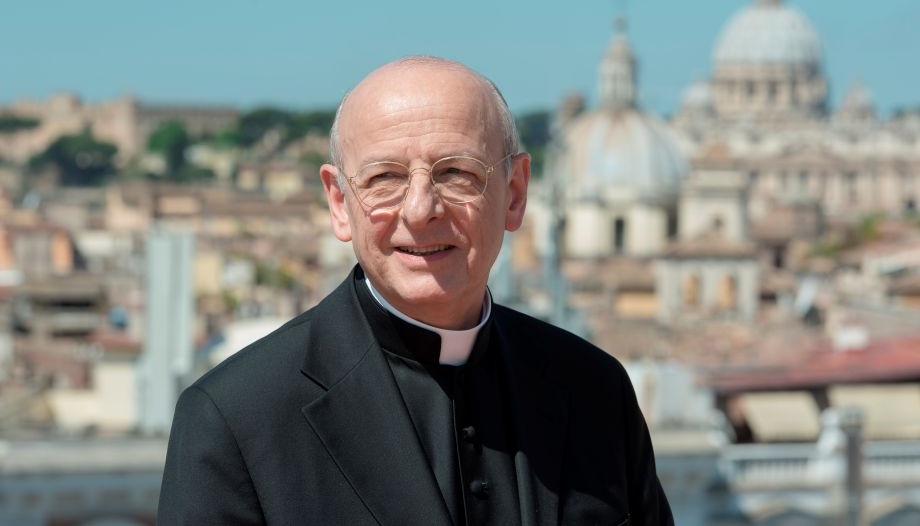
 Bishop Ocáriz: "Contact with poverty, with pain, helps to relativize problems".
Fernando Ocáriz, prelate of Opus Dei, has directed a comprehensive message to the members of the Prelature.
Dated on the Solemnity of St. Joseph, Ocáriz wanted to address a few words to his “sons and daughters” in a message framed in the next centenary of the institution, which will take place on October 2, 2028.
Opus Dei “in your hands”.”
In this letter, Bishop Ocáriz makes a strong appeal to the personal responsibility of each of the members of the Work to carry out the mission of this Catholic institution: “the Work is in our hands”.
At the same time, he recalled and thanked the participants for their participation in the preparatory listening work for this anniversary: “Young and old, members of the Work, cooperators, friends and many people who were part of the Work at some point in their lives, you have stopped to consider how to incarnate today, with dynamic fidelity, the spirit that St. Josemaría received from God to serve the Church.
From the results of this participation, the prelate highlights three themes that he emphasizes in this message as the keys to living the vocation to the Work today: family, the work and training.
Bylaws still undated
Nor does Ocáriz avoid in this message the reality of the Statutes of Opus Dei whose process of revision and adaptation to the new apostolic constitution “Praedicate Evangelium” began “almost four years ago, and is still under study at the Holy See“.
The approval and publication of these bylaws, therefore, does not seem particularly imminent.
More vocations to family life, less to celibacy
The Prelate's words reveal a reality that is repeated in many ecclesial institutions: the growth of “people who seek him and who participate in the means of formation, the conversions that the Lord brings about through friendly relationships and new apostolic initiatives” and, at the same time, “the difficulties for young people to perceive the beauty of the call to apostolic celibacy”.
For this reason, Fernando Ocáriz points out that “with the passage of time, we will have to face the difficulty of the replacement of our elders, lay people and priests. This will make it necessary to look for new ways of continuing to fulfill our mission in each region. This situation will require - as has been unanimously pointed out in the Regional Assemblies - a priority focus on the apostolic work with young people and a genuine protagonism of the supernumeraries: to continue improving their formation so that we are all in the front line in this apostolate”.
Divine sonship, Eucharist and work
The prelate also wanted to look at the example of “the first Christians: men and women of every condition and origin who gave witness to their faith in Jesus Christ to the point of transforming society,” an analogy often used by the founder of Opus Dei.
Against this background, he points to the need to reflect on “central aspects of the spirit of Opus Dei: divine filiation, the Mass as the center and root of our existence, the value of ordinary life and the beauty of discovering that «something divine» hidden in the most common realities of work, family and civic life”.
Finally, Ocáriz called to consider “these three central teachings of St. Josemaría, with the desire to better serve the people around us, the Church and the whole of society” and to join in the Pope's intention for peace in the world in a special way.




 Español
  English
  Italiano