


In the Gospel of Matthew, Jesus tells his disciples that “it is easier for a camel to pass through the eye of a needle than for a rich man to enter the kingdom of God.” These words have resonated for centuries as a warning and a challenge, not because salvation is impossible for the rich, but because it is demanding. On December 18, the Vatican confirmed that an Argentine layman, Enrique Shaw, met that challenge.
He announced that Pope Leo XIV had approved a miracle attributed to the intercession of the venerable Henry Ernest Shaw, thus clearing the way for his beatification.
Shaw, husband and father of nine children
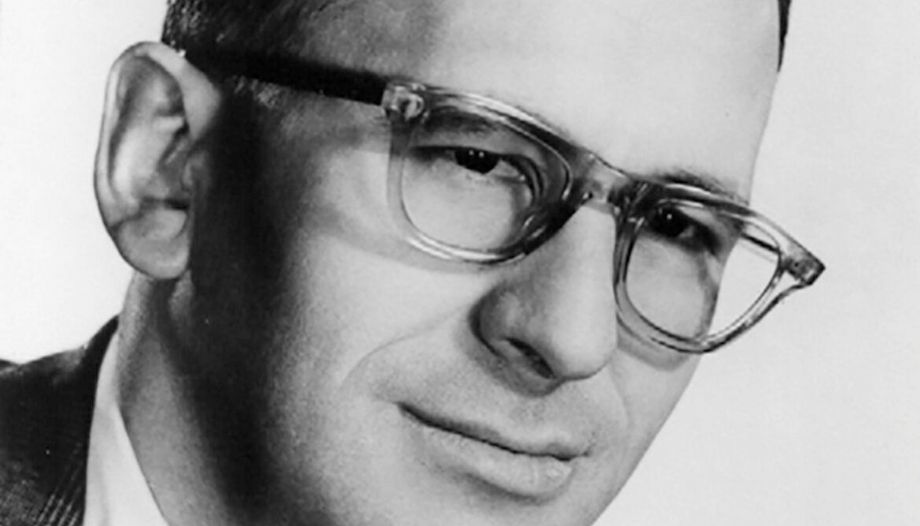
Shaw, who died in 1962 at the age of 41, was neither a priest nor a religious figure. He was a husband, father of nine children, naval officer, and businessman, and died in a situation of financial solvency, or wealth. However, his life, lived with an unusual consistency between faith and action, has made him one of the next candidates for glory in Argentina.
Born in 1921 at the Ritz Hotel in Paris to an Argentine family, Shaw grew up in a privileged environment, but chose a path marked by discipline, service, and prayer. He spent most of his childhood in Argentina, but lived for a year in the United States with his father and brother after his mother died when he was four years old. It was there that Shaw received the sacrament of confirmation.
Although his father was a non-practicing Catholic, he fulfilled a promise he made to his dying wife to raise their children in the faith.
More biographical details
Shaw remains the youngest graduate of Argentina's naval academy, having entered at the age of 14. When he retired at the age of 24, he had reached the rank of lieutenant.
Shaw returned to the United States several times, but one decisive trip was in 1945, when the Argentine Navy sent him to study meteorology. He arrived in New York on September 2, 1945, the day World War II ended, with a change of heart.
The connection between the economy, business, and the Gospel
During the trip, Shaw spoke several times with Monsignor Reynold Hillenbrand, a priest from Chicago known for training Catholic leaders through social engagement and pastoral work.
Monsignor Hillenbrand convinced Shaw that he would never be “just another worker,” but that he could make a difference as a businessman.
Under Hillenbrand's guidance, Shaw left the Navy and entered the business world, convinced that economic life was not separate from the Gospel, but rather one of its most demanding areas. This connection attracted the attention of Pope Leo XIV, who was in Chicago.
Leo XIV: it is possible to be both a businessman and a saint
In a message to Argentina's 31st Industrial Conference, the Pope wrote that Shaw's life shows that it is possible to be both a businessman and a saint, that economic efficiency and fidelity to the Gospel are not mutually exclusive, and that charity can penetrate even industrial and financial structures.
He studies at Harvard and runs Rigolleau.
Shaw founded the Christian Association of Business Executives of Argentina. Inspired by his education at Harvard Business School—where he studied by invitation despite not having applied for admission—he also helped found his country's Pontifical University.
At the same time, he took over the general management of his wife's family business, Cristalería Rigolleau, had nine children, led the men's section of Catholic Action in Argentina, and helped found the local Caritas office. At Rigolleau, Shaw established a pension fund and health care system for the company's 3,400 workers, providing medical care, financial support in case of illness, and loans for important life events.
More than 260 workers donated blood for him.
All this happened before Shaw died of cancer at the age of 41, after a six-year battle. Some 260 workers donated blood to help the man who knew them by name, often asked about their families, and carried a small notebook to jot down their needs.
Shortly before his death, Shaw thanked them: “I can tell you that now almost all the blood running through my veins is the blood of workers. That is why I identify more than ever with you, whom I have always loved and regarded not only as executors, but also as executives.”.
Company: community of people, human dignity
Shaw understood the business world not as a profit machine, but as a community of people. Convinced that work should serve human dignity, he promoted labor relations based on dialogue, justice, and respect, even amid the intense social and political conflicts of Argentina in the 1950s.
His convictions led him to take concrete action. Shaw promoted the concept of family wages in Argentina, a pioneering effort to ensure that wages reflected not only productivity but also the real needs of family livelihoods. For Shaw, wages could never be abstract figures; they had to enable a dignified life.
Arrested for belonging to Catholic Action
His public fidelity to the faith came at a price. In 1955, during severe religious persecution following the burning of churches and the confrontation between the state—led by President Juan Domingo Perón—and the Church, Shaw was arrested twice for his involvement in Catholic Action. He endured the opposition with serenity, never separating his personal piety from his public responsibility.
With the support of his fellow Argentine, Pope Francis, Shaw's cause advanced slowly but steadily. However, what finally opened the door was a healing that medicine could not explain.
Its cause: the inexplicable healing of a child
On June 21, 2015, a 5-year-old boy suffered a devastating brain injury after being kicked by a horse near Suipacha, on the outskirts of Buenos Aires. Doctors warned the family that his condition was so serious that surgery might not be advisable. Faced with a bleak prognosis, the parents entrusted their son to Shaw's intercession.
The boy survived and today, now a teenager, leads a normal life with no lasting effects. The Church formally recognized the healing as miraculous and published the decree on December 18, with the approval of Pope Leo XIV.
Fernán de Elizalde, administrator of the cause, told Infobae that at the critical moment, the child's father prayed: “I exchange your holiness for the health of my son.”.
Vocation of the laity
The approval marks a significant moment not only for Argentina, but for a global church increasingly focused on the vocation of the laity. Shaw's life offers a concrete answer to one of Christianity's persistent tensions: how to live with wealth, power, and responsibility without losing one's soul.
—————–
– Inés San Martín is vice president of Marketing and Communications for the Pontifical Mission Societies in the United States. She writes for OSV News from Rosario, Argentina.
This information was originally published in OSV News, and can be found at here.
—————




 Español
  English
  Italiano