



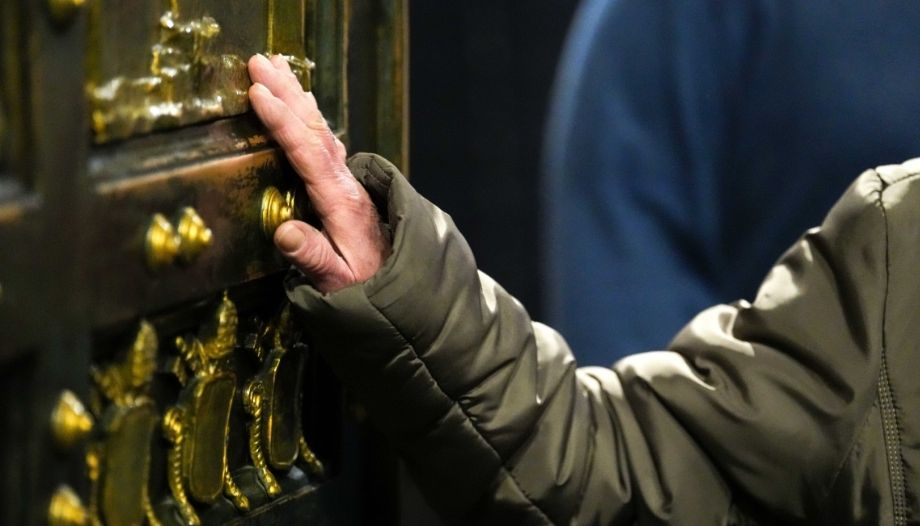
Today, on the solemnity of the Epiphany of the Lord, Pope Leo XIV compared the passage of countless men and women, pilgrims of hope, through the Holy Door of the Jubilee in St. Peter's, the last to close this very morning, with the pilgrimage of the Magi seeking the Child Jesus, and with “the spiritual search of our contemporaries, much richer than we can perhaps comprehend.”.
Millions of them have crossed the threshold of the Church. What have they found? What hearts, what attention, what reciprocity? asked Pope Leo XIV in the homily of the Holy Mass of the Epiphany.
“Yes, magicians still exist. They are people who accept the challenge of risking their own journey; who, in a complicated world like ours—in many ways exclusionary and dangerous—feel the need to set out on a journey, in search,” he continued.
The Church should not fear this dynamism, but rather guide it.
The Pontiff then suggested the response we should give to this movement. “The Gospel leads the Church not to fear this dynamism, but to value it and direct it toward the God who inspires it.”.
He added: “He is a God who can baffle us, because we cannot grasp him in our hands like idols of silver and gold, because he is alive and gives life, like that Child whom Mary held in her arms and whom the Magi adored.”.
“Holy places such as cathedrals, basilicas, and shrines, which have become destinations for jubilee pilgrimages, must spread the fragrance of life, the indelible sign that another world has begun,” he said.
Precisely the editorial from the January issue of Omnes, ‘The Examination,’ refers to the response to this “new social, cultural, and ecclesial movement” that is reflected in different cultural manifestations which, in cinema, music, or social media, have revived the search for God or spirituality.
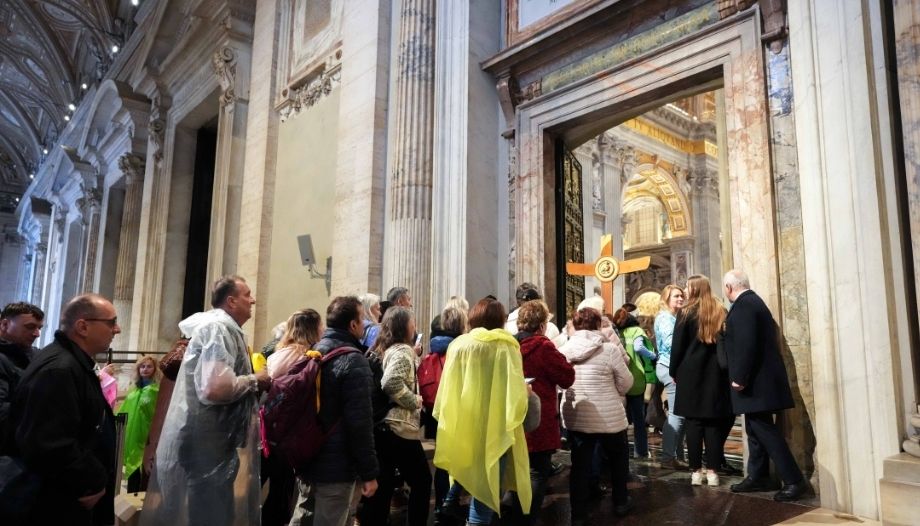
Solemnity of the Epiphany
The morning at the Vatican was marked by the solemnity of great occasions in St. Peter's Basilica. Nearly six thousand people were inside, plus ten thousand faithful and pilgrims in the square, where the Pope prayed the Angelus at noon, and four cardinals concelebrated. The dean of the College of Cardinals, Giovanni Battista Re, the vice-dean, Leonardo Sandri, the Secretary of State, Pietro Parolin, and the prefect emeritus of the Dicastery for Bishops, Marc Ouellet.
The Gospel has described in detail the great joy of the Magi when they saw the star, the Pope began, but also the turmoil experienced by Herod and all of Jerusalem in the face of their search. “Whenever it comes to manifestations of God, Sacred Scripture does not hide these kinds of contrasts: joy and turmoil, resistance and obedience, fear and desire.”.
Today we celebrate the Epiphany of the Lord, aware that in his presence nothing remains as before, the Pope continued. This is the beginning of hope. God reveals himself, and nothing can remain static. “Something begins on which the present and the future depend, as the Prophet announces: ‘Arise, shine, for your light has come, and the glory of the Lord has risen upon you! (Is 60:1).’”.
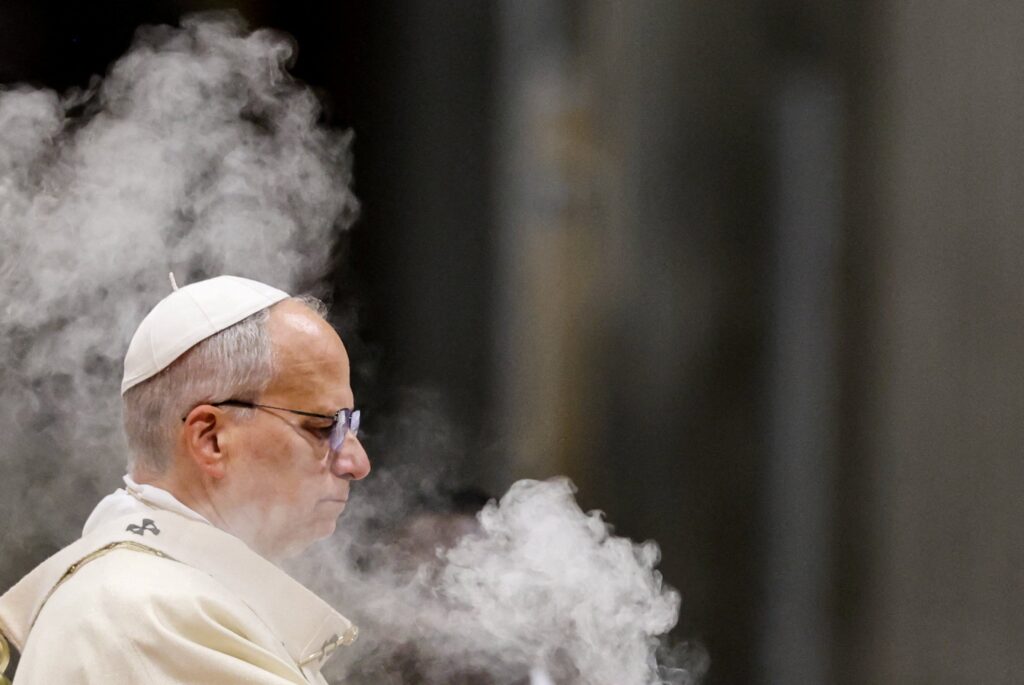
The Jubilee reminds us that it is possible to start over
The magi bring a simple and essential question to Jerusalem: “Where is the king of the Jews who has just been born?” “How important it is,” emphasized Leo XIV, “that those who cross the threshold of the Church realize that the Messiah has just been born there, realize that a community has gathered there where hope has arisen, that a story of life is being realized there.”.
“The Jubilee has come to remind us that we can start again, that we are still in the beginning stages, that the Lord wants to grow among us, wants to be God-with-us.”.
Finally, the Pope prayed before the Virgin of Hope, brought especially to St. Peter's for these weeks. The Pope had just spoken at Mass about “the great joy of the Magi, who leave behind the palace and the temple to go to Bethlehem; and that is when they see the star again! Therefore, dear brothers and sisters, it is beautiful to become pilgrims of hope. And it is beautiful to continue to be so, together. God's faithfulness will always surprise us.”.
Mary, Star of the Morning, concluded the Pontiff, will always walk before us. “In her Son, we will contemplate and serve a magnificent humanity, transformed not by delusions of omnipotence, but by the God who became flesh out of love.”.
Magicians of the East: “He who gives everything gives a lot.”
In the prayer of the Angelus, Pope Leo XIV recalled that the word “epiphany” means “manifestation,” and “our joy comes from a Mystery that is no longer hidden. God's life has been revealed: many times and in different ways, but with definitive clarity in Jesus, so that now we know, despite many tribulations, that we can have hope., “God saves”: it has no other intentions, it has no other name. Only that which liberates and saves comes from God and is an epiphany of God.
In the Gospel story and in our nativity scenes, the Magi present the Baby Jesus with precious gifts: gold, frankincense, and myrrh, the Pope continued. “These do not seem like useful things for a child, but they express an intention that gives us much to reflect on as we reach the end of the Jubilee Year. He who gives everything gives much.”.
“Craftsmanship for peace, instead of the war industry”
The Holy Father recalled here the poor widow who had thrown her last coins, all she had, into the Temple treasury. “We do not know what the Magi, who came from the East, possessed, but their journey, their risk-taking, their gifts suggest to us that everything, truly everything we are and possess, calls to be offered to Jesus, our priceless treasure.”.
May his Kingdom grow, concluded the Pope, before giving the blessing, “may his words be fulfilled in us, may strangers and adversaries become brothers and sisters, may inequality be replaced by equity, may the industry of war be replaced by the craft of peace. Artisans of hope, let us walk toward the future on another path (cf. Mt 2:12).”.




 Español
  English
  Italiano