



Yesterday and today, the Pope presented three special focuses of attention. God reveals himself through the humanity of Jesus, not only as a “channel for the transmission of intellectual truths”. Today, on the feast of St. Agnes, two lambs were presented to the Pope to be blessed, and their wool will be used for the palliums of the new archbishops. And compassion for those who suffer, the sick.
Knowing God in Christ
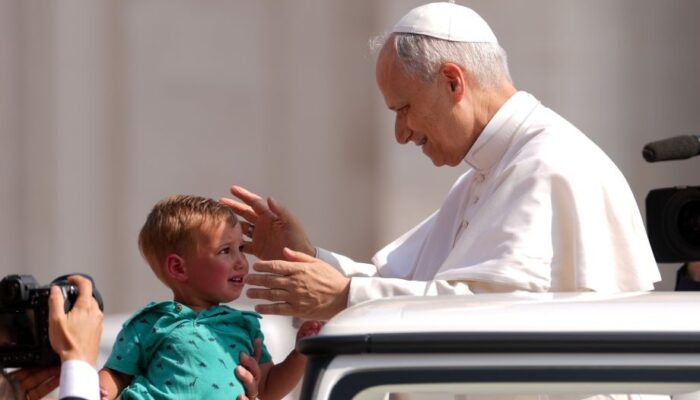
1.- Leo XIV continued his catechesis on Vatican Council II on January 21. in the General Audience weekly. His catechesis dealt with the Dogmatic Constitution “Dei Verbum”, the Church's teaching on divine revelation.
In knowing Jesus, the Pope affirmed that we can enter into a relationship with God as his adopted children, which was revealed through the humanity of Jesus.
To know God in Christ, we must embrace his integral humanity: the truth of God is not fully revealed when it subtracts something from the human, just as the integrity of the humanity of Jesus does not diminish the fullness of the divine gift," he said. It is the integral humanity of Jesus that reveals to us the truth of the Father.
He went on to say that, in becoming man, Jesus “is born, heals, teaches, suffers, dies, resurrects and remains among us. Therefore, to honor the greatness of the Incarnation, it is not enough to consider Jesus as the channel for the transmission of intellectual truths”.
Jesus is the Word of God incarnate
God communicates with us, the Pope said, and at the same time, Jesus is the Word of God incarnate. Through this bodily form, God's truth is revealed.
“Jesus Christ is the place where we recognize the truth of God the Father, while discovering ourselves known by Him as sons in the Son, called to the same destiny of full life,” he said.
Charge with the lost sheep
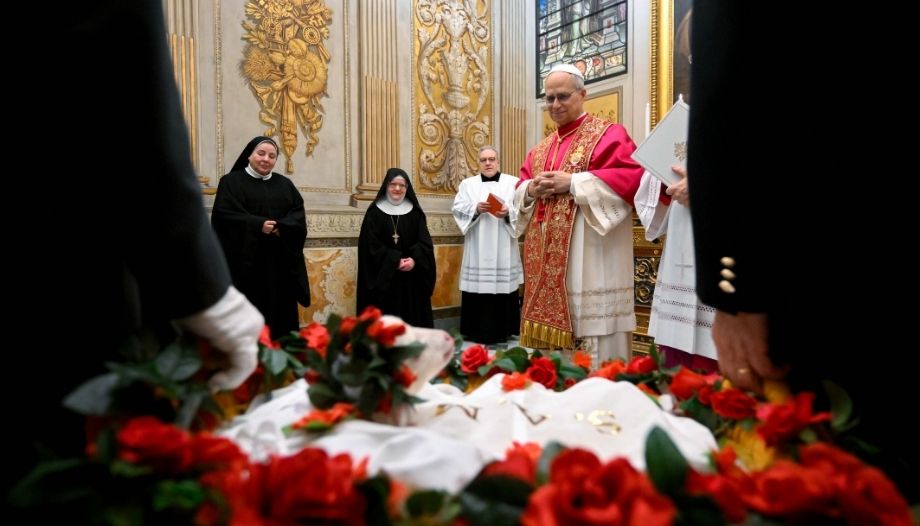
2.- Lambs' wool for the archbishops' palliums.. Today, liturgical memory of St. Agnes (Agnes), two lambs were presented to the Pope, to be blessed at the feast.
The wool from these lambs will be used to make the palliums of the new metropolitan archbishops. They evoke Jesus carrying the lost sheep, symbolizing the archbishop's care and guidance of his flock.
The rite of blessing of the Palliums and their delivery to the archbishoprics is performed by the Holy Father on June 29, the Solemnity of the Holy Apostles Peter and Paul.
The compassion of the Samaritan
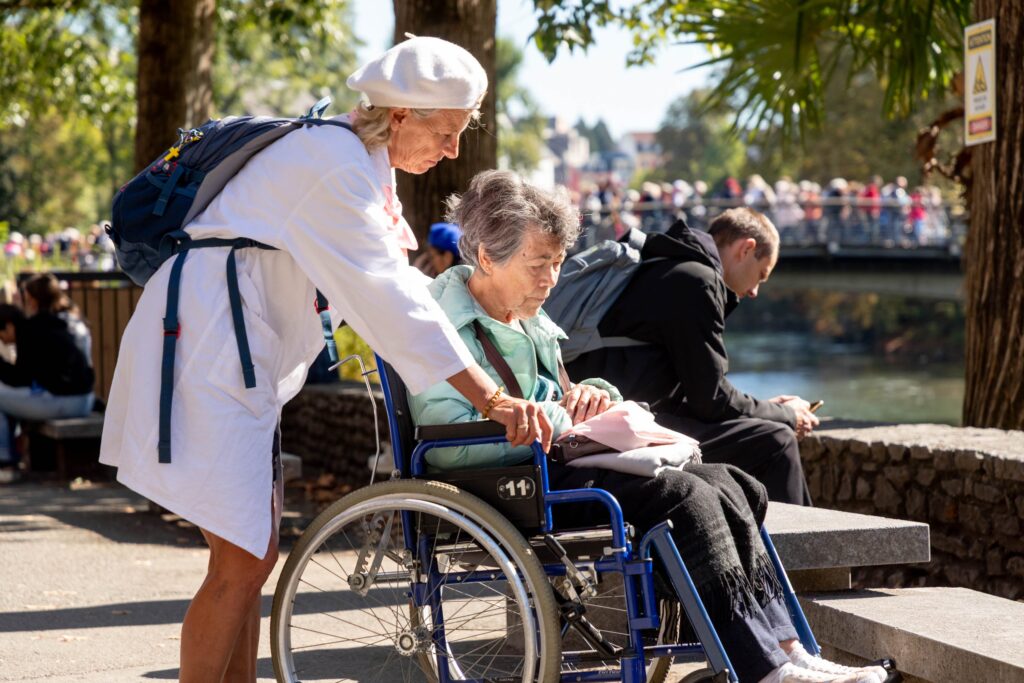
3.- 34th World Day of the Sick. It will be solemnly celebrated in Chiclayo, Peru, on February 11, 2026, the Pope says in his Message for the World Day of the Sick. The general motto is ‘The compassion of the Samaritan: to love while bearing the pain of others’.
The Holy Father wanted to propose once again “the image of the Good Samaritan, always relevant and necessary to rediscover the beauty of charity and the social dimension of compassion, to focus attention on the needy and the suffering, such as the sick”.
The Pope's message is divided into three parts.
a) The gift of encounter: the joy of giving closeness and presence
“We live immersed in the culture of the quick, of the immediate, of haste, as well as of discarding and indifference, which prevents us from approaching and stopping along the way to look at the needs and sufferings around us,” the Pope said.
The parable narrates that the Samaritan, upon seeing the wounded man, did not “pass by”, but “had an open and attentive gaze for him, the gaze of Jesus, which led him to a human and supportive closeness. The Samaritan ‘stopped, gave him the gift of closeness, healed him with his own hands, put money out of his own pocket and took care of him. Above all [...] he gave him his time”.
“Love is not passive, it goes out to meet the other; being a neighbor does not depend on physical or social proximity, but on the decision to love,” the Holy Father stressed. For this reason, “the Christian becomes a neighbor to those who suffer, following the example of Christ, the true Divine Samaritan who approached wounded humanity”.
b) The shared mission in caring for the sick
“In my experience as a missionary and bishop in Peru, I myself have seen how many people share mercy and compassion in the style of the Samaritan and the innkeeper. The relatives, the neighbors, the health workers, the pastoral health workers and so many others who stop, approach, heal, carry, accompany and offer their own, give compassion a social dimension”.
“This experience, which takes place in a web of relationships, goes beyond mere individual commitment. Thus, in the Apostolic Exhortationa Dilexi te I have not only referred to the care of the sick as an “important part” of the Church's mission, but as an authentic “ecclesial action (n. 49)”.
c) Always moved by the love of God, to meet with ourselves and with our brothers and sisters.
“I earnestly hope that our Christian lifestyle will never lack this fraternal, “Samaritan”, inclusive, courageous, committed and supportive dimension, which has its deepest roots in our union with God, in our faith in Jesus Christ. Fired by this divine love, we can truly give ourselves to all those who suffer, especially to our sick, elderly and afflicted brothers and sisters.
Let us raise our prayer to the Blessed Virgin Mary, Health of the Sick, the Pope invites. “Let us ask her help for all those who suffer, those in need of compassion, listening and consolation, and let us beseech her intercession with this ancient prayer, which was prayed as a family for those who live in sickness and pain.”
Prayer to the Blessed Virgin Mary, Health of the Sick
Sweet Mother, do not turn away,
do not take your eyes off me.
Come with me everywhere
and never leave me alone.
Since you protect me so much
as a true Mother,
May the Father bless me,
the Son and the Holy Spirit.
Vatican City, January 13, 2026
LEÓN PP. XIV




 Español
  English
  Italiano