



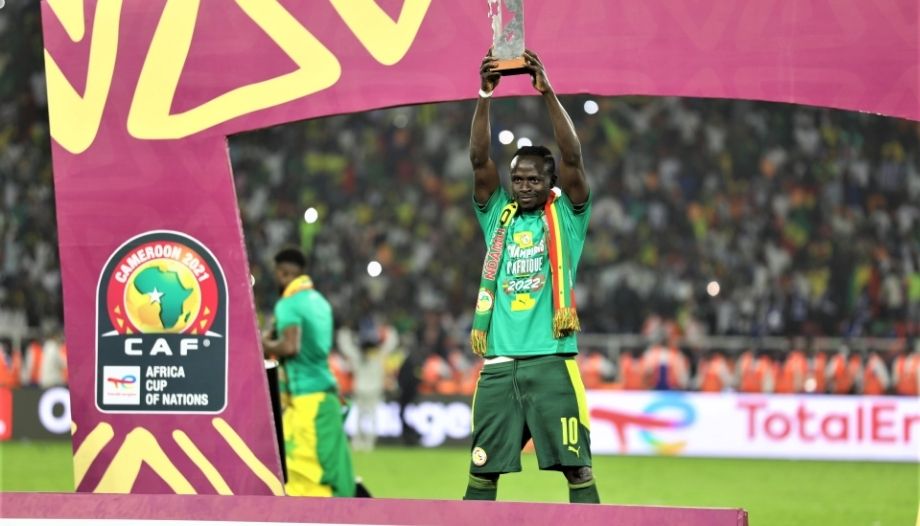
“What do I want ten Ferrari cars, twenty watches and two airplanes for?» expressed African player Sadio Mané in 2019, during an interview with TeleDakar. I went hungry, worked in the fields, played barefoot and didn't go to school. Today I can helping people. I prefer to build schools and give food or clothes to poor people,” he said.
A few weeks ago, in March, a news story shook the sports media. The Confederation of African Football (CAF) declared the Morocco winner of the 2026 Africa Cup of Nations soccer tournament, despite losing the final to Senegal.
I was able to see it on BBC News, but at the same time it also appeared in newspapers all over the world including Spaniards. That sparked interest, once again, in Senegalese star Sadio Mané, who plays alongside Cristiano Ronaldo as a striker for Al-Nassr F.C. in the Saudi League.
Bambali, Metz, Salzburg, Liverpool, Bayern, Al-Nassr F. C.
But he is almost better known, at least in his homeland, because a year and a half ago, for example, he appeared in a soccer match played in Bambali, the village where he grew up and took his first steps in soccer.
Sadio Mané born on April 10, 1992 in Bambali (Senegal), started his career as a footballer at the Academy ‘Génération Foot’ based in Dakar, Senegal. He was transferred to Metz in France in 2011. Then to Red Bull Salzburg, Southampton F. C. in 2015, Liverpool, and Bayern Munich.
He spent a single season there, scoring 12 goals, making 38 appearances and helping the team win the German Supercup and the Bundesliga. But in 2023 he signed for Saudi Arabia's Al-Nassr F. C., following an agreement with Bayern.
Helping those who have less
“The African ”king" who changed the history of Senegalese soccer and inspires new generations, he has been called. The 33-year-old Senegalese footballer, a footballing icon, is known for his generous contributions to the social work in your country.
Sadio Mané's greatest investment has been to improve the quality of life of the Senegalese people. Among other initiatives, he is credited with building a hospital for his village, financing the installation of a gas station so that they do not have to move to other villages, setting up a post office, and building a school and a soccer stadium.
In addition, the Senegalese star has provided computers for the school's students, and gives a monthly allowance of 70 euros to people with very limited resources. All this has made him an idol in his country.
No support, but he was doing well
Mané did not go to school because his parents could not afford to pay for his studies, and when he said he dreamed of playing soccer, they thought he was not in his right mind. His family preferred another physical activity, not least because soccer is not Senegal's national sport, but Senegalese Wrestling. Sadio knew that he would not prosper in his village and left for Dakar. That's when he made the leap to Metz.
“I don't need to brag about fancy cars, luxurious houses, trips or airplanes. I prefer that my people get some of what life has given me,” he said.
On the other hand, when he was younger he was seen helping those responsible for his team's water bottles, or cleaning the toilets of a mosque, and this made him popular on social networks.
Senegal, an example of peaceful coexistence
Senegal is home to 18 million people, and is the world's largest economy 109 by volume of Gross Domestic Product (GDP). Its GDP per capita in 2024 was €1,625, which places it very low in the world ranking.
With a 92 percent Muslim population, of Sunni tradition, and 4 percent Christian, Senegal is not one of the countries with the largest Muslim population in the world. Pope to visit on his impending trip to Africa from April 13 to 23.
However, the Senegalese nation confirms itself as an example of “.“peaceful coexistence Paul Richard Gallagher, Secretary for Relations with States and International Organizations of the Holy See, in April last year in a message to an international symposium organized by the Cheikh Anta Diop University in Dakar.




 Español
  English
  Italiano