



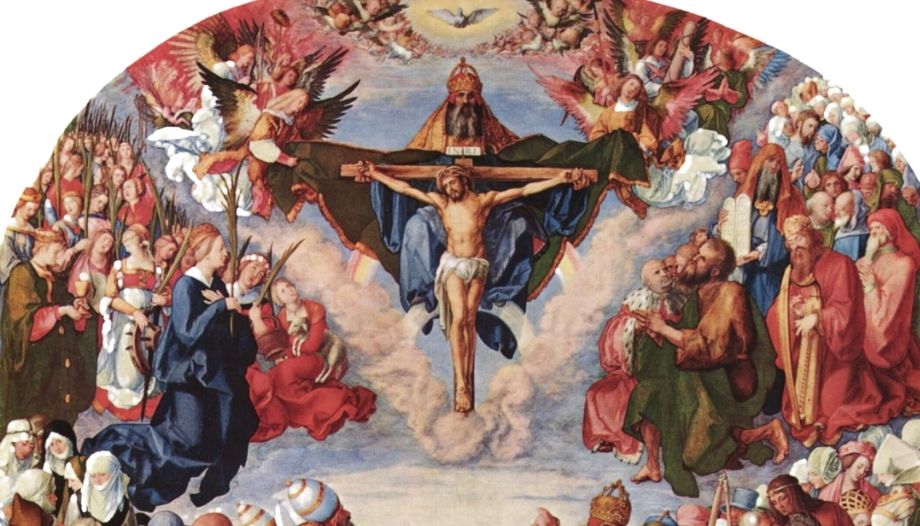
Unlike other shorter or more personal prayers, the Te Deum is public and choral in nature. It is the entire Church—represented by the Pope—that raises its voice to acknowledge God's greatness, profess the Christian faith, and give thanks for His providential action throughout time, especially at decisive moments in its liturgical and historical life.
Origin and historical background
The Te Deum dates back to the late fourth or early fifth century. For a long time, its composition was attributed to Saint Ambrose and Saint Augustine, and it was even rumored to have been improvised during Saint Augustine's baptism in Milan.
Modern historical and philological studies consider the hymn to be the result of early liturgy, and mention Nicetas of Remesiana (414), bishop of the Balkans, although this has not been proven, as well as Saint Ambrose of Milan, a great composer of Latin hymns.
Seniority
The structure of the Te Deum clearly reveals its antiquity: it combines formulas of biblical praise, Trinitarian and Christological confessions of faith, and final supplications taken from the language of the psalms. It is, in a way, a prayerful summary of the faith of the early Church.
Very early on, the Te Deum was incorporated into the Liturgy of the Hours, especially into the Office of Readings on Sundays and solemnities outside of penitential seasons. From there, it also became a hymn for extraordinary occasions.
Theological and spiritual content
The anthem can be divided into three main parts.
The first is universal praise: all creation—angels, heavens, apostles, martyrs, and the Church spread across the earth—glorifies God the Father, recognizing his holiness and majesty.
The second part is a profession of faith in Christ, true God and true man, who took on our flesh, conquered death, and reigns gloriously at the right hand of the Father. This Christological core connects the Te Deum with the great symbols of faith.
The third part takes on a tone of confident supplication: the Church asks to be protected, guided, and saved, relying not on its merits, but on divine mercy. Therefore, the Te Deum is not only a song of thanksgiving for the past, but also a prayer of hope for the future.
The Te Deum on the last day of the year
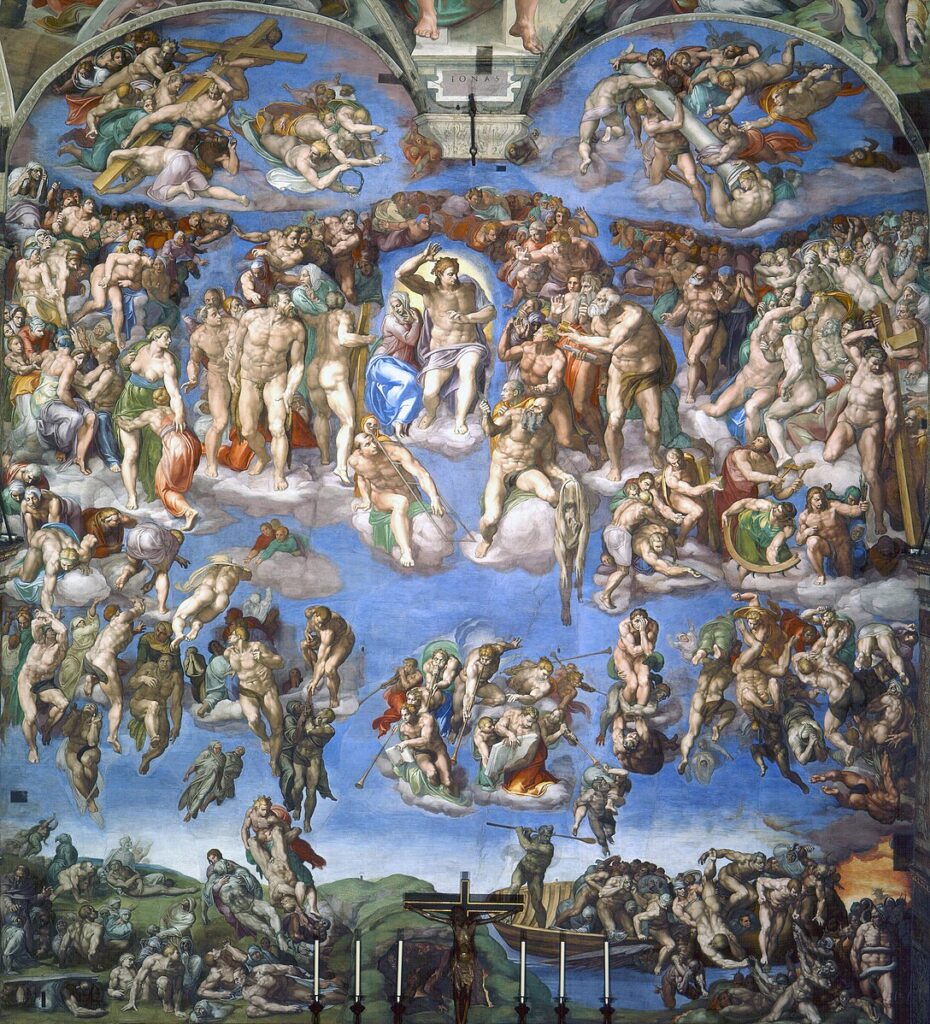
The custom of singing or praying the Te Deum on December 31 is deeply rooted in Catholic tradition. On that day, the Church pauses to reflect on the year that is ending and, before making any human assessment, gives thanks to God.
It is not a matter of ignoring difficulties, failures, or suffering, but rather of recognizing that God has remained faithful at all times. The Te Deum allows us to look back on the past with the eyes of faith: everything has been under divine Providence. That is why, even in years marked by crisis, the Church does not give up giving thanks.
Saints and thanksgiving
Some saints who, in addition to Saint Ambrose, have given special importance to thanksgiving include, among others, St. Augustine, for whom giving thanks to God is a central attitude of Christian life, not just a liturgical act, and wrote that gratitude is inseparable from faith. Saint Thomas Aquinas, author of the prayer ‘I thank you, Holy Lord, almighty Father, eternal God, because to me, a sinner, ...’.
Also St. Alphonsus Maria de Liguori, St. Bonaventure, St. Ignatius of Loyola, who used and spread the phrase ‘Soul of Christ, sanctify me’.... Or St. Teresa of Jesus, who invited us “not to lose such good company,” referring to Christ present in the soul.
Saint John of the Cross, who taught us to give thanks to God in the night and in spiritual dryness. Saint Thérèse of Lisieux, who lived thanksgiving with filial trust and simplicity. Or Saint Josemaría, who added the ‘etiam ignotis’ (for what we do not know) in his thanksgiving to God the Father Almighty, Eternal, and Merciful.
We must mention here the great Apostle of the Gentiles, Saint Paul, who is in a way the great theologian of thanksgiving in the New Testament. And Saint Francis of Assisi, whose ‘Canticle of the Creatures’ is a great cosmic thanksgiving, as has been written, and for whom gratitude is the natural response of a humble heart.
On other solemn occasions
Throughout history, the Te Deum has been reserved for moments of special importance, such as the election of a new Pope and the beginning of his pontificate; major jubilee celebrations; canonizations and ecclesiastical events of special significance; or the end of councils, synods, or significant assemblies.
In countries with a Christian tradition, it has also been sung in civil contexts: at the end of wars, after the signing of peace treaties, or during decisive events in the life of a nation. In all cases, the meaning is the same: to publicly acknowledge God's action in history.
The Te Deum and the Pope, December 31
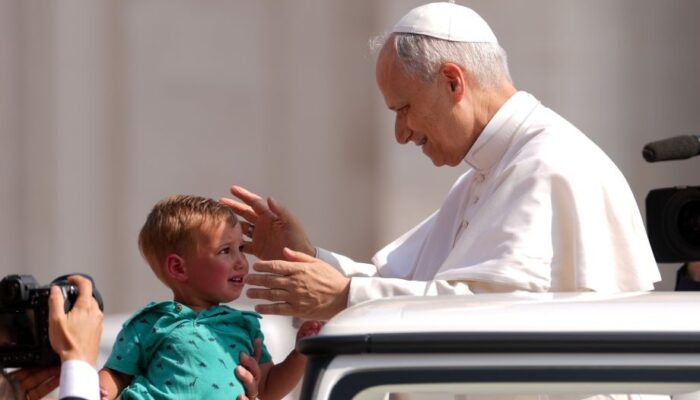
The Successor of Peter, as Shepherd of the universal Church, prays the Te Deum on behalf of the entire People of God. Traditionally, he does so every December 31 in Rome, emphasizing that the Church does not rely on human strategies, but on praise and trust in God.
You can consult here The booklet for the celebration of the Te Deum (p. 33 ff.), in thanksgiving for the past year, which will be presided over by the Holy Father Leo XIV on December 31, on the eve of the Solemnity of Mary Most Holy, Mother of God.
We praise you, O God – Latin text
We praise you, O God: we acknowledge you as Lord.
Forever, all the earth worships the Father.
All angels, all heavens, and all powers,
cherubim and seraphim proclaiming with unceasing voice:
Holy, Holy, Holy Lord God of Hosts.
The heavens and the earth are full of the glory of your majesty.
Glorious choir of the Apostles,
praiseworthy number of prophets,
The army praises the martyr candidate.
The Church confesses you throughout the world,
Father of immense majesty;
we worship your true and only Son;
Sanctum quoque Paraclitum Spiritum.
Your Rex gloriae, Christ.
Your Father is eternal, and so is the Son.
You, who will freely accept man,
You did not despise the Virgin's womb.
You, defeated by the sting of death,
apostles to the believers of the kingdom of heaven.
You shall sit at the right hand of God, in the glory of the Father.
You will believe that he is coming.
We beseech you, come to the aid of your servants,
whom I redeemed with precious blood.
May I be counted among your saints in glory.
Save your people, Lord, and bless your inheritance.
Rule them and lift them up forever.
For each day we bless you.
And we will praise your name forever and ever.
Deign, Lord, to keep us sinless on this day.
Have mercy on us, Lord, have mercy on us.
Have mercy on us, Lord,
we burned as we had hoped in you.
In you, Lord, I have hoped: do not confound me forever.
You can consult the Text in Spanish.





 Español
  English
  Italiano