




The digital reading and viewing of the image of the Holy Shroud of Turin is an absolute novelty. In fact, it is possible to connect on Internet to the program from the website avvolti.org as from the official website sindone.org with any device: smartphone, tablet, computer, with access from all over the world. Pope Leo XIV was the first to access this tour of the image of the Shroud, on the 9th at the Apostolic Palace.
Path explained by the image
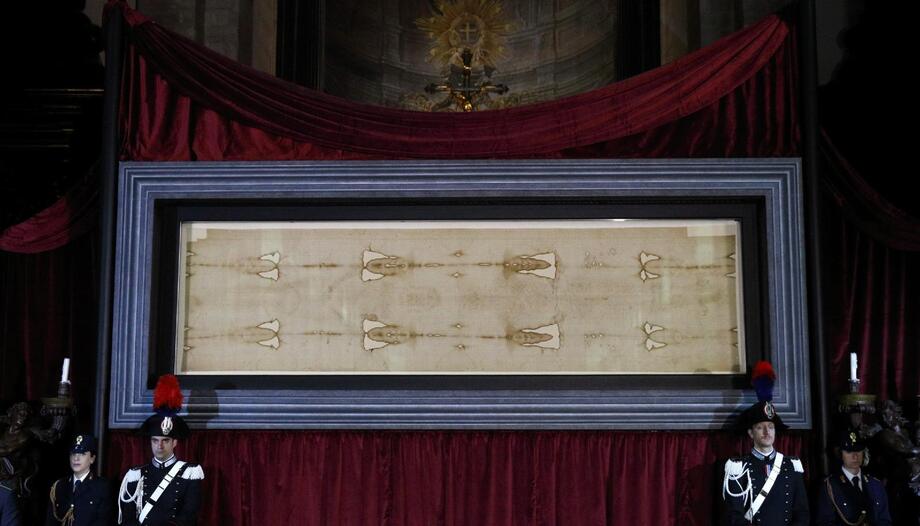
Thanks to the program, it is possible to “scroll” the syndonic image on the screen, enlarging the most significant details (the face, the crown of thorns...), in an explained and structured path. They are the following: 1. Deposition 2. Face/Face 3. Crowning 4. Flagellation 5. Transport 6. Crucifixion 7.
Each enlargement is accompanied by explanations and links to the Gospel passages describing the passion of Jesus.
Bringing the Shroud of Turin to the general public
The digital reading aims to bring the image of the Shroud and its meanings closer to the general public throughout the world. Despite the scientific rigor of the texts and images, the aim was to create a product accessible to everyone, rather than an initiative intended for specialists, explains the Archbishopric of Turin, in a note also released by the Vatican Agency official.
The “global” digital experience, accessible through the Internet anywhere in the world, is part of “Avvolti”, the initiative that the Diocese of Turin has implemented for the Jubilee 2025.
In 2025, a tent visited in Turin in 8 days by more than 30,000 people from 79 countries
Last spring, an “Avvolti” tent was set up in Piazza Castello in Turin. The tent presented, among other proposals, the digital reading experience that reproduced the image of the Shroud on a 1:1 scale, on a specially designed table, 5 meters long. The tent was visited by more than 30,000 people from 79 countries during the 8 days it was open (April 28 to May 5).
Now, the program presented at the “Mesa”, duly adapted, is available to everyone on the web. The images and texts of the experience can be found on the website www.avvolti.org and on social networks (Facebook and Instagram).

Cardinal Repole: Syndonic pastoral care
Cardinal Repole recalled that the publication of the global digital experience is part of the “pastoral syndonica” program that the Diocese of Turin launched in 2024 and of which “Avvolti” was the central axis for the Jubilee Year 2025.
In the coming months, other initiatives will be programmed and elaborated, with the aim of realizing a path of accompaniment towards the Jubilee of 2033, says the note.
What is the Holy Shroud
The Shroud of Turin is one of the relics of Our Lord that arouses most interest in the scientific community. It is a linen cloth, woven in herringbone, which shows the image, front and back, of a beaten and tortured man, which presents marks and bodily traumas such as those that may be present in a crucifixion. It measures 436 cm long, and 113 cm wide, as has been explained in Omnes.
It is kept in Turin, in its own chapel built in the seventeenth century, within the complex composed of the cathedral, the royal palace and the so-called palazzo Chiablese.
Origins and Gospel text
Many argue that it is the clothing that covered the body of Jesus Christ when he was buried, and that the figure that was engraved on the cloth is his.
The Gospel account (Mk, 15, 46), says: “Joseph of Arimathea bought a sheet, took the body of Jesus down from the cross, wrapped it in the sheet, and placed it in a tomb hewn out of the rock. Then he rolled a stone to the entrance of the tomb”.
Writer and researcher William West presented in Sydney in March of last year several pieces of evidence supporting the historical and scientific importance of the shroud.
Some evidence from West
In 2024, West published the book ‘The Shroud Rises, As the Carbon Date is Buried’, in which he suggests that the 1988 carbon date for the shroud “has finally been shown to be seriously flawed”. More recent dating tests have indicated that the shroud is 2,000 years old.
“It's covered in blood. It's one of the first things you notice on the shroud,” he explained. Not only are obvious wounds - such as the large flow of blood from the side - evident, but every scourge mark on both the front and back of the cloth is accompanied by bloodstains. “Research has shown very clearly that those blood flows and clots are 100 % accurate and intact,” he said among other things.





 Español
  English
  Italiano