



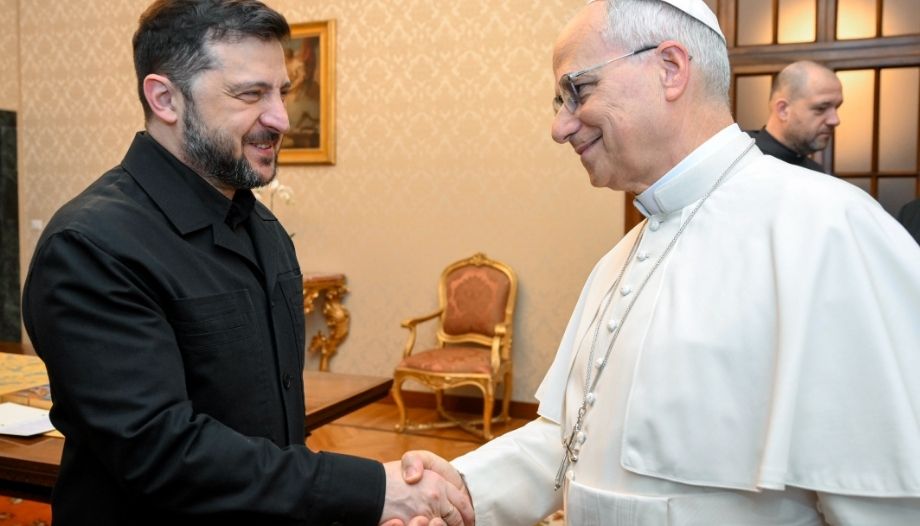
This morning, Pope Leo XIV resumed his Jubilee Year catechesis on ‘Jesus Christ, our hope,’ and meditated on ‘The Resurrection of Christ and the challenges of today's world.’.
When addressing the Audience To French-, English-, and Portuguese-speaking pilgrims, he summarized the same idea: “Death is not the end, but the passage to full light, to blissful eternity.”.
Poles and Germans: reconciliation and forgiveness are possible
In his greeting to the Polish people, he addressed in particular the organizers and participants of the conference dedicated to the message of reconciliation that the Polish bishops sent to the German bishops sixty years ago, which changed the history of Europe.
The Holy Father has encouraged that the words of that document — ’We forgive and ask forgiveness’ — “be a testimony to peoples in conflict today that reconciliation and forgiveness are possible when they arise from a mutual desire for peace and a common commitment, truly, for the good of humanity. I bless you all!”.
He expressed the same sentiment to German-speaking pilgrims when greeting participants at the same exhibition on ‘Reconciliation for Europe.’ “I thank you for this important event and encourage all people of good will to work for reconciliation and peace among peoples.”.
Culture of death: looking to Jesus
In his initial presentation of the catechesis, Leo XIV commented that today's culture tends to avoid thinking about death, but he invited us to look to Jesus, who passed from death to life.
“As human beings, we are aware that our life here on earth will come to an end. Our current culture tends to fear death and tries to avoid thinking about it, even resorting to medicine and science in search of immortality. However, the Gospel passage we have just heard invites us to look forward to the dawn of the Resurrection.”.
Jesus passed from death to life as the first fruits of a new creation. “The light of his victory illuminates our own mortality, reminding us that death is not the end, but a passage from this life to eternity,” he said.
Not fearing death: an invitation to examine our lives
Therefore, “death is not something to fear, but a moment to prepare for,” he encouraged. “It is an invitation to examine our lives and live in such a way that one day we may participate not only in the death of Christ, but also in the joy of eternal life.”.
“For those who believe in the Resurrection of Christ, death is not the end, but the beginning of eternity. As pilgrims of hope in this life, let us walk toward its fulfillment in the House of the Father,” the Pope said to Portuguese-speaking pilgrims.
And to those who speak Arabic: “I invite you to reflect on the mystery of death and life with hope, knowing that the risen Christ preceded us in the trial of death, conquered it, and opened the doors of eternal life for us.”.
Advent and the Virgin Mary of Loreto
On several occasions, the Pope has also invited us to “ask the Risen Lord during this season of Advent to make us sentinels who prepare and hasten the final triumph of his Kingdom, the Kingdom of Love” (French).
Finally, to the Romans and pilgrims of Italian language, he reminded them that “today we celebrate the memory of the Most Holy Virgin Mary of Loreto. Dear young people, learn to love and to hope in the school of Mary; dear sick people, may the Blessed Virgin be your companion and comfort in your suffering; and you, dear newlyweds, entrust your married life to the Mother of Jesus.




 Español
  English
  Italiano