


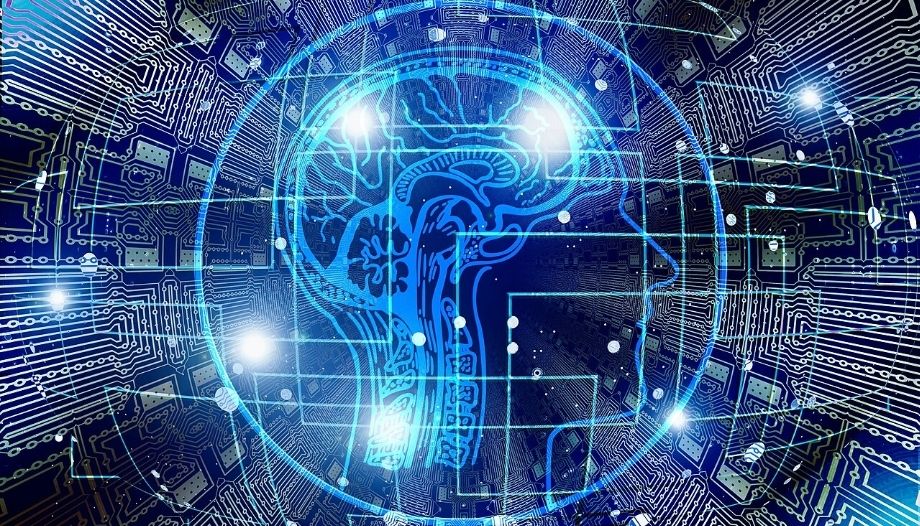
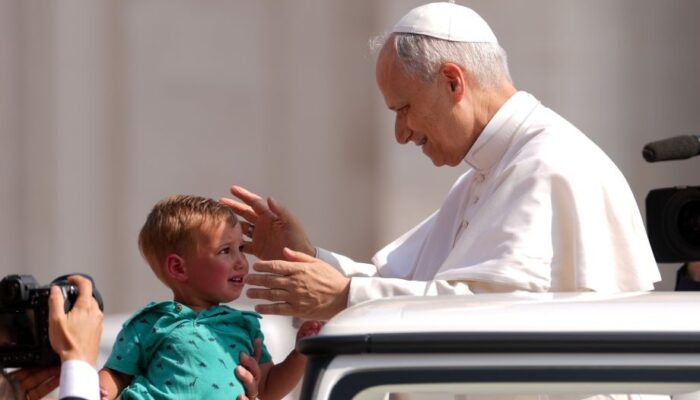
Pope Leo XIV has expressed a global alert to the phenomenon of AI (artificial intelligence), and proposes an alliance in the face of its simulating power. The goal is not to stop digital innovation, but to guide it as allies, in defense of human dignity and truth.
The appeal was made in the Message of the Pope for the 60th World Communications Day, made public on the feast of St. Francis de Sales on January 24. “The face and the voice are sacred. They were given to us by God, who created us in his image and likeness, calling us to life with the Word that he himself addressed to us,” he said.
“We are not biochemical algorithms.”
“Guarding human faces and voices means preserving this seal, this indelible reflection of God's love,” the Holy Father notes at the beginning of his message. “We are not a species made up of biochemical algorithms defined in advance. Each of us has an irreplaceable and inimitable vocation that springs from life and is manifested precisely in communication with others.”.
Risks and alliance
The risks warned by Leo XIV and his appeal, and the terms of the alliance proposed by the Pontiff, can be summarized as follows:
1. Failure to take care of digital technology modifies pillars of human civilization.
“Simulating human voices and faces, wisdom and knowledge, conscience and responsibility, empathy and friendship,” says the Pope, “the systems known as artificial intelligence not only interfere with information ecosystems, but also invade the deepest level of communication, that of the relationship between people.”.
2. The challenge is not technological but anthropological.
Guarding faces and voices ultimately means guarding ourselves. Embracing with courage, determination and discernment the opportunities offered by digital technology and the artificial intelligence does not mean hiding for ourselves the critical points, the opacities, the risks, the Pope explains.
3. Algorithms designed to maximize engagement in social networks reward quick emotions.
And at the same time, the Pope adds, they penalize “human expressions that need time, such as the effort to understand and reflection. By enclosing groups of people in bubbles of easy consensus and easy indignation, these algorithms weaken the capacity for listening and critical thinking and increase social polarization”.
To this has been added “a naively uncritical trust in artificial intelligence as an omniscient ‘friend’, dispenser of all information, archive of all memory, “oracle” of all advice”.
4. Artificial intelligence systems are increasingly taking control of text, music and video production.
Much of the human creative industry “thus runs the risk of being dismantled and replaced by the label “Powered by AI”, turning people into mere passive consumers of unthought thoughts, of anonymous products, without authorship, without love”.
The masterpieces of human genius in the fields of music, art and literature are reduced to a mere training ground for machines, diagnoses the Pope.
5. Fabrication of parallel realities, and no distinction between reality and fiction.
“The power of simulation is such that artificial intelligence can also deceive us with the fabrication of parallel “realities”, appropriating our faces and our voices (...). It is becoming increasingly difficult to distinguish reality from fiction,” the papal Message points out.
In turn, Leo XIV adds “the problem of lack of precision. Systems that pass off statistical probability as knowledge offer us, in reality, at best, approximations to the truth, which are sometimes authentic ‘hallucinations’”.
6. Lack of verification of sources and crisis of field journalism.
These two factors, whose overcoming requires “a continuous work of gathering and verifying information in the places where the events occur, may favor an even more fertile ground for disinformation, causing a growing sense of distrust, bewilderment and insecurity.”
With AI models being shaped by the worldview of those who build them, it raises “a major concern about the oligopoly control of algorithmic and artificial intelligence systems capable of subtly guiding behaviors and even rewriting human history - including the history of the Church - often without us really realizing it,” adds the Pontiff.
7. What we can or will be able to do. Partnership with digital innovation
Leo XIV reflects on what we can or will be able to do, growing in humanity and knowledge, with a wise use of such powerful instruments at our service. For we cannot “bury the talents we have received to grow as persons in relationship with God and with others. It means hiding our face and silencing our voice”.
“The challenge ahead is not to stop digital innovation but that of guide her, and in being aware of its ambivalent character,” the Pope proposes.
Corresponding “to each one of us”.” to raise their voices in defense of the human person so that “these instruments can really be integrated by us as allies”.”.
This alliance is possible, but it needs to be based, in his view, on three pillars: ‘responsibility, cooperation and education’.
8. Responsibility. Depending on the functions, this can be translated into “honesty, transparency, courage, vision, duty to share knowledge, right to be informed”. But, in general, no one can shirk their responsibility for the future we are building.
For those who are in the pinnacle of online platforms, This means ensuring that one's own business strategies are not guided by the sole criterion of maximum profit, but also by a vision of the future that takes into account the common good.
9. Creators and programmers of AI models, and national legislators: respect for human dignity.
They “are asked for transparency and social responsibility with respect to the planning principles and moderation systems that are at the basis of their algorithms and models designed to promote informed consent by users”.
The same responsibility is also required of “national legislators and supranational regulatory bodies, which are responsible for monitoring respect for human dignity”.
10. News agencies and the media: setting priorities
Agencies and media cannot allow algorithms oriented to win at all costs the battle for a few more seconds of attention to prevail over fidelity to their professional values, oriented to the search for truth.
AI-generated or manipulated content should be clearly marked and distinguished from human-created content, states the Papa.
Information is a public good. A constructive and meaningful public service is not based on opacity, but on transparency of sources, inclusion of stakeholders and a high level of quality, he adds.
11. All called upon to cooperate, create protection mechanisms.
“All stakeholders - from the technology industry to policymakers, from creative businesses to academia, from artists to journalists to educators - must be involved in building and enforcing conscious and responsible digital citizenship,” urges Leon XIV.
12. Education, critical reflection, digital literacy
The aim is to “increase our personal capacities for critical reflection; to evaluate the credibility of sources and the possible interests behind the selection of information that reaches us; to understand the psychological mechanisms that are activated in the face of it; to enable our families, communities and associations to develop practical criteria for a communication culture healthier and more responsible”.
It is important, reflects Pope Leo XIV, “to educate and educate oneself to use AI in an intentional way and, in this context, to take care of one's image (photo and audio), one's face and voice, to prevent them from being used in the creation of harmful content and behavior such as digital scams and cyber-bullying, deepfakes that violate the privacy and intimacy of individuals without their consent”.
In sum, “the digital revolution also requires a digital literacy (along with a humanistic and cultural background) to understand how algorithms shape our perception of reality, how AI biases work”, continues the Pope.
Conclusion
At the end of the Message, Leo XIV affirms that “we need to custodiate the gift of communication as the deepest truth of man, towards which every technological innovation should also be oriented”.




 Español
  English
  Italiano