



 What became of the house of St. Anne and St. Joachim?What is the Holy Land campaign money for? The Franciscan Children's Home of BethlehemCardinal Pizzaballa: "We need people to return to the Holy Land".
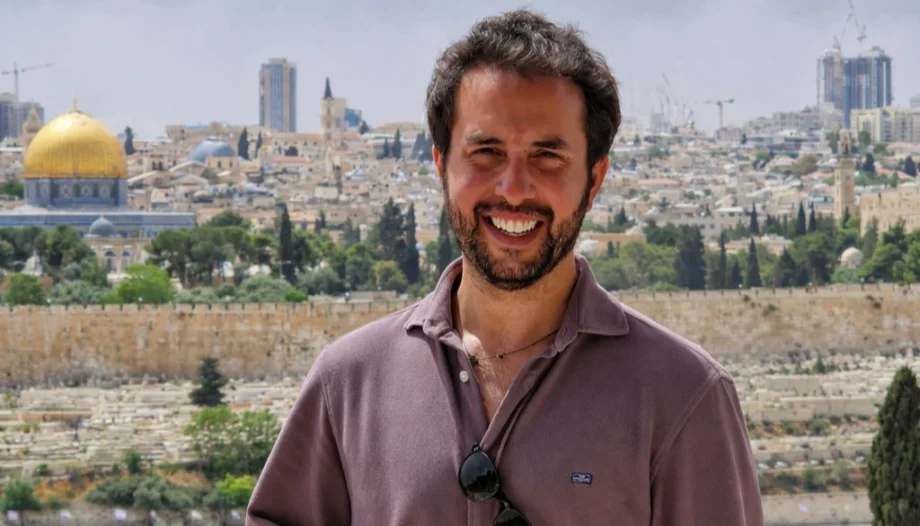
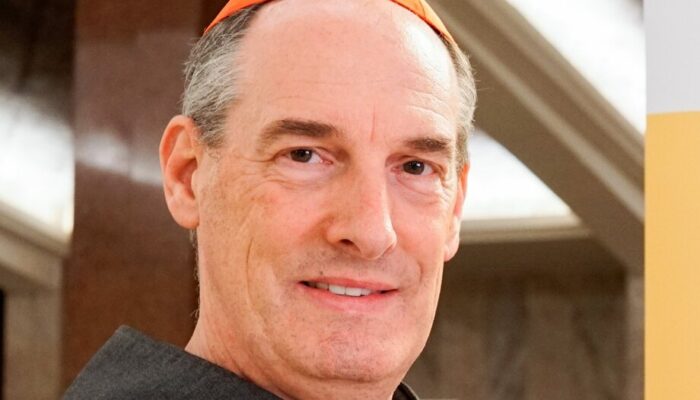
Elias Lucia does not speak from theory, he speaks from biography. From a specific place on the map and in time that many Western Christians venerate, but hardly know. When he says that he is from Galilee, the reaction is usually immediate and automatic: “Ah, so, you are Jewish”. And then he responds, again and again, with worn-out patience: “No, no, I am a Christian”.
The silence that usually follows that sentence says it all. Not because Elias is an exception, but because he breaks with one blow the usual prejudices. As he himself sums it up, “There is Christian community, we have been there for two thousand years, and we exist, even if most people in the West don't know it, but we exist.”.
A minimal biography, a very long story
Elijah was born in Galilee, in a village of 50,000 inhabitants today, of which 12,000 are Christians, fifteen minutes from Nazareth, Shefa-Amr. He grew up in a Melkite Catholic Christian family, one of those Eastern communities that have survived empires, conquests and persecutions without ever leaving the place.
“We are four brothers,” he says. Like most Christians in the area, he studied in an archdiocesan school: private centers, yes, but not in the European sense of the word. “They don't cost a lot of money, and for those who can't afford it even so, there are scholarships.”.
Growing up, his faith was something that seemed completely natural to him. “At school we were an absolute majority of Christians, something that doesn't happen in other schools in the Holy Land, where the number of Muslims can be close to 100 %.” The first blow comes later, when you leave that protected microcosm. He studied economics and finance at Haifa University. “You get the first culture shock when you leave school...in my university class of sixty we were four or five Christians.”.
It also changes the calendar. “Your weekend goes from Saturday-Sunday to Friday-Saturday, because Sunday is already a working day”. These are small details that, added together, build a permanent minority consciousness. “Also, if you have to go to class on Christmas Day and January 1, it's something you never get used to.”
Spain as a discovery... also of faith
Elias got to know Spain on a pilgrimage with a group from his parish in 2010, where he visited Barcelona and did the Camino de Santiago. “I liked the city a lot... and the fly on the wall was in my head”. He returned several times and ended up working in a consulting firm after finishing his degree. He now lives in Madrid. What surprised him most about Spain was not the professional aspect, but the ecclesial aspect. “I was amazed at how many offers there are for Mass, catechesis, formation... and I can assure you that I learned more than half of my Christian formation here”.
In the Holy Land, he explains, one lives surrounded by holy places, but not necessarily with a deep formation. “You know where the places are, you enter a church, you have faith... but you don't know the reason for many things, and it's not the fault of the people there or the clergy, but the situation and the instability of the area that makes you lose focus on the main thing while you focus on surviving.”. Jerusalem, Nazareth, Lake Tiberias are part of the daily landscape. “I don't get excited anymore when I go to Jerusalem, because since I was a child we used to go two or three times a year.".
“The living stones”
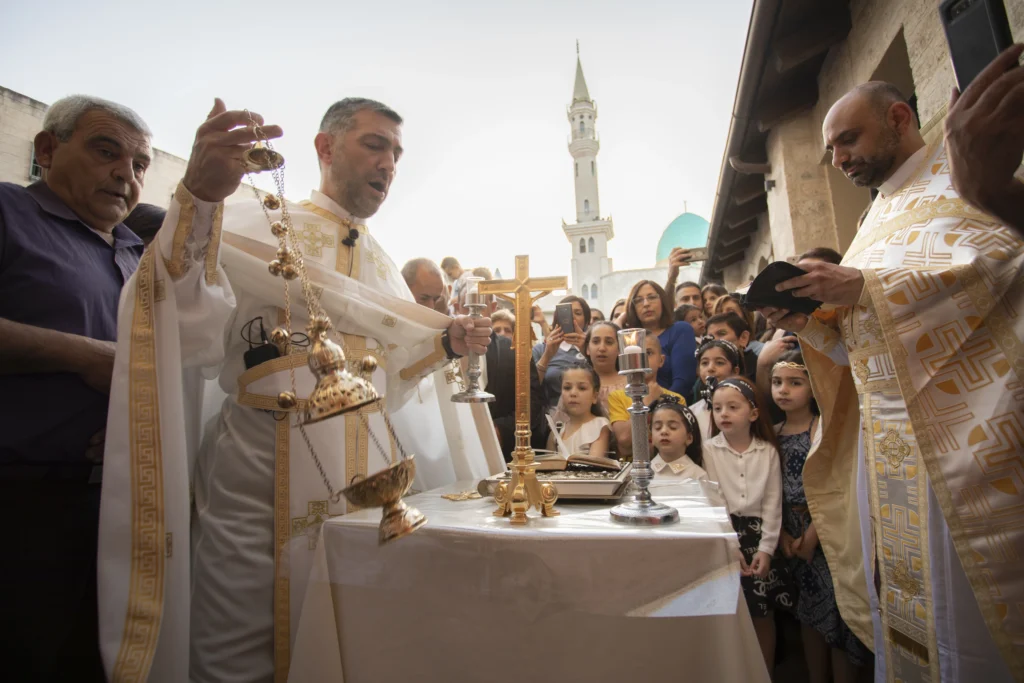
The central message communicated by Elias is the need for Christians in the Holy Land that when people make pilgrimages “not only visit the stones, but also care about the living stones, which are the Christians there. Let them show us that they are with us, that they support us, and that they have not abandoned us. We are eager to share some time or religious ceremony with the pilgrims. It's something that rarely happens, but when it does, we appreciate it very much”. Without that local community, he recalls, the holy sites would never have been preserved.
For this reason, he encourages pilgrims to visit local communities, to listen to testimonies, to put a face to a faith that is not touristy. The parishes “are very responsive”We have been able to facilitate this type of event. Dinners, simple meetings, real exchange.
An uninterrupted presence
“We Christians have been here for 2,000 years without interruption,” he says. “We are very few, but we are the ones who have been on this land the longest.”.
And that permanence came at a very high price. “From the 7th century until not so long ago, you could not convert to Christianity in the Holy Land, they would cut your head off.” Taxes, threats, constant pressure. Many converted. Those who remained, know where they came from. “We know we are descended from the first Christians.”.
Elias has traced his family tree. “I was tracing the baptismal records of my parish, and since 1800 my family has been in the same town, with the same surname and in the same parish.” Before there were no records, but there were remains. “In my village there are Christian remains from the first centuries of Christianity... a column from the first church.” Byzantine tombs from the 4th and 5th centuries. Christian presence from the origins. “Practically since the time of Jesus Christ”.
That's why he is pained by the pious ignorance of the West. “People go to Mass every day, but they don't know where Christianity really comes from.” And he says this without anger, but with a sadness that is hard to disguise.
When faith is defended with the body
There are episodes that mark you forever. One occurred in his own village, when he was a teenager. A conflict with Druze youths escalated to the extreme. “They took out their guns and wanted to go and burn the church and kill everyone in their way.”.
The response was immediate. “Everyone went down to the church...if you want to burn it, you have to kill us all first.” Without weapons. With sticks, with the body, with faith. “There you are giving your life for the church and defending the Christian presence in the holy places.”.
No one was killed by a miracle, although there were injuries. For Elías, it is not a heroic anecdote. It is almost routine. “The worst thing is that for us this is normal.”.
A Church sustained from below
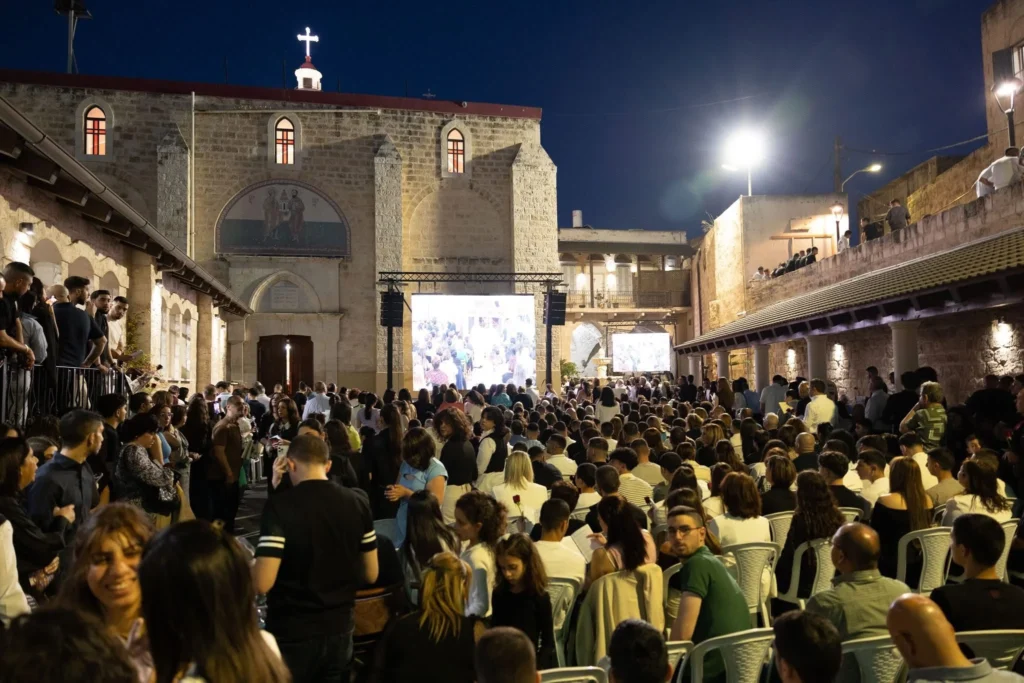
Maintaining the parishes is not so easy when one lives with Jewish and Muslim majorities around, especially because, from a labor point of view, there is usually a lot of reluctance to hire people of another religion. This means that in economic terms many Christians are in precarious positions, although this does not reduce their commitment when it comes to moving the Church forward.
For example, when his parish was short of money a few years ago, people responded. “We went from house to house asking if they wanted to contribute on an ongoing basis. The result was that a significant monthly amount was collected from families in the village. ”With this, they built a parish center, restored the entire church, and got the school out of debt. All without significant outside help.
This article could end with figures, but it is better to end with a sentence. One that Elías repeats almost as an act of resistance: “We exist”.
And perhaps that is the first step for any Christian who travels to the Holy Land: not just to look at ancient stones, but to meet those who, against all odds, continue to live there the faith that was born on that very soil.




 Español
  English
  Italiano