



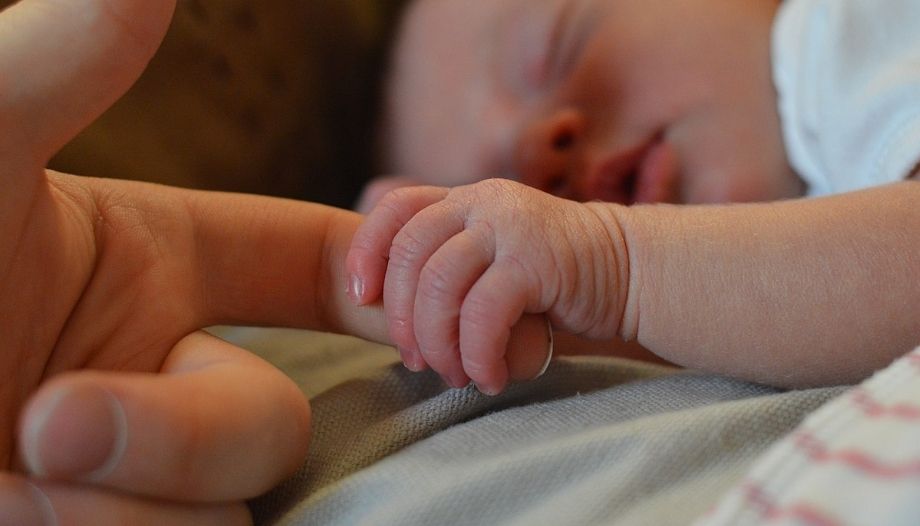
The 21 defendants accused of alleged coercion for their participation in prayer rallies in front of an abortion clinic in the capital of Álava have been acquitted by a Spanish court. The case was heard by Criminal Court No. 1 of Vitoria-Gasteiz, in the Basque Country.
The events in question took place between September 28 and November 6, 2022, during the ‘40 Days for Life’ campaign. The individuals who have now been acquitted took turns standing in front of the clinic carrying signs with messages such as ‘40 days for life, you are not alone, we are here.
Reasons
Here we summarize three arguments put forward by Judge Beatriz Román, author of the ruling, according to Libertas Forum, to rule on his acquittal.
1.- Freedom of assembly. The defendants “did nothing more than exercise their free right of assembly, choosing a location near a clinic where abortions are performed. They understood that expressing their demands in that place and in the manner they did was the most appropriate way to ensure that the message they wanted to convey—praying for life and offering their help—would reach its main recipients directly.”.
2.- In a “peaceful” manner.
All of this, the judge adds, was properly communicated to the competent authority and was carried out quietly in an “exquisitely peaceful” manner.
3.- There were no insults or pressure on workers or users of the abortion center.
The ruling, according to the aforementioned source, is a legal milestone as it is the first trial of its kind in Europe, and supports the defense's argument. The defendants limited themselves to praying silently and expressing their support for life, without insulting or pressuring the center's workers or users.
The ruling can be appealed before the Provincial Court of Álava, and sets a precedent regarding the presence of pro-life groups in the vicinity of abortion clinics.
The prosecution and the accusation requested prison or community service.
The public prosecutor and the private prosecutor requested five months in prison or community service, in addition to compensation of up to €20,000 and a restraining order. However, the judge concluded that no crime had been committed.
The defense attorneys argued that there was no “harassment” or “bullying,” but simply silent prayer. The number of protesters “never exceeded five people” at any one time.
In Birmingham and Madrid
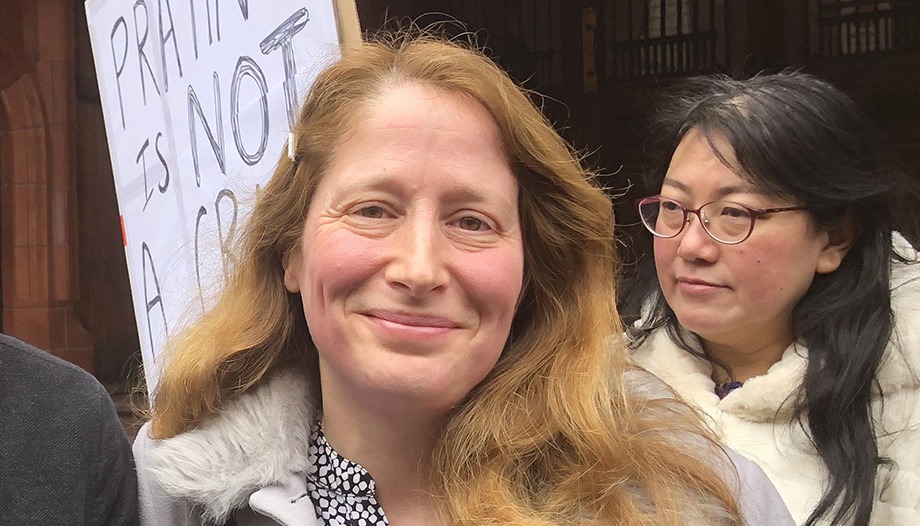
There are precedents for this case in Spain and other countries. In December 2022, Isabel Vaughan-Spruce, co-director of the March for Life in the United Kingdom, was arrested in Birmingham for “praying in her mind” outside an abortion clinic. Two months later, the charges against her were dropped. In an interview with Omnes, she described the experience as surreal.
Isabel Vaughan-Spruce, known for her work on behalf of women who choose to continue with their pregnancies, had been arrested on “suspicion” while she was “praying mentally.”.
In Spain, Dr. Jesús Poveda shows up once a year, on December 28, the Day of the Holy Innocents, in front of an abortion clinic in Madrid. He is usually arrested and then released. Poveda says, “We provide assistance 364 days a year, and one day, just one day, we engage in passive resistance.” You can see here a reflection on these events, focusing on the ethical and legal limits in the defense of life.




 Español
  English
  Italiano