



On March 2, the documentation prepared by the Historical Commission was handed over to the Episcopal Delegate for the Causes of Saints of the Archbishopric of Madrid, Mr. Alberto Fernández, at the Archbishopric of Madrid.
The Postulator of the Cause, Dr. Charlie Metola and the doctoral members of the Historical Commission swore to have faithfully complied with the mandate received from His Eminence Cardinal José Cobo, Archbishop of Madrid. Finally, the professors were interrogated one by one by the tribunal appointed for this purpose by the Cardinal as prescribed by canon law.
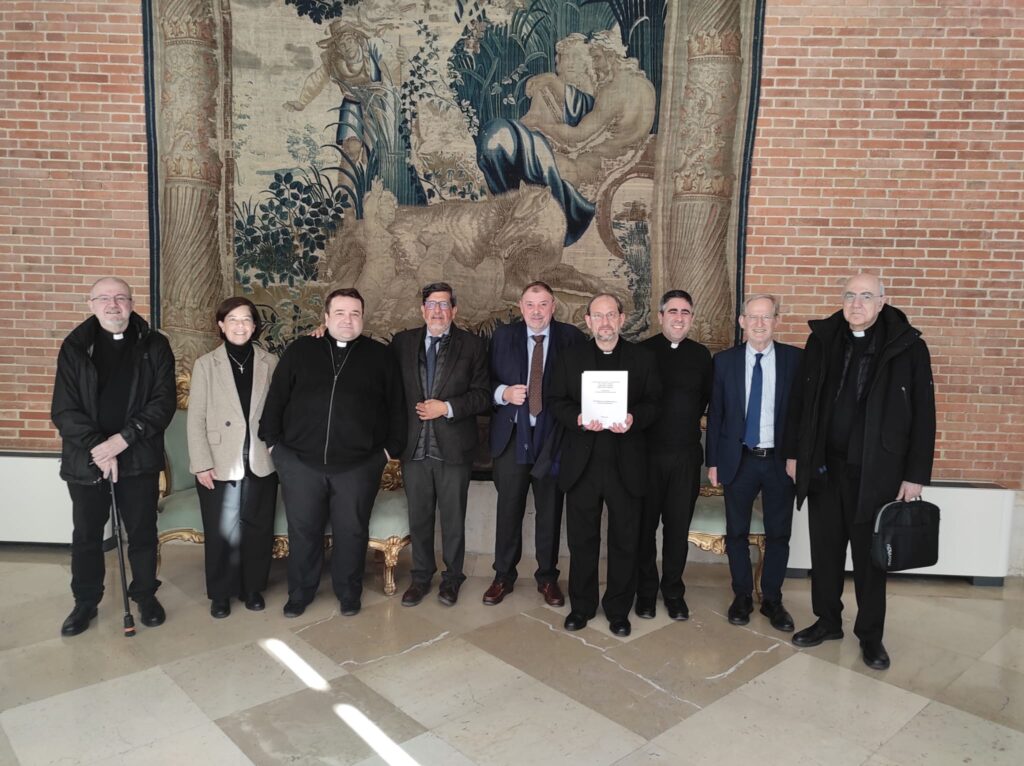
Finally, in the hall The members of the tribunal and the postulator of the Cause, together with the five historians, all of them good professionals and very knowledgeable about the co-foundress of the Neocatechumenal Way, were photographed to immortalize the moment.
The signs of identity of Carmen Hernández
The question one asks oneself after reviewing and preparing the 30,000 pages of documents, collected, transcribed and presented before the Diocesan Tribunal, would be what were the signs of identity of the Servant of God? Carmen Hernandez. This question is the one I will try to summarize in the following lines.
First of all, I was impressed to learn about the vocational itinerary through which Carmen Hernandez received from God the mission to work side by side with Kiko Arguello all her life, being both of such different formation and mentality, to respond to the divine invitation to build Christian communities throughout the world and a true spirituality in which several million people, mostly Christian families, have already reached, with God's grace and freedom, holiness and have enlivened entire countries and dioceses.
Theological formation and providence in its preparation
Immediately, we must recognize the Providence of God that made Carmen study theology until she obtained her degree in the Faculty of Theology of Valencia, which was started and promoted by D. Antonio Rodilla, one of the most important personalities of the diocese of Valencia and faithful collaborator of Archbishop Marcelino Olaechea.
Carmen was able to enrich herself with the doctrinal, theological and liturgical richness of the Faculty and then apply it to the catechists along the way, so that they would know how to apply it to persons, families, of all classes and conditions and of all races, thanks to the depth of theology. The scripts that he prepared and that have been preserved and delivered to the Historical Commission make explicit the theological environment of the fifties and the renewal of the Second Vatican Council.
Carmen knew the Bible very well
It is especially striking the great knowledge of the Sacred Scriptures that shows all the catechetical work of Carmen Hernandez as well as the living Tradition of the Church and the pontifical magisterium. It is very easy to discover the relationship of that living theology with the text of the Catechism of the Catholic Church that would be published in 1992 and that we see reflected in so many scripts elaborated by Carmen.
There is a detail that is worth highlighting in the light of the recent document prepared by the Commission on the Doctrine of the Faith of the Spanish Episcopal Conference. This document wishes to draw attention to the importance of providing the Christian people with a solid formation in doctrinal matters and popular piety, avoiding both emotionalism and cold rationality far removed from the true life of prayer and sacrifice of ordinary Christians. In this direction, the solid foundation of biblical theology and the theology of communion that runs through the life and writings of Carmen Hernandez is very striking.
A spiritual motherhood at the service of families
Certainly, the life of Carmen Hernandez and that of the Neocatechumenal Way and that of Kiko Arguello run in parallel and each one of them will be a true instrument of the gifts of the Holy Spirit, therefore, in what I am going to say now, I will stick to what I think is proper to Carmen. Specifically, Carmen, as a woman and “mother” of the Camino, will bring all the elements of her femininity and especially the gift of an overflowing motherhood with the families of the Camino.
As the years go by and the characteristics of this path of holiness that opened up in the world are studied from the angle of spiritual theology, surely theologians, with the necessary historical perspective and the undoubted fruits of holiness that we are already contemplating, will underline what we could now tentatively call: “the facets of a family and lay spirituality”.
The expansion of Christianity
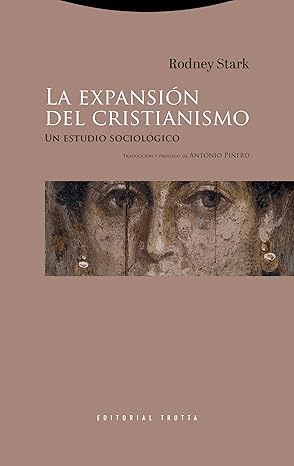
Certainly, the reality of the Camino is that it is about communities that contain other communities and within them a good group of families that know how to make community at all times and that at the same time evangelize the world because they relate with other families in their environment and thus the world will be illuminated from within. In this sense, we will study the migrations of families sent to build Christian communities where there were none or where they had almost disappeared so that they will connect with the first Christians and the expansion of the faith throughout the empire as Rodney Stark has historicized in his famous treatise “The Expansion of Christianity”.
Among the anecdotes that could be told, I have selected one that, because of its simplicity, denotes the character of a strong, strong, Castilian and Navarrese mother of a family, at the same time that she was full of infinite understanding and mercy. I am referring to the direct and spontaneous conversation with a group of seminarians whom she wished to form and launch throughout the world. In a moment of intense confidence in them, he told them: “virtue is a matter of faith”.
Certainly, those who know and have dealt with young people know that one must always be encouraging, positive and encouraging and, at the same time, that there are no magic formulas or shortcuts, but also that only from the depths can one build a solid edifice. Faith, hope and love are three theological virtues that God gives in abundance to those who wish to follow him in his service. All spiritual problems, therefore, can be solved by asking God to give us the virtues he is asking of us.
The expansion of Christianity




 Español
  English
  Italiano