



 11 messages from the Pope to young people at their Jubilee"Peace is possible": 7 lessons from the Pope after traveling to Turkey and LebanonArtisans of unity and peace. Leo XIV in Turkey and Lebanon
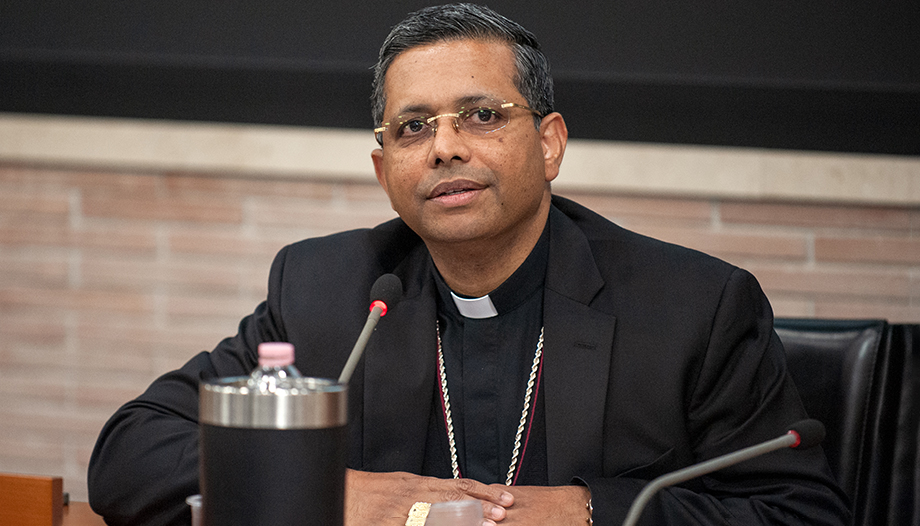
Created a cardinal by Pope Francis exactly one year ago and prefect of the Dicastery for Interreligious Dialogue, George Jacob Koovakad is today one of the key figures in the Catholic Church's commitment to promoting interreligious encounter and cooperation. In this interview with Omnes, he reviews the most significant stages of this journey, examines the challenges posed by conflicts and violence, speaks of the value of the encounter between believers of different religions and recalls the common responsibility of religions in promoting peace, fraternity and the common good, with an attentive eye on the new generations.
Your creation as a cardinal by Pope Francis and your subsequent appointment as prefect have quickly placed you at the center of interreligious dialogue. What aspects of your life trajectory do you consider important in facing this responsibility?
-First and foremost, I consider it decisive to have been born and raised in Kerala, India, in a multicultural and multireligious society, where all religions are respected and guarantee social harmony. Differences are a richness: one could say that I carry in my DNA the theme of coexistence between religions that are very different from one another. I then served in various apostolic nunciatures: in Algeria, South Korea, Iran, Costa Rica and Venezuela. This allowed me to get to know both the predominant religions in countries where Christianity is a minority, as well as countries with a Christian majority, but belonging to very different cultures.
This “panorama” was further broadened when, in September 2021, Pope Francis appointed me organizer of apostolic journeys: the more than ten visits made have been new opportunities for meeting and collaborating with people from different continents and very different social contexts. I recently accompanied Pope Leo XIV to Turkey and Lebanon, a trip with numerous factors related to interreligious dialogue.
I would like to highlight two aspects of these experiences in particular: on the one hand, being able to witness firsthand the countless gestures of friendship, closeness and sincere relations, at the most diverse levels, of the pontiffs towards people of other religious traditions. Secondly, the possibility of getting to know different cultures: this is an important element to be able to establish relationships, which in turn are the indispensable basis for establishing a dialogue.
The Jubilee that is now concluding has also involved the Dicastery in various moments of encounter with other religious traditions. Among the initiatives carried out, which one seems to you particularly revealing of the current state of interreligious dialogue?
-In this regard, I would like to highlight an important event that took place in the Paul VI Hall, in the presence of the Holy Father, on October 28, 2025. Those present found themselves immersed in a room full of variety: religions, languages, origins, ages, cultural and artistic expressions. What was the purpose of this celebration? To celebrate a round anniversary: the 60th anniversary of the declaration. Nostra Aetate, a conciliar document that marked a transcendental turning point for the Catholic Church, a concrete expression of a Church that “becomes a colloquy”, in dialogue, as St. Paul VI affirmed in the encyclical Ecclesiam suam (1964).
By openly acknowledging the presence of positive values not only in the lives of the faithful of other religions, but also in the religious traditions to which they belong, we have moved from an attitude of monologue to one of dialogue and listening, without renouncing the traditional foundations of Catholic identity. The presence of elements of truth and holiness in other religions, which are “the elements of truth and sanctity", has become an important element of the Catholic identity.“rays of that truth that illuminates all men”as stated in Nostra Aetate, It urges us to pay attention to others, to listen to them, to be interested in them, to take them seriously.
So, if we were looking for a confirmation of the current state of the dialogue, it would be enough to observe this “multicolored” hall, to enjoy the harmonies of the peculiar rhythms of the different cultures, to listen to the strong testimonies of a dialogue that becomes life, welcome, mutual respect and trust. Obviously, it is difficult to condense in a single evening the progress made in the interreligious journey, but seeing the more than two thousand attendees leave at the end of the day carrying with them a bag of seeds with the intention of “spreading” these seeds of dialogue and peace even more where each one lives, in their daily lives, was a confirmation that the journey continues.
“The Christian faith is capable of inculturation: Christians are called to be a seed of fraternity for all”.
Cardinal KovakaadPrefect of the Dicastery for Interreligious Dialogue
The Document on Human FraternityWhat still shows, even today, the vitality of this initiative?
-Through this historic document, signed by Pope Francis and the Grand Imam of al-Azhar, Ahmed al Tayeb, the two religious leaders expressed a strong message in favor of inclusion rather than exclusion and discrimination of minorities, especially in countries where Islam or Christianity is the majority religion. The document stresses that we are all children of the same God, we are all brothers and sisters; we all need to have our rights recognized and respected and, moreover, to move from tolerance to citizenship. Furthermore, the two leaders jointly condemn violence. The signing of this document, which took place in the presence of seven hundred religious leaders, is not an isolated case, but the result of a prophetic path, traveled by the whole Church, and represents an excellent example of how religions can inspire the diplomatic and political action of states to promote more courageously those values and traditions that exalt universal human dignity.
Having made many trips following the Pope, how does the perception of interreligious dialogue change when observed from countries marked by conflict, religious minorities or cultural tensions?
-After the pandemic we thought that life would be more peaceful, calmer, but it has not been so. Every day we face new challenges: ethnic conflicts, wars... Humanity seems to be heading towards an abyss... There are countries where internal conflicts causing violence and death have been going on for years, unfortunately far from the media spotlight, lengthening the list of “forgotten” wars. There are others, multi-ethnic and multi-religious societies, characterized by a climate of peaceful coexistence, where suddenly the horror of terrorism is unleashed, as we have seen in the recent tragic events in Sydney.
Since interreligious dialogue cannot replace the role of diplomacy and institutions in conflict resolution, as believers, we all have a duty to be witnesses of peace and communion. I would like to launch here a heartfelt appeal: hatred in the name of religion must be overcome. All war, all violence in the name of God is a religious perversion. Hatred, brutality and discrimination are incompatible with any authentic religious experience. Every human being is the holder of inalienable rights and freedoms and, in this context, the role of religion is, by its nature, a role of peace and can never be a motive for destruction.
On the other hand, if we look at the recent trip of Pope Leo XIV, in his speech with the authorities and representatives of civil society, the Pontiff quoted precisely the invitation of his predecessor St. John XXIII - who was Administrator of the Latin Vicariate of Istanbul and Apostolic Delegate in Turkey and Greece from 1935 to 1945 - to Catholics, so that they would not distance themselves from the civil life of the country. Those words, explained Pope Leo XIV, continue to radiate much light and continue to inspire an evangelical and more authentic logic, which Pope Francis has defined as “culture of encounter”.”.
We can therefore say that this latest visit was also an opportunity to break down prejudices and accelerate the process of growing mutual trust, as well as to deepen the long-standing relations between the Holy See and both the Shiites and the Sunnis.
Earlier I quoted Nostra Aetate. What remains to be done, after sixty years, to fully appreciate this Declaration?
-Undoubtedly, there are opportunities for growth, such as the deepening of relations with the followers of religions not yet mentioned in the document, such as the Sikhs, Jains, Confucians and Taoists; the development and implementation of the spirituality of dialogue, and the emergence of new religious movements. Undoubtedly, the theme of fraternity, of universal brotherhood, is the fruit of the seed sown by this magnificent document. The Christian faith is capable of inculturation: Christians are called to be the seed of fraternity for all. All this does not mean renouncing one's own identity, but rather being aware that identity is not and must never be a reason to build walls or discriminate against others, but always an opportunity to build bridges.
Interreligious dialogue is not simply a dialogue between religions, but between believers called to witness in the world to the beauty of believing in God and practicing fraternal charity and mutual respect. As believers, we are the majority in the world, but we are often silent or divided. However, it is increasingly important to unite and bear witness, working together for the common good. All of us in this field have a responsibility to continue to contemplate God's mysterious ways: it is he who opens the way.
“Interreligious dialogue is not simply a dialogue between religions, but between believers called to bear witness in the world to the beauty of believing in God and practicing fraternal charity and mutual respect.”.
Cardinal Kovakaad Prefect of the Dicastery for Interreligious Dialogue
What criteria should be used to overcome situations in which dialogue is hindered by radicalization, discrimination or violence?
-Ours is a time of conversion and renewal, an occasion to leave behind disputes and begin a new journey: working together, each with his or her own responsibilities, we can build a world in which everyone can realize his or her humanity in truth, justice and peace. Hope illuminates the path and, at the same time, is renewed and nourished each time, both in daily life, - with simple and concrete gestures of welcome, solidarity, mutual listening and sincere dialogue - and in official contexts, with the signing of a memorandum or a joint document. Both aspects are important. It is essential to always walk between realism and hope.
Interreligious dialogue is increasingly recognized as a component of diplomacy, peace building and development. There is also more talk of “religious diplomacy”. Those working in these fields should include religious actors and faith-based organizations in their strategies. Religious institutions need to move from dialogue based on specific events to dialogue as an ongoing relational practice, involving training, education and collaboration on social justice issues.
The new generations show a different sensitivity than in the past. Are there questions you see arising from them towards the Catholic Church?
-Regarding the different sensitivities of the new generations, some important aspects must be taken into account. Young people are often born and grow up in multi-ethnic and therefore multi-cultural and multi-religious societies. It is an experience that influences their concept of “different”. They share spaces, friendships and school careers. Or they are children of immigrants who often experience firsthand the contrast between the cultural and religious traditions of their family and the reality they encounter in society outside the home, with their peers and friends.
Welcoming and openness towards what is different are genuine needs and, in this, the Catholic Church can bear witness. We know of more and more frequent situations, just to give an example, of welcoming young people of other religions in oratories, who find in them a safe environment outside their family. The adult world should be more open and sensitive to understand the needs of the new generations.
You are an alumnus of the Pontifical University of the Holy Cross, what memories do you have of your years of study?
-I have excellent memories of my years of study at the University of the Holy Cross, a very important formation both then and later for my future. First of all, it was an experience of internationality, of universality (also an important basis for my present service), and above all I remember the opportunity to exchange ideas with students from other countries of Asia, a continent very well represented at that time. I remember the importance given to the formation of the laity. The personalized attention given to each student, the priority given to assimilation and formation, respecting individual learning rhythms, was very valuable. In short, it was a time of both human and intellectual growth.




 Español
  English
  Italiano