



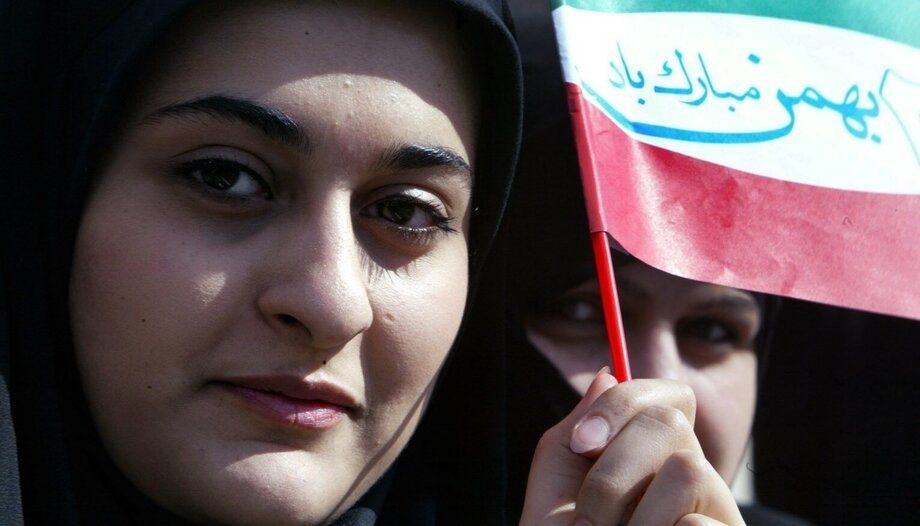
Would you like to take a five-question quiz, like a reduced-format ‘Pasapalabra’, about the Islamic Republic of Iran? If you have read the series in Omnes by writer and historian Gerardo Ferrara, published in early 2024, has it easier.
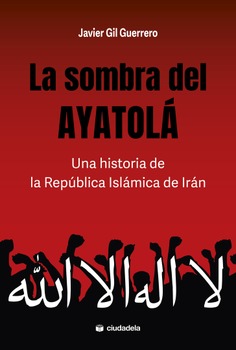
If you have not done so, or have it in perspective, you can also add the latest contribution of Javier Gil, researcher at the Institute for Culture and Society (ICS) and professor of international relations at the University of Navarra. The book is entitled ‘La sombra del AYATOLÁ’, edited by Citadel Books. Its topicality is evident.
The works of Gerardo Ferrara, more synthetic, and Javier Gil, are complementary, although the latter contributes, in addition to his strong historical accent, the geopolitical variable in the Middle East, given his specialization in U.S. foreign policy in the area.
Since this is not a conventional review, let's go with questions and answers, We summarize the analysis of the ICS researcher in his book on Iran, outlined in his presentation at the campus of the University of Navarra in December, and in contributions in January in ‘El Mundo’ and on radio stations such as RNE.
1. What is happening in Iran?
Three years after the last major popular challenge to the regime (2022), Iranians have taken to the streets. Economic discontent has served as an impetus, and the protests have called for the overthrow of the Islamic Republic.
The Iranian regime has gone from being established with the massive support of the citizenry to surviving violently in the face of an opposition that is perceived as a majority of the population. In the last elections of 2024, the turnout barely reached 39.9% in the presidential elections and 41% in the legislative elections.
2. How has the regime's repression been now?
According to human rights agencies, the death toll has reached several thousand, with thousands injured, and thousands detained. The Iranian government has reported more than 3,000 dead, and the UN and its agencies have significantly raised the figure.
In addition, the regime has taken extraordinary measures such as cutting internet and telephone lines, which are being partially restored.
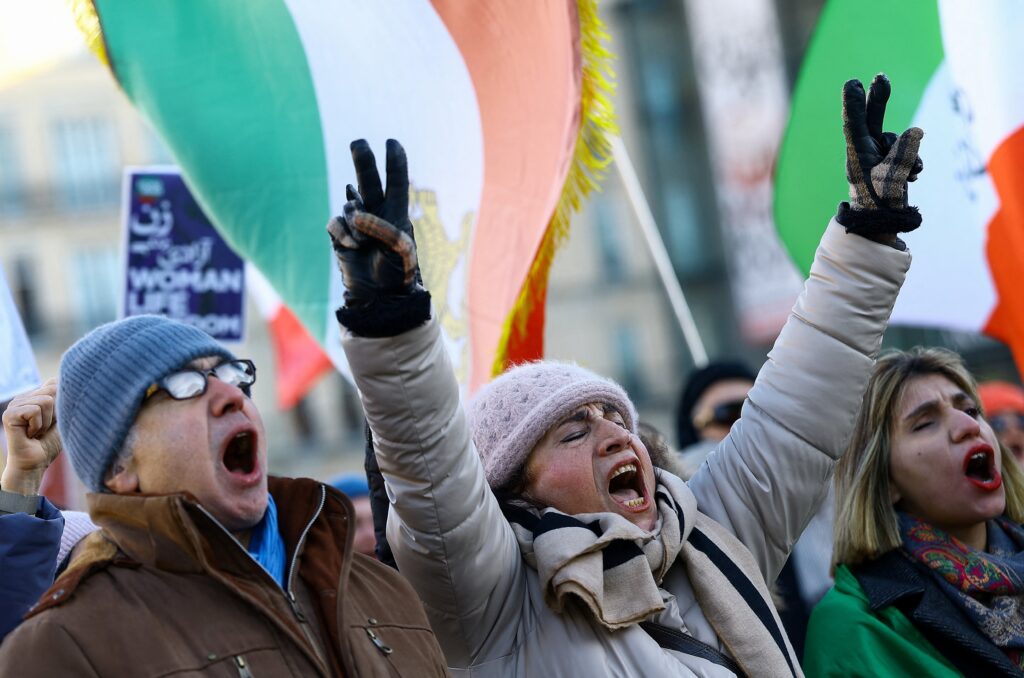
3. How many major protests have taken place since the Iranian revolution in 1979?
In summary, they have been as follows.
First) Summer 1999. Regime forces storm Tehran University campus. Hundreds injured and arrested.
Second) In 2009. Second great period of social protest. Opposition candidates in the presidential elections led protests that ended up shaping the so-called Green Movement. Struggle between reformists and hardliners (Khamenei).
Third) Hardliners of the regime encouraged a large protest in December 2017, to weaken the reformist government.
Fourth) 2019. Riots and strikes over gasoline price subsidy cuts. Demands for the end of the Islamic Republic began. Hundreds of deaths.
Fifth) 2021, against management of the country's water resources and water cuts.
Sixth) 2022. Death of Masha Amini, young woman arrested for wearing the veil incorrectly. New riots greater in participation and virulence than those of 2019. Catalysts: imposition of the veil and women's rights. Hundreds of deaths and thousands of arrests.
Seventh) 2025/2026. Economic unrest, new protests, also against the Islamic Republic. Repression has been described in point 2.
4. What new developments have occurred?
a) In these protests, the demonstrators may have reached a certain consensus around a symbolic figure, the exiled crown prince, Reza Pahlevi, although there are sensitive divergences among the opponents in the Iranian diaspora.
b) greater unity among the demonstrators, who are not limited only to the economic situation or human rights. The researcher believes that “we must be cautious”, as there is no evidence of a fracture in the regime.
(c) The regime is currently supported by Russia and China..
5. What is the ideology of Iranian Shiite Islam like?
Sonia Sánchez, professor of international relations at the Francisco de Vitoria University, who participated in the presentation of the book, defined the Iranian regime as an “Ayatolacracy, the tragedy of when fanatics take power”.
Elías Cohen, also a professor of the same specialty at the Francisco de Vitoria University, stated that «Iran has a hegemonic role in the Middle East”, and with the seizure of power by the clerics, “the Shiite religion is in the hands of the State, which oversees everything”.
Researcher and author Javier Gil explained the genesis, and after explaining the “46 years of cold war between Iran and the US”, he referred to the underlying ideology of the Islamic Revolution.
Revolutionary ideology
In his opinion, this is a “politicization of Shiism”. The Islamic revolution transformed the traditional quietism of Shiism, or Shiite Islam (90 % of Iran), in “a religion of protest that combined ingredients taken from nationalism, Marxism and populism, to put them at the service of a revolutionary reinterpretation of Islam”. In Iran an “ideologized and revolutionary Islam” took shape, writes the author (see pp. 35 ff.).
But Iran's presence in several Middle Eastern countries has become an unbearable burden on the country's finances, dragged it into endless wars, and subjected it to economic sanctions (pp. 268 ff.).
To make matters worse, on 7-O, 2023, Hamas led a surprise attack against Israel. They killed 1,200 people and captured more than 200 hostages. The aim was to disrupt an impending deal between Israel and Saudi Arabia. Iran denied involvement, but its leaders showed support for Hamas. The rest you know.
The Shadow of the Ayatollah. A History of the Islamic Republic of Iran.




 Español
  English
  Italiano