



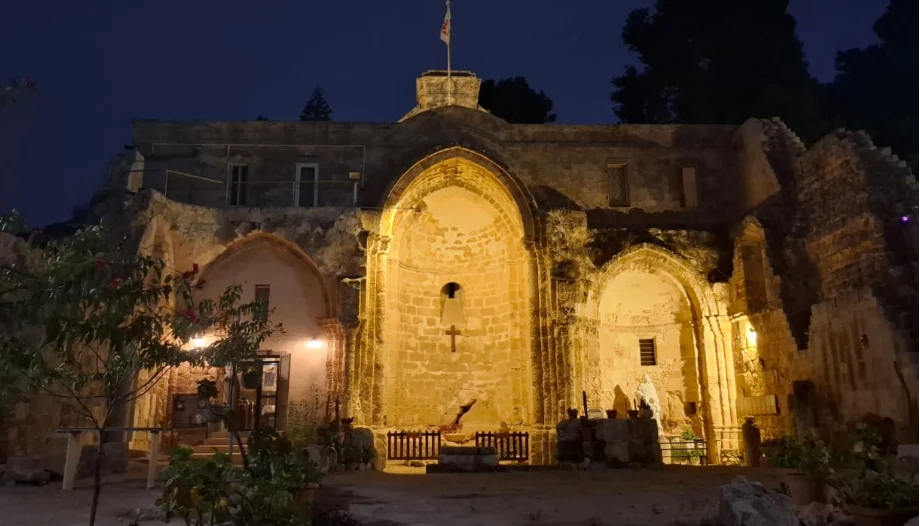
In the heart of the ancient city of Sepphoris, a few kilometers from Nazareth, Christian tradition has for centuries located the house of St. Joachim and St. Anne, parents of the Virgin Mary. Although there is no conclusive archaeological evidence to identify with certainty the original dwelling, the strength of tradition - documented at least since the 6th century - has shaped the history and layout of the site.
Already in Byzantine times, between the 4th and 5th centuries, there would have been a church commemorating this particular spot, indicating a very early veneration associated with Mary's origins.
In the light of this tradition, the present layout of the imposing ruins of the Crusader basilica can be better understood. In the center of the apse stands out a large rock, like a foundation now exposed in the open air, which immediately attracts the visitor's attention. Its central location is no coincidence: everything suggests that it was conceived to mark and guard the relics of what was believed to be the house of St. Anne.
The crusader basilica
In the 11th century, during the Crusader period, an imposing basilica dedicated to St. Anne was built on the site. Its dimensions are striking for the time, especially because it was not directly consecrated to Christ or the Virgin, but to the mother of Mary, which underlines the importance that tradition attributed to this site. With the passage of time, the church was destroyed and fell into neglect, until it was even used as a stable.
At the end of the 19th century, the Franciscan Custody of the Holy Land acquired the property with the aim of rescuing it, following one of its most characteristic historical missions: the recovery and custody of holy places.
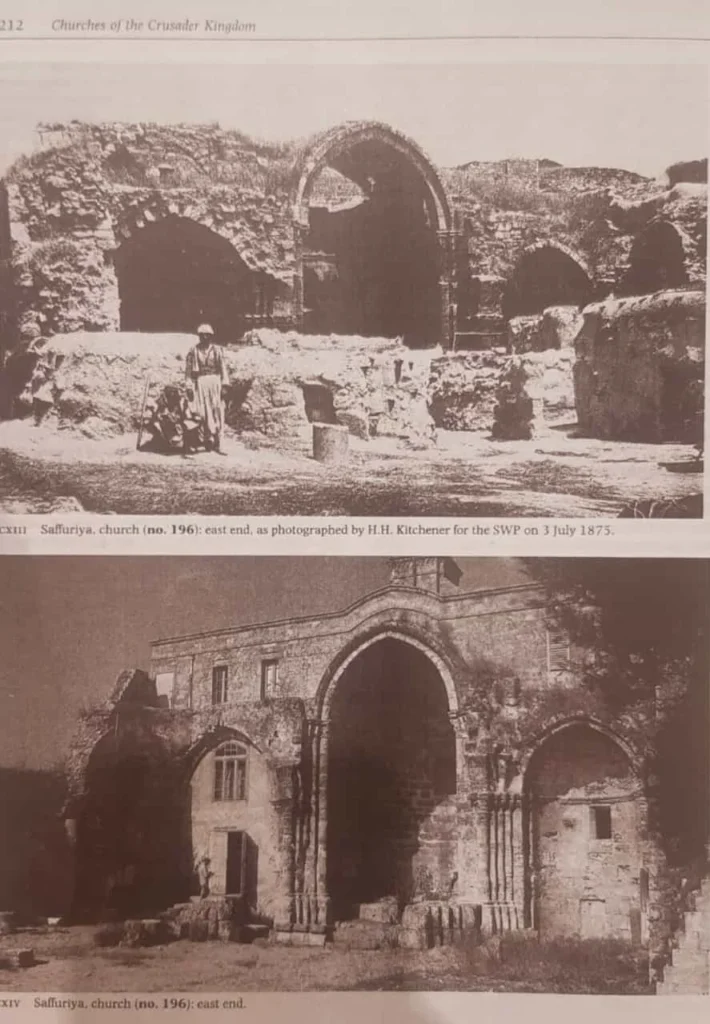
Photographs from the beginning of the 20th century show a building without a roof, with deteriorated walls and a completely neglected environment.
The Franciscans rebuilt the walls, repaired the roof and maintained the presence of friars who came intermittently, although a stable community was never established, due to the pastoral priority of nearby sanctuaries such as Nazareth and Cana. In 1973, due to the lack of personnel, the place was closed again for almost three decades.
The arrival of the Institute of the Incarnate Word
May 8, 2006 marked a turning point with the foundation at Sepphoris of a community of contemplative monks of the Institute of the Incarnate Word (IVE). With the permission of the Custody of the Holy Land - the owner of the site - the monks took on the mission of guarding this unique site.
At that time, after thirty years of abandonment, the state of the enclosure was very neglected: overgrown vegetation, about eighty unpruned olive trees, wild fauna and remains covered by weeds to the point of forming real mounds.
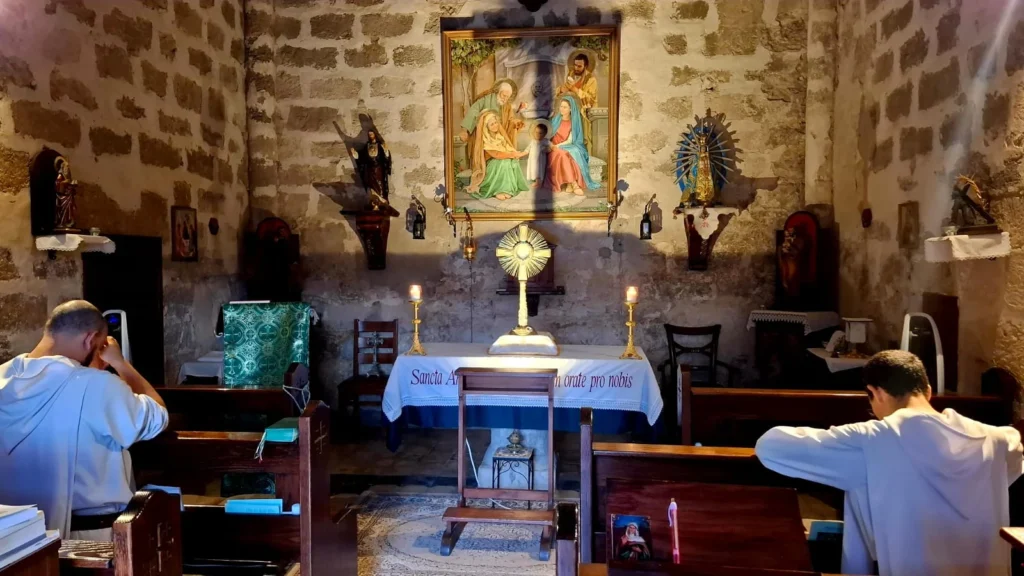
For years, the first monks devoted themselves almost exclusively to clearing and reclaiming the land. It took about eight months to separate the olive trees from the grass. That foundational stage was hard and silent, but decisive. Gradually, the left wing of the old basilica was adapted as a chapel, a tabernacle was installed and the mission began in earnest. “In a mission, when a tabernacle is installed, everything begins,” says Father Jason, a Chilean superior of the community that is now the custodian of the place. In May it will be twenty years since the Eucharistic presence returned to Sepphoris.
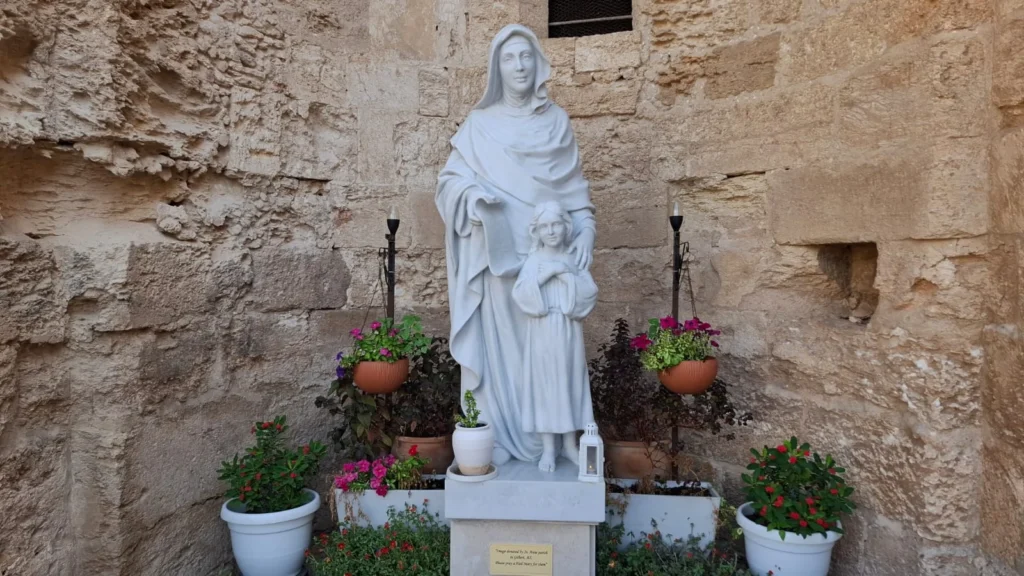
To this material and spiritual recovery of the place was also added the initiative of a priest who, after visiting Sepphoris and knowing the history of the sanctuary, promoted among his parishioners a collection to beautify it. Thanks to this help, a sculpture of St. Anne with the infant Virgin, which today presides over the right side of the monastery's façade, was created.
Monastic life in a non-Christian environment
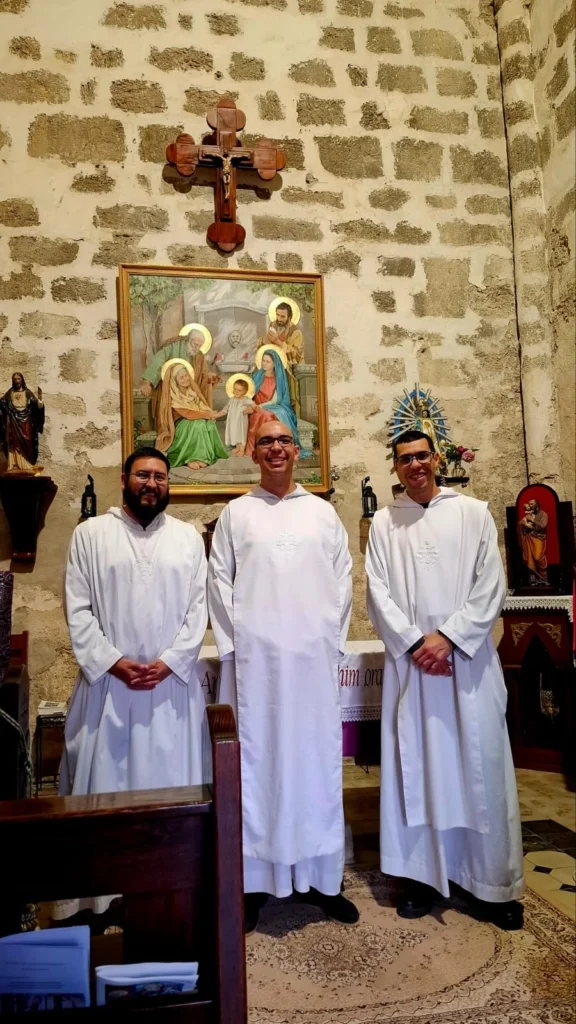
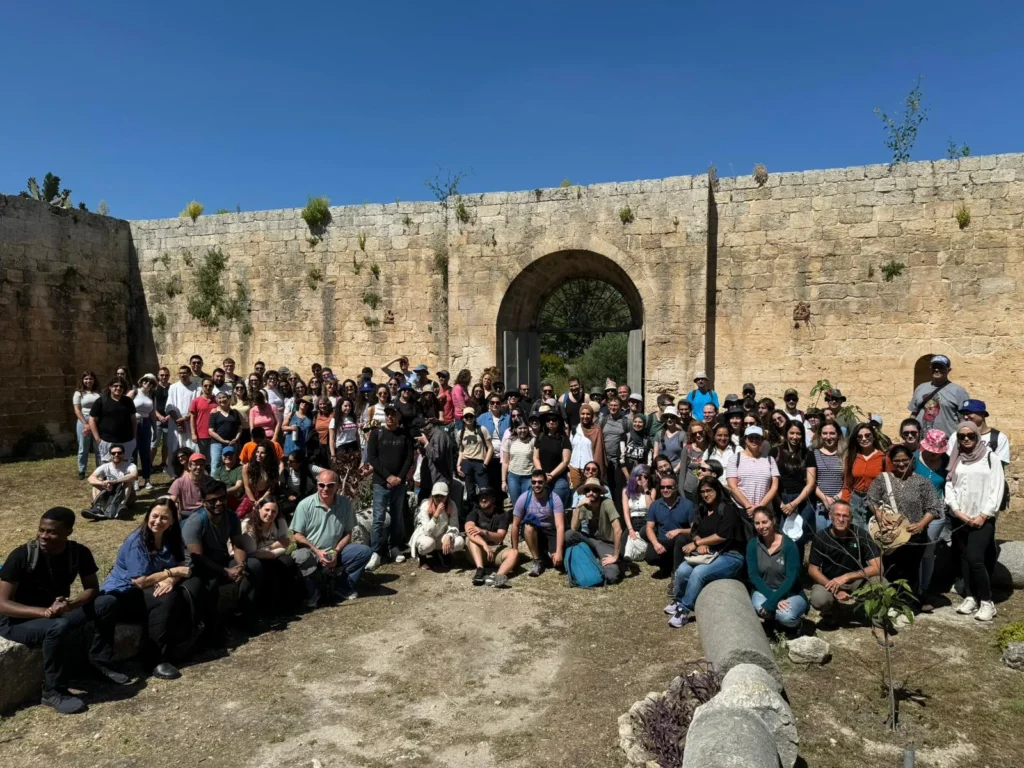
Today, the community consists of three IVE monks, the only Christians in the immediate vicinity. The monastery is located in a mostly Jewish area, which makes their presence a discreet but eloquent testimony. Its life revolves around prayer, silence and work, with a daily hour of community conversation and the rest of the time dedicated to recollection, except when pilgrims arrive or when there are encounters with local neighbors, with whom they weave bonds of friendship.
Although the house of St. Anne is not among the most common destinations for rapid pilgrimages to the Holy Land, the flow of visitors is increasing. Priests and faithful find here a favorable space for the celebration of the Eucharist and the sacrament of confession, attended by the priests of the community.
The life of the place beats today in the recollection of its monks, who every day gather in prayer in front of the Blessed Sacrament. From the small chapel to the left of the sanctuary's façade, their praise prolongs a tradition that gives new life to the place where faith contemplates the origins of the Virgin Mary.
St. Anne's help
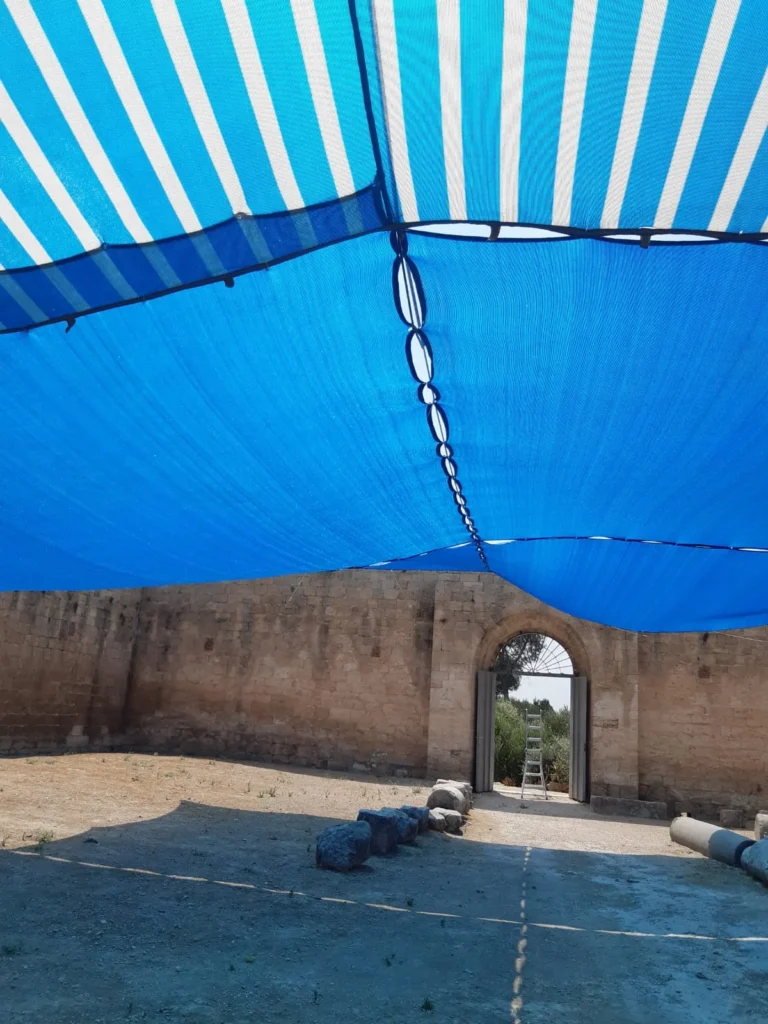
Daily life in this holy place is also marked by little stories that the monks interpret as signs of providence. One of them especially remembers an eve of the feast of St. Anne, July 26, 2021, celebrated every year with a solemn Mass at sunset, despite temperatures at that time of year exceeding 40 degrees. That year, because of the covid, he was alone and without volunteers to spread a large tarpaulin that must cover the outside of the basilica, indispensable to protect the faithful from the intense heat of the Galilean summer.
After several unsuccessful attempts to get help, he entrusted the situation to the intercession of St. Anne. The only thing he could do was to place the tarpaulin on a point on top of the apse of the old church, but he could not deploy it on the rest of the support points.
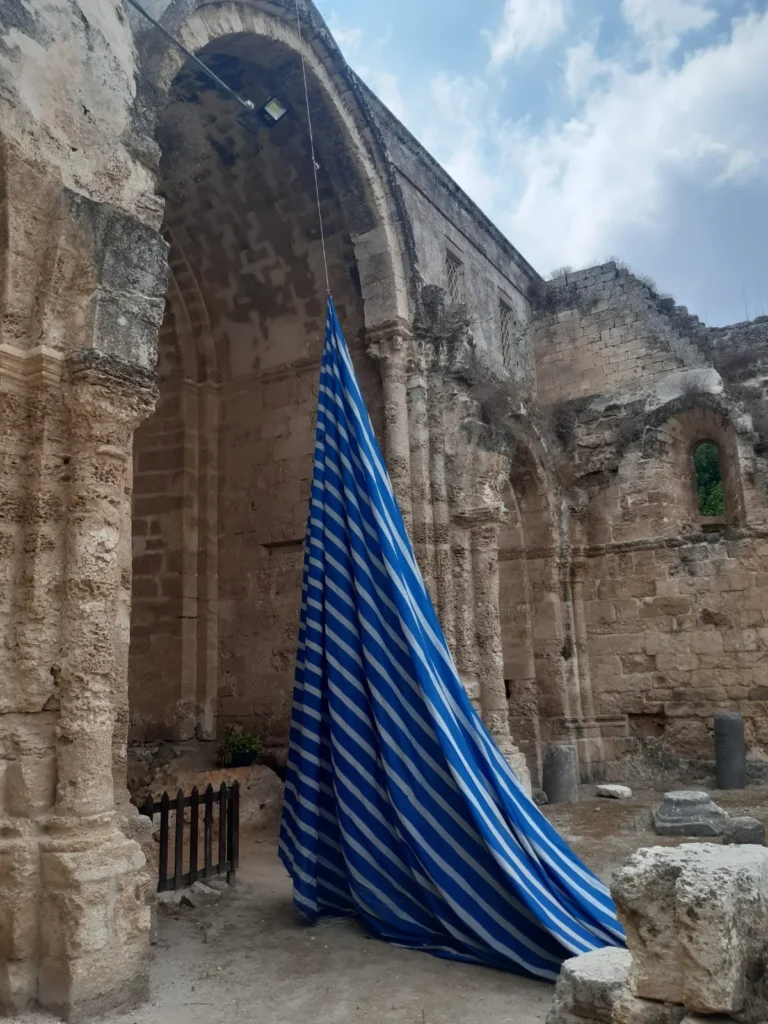
As the time for the celebration approached, a strong wind began to blow unexpectedly, so that the canvas was lifted several times, while the monk took advantage of each gust to secure the support points one by one. For him, that experience was experienced as a providential intervention: a simple and silent way in which, until the last moment, St. Anne “took care of her own feast”.
If you wish to help financially to the monks, you can do so by paypal here.
To get in touch with the monks and the place:
- Whats App: +972542268705 (messages only)
- E-mail: mon.seforis@ive.org
Web: lacasadesantaana.vozcatolica.com




 Español
  English
  Italiano