350 years ago, in Paray-le-Monial, Jesus revealed his heart to a nun of the Visitation, Saint Margaret Mary Alacoque. From those apparitions arose one of the most widespread devotions in the Catholic tradition. Sacred Heart, a documentary by the French production company Krea Film-Makers, takes that 17th-century episode as its starting point to explore whether this devotion still holds meaning today.
The project did not originate in a production office, but on a pilgrimage. In the summer of 2023, during a visit to Notre-Dame-du-Laus, Sabrina and Steven J. Gunnell encountered testimonies from people consecrated to the Heart of Jesus. “My heart was on fire there,” recalls Sabrina Gunnell.
Shortly afterward, they contacted the parish priest of Paray-le-Monial and discovered that the 350th-anniversary Jubilee of the apparitions was about to begin. For them, the coincidence carried its own significance: “We said to ourselves, ‘Okay… the Sacred Heart wants its movie,’” says Sabrina Gunnell.
Steven Gunnell sums up the underlying intention with a biblical reference: “We were thinking of the pilgrims on the road to Emmaus, who walk alongside a stranger and, after listening to him, say to one another, ‘Didn’t our hearts burn within us?’” That, he says, is the film’s aim: to allow every viewer to experience that same love, whether or not they initially share the faith of those speaking.
“Many people thought that talking about the 17th-century apparitions was something distant or outdated. But we wanted to show precisely that this message is still relevant today,” Sabrina recalls.
A Devotion That Lives On
Between 1673 and 1675, Jesus appeared three times to Margaret Mary, a nun of the Order of the Visitation in Paray-le-Monial, Burgundy. According to tradition, he showed her a heart burning with love for humanity, wounded by people’s indifference. From these apparitions arose one of the most widespread devotions in the Christian tradition.
The documentary organizes this message into three parts, which emerge throughout the film without appearing to follow a set structure: a love that is shown unconditionally; the pain of a love that is often not reciprocated; and an invitation to respond to that love, not just to contemplate it. The film devotes a good portion of its runtime to the third aspect: showing, through personal testimonies, what that response means in the life of a specific person.
The Same Heart, Centuries Later
The documentary alternates between two perspectives. One is historical, featuring actors who reenact Margarita María’s apparitions in the 17th century, the initial misunderstanding she faced from those around her, and the process by which that personal experience became a public devotion.
And another contemporary work, featuring some twenty testimonies from people with very different backgrounds—a priest, a nun, a missionary, and several young people—who speak about what that same wounded heart and that same love that does not impose itself mean today in their own lives.
Twenty voices, one heart
The transition between the 17th-century reenactments and the contemporary accounts is seamless: there are no jarring moments, nor does it feel as though you’re watching two different movies. The historical scenes—Margaret Mary, Jesus, the surroundings of Paray-le-Monial—are filmed with a dignity that is surprising for a documentary of this kind, without falling into the textbook-style reenactments that so often weigh down this type of production.
The testimonies work precisely because they are all different from one another. No two stories are the same, and that variety is what holds the documentary together. Not a single one is superfluous.
It’s true that, by touching on so many different aspects—historical, theological, and personal—the film leaves some doors ajar, without enough room to delve deeply into all of them. Even so, it never feels like it falls short: what it lacks in specific detail, it makes up for in intimacy, and it is that intimacy that stays with the viewer as they leave the theater.
Sacred Heart, produced by the French company Krea Film-Makers and distributed in Spain by Bosco Films—which is also responsible for Free (2023)—, hits theaters across Spain on September 11. Three hundred and fifty years after those apparitions in Burgundy, the question it raises remains the same: what does one do with a love that was never sought and yet never ceases to wait?.
Alpha: A “Light” Form of Evangelization That Leads Thousands to the Faith
Alpha emphasizes starting with a warm welcome and personal interaction before presenting the doctrine, trusting in the work of the Holy Spirit to draw people closer to Christ.
Fernando Emilio Mignone-September 8, 2026-Reading time: 4minutes
At a time when many parishes are seeking new ways to reach out to those who have drifted away from the faith, Alpha courses have become one of the most widespread evangelization initiatives in various countries. Its approach combines conversation, a warm welcome, and open reflection on the big questions of life and the Christian faith.
With Anglican origins, Alpha has spread to numerous Christian denominations and today has a significant Catholic presence. In recent decades, dioceses, parishes, and Catholic movements in various countries have adopted this method as a tool for initial evangelization.
In Canada, one of its main promoters in the Catholic sphere is Ed Zadeiks, who for the past eight years has been promoting Alpha “in a Catholic context.” Zadeiks left a successful business career to devote himself full-time to this evangelization enterprise. It was his wife, Shawna, who introduced him to the courses. Both explain how an initiative born in the Anglican tradition has found its own place within the Catholic Church.
The Origin of Alpha
The Zadeiks explain that the Holy Spirit blows where he wills: in this case, in the soul of the Reverend Nicky Gumbel. Born in London in 1955, this son of a Jewish father and a Christian mother—neither of whom were practicing—converted from atheism to Anglicanism during his first year at Cambridge University. A lawyer, married to Pippa, and the father of three children, he was ordained as an Anglican priest in 1987. In 1990, he took over leadership of the Alpha courses. He repositioned these courses, which were already being offered at Holy Trinity Brompton (HTB) church in London: he decided to offer them to the unchurched. Since it was so successful, he organized the first international conference at HTB in 1993… and a thousand Christian leaders attended. These international conferences have continued year after year.
That is where Zadeiks has met Gumbel most often. He tells me that Gumbel “has great love and admiration for Catholics.” Zadeiks adds that Pope Francis sent a video message for the opening of the LeadershipConference on May 6, 2024. The video was presented at the opening session by the Gumbels. Francis said that Christian leaders must imitate Jesus—through a life of service, closeness to others, and showing the way to the Father. He encouraged the 5,000 delegates from 30 Christian denominations to be bearers of God’s tenderness and forgiveness. And he called on them to walk together with their eyes fixed on 2033, the two-thousandth anniversary of the Resurrection.
What is Alpha about?
Proclamation of the Christian truth, encounter with Jesus, community. Why not reverse the order of these three steps? This is the modus operandi of Gumbel and Alpha: 1. personal encounter with others, 2. personal encounter with Christ, 3. doctrine. This inverse order has yielded miraculous results.
It’s a simple recipe for success: a series of structured sessions to learn about the Christian faith, and an opportunity to explore the meaning of life. The courses are held in churches, homes, prisons, universities, offices, factories, coffee shops—anywhere.
The courses themselves are typically held once a week over ten weeks, plus on a weekend. Each session begins with a meal, followed by a talk or video and small-group discussions.
The talks cover basic Christian beliefs: Who is Jesus? Why did Jesus die? How can we believe? Why and how do I pray? Why and how do I read the Bible? How does God guide us? The Holy Spirit (very important in the Alpha course). How can I resist evil? Why and how should I share this with others? Does God heal today? The Church.
In the One, we are one. Alpha's Ecumenism .
Gumbel says he loves Catholics and all Christians, who, he says, belong “to a Church of 2.4 billion souls.” Cardinal Christoph Schönborn, Archbishop Emeritus of Vienna, praises the Alpha courses. Many bishops around the world support Alpha.
The first Alpha course was held in 1977 (at HTB). In 1990, Nicky Gumbel took over, gave the program a major boost, and oversaw the revision of the course. The courses grew rapidly in Great Britain during the 1990s. Today, they are taught in about 100 countries and in 110 languages, and more than 25 million people have taken them. Participants come from non-Catholic Christian and Catholic (25% of the total) backgrounds, with some variations in the course material. For this article, I asked three Canadian Catholic priests for their opinions on the course. One praised it, another had a positive experience, and the third preferred to draw inspiration from the method to create his own courses with more doctrinal content.
Beyond the numbers, some priests believe that Alpha’s true impact is seen in the renewal of their parishes. This is the case for Father Michael Leclerc, pastor of St. Ignatius of Loyola in Montreal, where Alpha courses have been offered for nine years.
By putting those courses into practice with their four Rs—something real, relatable (that one can identify with), radical hospitality, and reliance on the Holy Spirit—Leclerc transformed his parish. It is predominantly young non-practicing Catholics and even non-believers who are drawn to it. The average age of parishioners has dropped to 40. And while there used to be 30 parish volunteers, there are now between 150 and 200. They will add a Sunday Mass starting in September. Leclerc puts these courses into practice alongside the Parish Renewal program created by another Canadian priest, Father James Mallon of Halifax, author of *A Divine Renovation: From a Maintenance Parish to a Missionary Parish« and founder of the Divine Renovation Ministry, which operates in English- and German-speaking countries.
The Spanish Alpha website states: “Alpha is a fun dinner, a great talk, and an open discussion. No pressure, free, and appealing.” See Spain: cursoalpha.es. For the Spanish-speaking Americas, see pruebaalpha.org (and a short video by Fr. Sebastián Achcar: pruebaalpha.org/historias-alpha), and alphausa.org/alpha-in-spanish.
"We think it's reasonable to move to another city for a promotion, but reckless to do so for the sake of a loved one. We admire those who sacrifice ten years for their careers, and we look upon those who give up an opportunity to support their families with a certain amount of pity.".
A few days ago, at a dinner party, the conversation turned to the future. A young man mentioned that his girlfriend was studying for a civil service exam and that her future might take her far away. Someone asked him what he would do.
—Once her situation is clear, wherever she goes, I'll go too. I'll figure things out on my own, but I'll do it with her.
He said it as if it were the most natural thing in the world. Then more dishes arrived, the conversation shifted, and the remark was left behind. I, however, couldn't just let it go.
Those words contained a decision capable of changing a career and a city. He didn't know where he would work, but he had accepted that the future of the person he loved would truly become part of his own.
«I’ll make a life for myself.» She didn’t expect her to sort things out for her. Nor was she giving up on her calling or going to live in anyone’s shadow. There was a sense of initiative and responsibility in that statement. She would start over if necessary. She would find her place.
«But with her.» That was the crucial point. Her project still existed, only it was no longer written solely in the singular.
We live surrounded by messages that portray lasting relationships as a loss. We’re told to travel, try new things, grow, find fulfillment, and, above all, «live life to the fullest.» Later on, once you’ve made the most of your youth and sorted out your aspirations, you can consider getting married or having children—as long as they don’t throw your plans too far off course.
Every time I hear that phrase, «First I have to live,» I wonder what it means. Those of us who’ve reached our early forties, married and with four children—are we dead, then? Have we failed to make the most of life? Are our children proof that we gave up too soon?
My daughters have robbed me of sleep, money, comfort, spontaneity, and some opportunities. Love doesn’t make the sacrifice any less painful. But they haven’t cut me off from life. They’ve drawn me into it as deeply as possible. They’ve forced me to step outside of myself, given me a story I couldn’t have built on my own, and expanded what I used to call my future.
Perhaps the misconception lies in equating living with always being able to do whatever one wants. As if a life were more valuable the less it owed to anyone, the fewer plans one had to change, and the more options one kept open. According to that logic, marriage limits one, children hold one back, and fidelity confines one. A fulfilling life would be one without too many ties: available, reversible, and permanently one’s own.
But a freedom that never chooses—out of fear of losing some option—ends up not knowing why it wanted to be free in the first place. Making a commitment isn’t about giving up the ability to choose, but about carrying a choice through to its consequences. And therein lies the decisive difference between an imposed renunciation and a voluntary surrender: where it comes from and from what kind of freedom. That young man wasn’t being held captive by another person; he had decided that she would have a real—and not merely decorative—place among his priorities.
St. Josemaría put it this way: «Nothing is more false than setting freedom against self-giving, because self-giving is a consequence of freedom» (Friends of God, 30).
It’s curious: we think it’s reasonable to move to another city for a promotion, but reckless to do so for the one we love. We admire those who sacrifice ten years for a career, yet we look upon those who give up an opportunity to support their family with a certain degree of pity. We’ve accepted that work dictates our lives; what unsettles us is when love does.
It’s not about imposing the same timeline on everyone or measuring a life by marriage or the number of children. There are unfulfilled desires, painful circumstances, and different paths. It’s about challenging a more subtle lie: that true love means living a shorter life; that all mutual dependence is slavery; that only those who have never given their word to anyone truly belong to themselves.
Commitment does not take away freedom—it gives it direction. Sacrifice is not always the denial of happiness; often it is the price of happiness, because almost everything worth keeping requires leaving something behind. Starting a family does not mean putting your own life on hold to care for others. It means discovering that life can be greater when we stop measuring it solely by ourselves.
That young man didn't talk about any of this. He simply said that, once her situation was clear, he would go wherever she went and make a life for himself there. He didn't say «because of her.» He didn't portray himself as a victim. He had chosen this himself.
Perhaps that is why the phrase was so powerful. In an era that advises us to live first and commit later, he seemed to have understood that commitment doesn’t begin once we’ve finished living. It’s a way of life. One of the most demanding, but also one of the ones that can set us free the most, because it frees us from the prison of always having to choose ourselves.
She didn't know how she would make a living, but she did know who she wanted to spend her life with. She hadn't stopped making choices. She was deciding what she wanted her future to be.
Why is the future of society decided around the kitchen table?
With this article, we are launching a series dedicated to theReflections on the home and its importance in today's society, in collaboration with Home Renaissance Foundation, an international think tank focused on the home and the family.
Sir Bryan K. Sanderson, CBE-September 7, 2026-Reading time: 3minutes
The first time I realized just how fundamentally important the home is for children, for families in general, and, by extension, for societies as a whole, was 60 years ago in Ica, a small coastal city in Peru located south of Chiclayo, where Pope Leo XIV would later spend many years.
A recent graduate of the London School of Economics, I decided to spend 18 months in a UN partnership program to help establish a new university in what was then an impoverished area of the country.
Life Lessons in Ica
Part of the agreement was that I would live in a shantytown with the local indigenous community; I had a small, spartan cabin with water and electricity only for a few hours a day.
There were numerous similar huts that, unlike mine, were crammed with children. It was common to have one child a year, but the lack of medical facilities, family planning, and poor hygiene led to a very high infant mortality rate—nearly 50 % of children died before the age of 5.
Despite all these hardships, there was enough to eat (rice, beans, and papayas almost every day), and I was welcomed into a close-knit community; I even played soccer on the local team; everything revolved around home and family.
I came to appreciate the importance not only of the immediate family, but also of the broader, intergenerational family that they all practiced. No child felt excluded or rejected, and older people continued to be part of the family—something that, unfortunately, is not the case in many of our societies today.
The Balance Between Success and Family
Life went on, and I enjoyed a career that took me to the top of a major oil company. I also married a Swedish woman 59 years ago, and we have two children and five grandchildren.
Visiting and living in many parts of the world—such as Italy, Singapore, Switzerland, and Scandinavia—contributed to my personal growth.
It wasn't easy to balance family life with the demands of a highly competitive career at a time when the importance of work-life balance was not yet recognized, but my wife and I always put our family life first because it was the cornerstone of our lives, providing us with security and happiness.
And that is precisely why it exists Home Renaissance Foundation For the past 20 years, we have been working to persuade governments and international organizations to do everything in their power to facilitate this. I wish we weren't needed.
New Housing Challenges
At Home Renaissance We seek to explore and address the impact of the home on personal development and the challenges of family life that we all face.
For example, the constant challenge of ensuring that different generations live together in harmony—especially now, in societies where an aging population places an ever-increasing strain on housing and healthcare resources.
Young people are becoming independent later in many developed countries because the cost of housing is prohibitive, but there is still a reluctance to design housing that is flexible enough to meet the needs of different age groups.
We could learn from Malaysia, for example, where families traditionally live close to one another in separate units and move to different accommodations depending on the needs of their growing families; Grandparents often help care for children whose parents work, as families struggle to meet the growing demands and expectations of modern life.
We need to find new ways to use today's technology to recreate the sense of community and security that were common to many people in the recent past.
The Impact of the Digital Divide
Another growing and rapidly evolving challenge is finding ways to adapt to the new and changing pressures of social media and young people’s vulnerability to its ubiquity.
We are so far removed from the simple, orderly, and stratified society of the mining village in northeastern England where I began my life in the postwar years that it now seems like ancient history. For people of my generation, this is often frightening because technology has advanced so rapidly that there are no longer any experiences to pass on to our children. One of the tasks of Home Renaissance Foundation, with the help of academics and experts, is to provide guidance on how households can adapt to meet these challenges.
It is not an easy task and requires constant attention to keep up with the ever-faster pace of technological change.
Without a doubt, living standards have improved substantially in most parts of the world, with the possible exception of sub-Saharan Africa; malnutrition in China and India, for example, has been virtually eradicated; and women’s rights have been recognized in many of our societies.
Now we must learn to use these improvements to benefit households around the world—and, in particular, the children who live in them. It is a huge undertaking, but one that is immensely important for Home Renaissance Foundation.
The authorSir Bryan K. Sanderson, CBE
President of the Home Renaissance Foundation and former CEO of British Petroleum.
Catholic educators describe the use of AI and agree: there is a lack of preparation
Artificial Intelligence in the Classroom: What Role Does It Play in the New School Year? Catholic educators have shared how they use AI and how they address its challenges. “We always focus on the human person,” and “we are ill-prepared,” they acknowledge.
It automatically corrects your emails. It lets Siri and Alexa answer your questions or respond to your commands. It recommends what to watch next on your streaming service. It helps you find your way with navigation apps. It can generate images, videos, term papers, and even novels.
It's AI (Artificial Intelligence), and its rapid rise as part of everyday life also extends to the field of Catholic education.
So, as the new school year begins, OSV News spoke with educators and thought leaders who discussed how AI works—or doesn't work—in Catholic classrooms.
What is human development like in a world shaped by AI?
“A few years ago, most conversations revolved around academic cheating, institutional policies, and whether students should be allowed to use AI tools,” Meaghan Crowley-Sullivan tells OSV News. She is a curriculum and professional learning developer at the Institute for Innovation in Digital Education and Leadership at Loyola Marymount University in Los Angeles, known as iDEAL.
“Those questions haven’t gone away; they’ve matured,” he explained. “We’re seeing more schools asking themselves: What does good teaching look like in this new digital age? What do students need to learn? What should we protect—not only in our teaching, but also in the way we approach teaching? And, ultimately, what does human education look like in an AI-shaped world?”.
Benefits and Assistance for Parents
Crowley-Sullivan stated that there has also been an increased emphasis on inclusion, while at the same time it has become clear that parents could benefit from support from schools.
“They’re helping parents understand what these technologies are and what their children are encountering,” Crowley-Sullivan added. “And how they can set healthy boundaries and have more meaningful conversations about AI at home.”.
Teachers need to be trained in the use of AI
It's not just students and parents who need guidance. “When we teach teachers how to use this and how to incorporate it into their classrooms, we rely heavily on that conversation about ‘the human element in the loop,’” said Shannon Tabaldo, director of iDEAL.
“Human-centered AI is just a tool: it’s there to give you additional resources and capabilities that you’ve never had before,” he continued. “But you’re still the expert. We always focus on the human person in Catholic schools. We always ask ourselves, ”What are we really trying to do with this tool?’”.
First-graders Connor Nguyen and Jasper Zhao participate in a science, technology, engineering, and mathematics (STEM) program at Assumption of the Virgin Mary School in Pasadena, California, on January 15, 2025. (Photo by OSV News/Bob Roller).
AI: An Opportunity for Personalized Learning
Crowley-Sullivan and Tabaldo—who are also mothers—have seen AI being used more and more for personalized learning.
Students can critique an AI-generated piece of work or image, or ask it to transform their attempts at poetry into perfect iambic pentameter; the AI can easily generate materials tailored to a specific course level and reading level or simulate a «conversation» with a historical figure; teachers can use it to assess students’ learning patterns and personalize instruction in small groups and other teaching formats.
“The Catholic approach is not about being afraid of technology or refusing to innovate,» Crowley-Sullivan emphasized. «It’s really about discernment—recognizing the possibilities and asking ourselves if we can use this in ways that promote our values.”.
We are ill-prepared
Crowley-Sullivan more than reflects Pope Leo XIV’s view on the role of AI in education, as recently expressed in his landmark encyclical ‘Magnificent Humanity: ’On the Protection of the Human Person in the Age of Artificial Intelligence.”.
“Rapid technological changes reveal how ill-prepared we are in terms of education. Educating people about the use of AI, then, means teaching them to decide when and for what purpose it should not be used,» wrote the Pontiff. «The speed and ease with which answers or summaries can be obtained risk extinguishing the desire to ask questions.”.
“Schools are not called to keep pace with the digital world,» the Pope advised, “but to offer what the digital realm alone cannot provide—namely, shared time to learn and build trusting relationships.”.
A Catholic framework is needed to address new technologies
In response to these concerns, Crowley-Sullivan developed the “Catholic Companion Framework for Technology and Innovation” to help educators, leaders, and families navigate emerging technologies.
Used by dioceses across the country and downloaded worldwide, it will soon be introduced in the Diocese of Arlington, Virginia—just outside Washington—to help integrate AI into its 51 schools, serving nearly 13,000 students.
Leslie Lipovski — assistant superintendent for student learning and teaching excellence in the diocese — told OSV News that the diocese formed a working group to help develop a policy on AI.
“From kindergarten through eighth grade, we only talk about AI literacy; students don’t log in to ChatGPT or use it,” Lipovski said. “But even preschoolers are familiar with AI. So we ask ourselves, what is AI? How can it be used—for good or for ill?”.
Some teachers say, “Let’s go back to pen and paper.” Others embrace it.
In middle school, Lipovski added, teachers are «very careful about how they use it. ‘I have some teachers who say, ’Let’s go back to pen and paper—that’s how we’re writing essays right now.» But we also have teachers who are embracing it and showing the kids how to use it responsibly.”.
The Diocese of Arlington uses PowerSchool, a cloud-based student information system that manages data, grades, attendance, and communication among educators, students, and families, as well as LUMA, a smart classroom assistant developed by edtech expert Michael Hargadon, which supports both teachers and students.
Awareness of AI has evolved
According to Lily Abadal, a partner at the Catholic school consulting firm Partners in Mission, a professor at the University of South Florida, and a research associate on a project at the University of Notre Dame called DELTA (Human Formation in the Age of AI), awareness of artificial intelligence has been evolving.
“During the first couple of years after ChatGPT’s launch, many people thought it might just be a fad,” Abadal said.
“Nor were they necessarily aware of how it actually worked, or to what extent students had access to it, or what kinds of things they were able to produce with it.”.
“There are places where the quickest and easiest option isn’t good or educational.”
“Obviously, it’s something that can make things go faster and more smoothly,” Abadal continued. “But there are situations where the fastest and easiest option isn’t good—nor is it educational in terms of how it shapes students.”.
“We learn that things are often not easy, and we must be able to face the challenges head-on in order to instill the Catholic virtues we want students to develop throughout their time in Catholic education.”.
“One of the best gifts we can give students when it comes to interacting with AI,” concluded consultant Abadal, “is to show them where the technology fits into their lives—and where it doesn’t.”.
We're talking about reflective material
Stephen Eschenfelder, director of university ministry at Bishop McLaughlin Catholic High School in Spring Hill, Florida, in the Diocese of St. Petersburg, plans to invite Abadal to speak at an upcoming conference on artificial intelligence.
And, as a former seminarian with a degree in moral philosophy who teaches classes on leadership and the sacraments, he has very specific ideas about the use of artificial intelligence in education.
“There has to be a limit to AI, and I believe that turning to God in prayer has to be that limit,” he emphasized. “I can’t use this as a means to have a life of prayer and to connect with God. In our theology classes, when we have reflection assignments, many students use AI. So we have to change things and the way we assign homework, because it’s reflective material. Part of it involves gathering data, but a large part focuses on: ”What do you think about this? How do you feel about that?’”.
The professional lives of today's students may be affected
Eschenfelder is also concerned about the potential “huge iceberg of change” on the horizon for his students« careers, noting that »their jobs could change significantly due to artificial intelligence in a few years.”.
One student even shyly revealed to Eschenfelder that his slide presentation had been generated by AI.
«They deprived themselves of the ability to learn anything,» said Eschenfelder, who also noticed that the students were surprised that he wrote a novel on his own rather than simply asking the AI to write it. «I couldn’t understand that,» he added, with a touch of exasperation.
AI is here to stay. “Our goal: to preserve that humanity”
“We’ll have to adapt our schools, teaching, and learning. It’s going to be completely different,” Lipovski suggested. “Our goal as Catholic schools is to preserve that humanity, because the teacher is the most important element; teachers are needed to guide students on when it’s appropriate to use AI and when it isn’t.”.
«They need that humanity,» he concluded. «We can’t just hand this over to machines.».
———————
– Kimberley Heatherington is a correspondent for OSV News. She writes from Virginia.
– This article was originally published in OSV News, and you can read it here.
The Pope Encourages People to “Come to an Agreement” as a Way of Loving, and Speaks Out for Ukraine
In addition to fraternal correction, there is another fraternal way to love, and that is “reaching an agreement,” Pope Leo XIV noted during this Sunday’s Angelus. He also called for a halt to and an end to the violence in Ukraine.
Francisco Otamendi-September 6, 2026-Reading time: 3minutes
During the Angelus this Sunday, September 6, the Holy Father Leo XIV issued a new appeal in St. Peter’s Square to put an end to the violence and destruction in Ukraine and to open hearts to dialogue and peace.
Furthermore, while commenting on the Sunday liturgical readings, he recalled what St. Paul says in the Letter to the Romans: that all the commandments “are summed up in this one: ‘You shall love your neighbor as yourself’” (Rom 13:9).
St. Paul emphasizes this point with a very powerful image, one that also appears in the “Our Father.” He writes: “Let your only debt to others be that of mutual love,” the Pope noted.
The Debt of Mutual Love
Jesus has taught us to ask for and practice the forgiveness of debts. However, there is a debt we owe one another, without becoming trapped by it: it is the debt of mutual love, the Pontiff emphasized in his meditation on the Angelus.
And Jesus suggests to every Christian community “at least two ways to practice mutual love. The first is to be able to offer fraternal correction. It is a delicate and often-forgotten art that requires frankness and a gradual approach.”.
Speaking honestly with one another—first one-on-one; then, if necessary, among two or three people; and finally, when needed, with the entire community—means facing reality and transforming problems and conflicts into opportunities for growth. Complaining and gossip are easier, but they accomplish nothing and paralyze many situations. The Gospel, however, teaches us freedom through charity—that has been the papal message on this point.
Reaching an agreement, not just when there's a conflict
Furthermore, “there is a second way to love one another as brothers and sisters, which for Jesus even transforms prayer: coming to an agreement. Not only when there is a conflict, but also when asking God for any gift,” said the Successor of Peter.
The Lord says: “If two of you on earth agree to ask for anything, my Father in heaven will grant it to you» (Mt 18:19). This promise suggests that we can share common desires, common sorrows, and common hopes, and, through prayer, grow in unity.”
“Without faith, anyone could feel lonely and distrust others, seeing them as strangers and enemies,” Leo XIV continued. "However, by grace, we are brothers and sisters who can come to an understanding: meeting one another, forgiving one another, and listening to one another in the Lord.".
“Let us ask Mary,” the Pope urged before the Marian prayer of the Angelus, “who, after the angel’s announcement, hurried to meet her cousin Elizabeth to share in the joy and the weariness of pregnancy, to teach us, too, the joyful debt of brotherly love".
Solidarity with the Ukrainian people
The Pope then opened his sorrowful heart to express his solidarity with Ukraine.
“It is with great sadness that I have been following the news about the violent attacks that have recently struck several cities and civilian infrastructure in Ukraine, resulting in the deaths of innocent people. My heart goes out to the people who have been living in anguish and fear for years.”.
“I make a new appeal to put an end to the violence, halt the destruction, and open hearts to dialogue and peace,” he implored. “I hope that the efforts made in recent days to resume negotiations will bear concrete fruit and open the door to diplomacy.”.
"Let us lift up our prayers to the Lord, that harmony may prevail in all the world's conflicts," said Leo XIV.
Return to Normal Activities
In closing, the Pope asked that, as we return to our regular activities after the holidays, we ask the Lord to accompany us and sustain us with His light.
It may be recalled that in late August, the Vatican Secretary for Relations with States and International Organizations, Monsignor Paul Richard Gallagher, and the Minister of Foreign Affairs of the Russian Federation, Sergey Lavrov, identified some common ground on international issues and agreed on the importance of continuing the dialogue between the Russian Federation and the Holy See.
Secretary Gallagher he said then: “This war must end.”.
The story of Philip II, the monarch who viewed power as a service to the common good and the Church—a far cry from the image of cruelty and fanaticism perpetuated by the “Black Legend.”.
On May 27, 2027, we will celebrate the 500th anniversary of the birth of one of the most influential monarchs in Spanish history. We all remember the famous saying that “the sun never set on his vast territories,” for during his reign there was a time when the crowns of Castile and Portugal were united, and as a result, these two immense empires encompassed a large part of the known world.
In any case, from the very beginning of his immense power and dominion, Philip II always kept in mind a statement by Francisco de Vitoria, founder of the School of Salamanca and of international law, who consistently reminded him, both verbally and in writing, that it was fitting for the entire spiritual realm of the world to be governed by the Roman Pontiff, for it was important that we be one people under one Shepherd: Jesus Christ, universal King of heaven and earth.
The Limits of Universal Power
Likewise, he wrote in his *Relecciones* on “Political Power and Its Limits” that, due to original sin—and, specifically, selfishness and envy—it was not appropriate for there to be a single universal empire that materially governed the globe. As we have indeed seen since his time—and even after the fall of the Berlin Wall—the seemingly global world is divided into large blocs that vie for development and progress in science, technology, and the subsequent advancement of anthropology.
Certainly, there is no single monarch who, through his laws and instruments of government, unifies laws and directives to establish a single political authority. Instead, we have realized Vitoria’s dream that the dignity of the human person would be the foundation of an international law that is far superior to the law of nations of his time and that, at the same time, respected local and provincial autonomy—where people can live in trust and according to their traditions—this provides closeness and security to the weakest and genuine charity among equals.
Philip II, a King in the Service of God
The fact is that this coming year we will celebrate the 500th anniversary of Philip II, the quintessential Catholic king who was attacked by everyone and everything because he never hesitated to affirm that he wanted to be a good son of God and of the Church.
In fact, he lived out to the letter what Alfonso X the Wise had already established as “the kings of the kingdom”: the first section, first title, and first law stated that the monarch’s purpose was for his subjects to go to heaven. Therefore, Philip II placed the interests of the Church above his own.
Governing for the Common Good
Likewise, he sought out the best, most intellectually gifted, wisest, and most prudent individuals for the highest positions in the state judiciary, even though many of them were clergymen, bishops, or cardinals. For example, he did not hesitate to propose to the Holy Father a statesman to serve as viceroy of New Spain and, at the same time, as archbishop of Mexico’s first American diocese.
Certainly, it was not clericalism but rather a pursuit of integrity, dedication to the citizens, and the common good. A letter from Philip II to Diego de Covarrubias—whom he had just appointed president of the Council of Castile, president of the Council of State, and who was also the bishop of Segovia—is illustrative of this. In that letter, he spoke to him from the heart. First, he asked him to devote all his efforts to carrying out the construction of the hospitals that had been decided upon by the Council of State and to release the necessary funds to implement the plan without delay.
Second, he urged him to be cautious with one of the high-ranking officials of the Council of State, noting: “He tends to take on more work than he can handle.” This detail is interesting because it speaks to a king who stays on top of matters to ensure they are carried out and who knows how to ask his trusted men for what they can give—and no more. In reality, that vast empire could only be sustained thanks to a generation of men who had been well-trained at the colleges—especially in Salamanca—and who knew how to take the reins of the state and guide the government of the viceroys and the General Cortes in every part of the empire.
The "Black Legend" Against the Catholic King
We cannot fail to mention the “Black Legend” about Philip II, which was actually intended to attack the Church, since he was certainly the most important Catholic monarch of his time and his territories remained loyal to the Catholic Church, while elsewhere the slogan “cuius regio, eius religio”, which means that attacking the Church was tantamount to attacking Philip II.
Likewise, we must remember that Philip II distinguished all too well between the Catholic Church—governed by the Holy Father and guided by the Holy Spirit—and the pope as a temporal lord and ruler of the vast Papal States, a situation that led to such bizarre alliances as the union of France and the Turks against Philip II to attack the Vatican States.
A New Perspective on Philip II
Certainly, younger generations have already come to know Philip II much better than we have, through the works of great American and European modernist historians such as, for example, Kamen, Parker, etc., who have developed new interpretations of the sources and shed light on many little-known facets, such as his paternal tenderness toward his daughters, the careful education he provided them, his concern for carrying out the Holy Father’s wishes in preparing for the Battle of Lepanto against the Turks, while at the same time defending, through the Roman agent of petitions, the rights of the Spanish crown regarding royalties
Certainly, the false image of a monarch as the “hammer of heretics” and the “light of Trent” has changed, that is to say, the false image of a stern king—always dressed in mourning, cruel and pompous (as reflected on the cover of this work we are now presenting), clerical, and more Catholic than the Pope—has been dispelled.
We will conclude by recommending Manuel Rivero Rodríguez’s recent book on Philip II as a way to prepare for this centennial, and we hope it will be as fruitful as the centennial of his death.
Philip II
Author: Manuel Rivero Rodríguez
Editorial: Alianza editorial
Pages: 347
Year of publication: 2026, Madrid
Subscribe to Omnes magazine and enjoy exclusive content for subscribers. You will have access to all Omnes
The apparent contradiction between God’s plan and human freedom is resolved when we understand that a vocation is not an external imposition, but rather a life plan that is freely discovered and embraced through an intimate relationship of love and personal friendship with Him.
September 6, 2026-Reading time: 4minutes
I recently came across a quote by John Paul II that caught my attention once again: “In one’s vocation, both God’s unconditional love and the exaltation of human freedom shine forth.”. How is it possible to reconcile the existence of a divine plan (vocation) with human freedom—the exaltation of freedom!—?
One line of thought, which has gained traction in recent years, asserts that God’s will consists in having created human beings free. God loves you and wants you to be free: your vocation is summed up in the way you choose to respond freely to God’s love. In this process, the only determining factor is that which stems from each person’s individual talents and circumstances—something that is, ultimately, contingent. Beyond that, it is generous creativity that shapes one’s calling.
This perspective is encouraging and helps us realize the full potential of our freedom, but it also presents some challenges. I became aware of this while reading the book In Your Hands, Father, by the Belgian Carmelite Wilfrid Stinissen. The book follows three steps: “Accepting God’s Will,” “Obeying God’s Will,” and “Being an Instrument of God.” In the second step, the author explores the idea that “God’s will is not written anywhere in heaven. Since God has given us free will, He also wants us to use it. As long as we do not expressly violate God’s manifest will and the laws of the Church, we can decide for ourselves what we want to do.”.
That was how a philosophy professor explained God’s plan for each of us. Years later, the same author asked “to a good friend whether God wanted something at every moment, even in the smallest things. The answer was immediate: ‘Of course—otherwise, obedience would be meaningless.’”. It sounds strong, but it’s easy to understand: if there is no specific will, it’s not possible to speak of obedience. And, in fact, if God had not had a will for Mary, she would hardly have decided to become the Mother of the Messiah (much less would she have achieved it through her own generosity alone…). Jesus, too, was clear about what the Father was asking of him at every moment—and doing so was his sustenance.
If God has a specific plan, does freedom boil down to saying "yes" to what God determines? The 2018 Synod of Bishops, dedicated to young people and vocation, highlighted the need to reflect on that relationship while avoiding any determinism and everything extrinsicism: “A calling is neither a prewritten script that a person should simply recite nor a theatrical improvisation without a outline”.
What Stinissen helps us understand is that it is possible to walk the path of God’s will—a very specific will—from a place of profound freedom. This is how the saints of every age have experienced it. Perhaps this is the decisive point: for those who still see themselves as individuals distinct from God, it is impossible that his will not be seen as an imposition, however slight it may be. He can be encouraged to trust in God, who created him free; and he can be helped to see that the divine will is nothing other than his own happiness, and that God created him free to put that radical capacity into play… But none of that is enough to convince someone if they see God as a stranger.
The divine call can only be understood and lived with complete freedom through a personal relationship with God. His will can be a path to freedom, to the extent that one’s own life is conceived within communion with Him. In this way, love put into practice illuminates reality: Love is knowledge itself, according to the well-known saying of St. Gregory the Great, love itself is knowledge. Love lived out allows us to understand our vocation in a way that was previously incomprehensible. Richard of Saint Victor put it this way: Where there is love, there is sight -“Where there is love,” one might translate it—the ability to see what was once hidden is revealed.
Thus, those who are united to God through love experience their calling as an invitation to complete freedom. On the other hand, those who do not live that love are unable to understand it. In short, the phenomenon of vocation can only be fully understood through union with God, in union with Him.
If this is the case, rather than trying to explain the phenomenon of vocation through the relationship between obedience and freedom, we should approach it through the concept of communion and calling. Leo XIV recently touched on this when answering questions from little Renzo in Barcelona: “More important than asking yourself whether you will be a priest, a doctor, a teacher, a parent, or anything else, is asking yourself if you want to be a friend of Jesus. Because friendship with Jesus brings us joy, sets us free, and helps us see, step by step, the vocation and the path that God has planned for each of us.””. For those who are friends with someone, the idea of sharing a project with that person is not an external demand, but something as natural as life itself. For those who live in friendship with Christ, his proposals are more their own than their own desires. And in responding to that call, they will put their entire freedom on the line—a freedom that is both obedient and creative.
9 Quotes from Saint Teresa of Calcutta to the World
On September 5, the Church celebrates Saint Teresa of Calcutta, whom so many called Mother Teresa and who was so deeply loved. Here are nine messages she left us during her time on earth, along with a story at the end that explains her early years in India.
Francisco Otamendi-September 5, 2026-Reading time: 5minutes
Who hasn't met—or has a relative or friend—who has spent a few weeks or a year in India with the Missionaries of Charity, lending a hand with the demanding work carried out by the spiritual daughters of Mother Teresa of Calcutta?
“Today the Catholic Church celebrates the feast day of Saint Teresa of Calcutta, a nun of Albanian origin who, through her ”yes’ to the Lord’s plans, was able to bring God’s love to the poorest of the poor in more than 130 countries—that is, to every corner of the globe. What is impossible for man is possible for God,”, wrote Last year on Omnes, on this very date, Fernando Gutiérrez, a lay missionary and founder of Mary’s Children Mission.
And she added: “During the fifteen months I lived in Calcutta, there was one thing that really caught my attention. The place where this great work of charity—which God brought about through Mother Teresa—began in the humble neighborhood of Motijheel remains today a predominantly Muslim area where there is still, moreover, a great deal of poverty, both material and spiritual. And I would often think to myself as I walked through its streets: If I had grown up in Kolkata with a saint so close to me, I would have converted long ago, and my faith would already be nearly the size of that mustard seed.”.
Mother Teresa's charisma: dedication with heart and soul
The Missionaries of Charity have posted on their website charisma from its founder, which they have also summarized in a somewhat colloquial way as follows:
“The goal of the Missionaries of Charity is to devote themselves body and soul, and exclusively, to the material and spiritual well-being of all the destitute, the defenseless poor, abandoned children, the helpless sick, lepers, and beggars in need; in short, all those unfortunate people who, whether through their own negligence or a lack of public concern, are forced to wander through life without help or hope.”.
Some of his messages
Here are some of the saint’s messages—necessarily abridged—that may be suitable for meditation before the Lord on this day. In summary, the saint said this:
“The fruit of silence is prayer. The fruit of prayer is faith. The fruit of faith is love. The fruit of love is service. The fruit of service is peace.”.
“Religion is a work of love; it should not divide us or destroy peace and unity.”
1.- Religion should be an act of love. Therefore, it should not divide us or destroy peace and unity. Let us use religion to help us become one heart filled with love in the heart of God. By loving one another, we will fulfill the purpose of our creation: to love and be loved.”.
2.- “We are all capable of doing good and evil. We are not born evil. We all have something good inside us. Some hide it, others neglect it, but it is there. God created us to love and be loved… we are all His children, whether we are Hindus, Muslims, or Christians.”.
Saint Teresa of Calcutta @OSV.
“We are children of God, created to love and be loved”
3.- “We are all children of God, and we have been created for great things: to love and be loved. God loves each of us with an eternal love; we are precious to Him. Therefore, nothing should separate us. Religion is a gift from God, and its purpose is to help us become one heart filled with love. God is our Father, and we are all His children; we are all brothers and sisters. Let there be no distinction based on race, color, or creed.”.
4.- “We have been sent to unite all people under one Spirit, regardless of their nation, race, or culture. Under what spirit? The spirit of love! We have been sent to unite everyone under the spirit of love: to unite all people of different religions—Hindus, Muslims, and people of different castes, colors, or cultures. We have been called to bear witness to the reality of the brotherhood of all peoples, in which the fulfillment of the law is love.».
“Let’s not use religion to divide us”
5.- Let’s not use religion to divide us. In all the holy books, we see how God calls us to love. Everything we do for one another, we do for Him, because God is our Father. Religion is a work of love, not something meant to destroy peace and unity.
6.- “Some call Him Ishwar, others Allah, and still others simply God, but we must all recognize that He created us for great things: to love and be loved. What matters is that we love. We cannot love without prayer, so, whatever our religion may be, we must pray…”
“Our work is not aimed at conversion, but at bringing people closer to God through our acts of charity.”
7.- “Our work in India and elsewhere is not aimed at conversion, but at bringing people—especially those most in need—closer to God through our charitable works.” “If, when we come face to face with God, we accept Him into our lives, then we are being converted.” “The best conversion is helping people love one another. When they love one another, they draw closer to God.” And how do we begin? By praying together. Let us pray to bring prayer into our families.
“A smile is the beginning of love”
8.- “Let’s always greet each other with a smile… because a smile is the beginning of love.” Be kind and merciful. May no one leave your presence without feeling better and happier. Be a living expression of God’s goodness: goodness on your face, goodness in your eyes, goodness in your smile, goodness in your warm greeting.
9.- “Sisters and brothers around the world, in every country, we strive to provide the same love and care, regardless of religion, caste, or skin color. We try to serve God’s children, our brothers and sisters. And I believe this has been another beautiful gift from God—giving us the opportunity to serve Him.”.
Photograph included in the article ‘La Misericordia and Mother Teresa,’ written by Brian Kolodiejchuk and published in *Palabra* magazine in 2016.
A pivotal anecdote: the first woman to collect
Saint Teresa of Calcutta recounts that “I personally picked up the first woman I saw from the street. She had been half-eaten by rats and ants. I took her to the hospital, but they couldn’t do anything for her. They only admitted her because I refused to leave until they took her in.”.
”From there, I went to city hall and asked them for a place where I could take these people, because that very same day I had found other people dying on the streets.".
“The city council’s health official took me to the temple—the Temple of Kali—and showed me the Darmashalah, where people used to rest after praying to the goddess Kali. It was an empty building; he asked me if I would accept it. I was very happy to have that place for many reasons, but above all because I knew it was a center of worship and devotion for Hindus.”.
”Within twenty-four hours, we had already brought our patients there and began working at the shelter for the destitute sick and dying. Since then, we have taken in more than twenty-three thousand people from the streets of Calcutta, of whom approximately fifty percent have died.".
Acquittal in an Indian court
This year, the congregation has experienced great joy. In a landmark ruling in a ruling that brings an eight-year legal battle to a close, the Civil Court of Ranchi (the capital of Jharkhand) has acquitted a nun from the Missionaries of Charity, who was imprisoned for more than a year, and two other people accused of child trafficking in 2018. Sister Mary Prema, who was the superior at the time, denounced the “widespread myths, distorted information, and fake news” that were published.
Monsignor Theodore Mascarenhas, former secretary general of the Catholic Bishops“ Conference of India (CBCI) and bishop of Daltonganj, described the ruling as ”a triumph of truth, perseverance, and faith.”.
In a Mexico marked by poverty, a boy discovers the dark secret that the adults around him are hiding, and he must face the awakening of evil without losing his innocence.
Pablo Úrbez-September 5, 2026-Reading time: 2minutes
Mexico, 1986. During the World Cup, young Miguel and his sister María play with children from other families at the Esmeralda estate, a once-prosperous coffee plantation. The adults, whom they see arguing constantly, are struggling to turn their financial situation around and lift their children out of poverty. One day, Miguel discovers Felipe, a kidnapped boy, hidden in an abandoned house.
A six-episode miniseries produced by Netflix that adapts the novel I'm not afraid by Italian writer Niccolò Ammaniti. In 2003, it was adapted into a film under the same title, directed by Gabriele Salvatore. While the plot in both the novel and that feature film was set in Italy in 1978, its adaptation to Mexico in 1986 is particularly commendable. The filmmakers maintain a clear distinction between the world of children—characterized by innocence, honesty, and sincerity—and the adult world, rife with selfishness and pettiness. The miniseries It describes these children's awakening to evil and their truly virtuous response.
I'm not afraid It has a lot in common with young adult classics such as The Goonies, E.T. or the recent Stranger Things, featuring adventures that celebrate heroism and the value of friendship. But at the same time, it also depicts dark situations bordering on horror, with a tone of thriller both in the investigation of the case and in the anguish experienced by the kidnapped child. The run-down coffee plantation, surrounded by vast cloud forests where it’s easy to get lost, provides an ideal setting for the action to unfold, and that is where the effort of the adaptation lies. Furthermore, the story’s unfolding during the World Cup showcases the dreams and childlike innocence of eagerly following the matches, just as the entire country is also glued to the action, while the kidnappers carry out their malicious plan.
The six episodes are very well structured, with specific time jumps that give the viewer a complete picture of the kidnapping. The performances, especially those of the children, are very convincing. However, on the downside, the series could have tied up all the loose ends in the conclusion, rather than leaving so many questions unanswered, and could have shown what becomes of each character.
Series
Title: I'm not afraid
Address: Ernesto Contreras, Alba Gil, Alejandro Zuno
Distribution: Luis Alberti, Fátima Molina, Humberto Busto
We want what we're supposed to want; we study the major we're supposed to study, and that's how our days go by.
September 5, 2026-Reading time: 2minutes
One of my favorite songs is called “Wonderful Life”, by Black, and it says that there's magic everywhere you look. There are people who go through life without realizing it.
I was volunteering at a hospital. One morning, I found myself standing next to the bed of a woman in her seventies who was lamenting her life—not her present life, but her past. Confined to her bed, she was reflecting on her life and, without realizing it, venting her complaints aloud so that everyone could hear them.
It struck me deeply, and at the same time, I was overcome with a great sadness, because there was no solution to any of the things he lamented. He said he had spent his entire life on his feet, behind the counter of a tobacco shop, working harder than he should have.
The woman felt as though she had lived too little or had failed to make certain decisions (as St. Teresa of Ávila said). One day she realized it: she woke up, saw, and came to the realization that there is only one life, but, swept along by inertia, she had done what she had to do, letting herself be carried along by the current. Why hadn’t she realized it sooner?
On our life There aren't always major dramas or crises; sometimes it's just a feeling of being there, but not quite being there. We want what we're supposed to want; we study the major we're supposed to study, and that's how our days go by.
We go with the flow of life, which sweeps us along because that's what's expected of us. That momentum leads us to put off the things that truly matter to us, because we believe it's not the right time to deal with them.
It is an inauthentic, unfulfilling existence in which one forgets oneself. Not because it is necessarily bad, but because we haven’t stopped to think about whether we might want something more out of life. When we live like this, we aren’t living our own lives—we’re simply going through the motions, missing out on the moments of magic.
Pedro Rodríguez García, founder and first editor of the magazine *Palabra*, has died
A theologian and professor at the University of Navarra, he founded Word in 1965 and pursued an extensive academic and research career linked to the Church and the Second Vatican Council. He produced the critical-historical editions of The Way y Holy Rosary, by St. Josemaría Escrivá, whom he interviewed in a historic interview in 1967.
Pedro Rodríguez García, a priest of the Prelature of Opus Dei, theologian, and full professor emeritus at the University of Navarra, has died at the age of 93. Rodríguez was the founder and first editor of the magazine Word, a publication that is the origin of the the current issue of Omnes magazine and from the publisher Ediciones Palabra.
Born in Cartagena in 1933, Pedro Rodríguez earned his Bachelor’s degree in Law and completed doctoral coursework at the Complutense University of Madrid. Between 1956 and 1959, he lived in Rome, where he earned his Bachelor’s and Doctoral degrees in Sacred Theology at the Lateran University. During those years, he spent time with St. Josemaría Escrivá on a daily basis. He was ordained a priest in 1958 and incardinated into the Prelature of Opus Dei.
Upon his return to Madrid in 1959, he devoted himself to teaching theology at the «Studium Generale»of Opus Dei" and to pastoral work in university settings. During those years, he also participated, along with professors Alfredo García Suárez and José María Casciaro, in the launch of the Theology Library under the auspices of the University of Navarra, which sought to promote theological renewal in the context of the Second Vatican Council.
Founder of Palabra
In September 1965, at the start of the final session of the Second Vatican Council, Pedro Rodríguez founded and became editor-in-chief of the magazine Word for four years. The publication began as a monthly journal of pastoral and theological analysis aimed primarily at priests in Spain and Latin America, with the goal of promoting the reception and application of the teachings of the Council.
As the years have gone by, Word It expanded its horizons to become a leading Christian news magazine. The publication also served as the foundation for Ediciones Palabra, a publishing house that has since been actively promoting books with Christian content.
The Interview with St. Josemaría
One of the most notable episodes of his tenure as head of Word was the Interview with St. Josemaría Escrivá published in October 1967. Pedro Rodríguez helped prepare the questionnaire, which ultimately consisted of 21 questions about the Church, the Second Vatican Council, the laity, and Christian life.
The interview, featuring St. Josemaría on the cover, was introduced by Rodríguez himself and later became the first chapter of Conversations with Monsignor Escrivá de Balaguer.
An extensive body of theological work
With doctorates in Theology and Law, Pedro Rodríguez’s teaching and research focused primarily on ecclesiology, with special attention to its ecumenical and spiritual dimensions. Throughout his career, he published numerous research papers and edited source texts.
Pedro Rodríguez was a full professor at the University of Navarra’s School of Theology beginning in 1974 and has been a professor emeritus since 2003. Throughout his academic career, he held, among other responsibilities, the positions of dean of the School of Theology, director of academic studies, director of research, and chair of the Department of Ecclesiology. He also directed Scripta Theologica, a theological research journal published by the University of Navarra.
His teaching and research focused particularly on ecclesiology, ecumenical theology, the history of theology, and the reception of the Second Vatican Council, as well as on the theology and spirituality of St. Josemaría Escrivá. He was also appointed by St. John Paul II as an expert for the 1999 Synod of Bishops for Europe and led the delegation from the Prelature of Opus Dei at the Third European Ecumenical Assembly, held in Sibiu, Romania, in 2007.
Among his honors are his membership in the Pontifical Academy of St. Thomas Aquinas, to which he was admitted in 1980, and his appointment as a full member of the Royal Academy of Doctors of Spain in 2006. John Paul II also granted him the title of Prelate of Honor of His Holiness.
The nearly 1,000 songs Dolly Parton recorded over her long career covered a wide range of topics. She passed away at the age of 80 from cancer on August 25 at her home in Nashville, Tennessee, and dedicated her life to delving into biblical teachings; her faith benefited millions of people.
In her thousand or so songs, Dolly Parton (1946–2026) not only addressed the humiliation of poverty, harassment in a dead-end job, and romantic rivalry, but she was also comfortable with explicitly Christian songs such as “He’s Alive” from 1989 and “There Was Jesus,” released 30 years later.
In fact, Parton's faith manifested itself in concrete ways that benefited millions of people around the world.
Outrageous and flamboyant on stage, she was discreet and level-headed in her private life—and never moralistic. She preferred to lead by example, investing her wealth and fame in philanthropy with a special focus on the most vulnerable.
Love for Others from an Early Age
Even as a child, Parton—the fourth of twelve siblings—knew firsthand how illiteracy plunged people into poverty. Because her father, Robert, a farmer from eastern Tennessee, could neither read nor write, his job opportunities were very limited.
But Parton also knew that the problem of illiteracy could be addressed at an early age. With this in mind, in 1995 she founded the Imagination Library, an organization that sends free, age-appropriate books to children under the age of 5. A resounding success since its inception, the Imagination Library currently helps 3 million children every month.
Another challenge Parton faced in her youth was the widespread fear of contracting polio. In 2020, when the COVID-19 pandemic began to spread a similar sense of terror around the world, she was asked to help, and she quietly got to work.
Without making a big fuss, Parton donated $1 million to vaccine research at Vanderbilt University Medical Center. Her friend, Dr. Naji Abumrad, told her that a vaccine might be on the horizon. Her contribution led to the creation of the Dolly Parton COVID-19 Research Fund, which was instrumental in the development of the Moderna vaccine.
Widespread success
Parton had already been establishing herself in country music for some time when, in 1977, she made a major breakthrough with “Here You Come Again,” which became her first pop hit. Thanks to that, she became a national figure, and her fame has never waned.
Three years later, Parton made the leap to the big screen, starring alongside Jane Fonda and Lily Tomlin in the popular office comedy “9 to 5.” The trio played secretaries overwhelmed by the tyranny of a lecherous boss (Dabney Coleman). Parton wrote and recorded the film’s theme song, which was also very well received.
Dollywood, a theme park in Pigeon Forge, her home state, was another of Parton's successful projects. It significantly boosted the local economy in an area that many would have considered too remote for an entertainment destination of that magnitude.
Spiritual Lessons
Parton's penchant for spiritual themes, as well as her tendency to take unexpected turns, was a constant.
In 2012, she starred alongside Queen Latifah in the movie *Joyful Noise*, which tells the story of the rivalry between two members of a church choir in a small town in Georgia.
Nine years later, Parton received a Christopher Award for her 2020 Christmas special, ‘Christmas on the Square,’ a modern adaptation of Charles Dickens’s 1843 novella, «A Christmas Carol.» In what would be her final role, Parton played—as one might expect—an angel adorned with rhinestones.
In an article published in January to mark Parton’s 80th birthday, Rita Buettner, a columnist for the Catholic Review—the media outlet of the Archdiocese of Baltimore—described her reaction to the recent re-recording of Parton’s 1977 song, ‘Light of a Clear Blue Morning.’.
“I was struck by the beauty of this gift from Dolly. It’s a song of hope, comfort, and strength at a time when we all need more of that. It’s also a song of faith.”.
Faith in humanity, faith in God
Buettner went on to praise the way Parton “lives out and clearly demonstrates her faith. She has faith in humanity, faith in a higher purpose, faith in God, faith in the future. ”I know Dolly isn’t Catholic. But we’re Christians, we’re believers, and we both try to live each day taking another step toward heaven—or so we hope.”.
“He doesn’t always say it directly,” Buettner continued. “He doesn’t have to. It comes through in his music, as he uses the gifts God has given him to bring a little more light, a little more beauty, and a little more joy to the world.”.
“Dolly’s songs help others feel less alone,” Buettner concluded. “She accompanies us on life’s journey, so we know we’re not the only ones who experience sadness, challenges, darkness, or love.”.
More than 50 years of marriage
Many people recall “Islands In the Stream” (with Kenny Rogers) in this vein, with a central message about love as a deep bond and the conviction that together, we can overcome whatever comes our way. Dolly Rebecca Parton married Carl Thomas Dean in 1966 and once joked that Dean had only seen her perform once. She was alluding to his romantic side, saying that he would do spontaneous things to surprise her, such as writing her poems.
Parton said in 2011: “We are truly very proud of our marriage. ”It’s the first for both of us. And the last.” On May 6, 2016, Parton announced that she and Dean would renew their vows in honor of their 50th wedding anniversary. On March 3, 2025, Parton announced on social media that Dean had died at their home in Nashville at the age of 82.
“I Will Always Love You”
A fact that is perhaps less well known is that Dolly Parton wrote “I Will Always Love You” in 1973 and originally recorded it in 1974. Later, the version that made her famous was the one by Whitney Houston, released in 1992 as part of the soundtrack for the movie *The Bodyguard*‘, in which Houston starred alongside Kevin Costner.
———————–
– Kurt Jensen is a guest columnist for OSV News.
– This article was originally published in OSV News, and you can read it here.
León XIV reminds us that the Christian life consists in discovering God’s call and freely responding to it, embracing the dream that the Lord has for each person.
September 4, 2026-Reading time: 2minutes
“You ask me if, as a child, I wanted to be Pope. Well, Renzo, I don’t think so. I don’t think I ever thought about it. But I can tell you this: ever since I was a child, I’ve felt the desire to dedicate my life to God. I didn’t yet fully know how or where the Lord would lead me. Over time, I came to discover that Jesus was calling me to follow him as a priest, and that this path led through the Order of St. Augustine. But this isn’t just true for me. Every child is a dream of God.”. These words by Leo XIV were spoken during one of the most moving moments of the Pope’s Apostolic Journey to Spain last June.
Renzo’s innocent and tender question—he was a boy from a vulnerable family—concealed, in the simplicity of its wording, the crucial question for every Christian.
God doesn't ask each of us if we want to be Pope (thank goodness!), but there is one question He asks all of us, every day of our lives: “Do you want to be a saint?”
And, day after day, we respond—with varying degrees of success.
This is the Christian life.
I recently read that a disciple is someone who changes their routines and schedules… in order to be closer to Christ.
The disciple sets aside the nets—not because he abandons them, condemning them to oblivion and to the mice, but because he puts those nets to work in the service of the mission.
Peter did not abandon the boat. He abandoned his reliance on it, his dependence on it, and, by placing it in Christ’s hands, he made it the Church.
No, God does not ask us if we want to know the ultimate purpose of our lives, nor the trials we will face along the way—perhaps because He knows the consequences of heart attacks. He asks us if we want to collaborate, freely, in His plan, in bringing to life the dream of God that Leo XIV spoke of to Renzo—the one that the Creator holds and nurtures for each and every one of us.
Bringing that positive response to that call to life is what shapes our happiness, which is always shared.
A Spanish thinker and writer asserts that human beings have only one pivotal moment in their lives: the moment when they realize who they are—not what they are or what they do, but who they are.
That who is is the content of that “little white stone” in which it is “a new name has been written, known to no one but the one who receives it” (Revelation 2:17).
The name-thought of God, the divine dream that gave us life and that holds all our happiness.
Opus Dei Weighs In on Torreciudad: «A Legal Difference Cannot Be Turned Into an Offensive Accusation»
The prelature regrets the accusation that it is "withholding" the Virgin of Torreciudad and reaffirms its confidence in the work of the papal commissioner.
In light of the latest installment in the «series» on Torreciudad—specifically, the statement issued by Ángel Pérez Pueyo, bishop of the Diocese of Barbastro-Monzón, on August 31—the Opus Dei has made its position on this conflict public and keep in mind a few key points for understanding a difficult process in which two positions that seem unable to reach an agreement come together.
Indeed, in the press release On the occasion of the 47thPilgrimage of the Virgins of Ribagorza and Sobrarbe at the Torreciudad Shrine, Bishop Ángel Pérez Pueyo described as illegitimate the «alleged» retention of the original image of Our Lady of the Angels of Torreciudad by Opus Dei; he called into question the work of the papal commissioner and threatened to resign if the statue was not returned to the original sanctuary (located just a few meters from the new church).
The Virgin has not been «taken away» or «separated from her children»
The statement implies that the Virgin has been separated from her people ever since 1966, when the then-diocesan bishop, Monsignor Jaime Flores, agreed to the relocation of the Virgin’s statue (the transfer in perpetuity had taken place in 1962).
This point is one of the first mentioned in the Prelature’s statement, which notes that «it has never been in dispute that ownership of the image belongs to the diocese. The controversy concerns the scope and validity of the rights of use, custody, and location established through agreements between the parties.».
The statement is also clear in specifically noting the legality, transparency, and normality of the relocation: «The image was not moved to another town nor removed from Torreciudad: it was placed, with documented authorization from the diocese, in the new church built a few meters from the chapel and within the same devotional complex.”.
»The sculpture was never taken without authorization. Always with the bishop's permission, it was restored in 1964 and again around 1970, and since 1975 it has presided over the altarpiece of this new church, publicly displayed for the veneration of all the faithful.« This point contradicts the bishop’s account that the image has been »withheld” from the faithful of his diocese.
The statement takes a firm stance against what it describes as a baseless and offensive accusation. Opus Dei asserts that «it is legitimate that there are currently differing interpretations regarding the legal effects of the agreements. It is up to the competent authority to resolve them. But a legal difference cannot be turned into a baseless and offensive accusation.».
The Role of Opus Dei in the Knowledge and Devotion to Torreciudad
One of the points the statement makes clear is the growth in devotion to Our Lady of Torreciudad thanks to the work carried out by Opus Dei in renovating the site, restoring the statue of the Virgin, and promoting devotion through initiatives organized by the Shrine.
In this regard, the prelature highlights the restoration, renovation, and maintenance work carried out on the complex, which also includes the original sanctuary chapel (owned by the Diocese but ceded in perpetuity). Among other things, it mentions how «the new church allows the elderly and people with disabilities to draw closer to the Virgin» and notes that the original chapel has been restored and is open to the public. In fact, they point out, «historical photographs show the physical condition of the chapel and its outbuildings before the work began. The current images allow us to see the results of the restoration, conservation, and hospitality efforts carried out by many people, including the faithful of the diocese.».
The old chapel before its restoration and the creation of the access path
The plenipotentiary commissioner was requested by the diocese
On October 9, 2024, the Holy See's daily bulletin reported the appointment of Bishop. Alejandro Arellano Cedillo, Dean of the Tribunal of the Roman Rota, as «pontifical commissary plenipotentiary»for Torreciudad," that is, a delegate of the Pope who has the authority to act on his behalf in specific matters.
In cases of this kind, the commissioner has full authority to make decisions and take action in both ecclesiastical and administrative matters. This type of commissioner is appointed by the Pope, and his or her role may encompass both judicial and executive functions within the Church.
At that time, the diocese not only expressed, together with the Prelature of Opus Dei, its full confidence in the commissioner’s work, but also, in statements to a local media outlet, Pérez Pueyo emphasized that this intervention by the Holy See came at the request of the Diocese of Barbastra, since a satisfactory agreement had not been reached in the meetings held by both parties since the disagreements began in July 2023. However, in the latest diocesan statement, the bishop expresses his disagreement with Arellano Cedillo’s work.
Torreciudad is set to host a week full of events: on September 5, the aforementioned pilgrimage will take place, while on the 12th, the plenipotentiary commissioner will preside over the Marian Family Day, which has been attended by thousands of people from all over Spain for the past 33 years. Meanwhile, Opus Dei remains confident that the competent authority will resolve a conflict that is only creating an uncomfortable and sad situation.
An American Pope: The United States' Influence on Leo XIV
The fact that Pope Leo XIV is the first pope born in the United States is a historic event of enormous significance, although his international pastoral experience and his long-standing work in Latin America have shaped his leadership into a clearly universal one.
A few days ago, at the end of his summer stay in Castelgandolfo and before leaving for San Marino, Leo XIV gave an important interview to NBC. Many topics were discussed, although the Pope highlighted these two as particularly positive traits of the United States: the love of freedom and the ability to welcome people of all backgrounds and ethnicities. But more than the topics discussed, perhaps the interview’s special significance lay in bringing the American Pope into the spotlight for the first time. In this regard, it seems necessary to try to explain what the Pope’s birth in the United States adds to him, and what the existence—for the first time in history—of a Pope with American roots adds to the United States.
American Influence on the Pontificate of Leo XIV
The fact that he was born in the United States has influenced the pontificate of Leo XIV in various ways.
First, he has firsthand knowledge of how U.S. democratic institutions function, of the country's political culture, and of the role that religion plays in a pluralistic society.
The United States is home to one of the world’s largest Catholic communities, although it is marked by divisions over both doctrinal and political issues. In recent years, American Catholics have been embroiled in debates over abortion, immigration, religious freedom, gender identity, social justice, and partisan polarization. In this context, Leo XIV has sought to project an image of unity, reminding everyone that the Church cannot become a tool in the service of any political ideology. Indeed, one of the main effects of his election has been to strengthen the international visibility of the U.S. Catholic Church. León XIV’s election was interpreted by many American Catholics as recognition of the maturity that Catholicism in the country has achieved.
However, the Pope himself has insisted from the beginning of his pontificate that his responsibility transcends any national identity. On numerous occasions, he has pointed out that the Bishop of Rome does not represent the interests of a specific state, but rather exercises a universal ministry directed toward the entire Catholic Church.
As for his influence on the United States, Leo XIV has sought to become a moral authority rather than a political actor. His statements have aimed to remind people that democracy requires dialogue, respect for institutions, and the pursuit of the common good, while avoiding fueling the growing polarization that characterizes American politics.
The Pope and Donald Trump
One of the issues most widely covered by the media has been the relationship between Leo XIV and President Donald Trump. Since the beginning of his pontificate, Leo XIV has maintained an attitude of institutional respect toward the U.S. government, following the Vatican’s diplomatic tradition of cooperating with all legitimately constituted governments. However, this has not prevented disagreements on certain ethical and social issues.
The most visible differences have arisen over immigration policies. Leo XIV has repeatedly argued that migrants must be treated with dignity and that states have an obligation to balance the protection of their borders with respect for people’s fundamental rights.
This position is fully in line with the social doctrine of the Church and has been interpreted by numerous analysts as an indirect criticism of some of the immigration policies promoted by Donald Trump. However, the differences between the two do not imply an institutional rift. The Holy See maintains stable diplomatic relations with the United States and continues to collaborate on issues related to religious freedom, humanitarian aid, the defense of persecuted Christian minorities, and the search for peaceful solutions to various international conflicts.
A Pope Above Political Labels
With regard to the major U.S. political parties, Leo XIV has avoided any ideological alignment. Although some conservative circles believed that a U.S.-born pope might be particularly close to the Republican Party due to his defense of life, family, or religious freedom, his early actions have revealed a much more complex position. While upholding the Church’s traditional doctrine on moral issues, he has also firmly defended social justice, the protection of workers, the welcoming of immigrants, care for the environment, and the fight against poverty—issues that typically receive greater attention from the Democratic Party.
From an international perspective, the election of an American pope has also had significant diplomatic implications. Numerous observers noted that his nationality could strengthen the capacity for dialogue between the Vatican and Washington. However, the first year of his pontificate shows that Leo XIV has chosen to maintain a foreign policy based on active neutrality, international mediation, and the pursuit of dialogue among states. His actions confirm that the pontiff’s national origin does not automatically determine the Holy See’s diplomatic priorities.
Ultimately, Leo XIV stands out as a unique figure in the contemporary history of the Catholic Church. The fact that he is the first Pope born in the United States constitutes a historic event of enormous significance, although his international pastoral experience and his long-standing work in Latin America have shaped a clearly universal leadership. Rather than acting as a representative of U.S. interests, Leo XIV has sought to consolidate a papacy oriented toward dialogue, peace, social justice, and the promotion of human dignity, reaffirming the global nature of the Petrine ministry in an international context marked by political polarization and profound social challenges.
The authorRafael Navarro-Valls
Professor Emeritus at the Complutense University and Honorary President of the International Ibero-American Union of Jurisprudence.
The second reading provides the key to understanding both the first reading and the Gospel. It is like the spine of a book, holding together the various pages of today’s liturgy into a single message. St. Paul writes: “Owe no one anything, except to love one another; for whoever loves has fulfilled the rest of the law".
We all have a duty to love one another. Love takes many forms, and today’s readings invite us to embrace one of its most demanding and beautiful expressions: fraternal correction. We love others not only by encouraging and serving them, but also by helping them grow in holiness, overcome their faults, and leave behind everything that separates them from God.
The Christian life is not meant to be lived in isolation. God has made us responsible for one another. Each of us has weaknesses and blind spots that we often find difficult to recognize on our own. Out of true love, God places other people in our lives to help us persevere on the path of virtue.
This is the message of the prophet Ezekiel in the first reading: “"To you, son of man, I have appointed you as a watchman for the house of Israel; when you hear a word from my mouth, you shall warn them on my behalf."”. A sentinel who sees danger approaching and remains silent is not fulfilling his mission. In the same way, Christian love sometimes requires us to speak a difficult truth.
The Gospel reveals to us the purpose of that correction. Jesus says, “If your brother sins against you, rebuke him when the two of you are alone. If he listens to you, you have saved your brother.”. The goal is not to prove that we are right, to display a supposed moral superiority, or to humiliate another person. The goal is to save a brother or sister. True fraternal correction always seeks the genuine good of the other person.
But the duty to correct others also implies the duty to allow ourselves to be corrected. Anyone who is willing to practice fraternal correction must be equally willing to receive it. In fact, our reluctance to correct others may sometimes stem from our own unwillingness to accept correction. We hesitate to point out others’ faults because we ourselves resist having our own pointed out to us.
Amy-Jill Levine, Jewish biblical scholar: “We may disagree, but we can collaborate with Christians”
Jewish biblical scholar Amy-Jill Levine has been elected president of the Catholic Biblical Association, which promotes dialogue between Christian and Jewish biblical scholars. “We will disagree on fundamental theological issues, but we can collaborate,” says Levine. Furthermore, “demonization is not based on facts, nor is it the norm.”.
Amy-Jill Levine is the first Jewish person to lead the Catholic Biblical Association, which had previously been chaired by various scholars of Roman Catholic and Protestant affiliation.
Levine, an internationally renowned expert on the New Testament, is the Rabbi Stanley M. Kessler Distinguished Professor of New Testament and Jewish Studies at the Hartford International University for Religion and Peace, and professor emerita of New Testament and Jewish Studies at Vanderbilt University.
Bishop Joseph C. Bambera, chair of the Committee on Ecumenical and Interreligious Affairs of the United States Conference of Catholic Bishops, has stated its strong support for biblical scholar Amy-Jill Levine in the face of anti-Semitic reactions. Amy-Jill Levine has now spoken with OSV News.
What is your vision for the Catholic Biblical Association, and how do you hope to help guide and shape it as president?
– Levine: During my one-year term, I will work with the board of directors and the members to advance the association's goals, including promoting excellence in biblical studies.
I would also like to continue my work with Catholic clergy and clergy from other denominations, as well as with religious educators, to help eradicate anti-Semitic teachings that stem from a combination of ignorance and a lack of sensitivity.
I would like to work with the United States Conference of Catholic Bishops to help ensure that the textbooks used in parish schools, catechesis, and sermons do not promote anti-Semitic messages.
What does his historic appointment mean in the broader context of Catholic-Jewish relations following ‘Nostra Aetate’ the Second Vatican Council's Declaration on the Church's Relationship with Non-Christian Religions?
– Levine: It is clear evidence of the rapprochement between the Catholic Church and the Jewish people over the past 60 years. Pope Benedict XVI wrote (in his 2011 book, *Jesus of Nazareth, Part Two*) that “after centuries of antagonism, we now see that our task is to bring our two ways of reinterpreting the biblical texts—the Christian and the Jewish—into dialogue if we are to correctly understand God’s will and His word.”.
In *Evangelli gaudium*, Pope Francis wrote that ‘God continues to work among the peoples of the Old Covenant and to bring forth treasures of wisdom that spring from their encounter with his word. For this reason, the Church is also enriched by receiving the values of Judaism.’.
My appointment, therefore, is in line with the teachings of the Church. It reflects the trust and respect that people have in me, as well as in the CBA.
Perhaps this position will allow me to work more closely with the Catholic clergy and religious educators to demonstrate that understanding Jesus and Paul requires knowledge of first-century Jewish practices and beliefs—and that it is not necessary to disparage Judaism or use it as a negative foil to make Jesus look good.
Bishop Joseph C. Bambera of Scranton, Pennsylvania, chair of the Committee on Ecumenical and Interreligious Affairs of the United States Conference of Catholic Bishops, and biblical scholar Amy-Jill Levine, in a photo together. (Photo by OSV News/Courtesy of Tyler Orsburn/Daniel DuBois).
Can you mention any other goals? For example, regarding collaboration between Christians and Jews?
- Levine: Perhaps this will encourage the United States Conference of Catholic Bishops (USCCB), seminaries, and publishers to make more extensive information available to Catholic readers on Jewish biblical interpretation, the Jewish context of the Gospels and Paul, and the history of Jewish-Catholic relations.
Perhaps this will help inform Jews—many of whom are unaware of the changes in Church doctrine since “Nostra Aetate”—of the enormous progress that has been made.
In this dialogue, we do not set aside the distinctive features of our own traditions for the sake of interreligious sensitivity. We will disagree on fundamental theological issues, and these will not be resolved until the Messianic age is fully realized.
But in the meantime, we can collaborate to learn from one another and support one another when hatred arises.
How would you summarize, for the average person in church or synagogue, the importance of collaboration among Catholic, Christian, and Jewish scholars in biblical research?
– Levine: We are stronger when we do this work together, when we can identify gaps in our knowledge, and when we can contribute different questions to the text based on our own traditions.
From a Jewish perspective, reading the New Testament is part of Jewish history. Mary and Jesus were Jewish; Paul, Peter, and James were Jewish as well, and they never lost, denied, or rejected that identity. My work can fill in aspects of my own history that the synagogue did not preserve.
As for the Christian position, the 2002 document from the Pontifical Biblical Commission, ‘The Jewish People and Their Sacred Scriptures in the Christian Bible,’ states: “Dialogue is possible, since Jews and Christians share a rich common heritage that unites them. It is highly desirable that prejudices and misunderstandings be gradually eliminated on both sides, in order to foster a better understanding of the heritage they share and to strengthen the bonds that unite them.”.
“Reclaiming our shared history, better understanding why and how we disagree”
- Levine: By reading together, we can learn what meanings the texts had in their original contexts, how they have been interpreted over time, and how Jews and Christians came to draw different messages from the shared Scriptures. This work is explored in the book I co-authored with Marc Z. Brettler, *The Bible with and without Jesus: How Jews and Christians Read the Same Stories Differently*.
We are also co-editors of the *Annotated Jewish New Testament* (currently in its third edition, published in 2026 by Oxford University Press). The notes and essays in this volume demonstrate the profound influence of Christian origins on Jewish sources and practices. By studying texts together, we learn more about our neighbors and also about ourselves.
We can rediscover our shared history, better understand why and how we disagree, see how our relationships have changed over the centuries, and recognize that demonization is not based on facts, nor is it the norm.
In which areas of biblical studies are there significant research opportunities at this time?
– Levine: New Testament scholars are recognizing the importance of understanding Jesus and Paul as first-century Jews.
We realize that Jesus is not abolishing the Torah, but is, in fact, making it stricter. To the commandment against murder, He adds a commandment against anger; to the commandment against adultery, He adds a commandment against lust. These verses from the Sermon on the Mount are not antitheses, but intensifications.
Regarding the question of ‘an eye for an eye’ versus ‘turning the other cheek,’ we know that Jews do not go around gouging out people’s eyes. Rather, Rabbinic Judaism makes it clear that, in cases of physical injury, the victim must be compensated. Thus, the rabbis address the aggressor’s responsibility.
Jesus quotes the saying ‘an eye for an eye’ and then changes the subject, speaking of a slap on the right cheek—a light tap with the back of the hand intended to rebuke, not to harm. He then gives instructions not to the aggressor, but to the victim.
St. Paul and the Torah
With regard to ritual purity, we now recognize that Jesus does not disregard the laws of purity, but rather restores people to a state of purity. Furthermore, thanks to archaeology, we have a better understanding of the importance that purity and other Jewish practices held for first-century Jews. These practices reaffirmed Jewish identity in the face of Roman pressure and made Judaism a way of life, rather than merely a belief system.
We take Paul seriously as the ‘Apostle to the Gentiles’ and, therefore, understand that his comments on the Torah are not directed at the Jews. His interest lies in convincing the Gentiles to worship the God of Israel, but not as converts to Judaism—for then only Jews would worship God, and Jews generally expected that in the messianic age the nations would turn to the God of Israel without converting—but as Gentiles in Christ.
How would you respond to anti-Semitic reactions—especially on social media—regarding your appointment?
– Levine: Ever since my choices were made public, I have been accused of being the daughter of Satan, a cannibal, someone who seeks to destroy the Church, a supporter of the Palestinian genocide, an enemy of Jesus and the Church, and so on. Some people have contacted the CBA office to demand my dismissal.
Ever since I was a child, I have not only studied but also appreciated the beauty of Catholic worship and traditions. As someone who has dedicated my life to fostering better relations between Jews and Christians, with a special focus on Catholicism, I find this sad and a clear sign of the enduring power of the anti-Semitism.
Readers who question how a Jew who does not recognize Jesus as the Messiah can preside over an association dedicated to Catholic biblical studies are not anti-Semitic. It is a legitimate question. The association has had Protestant presidents, and I do not recall their appointments sparking virulent reactions. (Editor’s note: Former CBA presidents Paul J. Achtemeier and Charles H. Talbert belonged to Protestant denominations; Talbert was a Baptist pastor.).
I have been a member of the CBA for decades, I have served on numerous CBA committees, taught at the Pontifical Biblical Institute in Rome, developed numerous programs for Catholic elementary and secondary schools (especially in Australia), and defended Catholic doctrine to Jews, Protestants, and people without religious affiliation who were unfamiliar with the faith. My work has strengthened the Christian faith and improved Jewish-Christian relations.
You respect the fundamentals of the Catholic tradition.
- Levine: I do not question the fundamentals of the Catholic tradition, such as the Incarnation, the Resurrection, etc. Although I do not share these beliefs, I can honor them, respect them, and even give them additional meaning by placing them in their historical context.
When it comes to the Incarnation, I am interested in the Jewish stories of miraculous births, the Jewish philosopher Philo’s description of the Logos, how the Nativity stories might have been received by their earliest audiences, and how they relate to the Scriptures of Israel.
I'm also very interested in Mary: what life was like for Jewish women in Galilee, how her story is portrayed differently in the Gospels, and how texts from the 2nd and 3rd centuries recounted stories of her childhood and death.
The Resurrection
With regard to the Resurrection, I am interested in placing the accounts of it within the context of the various Jewish views on the resurrection or life after death, and how those views have changed over time. From the disagreements between the Pharisees and the Sadducees, through the rabbinic insistence on the resurrection of the body, to the questioning of this idea by the Reform movement in the 19th century, and the various Jewish views today.
I'm also interested in how belief in Jesus' resurrection changed the way people behaved at that time and afterward.
It is not necessary to believe in Catholic doctrine (part of which is post-biblical in its formulation, such as the creeds) to interpret Matthew, for example, as a text that proclaims the lordship of Jesus.
We should always read the writings of others with generosity and grace. In this process, I consider myself an ally of the Catholic tradition.
——————-
Gina Christian is a multimedia reporter for OSV News. You can follow her on X @GinaJesseReina.
This interview was originally published in OSV News, and you can read it here.
On September 22, Villanueva University will host an open discussion on Opus Dei between Jack Valero, spokesperson for the institution in the United Kingdom, and María José Atienza, director of Omnes.
– Supernatural Villanueva University will host, next Tuesday, September 22, an open discussion about Opus Dei between Jack Valero, spokesperson for the institution in the United Kingdom, and María José Atienza, director of Omnes.
The discussion is part of the book launch “Opus Dei Unfiltered”, published by Almuzara, in which Valero compiles the stories of nearly twenty people who are members of Opus Dei, all of whom are very different in terms of culture, background, and circumstances.
This discussion aims to address some of the most frequently asked questions about this institution of the Catholic Church, as well as preconceived notions, facts, and myths regarding the personal prelature.
Opus Dei, which will celebrate its 100th anniversary in 2028, is one of the institutions that generates the most interest and discussion in all circles, both within and outside the Church.
The open discussion will take place on September 22 at 7:30 p.m. in the Auditorium at Villanueva University, (C/ Costa Brava, 6, 28034 Madrid)
The ecological issue is a theological one, according to the International Theological Commission
The International Theological Commission, chaired by Cardinal Victor Manuel Fernández, Prefect of the Dicastery for the Doctrine of the Faith, has just published the document ‘Caring for Our Common Home. A Responsible and Fraternal Response to the Triune God,’ in which it concludes that caring for creation is a theological issue.
Francisco Otamendi-September 2, 2026-Reading time: 6minutes
On September 2, the International Theological Commission (CTI) published an extensive document consisting of 148 points and 233 footnotes, titled ‘Caring for Our Common Home: A Responsible and Fraternal Response to the Triune God.’ Immediately, the Vatican news agency published a information in which he summarizes the main points of the document.
Two of the main arguments highlighted in the document prepared by the CTI, a body presided over by the Prefect of the Dicastery for the Doctrine of the Faith, Cardinal Victor Manuel Fernández, are included in the concluding section, ‘Conclusion and Outlook.’ First, that “from a Christian perspective, the ecological question ultimately amounts to a theological question” (no. 144)
At the same time, he believes that environmental degradation is alarming and that urgent action is needed to ensure the planet’s sustainability.
With the authorization of Pope Leo XIV
Pope article A summary in several languages released by the Vatican Press Office states that the document has “the authorization of Leo XIV” and is the result of reflections carried out between 2022 and 2025.
How should we respond, from a Christian perspective, to the “ecological and social crisis”—“short-sighted and suicidal”—into which humanity has fallen? This is the question that forms the basis of the new document from the International Theological Commission (ITC), titled “Caring for Our Common Home”, reports Vatican News.
Origins of the Document and Its Development
The text includes a preliminary note stating that the International Theological Commission “is not a group of theologians who meet simply to draft a text, but rather a space for free exchange and dialogue that draws on the rich perspectives of diverse individuals from different ecclesial and sociocultural backgrounds.”
It explains that during its tenth five-year term, the Commission examined the topic of creation in light of the revelation of the Trinity in Christ, with reference to our commitment to care for and protect our common home.
It also states that “the work was carried out by a special subcommittee, chaired by Professor Alenka Arko and composed of the following members: Rev. Gabino Uríbarri Bilbao, SJ, Rev. Peter Dubovský, SJ, Rev. Edouard Adé, Rev. John Junyang Park, Rev. Thomas Kollamparampil, CMI, Rev. Nicholaus Segeja M’Hela, Rev. Yury Avvakumov, Rev. Jorge J. Ferrer, SJ († 2024), and Rev. Marek Jagodzínski († 2025).”.
Bishop Piero Coda: The Urgency of the Ecological Crisis
The meetings of the Subcommittee and the plenary sessions of the Commission, held between 2022 and 2025 under the coordination of Secretary General, Bishop Piero Coda, resulted in a text approved by a majority of the Commission’s members through a vote during the virtual meeting on July 23, 2026.
The Secretary-General has pointed out that “the urgency of the ecological crisis facing the human family” has prompted them to offer “a reflection that encourages us to rediscover and appreciate «the theological foundation of care for our Common Home beyond the extremely grave situation in which we find ourselves»” (no. 6). This is the objective of the latest document prepared by the International Theological Commission, which has now been published.
“We draw in particular on the theology of the Orthodox Churches”
Another point of interest is that, drawing on Western Latin theology and the contributions of the spirituality and theology of the Eastern Catholic Churches, “we rely in particular on the theology of the Orthodox Churches, as well as on analyses derived from different worldviews. In this way, we aim to contribute to the promotion of an integral ecology—such as that advocated by Laudato si' , especially in Chapter IV, and Magnifica humanitas[15] — and to ecological conversion.”.
Three chapters. The first: The Divine and Trinitarian Imprint on Creation
The Commission’s document is divided into three chapters. The first—’Our Common Home: The Work of the Triune God’—highlights “the not only divine but also Trinitarian imprint” present in Creation, illustrated through the teachings of four Doctors of the Church: Augustine of Hippo, Hildegard of Bingen, Bonaventure of Bagnoregio, and Thomas Aquinas.
This chapter also explores the dialogue with certain scientific and philosophical views of the cosmos—such as immanentism, pantheism, and supernaturalism—explaining how faith in God the Creator offers something that science cannot provide, even if science “legitimately” investigates the early stages of the universe, explains the Vatican agency.
Pope Leo XIV receives offerings from a family during the celebration of Mass at the Borgo Laudato Si’ Center in Castel Gandolfo, Italy, on September 1, 2026, on the occasion of the World Day of Prayer for the Care of Creation. (Photo by OSV News/Mario Tomassetti, Vatican Media.).
Chapter Two: Human Beings in Our Common Home
The second chapter—“Human Beings in Our Common Home”—begins with a reflection on human beings created in “the image and likeness of God,” which reaffirms that differences—in ethnicity, gender, culture, social or economic status—in no way imply a hierarchy, it emphasizes. Using these differences to discriminate against or subjugate others is contrary to God’s plan.
Alarming facts and arguments about environmental degradation
The CTI also summarizes some “highly alarming” data on “ecological degradation”: the loss of biological diversity, a “key factor” for food security; air pollution; deteriorating water quality; war, which “brutally” accelerates environmental destruction; and the “extremely serious” consequences of all this for the poorest, whose natural resources are exploited and who are forced to migrate.
The Commission follows the lead of its secretary general and believes that, in the face of an “unprecedented” ecological crisis, scientific and technical solutions—such as substantial changes in production, consumption, transportation, and energy use—are not enough; rather, what is also needed, and above all, is “a change in cultural values,” a true ecological conversion in the way we live.
“Sin Against Creation and Against the Creator”
The document goes on to speak of “sin against Creation and against the Creator,” a theological formulation that links environmental damage to the rejection of the divine plan for creation.
The text emphasizes that the current historical moment “requires everyone—starting with those responsible for public life—to take urgent action to ensure the sustainability of the planet and the livability of our common home. This is not only an ethical imperative, but also a theological one.”.
Practical guidelines
The third chapter—’Care for Our Common Home’—offers some practical guidelines, organized around several fundamental human relationships.
From our relationship with God flows the «Jubilee logic»: based on fraternity and solidarity, which «set an insurmountable limit on greed in the use of the Earth,» as well as on the generosity and humility of those who «do not give in to the impulse to hoard everything». This logic leads to social justice.
The Cry of the Earth and of the Poor
From our relationship with Creation stem principles such as reverence; sustainability—”an essential criterion that must guide our way of life and the economic model that sustains it”—and listening to the Earth’s “heart-wrenching cry,” which is “tragically linked to the cry of the poor,” who suffer the most from “the consequences of mistreating the planet.”.
Respect for life, which allows human beings to use natural resources, but only as needed and in moderation, rather than through indiscriminate exploitation; asceticism and fasting, as a moral response to the overexploitation of resources, especially in wealthy countries; and a commitment that varies according to the responsibilities of different nations.
The sanctity of human life and the rejection of war
Furthermore, according to the document, the following arise from our relationships with others:
– the sanctity of human life—an unconditional and inalienable right that states must protect and promote, including by rejecting war—;
– the universal destination of goods—according to Christian tradition, «private property is not an absolute right,» and therefore our common home must also be cared for on behalf of future generations—;
– fraternity, as an antidote to violence, injustice, and a «false, selfish, atrocious, and greedy» individualism;
– mercy—without love, human life drifts away from God and becomes subhuman—;
– and a preferential option for the poor, who are increasingly exposed to environmental degradation and have fewer and fewer resources to mitigate its effects.
Moral Responsibility
In its conclusions, the Commission reaffirms that the ecological issue is, ultimately, a theological issue, as has been pointed out.
Freedom and moral responsibility remain the indispensable foundation of any authentic ecological commitment. The text therefore calls for an “ecological conversion” that is at once cultural and spiritual—following the example of Saint Francis of Assisi—and concludes with hope: the environmental crisis, however serious it may be, does not undermine our trust in God, who makes “all things new.».
The Pope calls for an end to passivity and indifference in the face of current events
“We are not ‘prophets of doom,’ said St. John XXIII, nor are we driven by ‘naive optimism,’” noted Leo XIV as he began a series of catechesis on the Pastoral Constitution *Gaudium et spes* (Joy and Hope) on the Church in the Modern World. The Pope urges us to move beyond passivity in the face of current events.
Francisco Otamendi-September 2, 2026-Reading time: 4minutes
The Second Vatican Council’s Constitution *Gaudium et Spes*, on which Pope Leo XIV began a new series of catechesis this Wednesday, opens by declaring that the Church takes as her own ‘the joys and hopes, the sorrows and anxieties of the people of our time, especially the poor and all who suffer’ (GS 1).
“This message calls on us to cast aside all passivity and indifference in the face of current events, in the face of history and people’s lives, and above all in the face of the rapid and profound changes we are experiencing today,” the Pontiff emphasized in St. Peter’s Square before thousands of faithful, more than 15,000, who attended the General Audience.
“Be open to dialogue, get involved”
“We cannot remain ”disinterested spectators“; rather, we must ”listen with our hearts, allow ourselves to be challenged, and get involved,'" he added.
“With Christ and sustained by the power of his Spirit, believers are called to take on the burdens of their brothers and sisters, especially those who are oppressed by injustice, discrimination, and violence.”.
The Church and believers must walk alongside humanity
“This sharing with humanity is the path that Christ asks of the Church,” which cannot remain passive or indifferent to what is happening in the world, but rather “is called to walk alongside humanity, especially in light of the rapid and profound changes we are experiencing,” the Pope reflected.
Therefore, “believers, united with Christ and sustained by his Spirit, must commit themselves to listening with their hearts and allowing themselves to be challenged, accompanying and helping those in need, especially the poor and those who suffer from injustice, discrimination, and violence.”.
Neither prophets of doom nor naive optimism
At the beginning of the Audience, the Successor of Peter recalled that St. John XXIII, in his inaugural address on October 11, 1962, “wished to express his disagreement with the ‘prophets of doom,’ who “even in their ardent zeal […] go about saying that our age, compared to past ones, has been getting worse; and behave as if they had learned nothing from history” (Address Gaudet Mater Ecclesia, October 11, 1962, 4.2).
“This is not a matter of naive optimism,” the Holy Father said, “but of a renewed fidelity to the Mystery of Christ, who, by becoming incarnate, chose to share our life: He «had to be made like his brothers in every way» (Heb 2:17; cf. 4:15) and took upon himself the consequences of sin, dying «as a ransom for all» (1 Tim 2:6).”.
The Pope's Double Appeal
Finally, the Pope issued a twofold appeal to the Church and to the faithful.
On the one hand, he has called on the Church to “a conversion commitment (as it has done in the Message (for the Day of Prayer for the Care of Creation), to bear witness that he is not motivated by ‘any earthly ambition,’ but rather «desires only one thing: to continue, under the guidance of the Spirit, the very work of Christ, who came into the world to bear witness to the truth, to save and not to judge, to serve and not to be served» (GS 3).”.
On the other hand, service and the option for the poor. “Pope Francis reminded us that for the Church, ‘the option for the poor is a theological category rather than a cultural, sociological, political, or philosophical one […] We are called to discover Christ in them, to speak out on their behalf, but also to be their friends, to listen to them, to understand them, and to draw upon the mysterious wisdom that God wishes to communicate to us through them» (Apostolic Exhortation *Evangelii gaudium*, 198).
Unmasking the Contradictions of the Contemporary World
Christian commitment, the Pontiff emphasized in conclusion, “commits us to facing reality and also to exposing the contradictions that characterize personal and social life in the contemporary world: for example, Scientific and technological progress, which constantly offers new possibilities—but only to some—and which human beings are not always able to put ‘to their use.’.
Or a clearer understanding of the ‘laws of social life,’ but accompanied by uncertainties “about the direction in which it should be steered.” Or still, a greater abundance of “wealth, so many possibilities, so much economic power,” and unfortunately, today as in the days of the Council, «a large part of humanity suffers from hunger and misery» (GS 4) (…)”.
“The Church is called to serve human beings, listening to and embracing the deepest questions of their hearts and the longings that dwell within them, pointing to Christ as ‘the key, the center, and the goal of all human history’ (GS 10),” the Pope concluded.
Pilgrims from Senegal, England, Scotland, Malta, Canada, and the United States, and close ties with the Platform for Dialogue in the Arab World
In his remarks to pilgrims speaking various languages, Leo XIV extended a special welcome to those from Senegal, England, Scotland, Malta, Canada, and the United States of America, among others.
He also greeted the delegation from the Interfaith Platform for Dialogue and Cooperation in the Arab World. He expressed his deep gratitude, prayers, and spiritual solidarity for the work of the King Abdullah bin Abdulaziz International Center for Interfaith and Intercultural Dialogue.
Tomorrow, St. Gregory the Great
Tomorrow we will celebrate the feast day of Pope Saint Gregory the Great, whose body rests in St. Peter’s Basilica, as Leo XIV has reminded us. He is known as “the Great” for his exceptional work as a shepherd during very difficult times for society and the Church: a “greatness” that drew its strength and vigor from a living faith in Christ. May his example inspire in each of you a renewed and deep trust in God, the source of grace and hope for the entire world, the Pope encouraged.
The conclusion was dedicated to the Virgin Mary, as the Pontiff usually does, asking her to “intercede for the entire Church, so that it may proclaim the Gospel with joy and hope, drawing close to the men and women of our time, and know how to guide everyone to Christ, «the key, the center, and the goal of all human history» (GS 10).”.
Cardinal Ouellet Wins in Court: The Abuse Allegations Were False
The former archbishop of Quebec and prefect of the Dicastery for Bishops had been accused by a pastoral worker of several incidents of sexual misconduct between 2008 and 2010. A Canadian judge has now ruled that her accusations were false and ordered her to pay the cardinal $100,000 in damages for defamation.
A Montreal judge has ruled that the allegations of sexual misconduct against Quebec Cardinal Marc Ouellet are unfounded and has ordered his accuser to pay him $100,000.
The cardinal, who had been retired since April 2024, had been under suspicion ever since Paméla Groleau accused him of touching her without her consent on three occasions between 2008 and 2010, while she was training or working as a lay pastoral agent. She also testified in court that she felt «harassed» at another event, stating that Cardinal Ouellet approached her from across the room to sit next to her.
The judge ruled that the accusations were false
«The court finds that the allegations describing the four incidents cited by Ms. Groleau in the context of the class-action lawsuit are false,» wrote Superior Court Judge Martin Castonguay in a decision published on August 31.
Castonguay concluded that Groleau's testimony against Cardinal Ouellet, now in his eighties, «was neither credible nor reliable,» noting in his ruling that she had changed her account several times.
Two other women testified against Cardinal Ouellet during the trial, but the judge ruled that their testimony was not relevant to determining whether Groleau had defamed the cardinal. He also concluded that Cardinal Ouellet «was not the author of the gestures» presented as evidence by one of the women.
The allegations against the cardinal surfaced in 2022 as part of a class-action lawsuit filed against the Archdiocese of Quebec and dozens of clergy and laypeople. In response, Cardinal Ouellet publicly denied any wrongdoing and filed a $100,000 (US$72,230) counterclaim for defamation against his accuser, alleging that she had damaged his reputation, honor, and dignity.
The Vatican ruled out opening an investigation
After the complaint was filed, the Vatican chose not to launch its own investigation against the cardinal. In a statement issued on August 18, 2022, by Matteo Bruni, then director of the Holy See Press Office, the Vatican concluded that there was «insufficient evidence to open a canonical investigation into sexual assault by Cardinal Ouellet against Person F,» as Groleau was identified at the time.
In his opinion, Castonguay stated that the harm suffered by Cardinal Ouellet—the former archbishop of Quebec who would serve as prefect of the Dicastery for Bishops under the pontificates of Benedict XVI and Francis—and to his reputation was «amplified by the chosen vehicle, namely, a class-action lawsuit directed primarily against religious pedophiles, thereby equating Cardinal Ouellet, in the eyes of the ‘ordinary citizen,’ with that group of individuals.».
He said that «it is difficult to quantify» the true impact of the allegations against Cardinal Ouellet and granted him the $100,000 he had requested.
A class-action lawsuit for 31.5 million
The class-action lawsuit against the Archdiocese of Quebec was certified on August 12, when the Superior Court of Quebec approved an out-of-court settlement of $31.5 million (US$22.66 million) for individuals who claim to have been victims of sexual abuse by members of the church since 1940.
In a statement regarding the ruling in favor of their client, Cardinal Ouellet's attorneys expressed their satisfaction that the court recognized the injustice suffered by the cardinal.
«This ruling reaffirms a fundamental principle: even in the context of legal proceedings, serious allegations must be based on specific and relevant facts and presented with the rigor required by their gravity,» Dominique Ménard stated in the press release.
Ouellet will donate the severance pay
The cardinal has promised to donate the compensation he was awarded to organizations that fight against sexual abuse suffered by Indigenous Canadians.
The class-action lawsuit also accused the current archbishop of Quebec, Cardinal Gérald Lacroix, of sexual misconduct. After stepping aside from his post for six months in early 2024, Cardinal Lacroix resumed his duties after a Vatican-ordered investigation found no evidence to support the allegations.
The authorOSV / Omnes
Subscribe to Omnes magazine and enjoy exclusive content for subscribers. You will have access to all Omnes
Hebrew is not just the language of the Bible: its evolution reflects the history of a people, their traditions, and their relationship with the written word.
Writing an article about the Hebrew language gives me the opportunity to go back in time.
It was February 1991. I was 12 years old, and like so many Italians back then, I was glued to the TV watching the Sanremo Music Festival, a true national institution.
That year, each of the Italian contestants was accompanied by an international guest who reinterpreted the song in the competition. At one point, a beautiful woman appeared—with amber-colored skin, black hair, and eyes like two opals. She was wearing traditional Yemeni costumes, and when she was introduced, it was noted that she was Israeli and had achieved international success with a very old song written by the 17th-century Yemeni Jewish rabbi and poet Shalom Shabazi, titled «Im nin’alu.» The song had become famous in Europe in a dance-pop remix. Its lyrics went:
I'm not going to the beach
I didn't hear that from Dalté Maróm
Even if the nobles' doors are closed
The gates of heaven never close
In San Remo, however, Ofra Haza performed a song titled «Oggi un Dio non ho» in Italian, but which she called «Today I’ll Pray.» She sang it in English and Hebrew and captivated not only me but also the audience in the theater and television viewers. The song, a hymn to faith and peace, was dedicated to peacemakers and the victims of war.
At that time, I spoke neither English, nor Arabic, nor even Hebrew, so I didn’t understand those lyrics. But I didn’t understand them easily even after I began studying both Semitic languages. Ofra Haza, in fact, sang in Hebrew with a Yemeni pronunciation, not the standard Israeli pronunciation, which is similar to what is taught today in religious institutions.
It took me a few years before, drawn in by the charm of that voice, I decided to dedicate my senior thesis to the history of the Sephardic and Mizrahi Jewish communities, and to the different pronunciations of Hebrew—with the guttural consonants that European speakers tend to soften but which, having learned them in Arabic, allowed me to perceive much more clearly the closeness between Hebrew and Arabic, sister languages, both Semitic.
In Naples, Granada, Venice, Buenos Aires, and Jerusalem, I continued to learn Hebrew with Ashkenazi Jews, Sephardic Jews, and Israeli Arabs.
An Introduction to Hebrew
Hebrew is part of the broad family of Semitic languages (along with extinct languages such as Phoenician-Punic, Amorite, Moabite, Akkadian, or Assyrian-Babylonian, and languages that are still spoken today, such as Arabic, Amharic and Tigrinya, Aramaic, and the languages of southern Arabia) which, in turn, due to their similarities and affinities, forms part of the broader group of Afro-Asiatic languages (which also includes Ancient Egyptian, Coptic, Berber, etc.)
Semitic languages are further subdivided, based on their structure and geographic location, into Western and Eastern Semitic languages. Hebrew and the other Canaanite languages (Phoenician, Moabite, etc.) are part of the Western group, along with Aramaic.
Their current alphabet, consisting of twenty-two letters, is based on the square Aramaic script (adopted after the Babylonian captivity). Previously, they used Paleo-Hebrew, a system similar to Phoenician.
It is written from right to left, and, like Arabic, it consists primarily of consonants. The vowels (niqqud, a system of dots) were added by the Masoretes, Jewish scholars of the Early Middle Ages, to preserve the correct pronunciation of the biblical text.
An interesting fact in this regard: the need to introduce diacritical marks to determine the correct pronunciation of vowels (which in ancient times was undoubtedly different from today’s and much more complex) stemmed precisely from the need to standardize the pronunciation of a language considered sacred, but about which there was likely no longer any certainty—to such an extent that, for example, the name of the famous mountain we now know as Ararat, in Armenia, might originally have been Urartu, after the ancient kingdom of the Urartians (the Hebrew spelling only includes «rrt»).
For native speakers of Indo-European languages, approaching Hebrew and other Semitic languages means entering into a different logic. Into another universe, I would say. The lexicon of these languages is generally organized around roots, often consisting of three consonants. From a single root emerge verbs, nouns, adjectives, and nuances of meaning. When translating, one does not seek the specific term that appears in a text, but rather—through the application of grammatical rules—the root from which it is derived.
Let’s take the term *midbar*, for example. If I didn’t know its meaning, I would first have to identify the three fundamental root consonants, which I would obtain by removing the letter m (mem)—a letter also used as a prefix for participles or to express locative or privative meanings (like the alpha in Greek). I would be left with the roots d-b-r, the same ones that form dabar («word,» but also «thing,» «fact,» «event»). In this case, m + d-b-r literally means «without a word,» but it is translated as «desert.».
The same is true of «milhamah.» If I remove the «m» and «ah» at the end (which indicate the feminine gender), I’m left with «l-h-m,» the root of «lehem,» «bread» (in Arabic: «meat»). «Lack of bread» could be a literal meaning, but milhamah means «war.» It is curious, however, that Christ, born in Bethlehem (Bet-lehem, in Hebrew «house of bread,» in Arabic «house of meat»), taught his disciples to ask for their daily «bread» (although it would be more accurate to translate it as «what is necessary,» «essential,» just as bread was for the Jews, a sedentary people, and meat was for the Arabs, a nomadic people)—that is, the food that does not perish and gives life. With this food, I like to think, one is in Bet-lehem, «house of bread,» and not in milhamah, «war.».
A bit of history
The history of Hebrew is truly remarkable. In fact, most of the Hebrew Bible was written in this language (though some parts are in Aramaic). The Mishnah, prayers, and rabbinic studies are written in Hebrew. The language likely ceased to be a «living» language around the 2nd century C.E., becoming a language of culture, literature, poetry, and liturgy; moreover, it was chosen to regain prominence as the modern official language of the State of Israel, spoken daily by millions of people.
The earliest Paleo-Hebrew inscriptions date back to approximately the 10th century B.C. During this early period, known as Biblical or Classical Hebrew, the language was very similar to Phoenician and other Canaanite languages, such as Moabite and others mentioned in the Scriptures. It was in this language that the Torah, the Prophets, and part of the Writings were composed, although with different styles and vocabularies, depending on the period in which the texts were written (the terms “Archaic Biblical Hebrew,” “Standard Biblical Hebrew,” and “Late Biblical Hebrew” are used, the latter being typical of post-exilic books such as Ezra, Nehemiah, Daniel, and Chronicles).
After the Babylonian exile (6th–5th centuries B.C.), Aramaic—which was already the administrative language of the Persian Empire—also spread among the Jews exiled to those lands. In the next article, we will examine whether this language was still spoken in Palestine during the time of Christ and, if so, in what form.
Undoubtedly, in Second Temple-era Palestine, Hebrew was the language of scholarship and lived together Aramaic (which had various dialects, as the Gospels also note when they mention a Galilean pronunciation that differed from that of Judea), Greek, and Latin—in a manner not unlike what occurred in the Islamic Andalusia or in the The Middle East Today .
Between the last centuries B.C. and the first centuries A.D., Mishnaic or Rabbinic Hebrew gradually took shape. It is the language of the Mishnah , which is characterized by a vocabulary more closely tied to everyday life and by influences from Aramaic, Greek, and Latin.
After three o'clock Jewish Wars (between A.D. 66 and 135) and the destruction of the Temple in Jerusalem (A.D. 70), Hebrew became a kind of sacred «bond,» lashon ha-qodesh («holy tongue»), for all Jews already scattered throughout the world, who identified with this language, with religious traditions, and with the Law as their common root. It was used for study, prayer, writing poetry, and correspondence among scholars from different countries. The languages of the Diaspora, such as Yiddish, Judeo-Spanish, Judeo-Italian, and Judeo-Arabic, were written using Hebrew characters. Examples of this include figures such as the Sephardic poet and philosopher from al-Andalus Yehudah ha-Levi .
In the late 19th century, thanks to the work of Eliezer Ben Yehuda , Hebrew was revived as a spoken language and gradually established itself as a common language among people from very different linguistic backgrounds: Yiddish, Russian, Polish, German, Ladino, Arabic, French, Persian, Amharic, etc., until it became the official language of the newly established State of Israel.
I had the privilege of spending an entire month in Jerusalem to delve deeper into the study of Biblical Hebrew at the Polis Institute, alternating between listening to Yehudah Ha-Levi’s piyyutim, gazing at Jerusalem’s marvelous jasmine-scented sunsets, studying the Psalms, and engaging in conversation on the street. When speaking Hebrew with ordinary people, but also when watching Israeli TV series like *Fauda*, one realizes just how often words from colloquial speech appear in the Bible.
Subscribe to Omnes magazine and enjoy exclusive content for subscribers. You will have access to all Omnes
"The Season of Creation Calls Us to a Profound Conversion," Urges Leo XIV
The Holy Father Leo XIV spoke during the evening Mass on September 1 for the Care of Creation, in the Madonnina Garden in Borgo Laudato si', during this Season of Creation through October 4—this year's theme being ‘Living Water,’, calls us to a profound conversion.
Francisco Otamendi-September 1, 2026-Reading time: 4minutes
During the World Day of Prayer for the Care of Creation, which Pope Leo XIV solemnly celebrated this Tuesday at Castel Gandolfo, the Pontiff stated during Mass that all of creation speaks to us of the greatness of the Creator and of God’s love for us.
In the homily, he focused on the Book of Wisdom and Psalm 18, which urge us to contemplate the beauty and power of creation “so that we may recognize the Creator,” and to contemplate the heavens, which speak of God’s glory. And he said: “All of creation speaks to us of the greatness of the Creator, provided that our eyes and hearts are open to such a great mystery,”,
The Gospel passage from Saint Matthew also invites us to contemplate creation, emphasizing the Lord’s special love for human beings, the Pope noted.
“Gazing in wonder at the birds of the sky and the lilies of the field—precious in the eyes of the Creator—leads us to understand how great God’s love is for us. If the Lord never ceases to bestow splendid beauty and to provide for the needs of plants and animals, how much more attentive will He be to the needs of His beloved sons and daughters!”.
Enter “silent mode”
The setting was truly fitting for the celebration in the Gardens—with trees, plants, and water—and the celebrants« green chasubles, on a day marking the beginning of »Season of Creation,‘ observed by Christians of various denominations, whose theme this year is ’Living Water.”.
A period that ends on October 4, the feast of St. Francis of Assisi, on the 800th anniversary of his death. The Pope has suggested that during these weeks we enter into a state of silence, away from noise, to learn to listen to the voice of Creation, through which God speaks to us.
Contemplation:a few minutes away from the daily hustle and bustle to listen to God
The Pope put it this way in his homily during Mass:
“This afternoon, as we accept the invitation to pause and reflect on God’s works, we begin “The Season of Creation,” a five-week period dedicated to prayer and a commitment to caring for our “common home.” Therefore, on this Day, and in the days ahead, let us take a few minutes to step away from the hustle and bustle of our daily activities to savor the great harmony of which we are a part. Let us put all the noise of human activities on “mute” to hear the melodious voice of creation, in which God, the author of all things, speaks to us.”.
This contemplative exercise, which fosters an encounter with the Lord, continues to be a first step toward an “authentic ecological conversion, in which the effects of our encounter with Jesus Christ become evident in our relationship with the world around us” (Message for the 11th World Day of Prayer for the Care of Creation).
From Destruction to Life
From contemplating creation and encountering the Creator comes an awareness of our special place in God’s wonderful plan and of our personal and collective responsibility to preserve the original harmony. “Thus, from the awareness of our faults and mistakes comes a renewed commitment to restore relationships among creatures according to the will of their Creator.”.
In this way, the Successor of Peter has emphasized that “the Season of Creation calls us to a profound conversion: ‘What has been used for destruction can be redirected toward life: toward caring for the poor, providing food for the hungry, and caring for creation.’”.
A post by the Pope on X
The close connection between the time of creation and conversion was thus the ‘leitmotif’ of the Day, which had been announced well in advance the Pope on the X network, on his Pontifex_es account:
“As I recalled in the Message for this Day, caring for our “common home” requires a conversion of the heart, so that what has been used to cause destruction may, instead, be directed toward life. I invite everyone to join together in prayer and action, so that we may become channels of the living water of God’s peace, which refreshes our wounded world.”.
In his brief homily, the Pontiff once again recalled St. Francis of Assisi, who, he noted, served as a particular source of inspiration for “Pope Francis, in order to write your LetterEncyclical Laudato si’ and to bring this to life Borgo ”that welcomes us.".
León XIV has encouraged spiritual unity with St. Francis of Assisi, “making his Canticle of Praise our own”:
“Praised be You, my Lord, with all Your creatures, especially Brother Sun […]. Praised be You, my Lord, for Sister Moon and the stars […]. Praised be You, my Lord, through Brother Wind […]. Praised be You, my Lord, for Sister Water […]. Praised be You, my Lord, for Brother Fire […]. Praise be to You, my Lord, for our sister, Mother Earth, »which sustains and governs us.".
”Together with St. Francis, we wish to renew our commitment to live and promote that universal brotherhood which is inseparably linked to the duty to care for creation.”.
The Pope's Video Message in September: ‘Caring for Water’
Earlier today, the video message that Pope Leo XIV is releasing for the month of September was made public through the Global Prayer Network from the Pope. Here is the text:
In the name of the Father, and of the Son, and of the Holy Spirit. Amen.
Lord of Life, You gave us the gift of water, a source of fertility, freshness, and hope.
It quenches thirst, fertilizes the soil, and cleanses wounds.
We thank you because you, too, She is a symbol of your grace and your love who renews us through Baptism.
Today we ask you to teach us how to protect it with gratitude, fairness, and responsibility.
We apologize for having turned her into a commodity, forgetting that it is a universal gift, A right without borders, intended for all your children.
It pains us to see so many of our brothers and sisters who don't have clean water, who walk kilometers to find her, that cause illness due to their scarcity.
May Your Spirit transform us into pilgrims in search of what is essential, able to live a sober life, denouncing waste and pollution, defending the rights of every brother and sister Let's drink without fear, without inequality.
Make our water conservation efforts may it be a sign of love for the Creator and a commitment to the lives of the poorest, by educating new generations who value and protect the Earth's resources.
In the face of suffering and disasters, faith does not offer easy answers, but it invites us to discover a God who does not will suffering, yet remains close to us and calls us to work together in hope and reconstruction.
September 1, 2026-Reading time: 3minutes
Hundreds of people running in panic are engulfed by a monstrous wave of water, ice, rocks, and mud that sweeps away entire villages in its path. The harrowing videos of the flash flood in Nepal or the earthquakes in Venezuela and Colombia lead us to ask: Where was God?
We can still blame ourselves for the flood if, as everything seems to indicate, it was caused by the sudden melting of a glacier attributable to climate change; but earthquakes have no other cause than the very structure of our planet. The same is true of volcanoes, epidemics, and so many other natural phenomena capable of destroying human lives.
In the face of events as dramatic as those we have experienced in recent months—with thousands of innocent victims—it is perfectly natural to doubt God, His existence, or at least His goodness and omnipotence. Some, whose convictions run deeper, do not distrust God but allow themselves to be carried away by logic without realizing that the organ in which logic operates—their brain—can make very natural errors due to its design. Trained over millennia to seek patterns and cause-and-effect relationships, the brain immediately activates its evolutionary mechanism to explain what it cannot grasp, reaching the erroneous conclusion that we must have done something wrong to merit this response from the Almighty. This is known as the illusion of causality. God is like a Father who, out of love, disciplines His children so they may walk the path of goodness. It makes sense, doesn’t it? But it is still an illusion that helps us reduce our anxiety over not understanding something that, in reality, is not easy to grasp. Jesus already had to explain this by giving the example of what happened to the victims of the tower of Siloam, which suddenly collapsed, killing 18 people who were no more sinful than anyone else. Just as human beings have the freedom to do evil—and God allows it—nature, too, has a certain autonomy in which God does not seem to intervene.
During his trip to Spain, the Pope helped us understand a little better this mystery of God’s apparent absence in times of trial. He reminded us that «when God seems absent, we must once again entrust to Him the burdens we carry in our hearts—even crying out to Him, even protesting like Job—confident that in some way He makes Himself present and is near even when He appears to be silent.» And, faced with the temptation to invent a false image of God that fits our human logic, he pointed out that «we must not spiritualize suffering, superficially attributing it to the “will of God” or to some mysterious plan of His, because this risks minimizing that suffering, silencing it, and hurting people.» He concluded by adding that «God does not want suffering; He bears it with us and invites us to trust in Him with perseverance.».
On this World Day for the Care of Creation, perhaps we should also recall the words of Pope Francis in *Laudato Si’*, in which he explains that «many things we consider evils, dangers, or sources of suffering are, in reality, part of the birth pangs that spur us on to collaborate with the Creator.».
The fact is that natural disasters can be a message from «our sister Mother Earth,» as St. Francis of Assisi referred to her in his famous Canticle of the Creatures. A reminder of our vulnerability—no matter how much scientific and technical progress we make—and that God’s work is not yet fully complete and remains imperfect. It is up to us to collaborate with God, to the best of our ability, to bring order to that disorder, transforming—as He did in the story of creation—chaos into cosmos. This means caring for the environment to prevent whatever can be prevented, taking preventive measures to minimize damage in the event of natural disasters, and, of course, coming to the aid of victims so they can return to normal life as quickly as possible. In this way, we will already be getting a foretaste of that new heaven and new earth at the end of time, where «He will wipe away every tear, and there will be no more death, nor mourning, nor crying, nor pain, for the former things have passed away.».
I’ll conclude with a thought from the Pope’s former preacher, Father Cantalamessa, who taught that, just as the earthquake following Jesus’ death on Golgotha was followed by an even greater earthquake—with its epicenter at the tomb—which gave way to his Resurrection; so, for every earthquake in our lives, every painful and incomprehensible event, every suffering, a much greater aftershock awaits, in which our now mortal and fragile nature will be revealed in all its glory. That is my hope!
Journalist. Graduate in Communication Sciences and Bachelor in Religious Sciences. He works in the Diocesan Delegation of Media in Malaga. His numerous "threads" on Twitter about faith and daily life have a great popularity.
Subscribe to Omnes magazine and enjoy exclusive content for subscribers. You will have access to all Omnes
With summer now behind us, enough time has passed for a leisurely reading of Leo XIV's first encyclical: Magnifica humanitas (May 15, 2026). A text whose subject is not artificial intelligence, but rather, as the subtitle states, “Protecting Human Dignity in the Age of Artificial Intelligence".
At the same time, it outlines what the contribution of Christians should be toward building a more humane and fraternal city. The prelude and the finale frame the symphonies. It is worth paying special attention to the beginning and end of the encyclical—even though they are brief—to fully grasp the content of its message.
The Prelude: Babel or Jerusalem?
During the time of Leo XIII What was new was the Industrial Revolution, with its advances and risks. Today, the Pope says, we need to carry out a “shared discernment”that will help us, in this “"change of era”to answer some fundamental questions:" “Where are we headed? What goal do we wish to pursue? What direction should we choose as a human community and as peoples?”” (No. 6).
To build responsibly in our time, the Pope proposes two biblical “images”: the building of the Tower of Babel (cf. Gen 11:1–9) and the rebuilding of the walls of Jerusalem (cf. Neh 2:6) after the exile in Babylon (cf. nos. 7–10).
“The first choice is not between a ‘yes’ or a ‘no’ to technology, but between building Babel or rebuilding Jerusalem: between a power that seeks to dominate the heavens and a people who, in God’s presence, set to work together to rebuild the walls of fraternal coexistence.”” (no. 9).
León XIV states that, in fact, “this collaborative work” It is an expression of the way Christians build their lives: “To direct our actions toward God, so that, in His light, pluralism does not dissolve into disorder but, through the practice of synodality, becomes the space in which humanity rediscovers its solid foundations and its ultimate purpose” (no. 10).
Thus, one might say, a Christian anthropology of work takes shape, culminating in the gift of the definitive City of God: Heaven, the fulfilled Kingdom of God, the Church—the communion of saints in a reconciled and transformed world. “For us Christians, this vision of grace is a call to work together, fostering a peaceful, just, and dignified life in community in today’s ‘cities.’" (Ibid.).
Conditions for “Building Up What Is Good”
For this “construction on the property”The Pope points out four conditions (cf. nos. 11–14): to build upon the foundation of one’s relationship with God and the longing for happiness that dwells in the human heart; “to accept the limitations and fragility of humanity, without viewing them as a mistake that needs to be corrected”; work with “a courageous shared responsibility” and a “shared responsibility”; use a “Gospel language".
What does Leo XIV mean by this last point?: “Let’s avoid words that humiliate or create conflict. Let’s choose clarity that enlightens and candor that opens doors. Let’s not endorse naive enthusiasm or fuel unfounded fears.” (no. 14). It adds that criteria should be based on human dignity and guided by the principles of justice and peace.
What's at stake for us in the world is “to remain deeply human”. From the very beginning of Christianity, this has been part of the proclamation of the Gospel message; for Christ reveals to humanity what it truly means to be human in its fullness (cf. Gaudium et spes, 22).
Here is the proposal for which he invokes divine protection, so that God may dwell in the heart of man: “Let us be builders of communion, not architects of Babel; servants of the Kingdom to come, not masters of towers destined to collapse" (n. 16).
Discernment in Caring for Humanity: Between Technique and Domination, Power and Love
In the main body of his encyclical, Leo XIV presents the social doctrine of the Church as a dynamic way of thinking faithful to the Gospel (Chapter 1), capable of interpreting history in light of the Christian message and guiding humanity toward its fullness. He then sets forth the Fundamentals and Principles of the Social Doctrine of the Church (Chapter 2), as decisive criteria for personal and social discernment in the digital age. The central criterion is human dignity, which every human being possesses by virtue of existing. From this derives the common good as a set of conditions that make personal maturation possible. This implies the universal destination of goods, including intangible and digital ones; subsidiarity, which safeguards the responsibility of the individual, the family, and intermediate bodies against any abuse of power; and solidarity as an awareness of the interdependence of individuals and peoples.
In the following chapter, analyze the relationship between technique and mastery against the backdrop of the greatness of the human person (Chapter 3) and in the face of the misleading proposals of transhumanism and posthumanism, which seek to transcend the limits of the human person by redefining human potential beyond political and moral responsibility. The document states that “‘Human beings do not flourish ’in spite of‘ their limitations, but often ’through” them." (No. 118); thus, fragility and vulnerability are the ground in which interpersonal relationships, care, and openness to others mature. God’s grace and Christian humanism are the only guarantee of true “more than human”, by transcending oneself out of love.
As for artificial intelligence, it can be a valuable aid, but it requires careful consideration; furthermore, it can undermine personal judgment and creativity, have a negative impact on the environment, and is not morally neutral. The criteria of social doctrine can help prevent AI from being exploited to the detriment of humanity.
But in the digital age, what is at stake, above all, is, Safeguarding What It Means to Be Human Amid Transformation: Truth, Work, Freedom (Chapter 4). It highlights the need for reliable public communication and critical thinking education, as well as for ensuring access to decent work and genuine freedom for all. All of this requires fair standards, shared responsibility, and quality education.
Ultimately, two approaches are at odds with each other: The Culture of Power and the Civilization of Love (Chapter 5), which can be viewed in relation to the Augustinian expression: “Two loves created two cities”: self-love versus love of God, which entails love for others.
The culture of (mere) power is associated with war and violence, even if it stems from an algorithm. The civilization of love is associated with the “building communion”based on the principles of justice, fraternity, and dialogue, and on the path to peace.“With peace, nothing is lost, whereas with war, everything can be lost” (no. 219).
Taken as a whole, and understood in this way, “Social doctrine becomes a theology of communion in history” (no. 27).
Contemplation and Eucharistic Spirituality
The final movement of a symphony, the finale, it tends to have a powerful impact. At the end of the encyclical, as the curtain falls on this symphony, the condition—the spiritual and theological dimension that underpins and preserves its ultimate meaning—is revealed in a simple yet intense way. But it is neither a cultural proposal nor a sociopolitical theory.
Under the heading A Spirituality for Our Time (Conclusion), wishes to offer us “a sober and demanding path of Christian life by which to live through this changing era in the light of the Gospel” (no. 229). Here are the four steps of that path: “It is a path that begins with contemplation of God’s plan, lives out ecclesial unity by drawing strength from the Word and the Eucharist, works for the good of the world, and prays together with the Virgin Mary" (Ibid.). A “finale” in four words: contemplation, unity, work, and prayer.
Above all, contemplation of Christ: “As a believer among believers, I invite you to contemplate, in the face of the Son, a magnificent humanity that also illuminates the age of AI. In Christ, we understand that humankind is called to be a partner in the work of creation, and not a resigned spectator in the face of technological processes that limit our freedom and responsibility” (no. 233).
Christ does not despise what is authentically human; rather, he embraces it: “In this plan, nothing that is truly human will be lost; rather, everything will be purified and gathered into Him who gathers every fragment of life, every tear, and every authentic human achievement to rescue them from nothingness and deliver them, redeemed, to the Father" (Ibid.).
Second, Eucharistic spirituality; for the self-giving of Christ, the Word of God made flesh, remains present and active in the Eucharist (cf. nos. 234–235), the “sacrament of unity,” according to St. Augustine. The Eucharist “It is a deeply personal encounter with the Lord, and yet it is never merely an act of individual devotion.”. (Benedict XVI, Homily April 21, 2011). This, says the Pope, is “the Church of Christ,” which we Christians form in unity with Him, as expressed in the episcopal motto of Leo XIV: In illo uno unum.
In doing so, he highlights the social dimension of the Eucharist: “The Eucharist inspires us to justice and sharing, with a special concern for those who bear the burden of poverty and marginalization” (no. 235). And it expresses this in the context of our digital age: “And while new economic and technological networks can lead to exclusion, isolation, and dependency, the Church, nourished by the Eucharist, is called to make another kind of approach visible—by safeguarding bonds, giving a voice to the invisible, and steering processes toward the dignity of the person" (Ibid.).
Work and Prayer
All of this involves work. “In this work –the creation of goodness in the world– We are called to take an active role, without taking refuge in spiritualism or in our own little worlds: we must be faithful to the truth, invest in education, nurture relationships, and love justice and peace” (no. 236). These are various areas of work.
Working to Remain Faithful to the Truth: “In this scenario —“notes Leo XIV”— It is important to guard a heart that loves the truth, that desires what is just more than what is most appealing, that seeks wisdom more than immediate impact. The truth we must not lose is that of God and that of human beings, just as Christ has revealed it to us.” (no. 237).
Work in education: “Let’s invest in education—starting with ourselves!”” Specifically, “We all need to be educated so that we can live in the digital world in a humane way, as an integral part of our education in the faith and in the virtuous life of the Gospel” (no. 238). And all of this takes place within the context of an art of education that today needs to expand and share educational partnerships.
Working to nurture relationships: Our times, Leo XIV warns, need “hands capable of tenderness, attentive minds, and kind words”. Always, and especially today, physical presence: “sharing a meal, the Christian community gathering together, visiting those who are alone, serving the poor” (no. 239).
To work, ultimately, for the sake of justice and peace.“Every technical or economic decision becomes a point of spiritual discernment, an opportunity to assess whether advances in AI open up spaces for justice and participation or concentrate wealth and power in the hands of a few. I invite you to take a clear-eyed look at digital production networks, the working conditions hidden behind our devices, and the mechanisms that exploit manipulation and war.” (No. 240).
As a grand finale, Leon XIV recalls Mary's “Magnificat” (see nos. 243–245). It is a symbol of what our prayer should be: praise and joy, realism and prophecy from those who are committed to being “Weavers of Hope".
Torreciudad: Bishop Pérez Pueyo Once Again Calls for the Virgin to Remain at the Shrine Chapel
The Bishop of Barbastro-Monzón has issued a statement in which he once again calls for the Virgin to remain in the original chapel and asserts that “the peace of the Church cannot be built on the silence of a people.”.
On September 5, the 47th Pilgrimage of the Virgins of Ribagorza and Sobrarbe will take place at the Torreciudad Shrine. The original statue of Our Lady of the Angels will participate in this pilgrimage following authorization from the commissioner pontiff, Bishop Alejandro Arellano.
In this context, the Bishop of Barbastro, Monsignor Ángel Pérez Pueyo, has issued a statement in which he once again calls for the return of the statue to its original chapel, even though the matter is currently in the hands of the Holy See, specifically, the plenipotentiary commissioner appointed for this purpose by Pope Francis in 2024, Bishop Alejandro Arellano who will also visit the complex the following week to preside over the Marian Family Day, one of the most beloved and well-attended celebrations held in Torreciudad.
The statement by Bishop Perez Pueyo is the latest installment in a series which has held its main events every summer since, in July 2023, this would lead to a disagreement between the Diocese of Barbastro-Monzón and the Prelature of Opus Dei that has not yet been resolved.
The Image of Torreciudad and the New Shrine
In a statement very similar to the homily delivered a year ago, Bishop Perez Pueyo has once again called for the image’s permanent return to its original chapel: “We ask that the Mother remain in her longtime home, where she had always been for more than a thousand years until she was taken away fifty years ago.” It should be recalled that the transfer of the image of Our Lady of the Angels of Torreciudad to the new church, the work of Heliodoro Dols, was authorized by the bishop of the diocese, Monsignor Jaime Flores, in 1966; a copy of which is preserved notarized document.
Four years earlier, in 1962, it had been agreed to restore the statue of the Virgin and the chapel and maintain them in perfect condition, “to promote worship and ensure access for pilgrims, and, initially, not to remove the statue of the Virgin from the chapel,” this was the only point that changed. During this time, the Torreciudad Board of Trustees, in its various forms, has been responsible for restoring the chapel, renovating it, paving the access road, and ensuring its safety.
The statement also asserts that “the Diocese has renounced everything else. We have renounced any financial compensation. We do not claim control of the new church, nor its assets, nor its accounts, nor the entities or companies involved in its management”—something that, on the other hand, is complicated given that the new church belongs to the canonical foundation Nuestra Señora de los Ángeles de Torreciudad, while the Asociación Patronato de Torreciudad—which is responsible for securing funding for the new church’s maintenance—is an entity with civil legal personality.
Once again, the prelate points out that it was the diocese that asked the Holy See for Torreciudad to be “recognized as an international shrine directly under the Holy See, and for the Holy See itself to oversee its financial and pastoral affairs.”.
The procession of the original statue
Regarding the temporary transfer of the statue, the bishop had published a statement last July in which he unequivocally affirmed that this statue would participate in the liturgical celebration and the procession of this pilgrimage. However, officials in Torreciudad maintained that “they presented this proposal to the papal commissioner, Monsignor Alejandro Arellano, who has authorized the original statue to be taken to the chapel and remain there during the celebration” They also clarified that “the pilgrim copy of the Virgin of Torreciudad will be used for the subsequent procession,” which “is equipped with the necessary fastenings and other elements to be transported safely and is specifically designed to participate in pilgrimages.”.
The Work of the Plenipotentiary Commissioner
Perez Pueyo, however, argues in this statement that it is Torreciudad that is under “special supervision” and not the diocese; therefore, in his view, consulting Arellano was unnecessary.
Although the text of the potential agreement regarding Torreciudad is unknown, the Bishop of Barbastro states in this press release that he “cannot sign, approve, or consent to a solution that would deprive the people of Barbastro-Monzón of their own Mother, or that would turn her into a stranger who pays occasional visits to her children from someone else’s home.” The Virgin’s residence in the new church, which is otherwise open and visited as usual by devotees of the Virgin of Torreciudad—both locals and visitors—is unacceptable to the bishop, who goes so far as to emphasize that “the peace of the Church cannot be built upon the silence of a people who are asked to renounce their own memory.”.
In this regard, Perez Pueyo has hinted at some dissatisfaction with the plenipotentiary commissioner’s handling of the matter, noting that it has become “a sort of mediation between them [the Opus Dei prelature] and the diocese, as if this community, which was hoping for justice, were forced to accept concessions instead of defending its rights—which is precisely what led to the creation of the Torreciudad commission.” A statement that appears to contradict several previous remarks made by the prelate to various media outlets, in which he expressed satisfaction with the statement by the Holy See and willing to comply with whatever the Vatican might decide regarding Torreciudad.
Condition for the Continuity of the Episcopate
Before issuing the call for participation in this pilgrimage—which is not the first time it has been held in Torreciudad, as the town already hosted it in 2011— the bishop wished to emphasize that he hopes “Torreciudad will be a major universal center for Marian evangelization,” as it has been in a special way over the past fifty years.
As the last year, echoing the stance of the elderly Eleazar, the bishop has once again put his position on the line if the resolution regarding Torreciudad does not result in the return of the «private» Virgin—in the bishop’s words—to his diocese. A resolution that, for the time being, does not seem likely.
How can we encourage vocations? The rector of the seminary with the most vocations in the US answers
The Diocese of Wichita stands out from the rest, having achieved an astonishing 195 per cent of the figure required to ensure the succession of its priests.
The Diocese of Wichita, in Kansas, has established itself as a national leader in promoting the priestly ministry, by far topping the vocation rankings in the United States. According to a recent report by Vocation Ministry, the smallest and most cohesive dioceses achieve the best results, with Wichita reaching an impressive 195 per cent of the rate needed to maintain its number of priests. This picture contrasts with the reality of large dioceses with larger Catholic populations, which face significant challenges in ensuring the next generation of priests and securing sufficient seminarians.
To explore the factors behind this remarkable surge in vocations, we spoke to Fr Chad Arnold, a diocesan priest and rector of the St Philip Neri SeminarySt. Philip Neri Seminaryin the Diocese of Wichita. Drawing on his experience of priestly formation and community life, he shares with us the pastoral principles that have made this small diocese a model of vitality and hope for the Church.
The Diocese of Wichita is regarded as a model of vocational abundance. To what factors do you attribute this sustained response from young people?
The blessings of vocations come from many factors. First, wide availability of Eucharistic Adoration chapels. Most of our parish have Eucharistic adoration, some perpetual chapels. This allows the young people to come before God in silence anytime they want and listen for His voice.
Second, we have a very healthy presbyterate. The priests are all ages, enjoy one another and form a truly supportive fraternity. Young men see our priests praying together, laughing together, and enjoying real supportive brotherhood.
What other factors contribute to a culture of vocation?
Our diocese has a great emphasis on stewardship. The idea that all that has been given to me is from God and I have a responsibility to use it well, including my gifts and my vocation. This same model also allows us to provide exceptional catholic schooling for any practicing Catholics who desire it. Our young people are well formed in the faith.
Finally, good leadership. We have been blessed with caring and devout Bishop for many decades. They have steadily led us.
How do families and local parishes work together directly to identify and support potential vocations?
All of our parish receive our yearly vocations poster and have them displayed. Many of them encourage their people to offer a holy hour for individual men.
We also have 4 Serra clubs in the diocese. This is a group that meets regularly to support vocations through prayer, start of the year care packages, writing letters to the men, and running grade school vocations rally.
Finally, we also try to bring pastors in regularly to the seminary to spend time with the men.
How are you approaching the implementation of the new Propaedeutic Stage requested by the Holy See for the early years of formation?
Thankfully, much of what we were already doing aligned well with the new Propaedeutic stage. We had already developed a local program so that the men could get to know the diocese and the Bishop before going off to a distant seminary. In our House of Formation/Seminary we focus on traditional basic human skills.
We have no hired staff, so the men do all the cleaning, maintenance and cooking. We have 5 sit down meals a week, in which teams of men prepare the dinner.
We also have regular 'skills' classes which deal with woodworking, automotive, electrical, plumbing, cooking, shooting and sewing.
What advice would you give to a vocations director from another diocese who is seeking to revitalize vocational ministry in his region?
The best advice I can give is do not be discouraged. Don't try to do it alone. First and foremost, the Lord of the harvest must be deeply involved, through regular prayer, petition, fasting, etc. But other priests and lay people must also feel invested. Vocations are everyone's business.
For a young person who feels a sense of vocational calling today but does not dare to take the first step, what would be your main message?
My main message to a young person would be the words Jesus most often repeats in the Gospel, 'Do not be afraid.' Whatever we give God, He will not be outdone in generosity. When we say yes to God, we do not regret it.
Zuckerberg (Meta) and Amodei (Anthropic) Face the Humanistic Challenge
The CEOs of Meta, Mark Zuckerberg, and from Anthropic and Darío Amodei are facing significant humanistic and ethical challenges that will shape the course of technology in the coming years. Zuckerberg, on mental health and addiction among young people, and Amodei, on ethics in artificial intelligence (AI).
Francisco Otamendi-August 31, 2026-Reading time: 3minutes
The race for AI is not just technological; it is also ethical and humanistic. The technological empire of social media must have limits—namely, human dignity and health—in light of the allegations made by numerous teenagers from 47 U.S. states who consider themselves victims of psychological and mental harm caused by products on the market that are deemed addictive.
This is corroborated by significant events that are taking place these days.
On August 26, it was viewed the agreement filed in a federal court in California, in which Meta, the owner of Facebook and Instagram, agrees to pay $17 billion—plus an additional $1 billion if Texas is included—to avoid the trial against Zuckerberg. The reason: harm to minors caused by the platform's design addictive on its social media accounts, in the largest legal proceeding in its history.
If it lost the lawsuit, the tech giant would face a cost that was expected to be much higher—perhaps tens or hundreds of billions of dollars.
The Controversy: Up in the Air
All in all, perhaps the most concerning aspect is the wide range of arguments in the controversy, because Meta does not agree with the allegations.
The lawsuit accused the company of contributing to the mental health crisis among adolescents due to the app's addictive design, which was hidden from the public.
The Meta logo was on display during the Viva Technology conference, dedicated to innovation and startups, at the Porte de Versailles exhibition center in Paris on June 12, 2025. (Photo by OSV News/Benoit Tessier, Reuters).
However, Goal It denies the allegations and any responsibility. “Ensuring that teens have a safe and productive experience on our platforms is a top priority for Meta,” the company said. “We want to do the right thing for both parents and teens,” it added.
InvolvesTikTok and YouTube
It has also been announced that payment to the states is guaranteed only at a rate of 70%. Meta will pay the remaining 30% only if Tik Tok And YouTube is committed to taking steps to better monitor how young people use its platforms, and is investing in these efforts.
Some of the measures Meta plans to implement—and hopes its competitors will adopt as well—range from a daily limit of two hours (which could be one hour), restricting notifications in the evening and until noon (including during school hours), disabling algorithms, and so on, in order to reduce smartphone addiction. Australia has banned social media for children under 16, and other countries are considering the issue.
The Law of Profit or Principles?
Another important issue—perhaps even more so—that we mentioned at the beginning is the ethical challenge posed by artificial intelligence models, a matter we might call the humanistic technological challenge.
Pope Leo XIV has sounded the alarm and called for reflection, emphasizing the principle of respect for human dignity, which precedes and governs AI.
The question is what will happen, as Robert Armstrong wrote in the Financial Times on April 30, if companies and their business models “follow one rule above all others: they will seek to maximize returns for their shareholders, up to the limits set by law. When the law of profit conflicts with a company’s internal principles, profit will always prevail.”.
Anthropic co-founder Darío Amodei in Davos, Switzerland, on January 20, 2026 (Photo by OSV News/Denis Balibouse, Reuters).
Darío Amodei: Focusing on the Positive Aspects of AI
Dario Amodei says he is “focused day and night on how to move away from the negative outcomes of AI and toward the positive ones.” Armstrong says he believes him. But (…) his words are nothing more than noise. The relevant incentive structures don’t care what he’s focused on.”.
While the FT columnist expresses skepticism, it is important to keep an eye on the the Amodei brothers, Darío and Daniela, the children of a leather craftsman originally from Italy and a Jewish library project manager from Chicago. Both left OpenAI/ChatGPT to found Anthropic (the Claude chatbot), with Darío serving as CEO and Daniela as president.
León XIV recommends not interrupting your dialogue with the Lord and never judging Him
During this Sunday’s Angelus at Castel Gandolfo, Pope Leo XIV encouraged us never to stop dialoguing with the Lord, even if we do not understand Him, and to confidently express to Him our difficulty in understanding what He asks of us, without judging God.
Francisco Otamendi-August 30, 2026-Reading time: 2minutes
In front of the many pilgrims and faithful gathered in Castel Gandolfo, the Holy Father remarked during the Angelus The Gospel for Sunday, August 30, in which the first of the apostles, Peter, expresses his disagreement with the Lord regarding Jesus“ revelation about His impending Passover: His suffering and execution, and His resurrection on the third day. ”Far be it from you, Lord! That cannot happen to you,” he says to him.
It had been only a moment since he had recognized Him as “the Messiah, the Son of the living God.” And now, however—surprised and perhaps disappointed by what he had heard, in contrast to the beautiful profession of faith he had just made—he rebuked Him, the Pope explained.
"Nor is it always easy for us to understand and accept God’s ways, especially when they are so far removed from our own," Leo XIV continued.
Contrary to all logic of faith, we are tempted to think that the Lord is the one who is mistaken or, worse still, that He does not listen to us or care about us.
Peter's Teaching: Trust
In the face of this uncertainty, Peter—even in his impulsiveness—teaches us two important things, the Pope emphasized.
“The first is never to interrupt our dialogue with the Lord—not even at times like these—but rather to confidently express to him our difficulty in understanding what he is asking of us.”.
The second is “never to judge God’s actions, but rather to listen humbly, in prayer, to what He is revealing to us through His actions, even when they do not meet our expectations.”.
The greatness of the first of the apostles is also evident in this, the Pontiff noted.
Because Jesus replies, “Get behind me, Satan!” and explains to him and the other disciples that, in order to follow in his footsteps, they must deny themselves, take up their cross, and follow him.”.
Pedro will remain faithful even unto martyrdom
Pedro will do so after hearing it; he will take on the challenge and stay faithful "He has remained faithful to the words of Christ—whom he has recognized as his Redeemer—throughout his entire life, even unto martyrdom," emphasized the Successor of Peter.
In closing, the Pope encouraged us to ask the Lord, in our life of faith and in our prayer, “for the same sincerity that Peter had, humbly telling Him what we truly feel, even when our hearts are confused; and, at the same time, that we may cultivate his docility, accepting what He asks of us even beyond our expectations.”.
And let's do it with Mary's help.
Prayer and Solidarity for Haiti, Nepal, and the Care of Creation
After the Angelus prayer, Leo XIV spoke about the horrific massacre in Haiti, expressed his solidarity with the victims and their families, and called for the urgent and unconditional release of the hostages. He also prayed for the victims of the devastating flood in Nepal.
Finally, after greeting various groups of pilgrims, the Pope recalled World Day of Prayer for the Care of Creation next Tuesday, September 1, when he will preside over Mass in the Pontifical Gardens at Castel Gandolfo.
The Sacramental Revolution: A Mission for Christian Married Couples
Christian married couples are called to lead a «sacramental revolution» that restores the truth about the body and the family in the face of the current anthropological crisis.
Valle Rodriguez Castilla-August 30, 2026-Reading time: 7minutes
John Paul II, in his *Theology of the Body*, spoke to us about the body as a sacrament, as a visible sign: our bodies express the mystery of God and make Him present. In this sense, today, as we contemplate the decline of the body, a new revolution is sorely needed—this time, a sacramental one. In this revolution, married couples would have a central mission.
This idea has been on my mind a lot this summer. I think it stems from my rereading of Paul VI's encyclical Humanae vitae—my own way of celebrating the latest anniversary of its proclamation, on July 25.
The broadest meaning of «sacrament» according to the Theology of the Body
First of all, it is important to clarify that John Paul II, in his *Theology of the Body*, uses the term «sacrament» in a broader sense than that which refers to the seven sacraments instituted by Christ.
According to this broad definition, a «sacrament» is the visible sign of an invisible reality—the mystery of God hidden throughout the ages. That is why, in a sense, the body is part of the definition of a sacrament, just as marriage is from the beginning. Both—the body and marriage—speak to us of God and make Him present in the world.
The Image of God in Marriage
With regard to marriage, John Paul II states in his theology that marriage is a sacrament essential y prototype of all the sacraments: «primordial,» in that it is the first in sacramentality, taking the lead; and «prototype,» in that it is the model for all the sacraments because «it succinctly expresses the spousal love of Christ and the Church.» (Without detracting from the Eucharist, which Pope John Paul II calls main sacrament).
Thus, in his catechesis, John Paul II maintains that the most complete image of God’s love in the world can be found in the lives of spouses and, more profoundly, in those who are married in the Church. Conjugal love is called to be the fullest reflection of divine love in this world.
Behind a great revolution lies a great encyclical
Major changes in humanity and history prompt the Church to speak out. The Church, our mother and teacher, always reminds us who we are and why we are here.
For this reason, every great revolution gives rise to an encyclical. And every encyclical reaffirms the anthropological and theological foundations of a revolution yet to come: the truest and most definitive revolution.
Thus, the sexual revolution sparked, at the time, Humanae vitae. The technological revolution of our time has prompted the first encyclical of Leo XIV, Magnifica humanitas. And time and again, in their respective contexts, they point to the only revolution capable of guaranteeing humanity's progress and happiness: the sacramental revolution.
The goal is to restore the body, marriage, and the family to their deepest truth, to their sacramental nature.
The Ever-Present Relevance ofHumanae vitae
Humanae vitae It shed light on the treasure of human nature. Its precious pearl is reverence for the integrity of every marital relationship—of every sexual relationship—and its life-giving power.
This is not an outdated teaching, nor is it a proposal from another era. Even today, the serene authority of its message continues to encourage men and women to pause before the mystery of life with a more loving, more reverent, and more fulfilling perspective.
Two years before its 60th anniversary, the first invocation of Humanae vitae It remains a youthful echo of the truth of love for all humanity: The most solemn duty of transmitting human life, «the most serious duty to transmit human life.».
However, the power of his voice seems to be drowned out by the clamor of the new anthropologies. Sometimes, it manages to slip through and echo in the silence of a bedroom. Even then, the newlyweds ask themselves:
“What life? What does it mean to be human? What duty? Why is it serious?”
These are the questions of our time.
The transmission of life, the cornerstone of humanity
The sexual revolution, brought about by the legalization and widespread use of the birth control pill, triggered—as Paul VI prophesied—an anthropological earthquake. Its aftershocks continue to open cracks in our understanding of the person and the body, of masculinity and femininity, of generativity and fertility, of marriage and the family.
Through a path we have been retracing—undercutting our humanity—the issue of contraception has undermined other, more radical concepts, such as that of «one flesh»; and it has opened the door to other, more fluid ideas, such as «gender theories.» A generative issue has ultimately sown confusion regarding more fundamental truths about human nature.
In this unnatural drift, truth and love have grown increasingly distant. They have drifted so far apart that it is now normal for them not to recognize each other. And when love and truth do not recognize each other, neither do men and women.
Without a doubt, over the years, we have experienced firsthand that the natural grammar of the transmission of human life is the cornerstone of our humanity.
Contraception vs. Nature
The dilemma surrounding contraception is not clarified by the dichotomy of contraception versus conception. If anything, it might be framed as contraception versus non-conception. In any case, the underlying dichotomy is contraception versus nature.
We were created male and female in the image of God. Our nature has been given to us. It is not arbitrary. Its language is inscribed in our bodies. It is a language we must learn to speak. When we master it, it fills us with happiness.
Sexual relations also share this universal language. The fact that a man and a woman speak this language together brings us closer together and allows us to achieve true communion. And communion is always holistic: it transcends us. Its fruits are fruits of fertility.
The audacity to interfere with the nature of the sexual relationship—by questioning its unitive and generative meanings, as well as its role in identity formation—has cast a shadow over the communion between man and woman. But not only over that.
Taking the unitive meaning of the sexual relationship in one hand and the generative meaning in the other, and pulling them in opposite directions, strips marriage of its «one flesh» nature; it strips the husband of his humanity; it strips the wife of hers; it strips the children of theirs; and, ultimately, it strips all of society of its humanity.
What began yesterday in the silence of a bedroom is now being shouted from the rooftops in the streets and squares, sweeping humanity along with it. At this point (or low point), the image of God is becoming increasingly blurred. Creation groans and asks:
“Where is God?”
Nature and Sacramentality
But the postmodern man seems not to care whether God exists or not. What he truly wants is not to encounter Him anywhere; not even to catch a glimpse of His image.
Truly, people today draw upon the divine mystery. God, the Mystery, does not reveal Himself. God hides in creation and whispers in the heart. The language of nature is His language. And through man and woman, His favorite creatures, God sings.
To restore the image of God to the world, we must make the invisible visible: the sacramental logic. Seeing God is a matter of sacramentality: of body and grace, of grace and body.
That is why marriage—every marriage, Christian and non-Christian alike—as a union of a man and a woman, as a synthesis of the whole of humanity, is called to proclaim the language of nature, to sing it in truth, to proclaim it with their bodies. This is true even in the conjugal embrace.
Certainly, all of creation possesses an emerging sacramental value—a gift of the ability to make the invisible God visible. But, on a deeper level, marriage possesses this value. This is its value and mission for the revolution that creation cries out for.
Christian Married Couples: The True Protagonists of the Sacramental Revolution
Marriage, regardless of faith, culture, or era, is sacramental: it contains within itself the seed of being a manifestation of the divine mystery. But it fully blossoms with the coming of Jesus: if the Cross is the marriage of Christ to his Church, every Christian marriage is called to be the Face—its most visible and effective sign.
We, the baptized who are married, live out the same reality of natural marriage, but in a new and fuller way. Our marriage has been raised by Christ to the supernatural order: Christ affirms its nature and fills it with meaning. Christian married couples are an image of Christ’s union with his Church.
That is why, today, the true witnesses to Christ are the many baptized men and women who live out, with faith, God’s plan for human love in marriage: the witness of an engaged couple who love one another as they await marriage, that of a young married couple open to life, that of a family with many children by choice, and that of an elderly married couple who continue to live in hope. This is how God becomes visible and active.
The new apologetics does not rely on creeds and doctrines; it is rooted in the lives of the baptized—it walks alongside them. The new evangelization speaks of sexual difference, of self-giving, of fruitfulness, of an unambiguous «I do,» of «forever» that truly lasts, of wholeness, and of freedom. These are the surest paths to grace. And man and woman, masculinity and femininity, gift and life, self-giving and acceptance, communion and fruitfulness—these constitute the semantic field of sacramentality, the battlefield of this long-awaited sacramental revolution.
The «quid» is the body
Within this harmony, contraception shatters the signifying essence of married life. It is an earthquake with its epicenter in «one flesh»—a tremor that shatters the image of God into a thousand pieces.
The contraceptive mindset undermines marriage as a sacrament. It rejects the sacramental revolution: it continues to prefer its own—the sexual revolution for the sake of sexuality. Contraception is a marker—a tumor biomarker—of the sacramental health of courtship, marriage, and society.
As the priest and writer Juan Luis Larrú has pointed out, the crisis of the body—which arose with the sexual revolution—led to a sacramental crisis (beginning with the crisis of marriage). And the sacramental crisis has, in turn, brought about an even deeper crisis of the body. We must urgently find our way out of this labyrinth by following the sacramental path.
The sacramental journey is the journey of the body. It is not about inner enlightenment or spiritualized aesthetics. It is about grace touching our bodies, transforming and transfiguring them; filling them with glory from the skin inward, so that they may emerge once more as manifestations of glory.
The crux of the matter is the body. Grace—and within it, conjugal grace—is the key to revealing the true face of Christ to the world. But grace must encounter the body and open it up. Grace works from the body, through the body.
Progress and Happiness
Only a sacramental revolution—a radical shift in which the visible expresses the invisible—led by Christian couples (the visible manifestation of Christ and the Church) can restore our bodies to us, safe and sound.
Only a sacramental revolution can cure this cancer of the crisis in marriages and families and restore tenderness to their hearts.
Only a sacramental revolution can put an end to this anthropological upheaval and rebuild our identity as men and women.
And only a sacramental revolution can bring true progress—which is always happiness—to our society.
Well said, no doubt about it, Humanae vitae From the very beginning, it had already been heading in this direction Magnifica humanitas.
The authorValle Rodriguez Castilla
Married and the mother of seven children. An expert in the Theology of the Body, gender, and affective-sexual education.
Between Protection and Freedom: The Gaze That Challenges Parents
In the end, the only thing I can offer you is this: a love that doesn't know if it's right, but that never stops trying.
August 30, 2026-Reading time: 3minutes
There are little gestures that you hardly notice until, one day, they no longer seem normal. My oldest daughter has one. Before she takes a cookie at someone else’s house, she always does the same thing: she looks up and searches for me with her eyes.
He doesn't ask. He doesn't say, «May I?» He simply waits for that almost imperceptible nod from his mother or me across the table. Then he smiles. And he does it.
For years, I thought that was a small educational victory. It never occurred to me that that very look might hide a question about me. Until this summer.
We spent a few days on vacation with another family. It only takes two or three days to realize that differences between parents arise where you least expect them: an ice cream before lunch, five more minutes in the pool, bedtime.
That afternoon, one of the children asked for ice cream. His father said yes. A few seconds later, another child asked for exactly the same thing. His father said no.
The children accepted the answer with admirable ease. The adults did not. For a few seconds, we stopped looking at the children and began looking at one another. No one argued. No one tried to convince anyone else. But we all compared ourselves to one another.
And then something happened that has stayed with me ever since. Someone opened a box of cookies. My daughter reached out her hand. Just before she touched the cookie, she looked up and searched for me.
She waited a second. Maybe two. I nodded. She smiled. By the time she picked up her cookie, another child had already grabbed two and was running toward the playground without even looking at an adult.
And, for the first time in many years, I didn’t feel proud. I felt a sense of doubt. And, for a moment, I wished my daughter had a little of that confidence. Not so she could disobey. Not so she would stop being who she is. Just so she could walk through the world with the peace of mind of someone who isn’t afraid to make mistakes.
The thought vanished immediately. Or so I thought. Because it came back that night. And I couldn't shake it off for the entire trip home. The girls ended up falling asleep in the back seat. Teresa was driving. The radio was playing very quietly. For many kilometers, neither of us said a word.
“I can’t get the look on that little girl’s face out of my head—the look she had right before she took the cookie,” I said at last.
It took Teresa a few seconds to answer.
"What's with that look?"
“I don’t know. But I wonder what he was really seeing when he looked for me with his eyes. Was he waiting for permission? Was he waiting for reassurance? Was he waiting for approval? Or was he simply waiting for his father?”
She remained silent. The road stretched on ahead.
“I don’t know,” he said at last. “But if we’re making a mistake, I’d rather it be because we loved them too much than because we neglected them.”.
We remained silent. Sometimes I think that silence spoke louder than either of us. I’ve read about overprotection, resilience, and autonomy. Useful words. None of them captures what I saw in that look. Because what I saw wasn’t fear. It wasn’t obedience. It wasn’t submission. It was something older. It was a little girl who still believes her father has all the answers.
And I, who should have felt proud, could only feel fear. Fear that her trust was a trap. Fear that, by always agreeing, I was teaching her that you can only live in this world with permission. Afraid that one day, when I’m no longer here, she’ll keep waiting for a glance that will never come.
There are nights when I go into their room before going to bed. Even though they each have their own bed, they almost always end up sleeping together, tangled up, as if the world ended in that room.
As I watched them sleep, I thought that someday they would stop looking for me with their eyes. Not out of a lack of love. Not out of defiance. Because that’s what growing up is: learning to walk without looking back. And I knew I couldn’t protect them from that day. Nor should I.
I went in one night, before turning off the light. I watched them for a while without making a sound. I thought that, in a few years, probably none of them would want to sleep like that anymore.
I felt a strange mix of sadness and peace. Because, in the end, the only thing I can offer them is this: a love that doesn’t know if it’s right, but that never stops trying. Someday they’ll stop looking to me for guidance before making a decision. And on that day, I hope I’ll have enough courage not to confuse their freedom with my defeat. And then, yes. Even if the four of us no longer fit in the same bed.
Roseline Hamel and Nassera Kermiche: A Story of Forgiveness and Reconciliation
Roseline Hamel lost her brother, Jacques, a priest, who was murdered in 2016 at the age of 85 at the altar of the church of Saint-Étienne-du-Rouvray (France). Nassera Kermiche lost her son Adel, one of the attackers. This is the story of her grief and her journey toward healing, as she shared it at the Rimini Meeting.
Francisco Otamendi-August 29, 2026-Reading time: 12minutes
Two women, Roseline Hamel and Nassera Kermiche, were the focus of the first major gathering of the Meeting for Friendship Among Peoples—commonly known as the Rimini Meeting (Italy)—a few days ago. This year marked the 47th edition of the event.
The organizers, Communion and Liberation—and specifically Bernhard Scholz, president of the Encuentro—put on stage This story of forgiveness and reconciliation—of “two sorrows that are impossible to bear alone”—comes just on the eve of Pope Leo XIV’s visit on Saturday, August 22.
It was the suffering of Roseline Hamel, the sister of Father Jacques Hamel, and that of the mother of the young jihadist, Nassera Kermiche, who—for security reasons—was not recognizable, was wearing sunglasses, and was sitting at an angle to the camera.
"’Soeurs de douleur’ (Sisters in Sorrow)
This is a summary of the hours leading up to Father Hamel’s murder on that day in 2016—10 years ago—including how both women and their families experienced those events, how they met and became friends, and how they reconciled.
Now they are “Soeurs de douleur’ (Sisters in Pain), as is the title of the book published by Ares-LEV, in which they have told their story. We’ll focus on excerpts from what they shared at the Rimini Meeting, which you can watch in the video at the end, at a reference from the Vatican news agency, and some articles published, for example, in *Il Messaggero*.
The facts
On the morning of July 27, 2016, Father Hamel was celebrating Holy Mass at his parish in Saint-Étienne-du-Rouvray, in northern France.
When the Mass ended, right after the blessing, two young jihadists murdered him. When the police arrived, the two killers were trying to flee and were shot dead.
Shortly afterward, the news of her brother's death reached his sister, Rosaline. The news that one of Nassera Kermiche's sons, Adel, was involved in the murder reached his mother that afternoon, along with the news of his death. It was a terrible day for them.
"These women endured indescribable suffering," said Bernhard Scholz, "and we want to start today," he added. The sidebars consist of questions from Scholz himself, quotes from the two women, and text from Omnes.
Coffin bearers carry the coffin of Father Jacques Hamel on August 2, 2016, outside the cathedral in Rouen, France, in the presence of numerous priests and other members of the faithful (Photo by OSV News/Jacky Naegelen, Reuters).
Roseline, what happened that day? How did you experience it? And above all, how did it affect you?
– Roseline: That day was truly unexpected. We had arrived in northern France, in the town where my brother—my dear brother Jacques Hamel—lived, to help him during his last week on the job, and then we were planning to go on vacation together.
We arrived on July 25, which was Saint Anne’s Day. That night, we asked my brother—I was there with my grandchildren, too—we asked him, “How is it possible for such extremely violent acts to occur? How can one human being do something so terrible to another human being?”
At the beginning of dinner, he told us, “I have something important to tell you. I’m happy to have you here at my table.” And that struck us as strange coming from my brother, because by nature he was someone who didn’t know how to show his joy.
It's the morning of July 26, and the phone rings
– We saw that my brother got up very early because he had to celebrate morning Mass. He forgot that we were sleeping. He was so used to living alone and having no one at home that he made quite a bit of noise getting up, eating breakfast, and so on. And at one point, he opened the door—you could hear it creak—and we could smell the aroma of coffee filling the whole house. He had laid everything out for us—bread, jam, and butter—and we were all there together when the phone rang.
I usually didn't answer the phone when I was at my brother's house because I thought, "What if someone asks me about the Mass times and I don't know them?" So, I didn't usually answer the phone.
But one of my grandchildren said to me, “Grandma, why aren’t you answering?” He kept insisting that I had to answer because he was watching cartoons and the phone was keeping him from hearing them.
So I answered, and the person on the other end asked me, “Is this the rectory of Saint-Étienne? Can you confirm whether the priest is at the church? There’s been an attack, and they’ve taken hostages.”.
“I thought it was impossible for anyone to harm a priest celebrating Mass in a church.”
– And I replied, “Well, if this is a joke, whoever you are, it’s really not funny at all.” And I added, “My brother will be back from church in about 15 minutes, so please call back later.”.
I hung up the phone, went back to the kitchen, and talked to my grandchildren, telling them what I’d been told on the phone, and I said, “This news can’t be true. I don’t think it’s true, but I’m going to go to church to check it out.”.
And my daughter says, “Mom, I don’t think you’ll be able to get to church because there’s a huge crowd on the street—it’s packed with people, there are soldiers, the street is blocked off, and even the stores are closing.”.
And the soldier, frowning, told me, "Go to the funeral home"—a funeral home that was nearby—and there they made us wait for hours.
I thought it was impossible for anyone to harm a priest in a church—a priest who was celebrating Mass, the Passion of Christ, and sharing this rite with others, including elderly people who had come to Mass. After waiting for two hours, they told us, “You may leave.”.
An employee at a funeral home told me that my brother, Father Jacques, had died
– But they also told us to wait near a window in the courtyard. And that’s when I started to get really nervous, and my daughter tried to calm me down again, saying, “Mom, we’ve been waiting this long. Let’s wait another 5 minutes. Be patient.” And I waited.
And there, in the funeral home’s courtyard, we see two firefighters arrive—the ones who normally help people during disasters—and they stand there in silence, along with a third person wearing a white lab coat covered in blood.
I’m starting to get really nervous, losing my composure, and I turn to these people. And I snap at them, “Move it—go find my brother.” Then a funeral home employee comes up to me and says, “It’s all over. There have been two victims—one injured person who’s in the hospital, and the other is your brother, who has died.”.
I was stunned; it came as a shock, as if a bullet had gone right through me, as if a bomb had exploded inside me. I started screaming my brother’s name in desperation because I couldn’t believe news of that magnitude. And my oldest daughter, who had been by my side the whole time, said to me, “Mom, please, I’m begging you, stop screaming. Uncle isn’t coming back, no matter how much you scream.”.
And the nurse said to my daughter, “Let your mother scream.” If she needs to scream—even for hours—let her scream. I screamed so violently that it caused a problem with my diaphragm, and a few months later I had a lung problem because of those loud screams. I even had to have surgery because of this, but thank God I’ve recovered now.
Father Jacques Hamel, born on November 30, 1930, in Darnétal, was ordained a priest on June 30, 1958, in Rouen and murdered on July 26, 2016, at the Church of Saint-Étienne in Saint-Étienne-du-Rouvray (@Archdiocese of Rouen, France).
An indescribable pain—for you, too. How did you, Nassera, experience that day??
– Nassera: For me, that day started very early, at 7:30, because I woke up at that time, and I remember seeing my son (Adel) that morning—perhaps God granted me the chance to see him one last time—and I asked him why he was awake so early. And he said, “Well, I just woke up.” I told him to go back to bed. Then I went back to my room.
I remember turning on the TV and there was nothing interesting on, so I went back to sleep. A little while later, I remember the phone ringing; it was the police chief, asking me if my son Adel was home. I’d seen him just a few moments, just a few seconds earlier. So I assumed he was still there, because I didn’t think he’d been asleep that long, and I said, “Yes, yes, he’s here. Downstairs at home.”.
And the police chief said to me, “Go check if he’s there.” And I saw that my son Adel had gone out, so I said, “Well, yes, he has indeed gone out. I don’t know—I don’t know where he went.”.
The attack
– I asked the police chief why he had called me, and he said, “Because there’s been an attack at the church in Saint-Étienne-du-Rouvray.« And I was surprised because I hadn’t expected to hear about an attack at that church. So I asked him, ”But why are you calling me?“ »Why do you think Adel is involved in this attack?“ And he said, ”I don’t have any more information, but I’ll keep you informed.’”.
I started to worry, turned on the TV, began watching the news, and saw that they were indeed reporting on a terrorist attack, but they weren't giving many details.
I remember asking my daughter to go over to the church to see what was going on—maybe she'd run into her brother there.
A few minutes later, she called me and said, “Mom, look, there are so many people here, the police are here, I can’t see anything—everything’s blocked off.”
She went home, and in the meantime, I called the police chief again and asked him if there was any—if he had any more news—and he told me, “No, we don’t have any more information at this time.” He had to be back home before 12:30 because he was under certain restrictions.
My son hasn't come home, and a reporter is coming to our house
– But that’s not happening; my son isn’t coming back. Around 11:30, a reporter comes to our house and rings the doorbell. “I heard the name Kermiche outside the church.” That’s when we really started to worry. Meanwhile, my daughter Sabrina, my daughter Anisa, and my son Sofian are by my side, but he’s still missing. It’s 12:30 p.m. Adel still hasn’t come back.
We turned on the TV, and they were talking about people who had died and people who had been injured, but we didn't know exactly what had happened inside the church.
I called the police chief again. He probably already knew what had happened but simply didn’t have the courage to tell me over the phone, and he said, “Gather at home.” Meanwhile, the special units arrived—many police officers from various different police departments—and began searching the house. At that moment, we realized that Adel was involved, but we never would have thought he had died.”.
We didn't expect my son to have died. A long period of suffering began…
At the police station, the news
– The questioning lasted 4 hours, and after 4 hours they asked us to follow the police to the police station. Once there, I said, “Well, it seems my son is involved in the attack in Saint-Étienne-du-Rouvray, but I don’t know much else.” And they said, “Yes, he’s involved, and he’s passed away.” And that’s how I found out about my son’s death. At that moment, I knew for certain that he was gone, that he had died. That news hit us as if the sky had come crashing down on our heads. We weren’t expecting it.
And so began a long period of suffering for both of them, filled with many agonizing, unanswered questions—and social isolation as well, because, of course, people began to look at the family in a certain way.
Roseline, how did the initiative to find Nassera come about?
- Roseline: Right away, I had this idea, this desire. When we returned home, my children and grandchildren, who had been there with us, went back to their own homes and began to come to terms with this pain—the pain of that hellish day. Once I was home, I began to wonder how I would be able to survive all of this, how I would be able to find new meaning in my life.
“I began to talk and converse with God”
– I then began to talk and converse with God. For months I continued to talk with the Lord, trying to find an answer. I lacked patience. I was very restless because I couldn’t find an answer—an answer in Him—so I sought an answer in the Gospel.
I was looking for a word, a parable—something that could be with me, that would answer my questions, that would comfort me.
Cardinal Jean-Marc Aveline of Marseille, president of the French Bishops’ Conference (in the center, alongside Roseline Hamel, sister of Fr. Jacques, and other family members), bishops, and civil authorities during a silent march toward the church of Saint-Étienne on July 26, 2026, to commemorate the tenth anniversary of the death of Father Jacques Hamel in Saint-Étienne-du-Rouvray, France, on July 26, 2016. (Photo by OSV News/Antoine-Marie IZOARD/Catholic Press Photo).
“God is answering me. In your suffering, I carried you on my shoulders.”
– And finally, after a few weeks, I came across a line from a similar story—the story of a man who was carrying a heavy burden, a great pain, and who had a friend (…), And this man who was suffering, carrying such a heavy burden, said to his friend, “But you—where were you while I was suffering so much?” And he asked, “Well, I was right beside you,” his friend replied. And he said, “Why are you lying?” And the friend said, “No, I’m not lying. Your suffering—this great burden you’re carrying—was so heavy that I was carrying you on my shoulders.”
“And here I found an answer to my question. Later, during Sunday Mass near my home, I heard the same parable in the homily—a homily that addressed this very topic. And so I said to myself, “Well, God is answering me.””.
“Show me the way forward. And I prayed to the Virgin Mary.”
– So I allowed myself to say to Him, “Show me the way forward, a path in life that makes sense.” And so I carried on like that for a year. I spent a year reflecting, and after a year I was desperate, on the verge of letting myself die.
And yet I pulled myself together and said: “For the sake of my children, who suffered with me that day, I have to find the strength to keep going.” So I went to pray before the Pietà in my church.
And right away I thought of the Virgin Mary—she who had endured the suffering of her own son without being able to intervene, just as I—as we—could not.
And I said and asked her, “Virgin Mary, give me the strength to keep going, to walk, to follow in my brother’s footsteps, just as you followed in the footsteps of your Son, seeking justice, truth, and peace.”.
“But God, who could suffer more than I do?”
– One morning I was very tired; I didn’t know what to do anymore. I was sitting there with my cup of coffee, saying, ”But God, who could be suffering more than I am? Who could be suffering more than I am?”.
And over the next few mornings, I woke up with an obsession on my mind. I kept thinking about this woman I didn’t know—this mother, this mom with children—and I said to myself, “My God, if I were this mother with a son who had committed such a horrible act, how much pain would I feel?”
“I imagined the suffering of the mother of the son who committed such a horrible act. I can’t leave her alone.”
– And then I imagined the suffering of this woman, this mother I didn’t know, and the guilt she might be feeling. And it was only natural, given the looks of contempt people can give you, right? You can even lose your job, the trust of your coworkers, your friends—everyone. And I said, “No, I can’t leave her alone because she’s suffering more than I am. I have to find a way; I have to figure out how and find out where she lives.”.
The bishop: Follow that path, and I will walk with you.
- So I spoke with the bishop (of Rouen) to find out if it was a crazy idea. And he told me, “No, follow this path, and when you’ve found her, let me know because I’ll come with you.”.
And so I started looking for her; I began trying to get in touch with her.
For a few months, we started talking on the phone. Every 15 days, with a bit of shyness at first, but as the weeks went by, our conversations became more and more meaningful.
“Ma'am,¿”Would she agree to meet with me? And she said, 'I've been waiting for you for a long time.'"
– Roseline continued: “And finally I asked her, ‘Ma’am, on the day I come to see you in Saint-Étienne, would you be willing to meet with me?’ And she said, ‘I’ve been waiting for you for a long time.’ She’d been waiting for me for a long time.”.
–Nassera speaks up: A lot more happened after that. I went back to work, even if it was just like a robot. “I have to hold on, I have to hold on for my children, my other children, my family. I can’t break down, because if I break down, the whole family breaks down with me.”.
Finally, one day (Roseline) suggested I come to Saint-Étienne, and I told her, “Yes, I’ve been waiting for you for a long time.”, That's where we met, and that's where we got to know each other.
Devotion to Father Hamel continues to spread.
Letter from Roseline
At the Rimini Meeting, Roseline Hamel recalled that eight years earlier she had left a letter—a letter of forgiveness—at the grave of Nassera’s son.
Among other things, it says: “Adel, the soul of my brother Jacques is leading me to you. This is a testament to his forgiveness. The faith of believers is hope, and forgiveness is the path to peace.”.
“I had hidden it away a little so it would be for him (Adel),” said Roseline, "and she (Nassera) told me, 'It would have been a shame for it to rot away there in the grave, because you wrote such beautiful words for my son that I took the message home so I could keep rereading it.'".
"It had been eight years since I wrote that letter," Roseline continues. "And how is it possible that, despite the pain I was feeling, I found the strength to write those words?"
"It can't be any other way," said the sister of the Father Hamel. It was my brother who gave me these words; he was the one who inspired them. They are part of the first fruit of his martyrdom.
In the Archdiocese of Rouen, the process for the beatification of Fr. Jacques Hamel has been opened. The diocese invites the faithful to share their testimonies voluntarily. They may write The Cause for the Canonization of Father Jacques Hamel, Archdiocese of Rouen, 2 rue des Bonnetiers, 76000 Rouen – beatificationperehamel@gmail.com
The authorFrancisco Otamendi
Subscribe to Omnes magazine and enjoy exclusive content for subscribers. You will have access to all Omnes
«Oikos,» or the Issue of Education in Spanish Politics
A child's education "belongs" to the family. It is the parents who have the duty and the right to choose their children's education, provided that the child's dignity is respected.
Pope Speech by Pope Leo XIV Before the Spanish Parliament, he reignited the long-standing debate between the naturalist approach and collectivism in the classroom, highlighting the disparities in the regional agreement model.
Since the dawn of Greek philosophy, the concept of the “oikos”—the home or household—has been the fundamental pillar upon which the structure of the “polis” is built and sustained.
Far from being merely a source of emotional support, the family was originally understood as the basic unit of society and the economy. However, interpretations of its role have historically divided thinkers into two opposing schools of thought that still resonate strongly in contemporary political debate.
The Clash of Two Historical Perspectives
On the one hand, Aristotle advocated a naturalistic view in his work *Politics*, defining the family as the first community created for day-to-day survival, with the union of these communities forming the organic origin of society. A worldview that is firmly aligned with the principles of a democratic society.
On the other hand, in *The Republic*, Plato espoused a utilitarian and collectivist vision, proposing the abolition of the traditional family for rulers and guardians on the grounds that private ties fostered selfishness. His alternative was a communal upbringing managed by the state.
In the view of various analysts, this Platonic perspective foreshadows the logic of totalitarian and authoritarian regimes—such as those in the Marxist sphere—where the individual and his or her family are subordinated to the absolute control of the state apparatus. As a historical counterpoint, it is worth noting the stance of many of the states that suffered Soviet occupation, which today prioritize subsidizing educational projects spearheaded by family groups to bring them to fruition.
The Role of Schools and Subsidiarity
Common sense dictates that a completely isolated family cannot ensure the full development of its members, limiting their human dignity by confining them to a restrictive environment. There has been a consensus for millennia that the family is the living cell of society, granting parents the fundamental right and inescapable responsibility to raise and educate their children within their loving household.
However, given the complexity of the contemporary world, it is practically impossible for an isolated family to provide a high-quality academic, sociopolitical, and religious education on its own. It is from this reality that the requirement for compulsory schooling through age 16 and the need for educational institutions with different philosophies—all of which respect the Constitution—stem; these institutions are conceived as a support mechanism rather than a substitute for the family.
In this delicate balance, the principle of subsidiarity comes into play; it establishes that matters should be resolved by the nearest and most competent authority before being delegated to higher authorities. This principle operates in two dimensions:
Downside: It prohibits higher-level authorities from intervening in the affairs of lower-level authorities if the latter are self-sufficient, thereby curbing stifling centralism.
Positive aspect: It requires the government to step in and assist lower levels of government when they are overwhelmed by the situation.
When applying this principle to the field of education, the premise is unequivocal: the education of children «belongs» to the family. It is the parents who have the duty and the right to choose their children’s education, provided that the child’s dignity is respected. The state, therefore, should neither indoctrinate nor take the place of parents, but rather provide the necessary assistance when the family’s capacity is overwhelmed.
As Pope Leo said in his aforementioned speech: »The family will always be the first school of humanity »where one learns the basic grammar of living together: embracing life, caring for others, forgiving, serving, and belonging.".
The Regional Divide and the Challenge of Freedom of Choice
In his historic speech, the Pontiff highlighted public and private institutions as strategic allies of families, noting that the rest of the curriculum should be provided by both types of institutions, each with its own guiding principles. This collaboration requires strict respect for the “primary and inalienable right” of parents to choose the type of education consistent with their convictions—a right protected internationally by Article 18.4 of the International Covenant on Civil and Political Rights (December 19, 1966, and ratified by Spain in 1977).
Despite this legal framework, the reality on the ground in Spain reveals profound disparities. Currently, there are Autonomous Communities where parents cannot effectively exercise this freedom due to financial barriers. Since there are no state-subsidized schools aligned with their values in their cities, families are forced to turn to private education, turning a fundamental right into a privilege that must be paid for; or else to settle for options they are not comfortable with.
The standing ovation lasting more than seven minutes that the members of Congress gave the Pontiff on the floor of the legislature leaves a bittersweet taste. Although it is likely that much of the applause did not reflect support for the substance of this position on educational freedom, this political gesture offers a glimmer of hope that legislative bodies will take the Pontiff’s words as an invitation to dialogue, setting aside disparaging remarks so that agreements can be reached for the common good—such as the effective protection of families’ sovereignty in the realm of education.
Being in the presence of the Blessed Sacrament is, above all, being with Jesus. Many words are not always necessary: sometimes it is enough to remain in silence, to look at Him, and to let Him look into our hearts. But it can also help us to pray with the words of those who have learned to walk closely with Christ.
St. Thérèse of Lisieux, St. Thomas Aquinas, St. Alphonsus Maria de Liguori, St. John Paul II, and St. Ambrose offer us various prayers to accompany this encounter with Jesus in the Eucharist. We can pray them slowly, pausing on the words that speak to us most deeply and presenting our joys, concerns, desires, and needs to the Lord.
Prayer of Saint Thérèse of Lisieux «To Jesus in the Blessed Sacrament, the Love of Loves»
Altar Tabernacle, the nest of Your most tender and gracious love. You ask me for love, my God, and You give me love; Your love is heavenly love, and mine is a love mingled with earth and heaven; Yours is infinite and most pure; mine is imperfect and limited. May I, my Jesus, from this day forward, be everything for You, just as You are everything for me. May I love You always, as the Apostles loved You; and may my lips kiss Your blessed feet, as the converted Magdalene kissed them. Look upon and listen to the straying of my repentant heart, just as You listened to Zacchaeus and the Samaritan woman. Let me rest my head on Your sacred breast, as Your beloved disciple Saint John did. I long to live with You, for You are life and love.
For the sake of Your love alone, Jesus, my Beloved, I have placed my life, my glory, and my future in You. And since to the world I am a withered flower, I have no greater desire than to die while loving You.
Prayer of St. Thomas Aquinas to the Blessed Sacrament
O Most Holy Jesus, who are truly God hidden here; grant that I may ardently desire, prudently seek, truly know, and perfectly fulfill, for the praise and glory of Your name, all that pleases You.
O my God, set my life in order; grant that I may know what You desire of me and that I may fulfill it as is necessary and fitting for my soul.
Grant me, O Lord my God, that I may not lose heart in times of prosperity or adversity, so that I may neither be lifted up in the former nor brought low in the latter. May I find joy or sorrow in nothing except what draws me closer to You or leads me away from You. May I desire to please no one and fear displeasing no one except You. May all transitory things be vile to me, Lord, and all eternal things precious. May I, Lord, find all joy without You distasteful, and may I desire nothing outside of You. May every labor for You be a delight to me, Lord, and may rest without You be a burden. Grant me, O my God, to lift up my heart to You frequently and fervently, to do everything with love, to regard as dead whatever does not belong to Your service, and to perform my works not out of routine, but by referring them to You with devotion.
Make me, O Jesus, my love and my life, obedient without resistance, poor without humiliation, chaste without corruption, patient without distraction, mature without gloom, diligent without fickleness, fearful of You without despair, truthful without deceit; make me do good without presumption, correct my neighbor without pride, and edify him with words and deeds without pretense.
Grant me, O Lord my God, a watchful heart that will not stray from You because of any idle thought; grant me a noble heart that will not be led astray by any sinister intention; grant me a steadfast heart that will not be broken by any tribulation; grant me a free heart that will not be dominated by any violent passion.
Grant me, O Lord my God, the understanding to know You, the diligence to seek You, the wisdom to find You, the conduct that pleases You, the perseverance to wait for You with confidence, and the hope that will ultimately embrace You.
Grant that I may grieve over your sorrows here as an act of penance, that I may draw upon your blessings by grace throughout my life, and that I may enjoy your joys in glory in the heavenly homeland. O Lord, who lives and reigns, God for ever and ever. Amen.
Prayer of St. Alphonsus Maria de Liguori
My Lord Jesus Christ, who out of love for humanity remain night and day in this sacrament, full of mercy and love, waiting for, calling, and receiving all who come to visit you: I believe that you are present in the sacrament of the altar. I adore You from the depths of my nothingness and I thank You for all the graces You have bestowed upon me, and especially for having given Yourself to me in this sacrament, for having granted me Your most loving Mother as my advocate, and for having called me to visit You in this church.
I now adore your Most Sacred Heart, and I wish to adore it for three reasons: first, in thanksgiving for this extraordinary blessing; second, to make reparation for all the insults You receive from Your enemies in this Sacrament; and finally, desiring to adore You through this visit in all the places on earth where You are present in the Sacrament but receive little worship and are neglected.
Eucharistic Adoration of St. John Paul II
Lord Jesus:
We come before you, knowing that you call us and that you love us just as we are.
«You have the words of eternal life, and we have come to believe and know that you are the Son of God» (John 6:69).
Your presence in the Eucharist began with the sacrifice of the Last Supper and continues as communion and the gift of all that you are. Increase our FAITH.
Through you and in the Holy Spirit whom you give us, we wish to come before the Father to say our “YES” together with yours.
With you, we can now say, “Our Father.”.
Following you, «the way, the truth, and the life,» we wish to penetrate the apparent «silence» and «absence» of God, parting the cloud on Mount Tabor to hear the voice of the Father saying to us: «This is my beloved Son, in whom I am well pleased; listen to him» (Mt 17:5).
With this FAITH, born of contemplative listening, we will be able to shed light on our personal situations, as well as on the various aspects of family and social life.
You are our HOPE, our peace, our mediator, brother, and friend.
Our hearts are filled with joy and hope knowing that you are «always interceding for us» (Heb. 7:25).
Our hope translates into trust, the joy of Easter, and a hastening journey with you toward the Father.
We want to feel the way you do and value things the way you do. Because you are the center, the beginning, and the end of everything.
Drawing strength from this HOPE, we wish to instill in the world this scale of Gospel values, in which God and His saving gifts occupy the foremost place in our hearts and in our attitudes toward everyday life.
We want to LOVE LIKE YOU, who gives life and communicates with your whole being.
We would like to say, as St. Paul did: «My life is Christ» (Phil. 1:21).
Our life has no meaning without you.
We want to learn to «be with the one we know loves us,» because «with such a good friend by our side, we can endure anything.» In you, we will learn to unite ourselves to the Father’s will, because in prayer, «it is love that speaks» (St. Teresa).
As we delve into the depths of your inner life, we want to adopt basic principles and attitudes, make lasting decisions, and choose fundamental paths in accordance with our own Christian vocation.
BELIEVING, HOPING, AND LOVING, WE WORSHIP YOU with a humble attitude of presence, silence, and waiting—an attitude that is also meant to be an act of reparation—in response to your words: «Stay here and keep watch with me» (Mt 26:38).
You transcend the poverty of our thoughts, feelings, and words; that is why we want to learn to worship by marveling at the mystery, loving it just as it is, and remaining silent with the silence of a friend and the presence of self-giving.
The Holy Spirit whom you have poured into our hearts helps us to utter those «indescribable groans» (Rom. 8:26) that find expression in a simple, grateful attitude and in the filial gesture of one who is already content with your presence, your love, and your word alone.
In our times of physical and emotional distress, if you are present, and love us, and speak to us, that is enough for us—even though we may not always feel your comfort.
By learning this beyond WORSHIP, we will be in your intimacy or «mystery.».
Then our prayer will become a expression of respect for the «mystery» of each brother and every event, enabling us to integrate ourselves into our family and social environment and to build history through this active and fruitful silence that springs from contemplation.
Thanks to you, our capacity for silence and worship will become a capacity to LOVE and to SERVE.
You have given us your Mother as our own so that she may teach us to meditate and worship in our hearts. By receiving the Word and putting it into practice, she became the most perfect Mother.
Help us to be your missionary Church, one that knows how to meditate on, worship, and love your Word, so that we may transform it into life and share it with all our brothers and sisters. Amen.
Prayer of Saint Ambrose Before the Blessed Sacrament
My Lord Jesus Christ, I approach your altar filled with fear because of my sins, but also filled with confidence because I am certain of your mercy.
I am aware that my sins are many and that I have failed to control my heart and my tongue. Therefore, O Lord of goodness and power, I come to You with my weaknesses and fears. Source of mercy and forgiveness, I come to take refuge in You, who gave Your life to save me, before You come as my judge to call me to account.
Lord, I am not ashamed to reveal my wounds to You. I am afraid of my sins, whose number and magnitude only You know, but I trust in Your infinite mercy.
My Lord Jesus Christ, eternal King, true God and true man, look upon me with love, for You chose to become man to die for us. Hear me, for I place my hope in You. Have mercy on my sins and miseries, You who are an inexhaustible source of love.
I adore You, Lord, because You gave Your life on the cross and offered Yourself there as the Redeemer for all people, and especially for me.
I adore You, Lord, for the precious blood that flowed from Your wounds and has cleansed the world of its sins. Look, Lord, upon this poor sinner, created and redeemed by You. I repent of my sins and resolve to make amends for their consequences.
Purify me of all my sins so that I may receive Your Holy Communion with greater worthiness. May your body and blood help me, Lord, to obtain from you forgiveness for my sins and satisfaction for my faults; may they free me from my evil thoughts, renew holy feelings within me, impel me to do your will, and protect me from every danger to my soul and body.
Every August 28, the Church celebrates Augustine of Hippo, a tireless thinker who shed light not only on theology but also on politics. St. Augustine reminds us that the state is an imperfect instrument for bringing order to a wounded world.
The political thought of St. Augustine of Hippo (354–430 AD) is not found in a systematic treatise but emerges primarily from his monumental work *The City of God* (*De Civitate Dei*). His view is deeply theological: politics is a consequence of fallen human nature and a tool for maintaining a minimal order in an imperfect world.
These are the fundamental ideas that define his thinking:
1. The «Two Cities» Theory»
It is the central tenet of his philosophy. Augustine divides humanity into two groups based on the object of their love: the Earthly City (Civitas Terrena), made up of those who live according to human standards and love themselves to the point of despising God. Their motivation is the ambition for dominion and worldly goods; the City of God (Civitas Dei), made up of those who live according to God and love Him to the point of self-denial. Their goal is eternal peace. These cities are not strictly identified with the state and the Church. They are mystical and moral realities that coexist, intertwined, throughout history until the end of time.
2. The Origin and Function of the State
For St. Augustine, the state is not a «natural» institution in the sense of perfection (as Aristotle believed), but rather a necessity arising from Original Sin. Remedy against evil: The state exists to impose order, punish crime, and guarantee a minimum «earthly peace» that allows people to live together without destroying one another. Coercive power: Political authority has the right to use force and the law to curb human wickedness. Without justice, Augustine asserted that kingdoms are nothing more than «great bands of thieves» (magna latrocinia).
3. The Concept of Justice and Peace
Augustine redefines these classical concepts from a Christian perspective: Justice: In keeping with tradition, it is «giving to each what is due,» but he adds that there can be no true justice in a society that does not give God the worship He deserves. Peace: He defines it as the «tranquility of order» (tranquillitas ordinis). The ruler’s goal must be to preserve this order so that citizens (including Christians) can go about their activities in safety.
Although Augustine defended the autonomy of the two spheres, he laid the foundations for what would later be called «political Augustinianism.» Collaboration: The state must serve the interests of the City of God, protecting the Church and, on occasion, using its power to combat heresy (as it did with the Donatists). Moral Subordination: The Christian ruler must be a «minister of God,» acting with humility and placing his power at the service of piety.
5. The Theory of Just War
St. Augustine was one of the first to systematize the conditions under which it is lawful for a Christian to participate in a war. A war is just if: It is declared by a legitimate authority. It has a just cause (such as responding to an attack or recovering stolen property). It is carried out with the right intention (the ultimate goal must always be the restoration of peace, not revenge or cruelty).
St. Augustine’s thought is not only relevant today but has also experienced a resurgence in contemporary political science (especially through what is known as «Augustinian realism»). His vision offers a critical counterpoint to ideologies that promise utopias or definitive solutions through the state. Some areas where his thought remains most vibrant today include:
1. Political Realism and a Critique of Utopias: In contrast to modern views that believe in unlimited progress or that politics can «save us,» Augustine reminds us that the state is a limited tool. Relevance: It helps us understand why institutions often fail. His «anthropological pessimism» (the idea that human beings are fallible and selfish by nature) forms the basis of modern political realism, which favors systems of checks and balances rather than blindly trusting in the goodness of leaders.
2. The State as the «Lesser Evil» and Social Peace: For Augustine, the purpose of the state is not to make us happy or virtuous (that belongs to the personal or spiritual sphere), but simply to prevent us from killing one another. Relevance: In polarized or conflict-ridden societies, his idea of «civil peace» (a minimal, functional order) is highly pragmatic. It suggests that an imperfect order is better than absolute chaos, a notion that resonates in debates about failed states or international interventions.
3. Justice as a Measure of Legitimacy: His famous quote: «Without justice, what are kingdoms but large bands of thieves?» remains the standard by which political corruption is judged. Relevance: Augustine gives us a tool to delegitimize governments that, even if they have laws, do not seek the common good. Today, it is used to criticize kleptocracies or regimes where the law is merely a facade for the plundering of resources.
4. Pluralism and «Two Cities»: Agustín argues that citizens live in a constant tension between their ethical and spiritual values and the demands of the state. Relevance: In a globalized and multicultural world, his idea that a person’s identity is not limited to their nationality or obedience to the state is fundamental to defending conscientious objection and freedom of belief in the face of totalitarianism.
5. The Theory of Just War: It is perhaps his most practical legacy and the one most frequently consulted by experts in military ethics and international law. Relevance: The Augustinian criteria (legitimate authority, just cause, and right intention) continue to form the basis of modern protocols regarding when it is lawful to use force and how harm to civilians should be limited.
In short, Augustine is «relevant» today because he serves as an antidote to political fanaticism. By teaching that no political structure will ever be perfect («the City of God is not of this world»), he calls for a more humble, less dogmatic approach to political participation, one focused on practical solutions for peaceful coexistence.
Some modern philosophers (such as Hannah Arendt and Reinhold Niebuhr) reinterpreted St. Augustine in the context of 20th-century politics.
Modern «political Augustinianism» suggests that: We must not treat politics as sacred: No party or leader is a savior; they are merely stewards of an imperfect order. Critical vigilance: Since power tends toward the «desire for domination» (libido dominandi), citizens must always be on guard against abuses of justice. Commitment without fanaticism: We can work toward a better world without falling into despair when things go wrong, because we know from the outset that perfection is not of this world.
Pope Leo XIV's Four Proposals for Addressing Addictions
Pope Leo XIV proposes four avenues for collaboration and calls for comprehensive responses to addictions, which, he warns, reflect «the failure of a dehumanized world» and particularly affect young people.
Pope Leo XIV warned on Thursday that addiction is «a complex phenomenon that highlights the failure of a dehumanized world» and called for comprehensive responses to the impact of drugs on young people. The Pontiff emphasized the need to combine community-based prevention, scientific care, a justice system «with a human face,» and pastoral support.
The Pope offered these reflections during an audience held at the Vatican Apostolic Palace for participants in the meeting on situations of dependency in Latin America, organized by the Pontifical Commission for Latin America. In his remarks, Leo XIV expressed his gratitude for the collaboration of the Latin American and Caribbean Episcopal Council (CELAM), the Organization of American States (OAS), and the Pontifical Academy for Life.
He also greeted the leaders of faith-based centers for youth support, prevention, recovery, and integration from the Americas, Asia, Africa, and Europe. Their presence, he noted, serves as a reminder that «suffering and hope know no borders.».
Four Bridges of Collaboration
The Pontiff highlighted the existence of «four bridges» that represent different paths to collaboration in addressing the drug problem.
The first links the Church with international organizations. Leo XIV emphasized that no one can tackle this problem alone and made special mention of the collaboration between the OAS and CELAM, which coordinate training programs for faith-based community organizations and support networks. This cooperation has also made it possible to present the Latin American Pastoral Manual on Addiction Support and Prevention.
The second bridge is the one that connects science and faith. The Church, the Pope explained, does not seek to compete with or take the place of the neurosciences, psychiatry, or public health, «but rather to shed light on this reality through the Gospel and through a holistic understanding of the human person.”.
The third is found within the Church itself, among the communities on pilgrimage across the various continents. Participants from the Americas, Asia, Africa, and Europe have been able to share their «sorrows, hopes, and pastoral enthusiasm» over the past few days.
Finally, Leo XIV has pointed to a fourth bridge of an ecumenical nature. The Catholic Church and other ecclesial communities find, in concrete love for those who suffer, «a common language» for accompanying and integrating young people in accordance with their needs and dreams.
«There is no better way to prevent drug use than a good family.»
The Pope has placed special emphasis on the role of the family, which the Second Vatican Council defined as the «domestic church.» The family, he has stated, is the place «where life is nurtured, cared for, and planned.».
«There is no better prevention against drugs than a good family,» said Leo XIV, while recalling the suffering of many families affected by drug use, violence, the recruitment of children into criminal groups, poverty, or a lack of opportunities.
In this context, he echoed the words of St. John Paul II, who called for the Church to be «the home and school of communion» (Apostolic Letter. Novo millennio ineunte, 43), and Pope Francis, who called on us to touch human suffering, «the suffering flesh of others» (Apostolic Exhortation. Evangelii gaudium, 270). For Leo XIV, this is the core of the mission of those who work in this field: «May the Church be a family, especially including those who suffer.».
Finally, the Pontiff expressed a wish: «that the Church may be a family for all those who have been left by the wayside. Like the Good Samaritan, who became a neighbor to the fallen man, let us not pass by; let us build a Church that stops, draws near, is moved with compassion, binds up wounds, nourishes, and becomes a home.».
«In Africa, you can see how the Gospel is transforming people's lives.»
Alejandro Canales, a Comboni missionary from Cantabria, has been in Chad for 49 years. From the Diocese of Sarh, in the southern part of the country, he shares how the Church builds communities from the ground up, through rigorous catechesis and family ministry that makes no concessions to relativism.
There are priests we imagine sitting behind a desk, and priests we see under the trees, out in the open, sharing their lives with a tribal community. Father Alejandro is one of the latter. A Comboni Missionary from Cantabria, he arrived in Chad in 1978 with the hope of spreading the Gospel. Forty-nine years have passed. Today he is the dean of his congregation in the country, and he remains in Sarh, Chad’s third-largest city, with a parish comprising 25 communities of the faithful, 180 baptisms last Easter, and 50 young people who are eager to serve and live out the faith with all its demands.
What was your arrival in Chad like?
—There were nearly a dozen of us Comboni Missionaries who arrived in 1978, spread across three communities, working on initial evangelization with a fledgling catechumenate that needed to be strengthened. We drew inspiration from the experience of the White Fathers in Burundi, Uganda, and Burkina Faso. The result was a catechumenate lasting three and a half years, with a focus on the family.
Why do they focus on the family?
—Because here it is very difficult to instill the Christian perspective on marriage. In rural areas, women are not held in high social regard: they are largely treated as commodities to be exchanged between families. We must highlight what the Gospel teaches: that women are mothers, educators, and wives on the same level as their husbands in God’s plan. This must be proclaimed and preached constantly.
Most of the country is Muslim—what was Islam's message to the people?
—Their message is clear: “Become Muslims, because you’ll have plenty of women and financial opportunities.”. It's that straightforward. And that carries weight in a society where polygamy is culturally entrenched. Currently, Muslims make up about 55% of the population.
Today, as the Christian presence in Chad approaches its 100th anniversary—Chad will celebrate this centennial in 2029—Catholics account for about 20% of the population, and Protestant churches account for another 24%. But this growth is primarily due to adult baptisms. Last Easter, the Diocese of Sarh recorded 3,500.
Were almost all of them adults?
—Adults and young people, yes. The rules for the baptism of children are so strict that very few are baptized. Both parents must be baptized; they must actively participate in community life—not only in religious practice but also in community service—and it must be evident that the children’s Christian upbringing is guaranteed.
And how do we provide pastoral support to those who cannot yet be baptized?
—There is an informal category: people we call friends or supporters. They participate in parish life, in meetings, and in celebrations. They are members of the community who have received a baptism of desire. This is of enormous importance, because it maintains a weekly connection with the community rather than leaving them out in the cold.
What other forms of community life support this ministry?
—One of the traditions passed down from a Jesuit who worked in the area is the Lenten retreats: three days in the open countryside where communities leave their homes to pray, go to confession, and discuss their pastoral cases.
When you say «outside,» do you literally mean outdoors?
—Yes, in the countryside, under the trees. For those who have jobs, it takes place over three consecutive Sundays. In my parish, there are groups of 150–200 people who participate in these in-depth retreats. They come to present their situations, to seek confession, and to talk about what they’re going through. That’s where many of the year’s confessions take place. And people also come who cannot receive the sacrament but who want a blessing or to talk about their situation—so they can move forward and not feel alone.”.
How do you feel when you return to Spain and see the contrast?
—When I celebrate Mass in my hometown during vacation, I see how Spanish society has changed. Few people participate in the sacramental life—mostly older people, and hardly any young people. What a difference. In Sarh, I have 50 young people between the ages of 14 and 16 who help with the liturgy and ask me to lead retreats for them. When a 17-year-old girl tells you she wants to become a nun, you realize that our pastoral work is making an impact. When a young man who’s just finished his college entrance exams considers a life of missionary work, I tell him: “Whenever you’re ready, come see me, and we’ll begin a process of spiritual accompaniment to help you discern.” Working this way is very fulfilling.
During his most recent trip to Africa, Pope Francis spoke candidly about the issue of cohabitation among the African clergy. How is this issue being addressed in Chad?
—This problem here may be less severe than in other places, but it clearly exists as well. The bishops are clear: if a man has children, he should leave the priesthood so that he can properly care for them and his wife. If he later wishes to continue supporting the Church—with his family situation in order and a job that provides for him—he may do so.
How can these situations be prevented?
—With a strong community life: it is better to close a parish than to have an isolated priest. We strive to ensure that they live in teams, pray together, and are able to talk and share. And if there is a problem—with alcohol or anything else—we must address it head-on. Spiritual life, community life, and pastoral life are the three pillars we strive to nurture. In some dioceses, after ten years of priestly ministry, priests are sent to study for one or two years to renew their spiritual life. Just as they are called to provide spiritual guidance, they also need to receive it.
What, ultimately, does the Gospel do in a society like Chad's?
—A town without a Christian community has its own way of life, its own character. When the Gospel enters, it begins to work. The Lord has His own ways of transforming people. He gives meaning to human relationships and family life. He gives them perspective and hope. And that is truly remarkable.
Praying for someone we love and seeing no change can be painful. How can we cope with this sense of helplessness? Saint Monica teaches us to trust in God when all we can do is pray and wait.
August 27, 2026-Reading time: 3minutes
There are people for whom we pray for years. A child who has strayed from the faith, a friend going through a crisis, a sick relative, someone who seems to have gone down the wrong path. We pray for them again and again, but time passes and nothing seems to change. So we ask ourselves: How long should we keep praying for someone?
The answer we sometimes seek is, in reality, an expiration date. How long do I have to wait? How many times do I have to ask for the same thing? What if, after so many years, God doesn't answer?
The story of Saint Monica, whose feast day is celebrated on August 27, offers us a hopeful answer.
The Example of Saint Monica
Saint Monica knew all too well the anguish of watching someone she loved drift away from God. Her son, Augustine, was a brilliant, restless, and ambitious young man. But he was searching for answers far from the faith in which he had been raised.
His mother suffered greatly because of it. For years, she watched as Augustine took paths she could neither control nor set him back on the right track. In fact, when Augustine left North Africa to go to Italy, Monica tried to stop him. Like so many who pray for someone they love, she, too, had to learn that loving someone doesn’t mean deciding for them.
She couldn't force her son to believe. She couldn't walk his inner path for him. All she could do was continue to love him, be there for him, and entrust him to God.
When It Seems Like God Isn't Answering
One of the greatest challenges of praying for someone else is that we pray expecting to see results. This can be painful, especially when we’ve been asking for something we consider good for years. However, persevering in prayer also means accepting that God may act in a different way and at a different time than we had imagined.
Santa Monica had to wait. And while she waited, Agustín kept searching.
Much later, that young man would eventually find in Christ what he had sought in so many other places. His conversion, however, was not the result of a single moment or a single prayer. It was the end—or, rather, the beginning—of a long journey.
Praying Without Trying to Control Things
One of Saint Monica’s most difficult lessons is precisely this: praying for someone does not mean controlling their life. We can pray for a child, a friend, or our husband or wife while still recognizing that that person has their own freedom and their own relationship with God.
Often, behind our insistence may also lie the desire for the other person to change according to our own plans. But prayer can purify even the way we love. Over time, we may discover that we no longer pray simply for that person to become what we expect, but rather for them to find the truth, goodness, and happiness to which they are called. And that means trusting in God even when we don’t understand the path.
Prayer also changes the person who prays
When we pray for someone for years, we, too, are transformed by that waiting.
Persistent prayer compels us to acknowledge our limitations. It reminds us that we cannot save anyone on our own. We can offer advice, provide support, talk, and be there for others. But there are decisions and wounds we cannot reach.
For many people, that sense of helplessness is precisely one of the reasons they begin to pray. When we no longer know what to do, we discover that we can still love.
Continuing to bring someone before God can thus become a way to stay close even when the distance is great. Perhaps we cannot change his heart. But we can pray for him.
How long will this go on?
So, how long should we pray for someone?
The answer is probably not «until I get what I’m asking for.» Christian prayer doesn’t come with a guarantee of results or a set timeline. As we often say, God isn’t a genie in a lamp. Some requests are answered quickly, while others remain with us throughout our lives.
Perhaps the real question is another one: When do we stop loving someone? As long as we love, we can continue to pray. That doesn’t mean living in a state of obsession with the situation or repeating a petition out of anguish. Sometimes it will be necessary to rest, stop dwelling on a problem, and learn to trust in God’s will.
Saint Monica did not know how her son's story would end. For years, she had no way of knowing that that restless young man would eventually become one of the great Church Fathers. She simply continued to pray, trusting in God's plans.
Perhaps that is one of the lessons his story teaches those who are waiting for someone today: we do not know what is going on in a person’s heart, nor how far God’s grace can reach.
We may not see the results and grow weary. We might even come to think that nothing is changing. But praying for someone is, at its core, a way of saying, «I can’t walk this path for you, but I won’t stop entrusting you to God.» And perhaps, sometimes, that’s the only thing we can do. And it’s also the most important thing.
Today’s liturgy presents us with a challenge that is present in the life of every Christian: the temptation to eliminate the cross and suffering. How can suffering be reconciled with the Christian life? Jesus leaves no room for doubt. He says to his disciples: “If any man will come after me, let him deny himself and take up his cross and follow me.".
Jesus begins to reveal to his disciples that he must go to Jerusalem, suffer greatly, be put to death, and rise again on the third day. Peter, however, cannot see beyond the suffering and death. He does not realize that Jesus’ explanation does not end at the cross, but in the resurrection. For him, suffering cannot be associated with Christ or, consequently, with his followers. What he fails to understand is that, by trying to eliminate the cross, he is also eliminating the resurrection.
Today’s Gospel is a continuation of last Sunday’s passage. Not long ago, Jesus had praised Peter, calling him the rock upon which He would build His Church and entrusting him with the keys to the Kingdom. Today, however, Peter himself receives a harsh rebuke: “!Get behind me, Satan! You are a stumbling block to me.”. From a rock to a stumbling block.".
It might seem as though we should take back all the praise we heaped on Peter last week. Perhaps we celebrated him too soon? If we had waited just a few more verses, we would have seen this surprising turn of events. But the Christian life is not that simple. Peter’s experience reveals a reality present in every disciple. We can recognize Christ’s greatness and yet struggle to accept that faithfulness to Him requires sacrifice. We can profess that Jesus is the Son of God and yet become obstacles to His mission when we reject the path He has chosen to save the world.
The first reading offers us an example of this truth. The prophet Jeremiah remained faithful to the word of God, but his faithfulness brought him ridicule and rejection. He became a laughingstock. As he himself laments: “The Word of the Lord has been a source of reproach and contempt for me every day".
Many Christians today can relate to Jeremiah’s experience. Bearing witness to the Gospel sometimes exposes us to misunderstanding, ridicule, and even hostility. Living a spiritually and morally consistent life in Christ can be a source of suffering. This apparent loss is, in reality, true life. We are encouraged not to be stumbling blocks, but to stand firm as a rock in the face of difficulties. We are invited to think as God does—and not as people do—when faced with these circumstances.
The Pope Concludes the Liturgical Cycle and Once Again Condemns Abuse
“Liturgical acts are not private acts, but celebrations of the Church, which is the “sacrament of unity.” Furthermore, a distinction must be made between the divine and immutable elements and the human elements. In this vein, Pope Leo XIV has once again rejected abuses in liturgical matters.”.
Francisco Otamendi-August 26, 2026-Reading time: 4minutes
The Holy Father Leo XIV emphasized, in the last catechesis on the Constitution Sacrosanctum Concilium, two aspects: the need for more conscious and active participation by the faithful in the liturgy, a key reason for the liturgical reform carried out by the Second Vatican Council.
And the rejection of “the abuses that have been documented in some sectors of the Church in the postconciliar period, and which, unfortunately, sometimes even today ”are being tested, with some of the principles underlying the reform itself being taken to extremes or misunderstood.".
Throughout his remarks and greetings addressed specifically to the pilgrims and faithful in various languages—which were met with enthusiastic applause in St. Peter’s Basilica—the Pope highlighted key points of his message and recalled several holidays and events.
The example of Saint Monica and Saint Augustine, yesterday and the day before
For example, the liturgy commemorates two great saints tomorrow and the day after—Saint Monica and Saint Augustine—“united on earth by family ties and in heaven by the same destiny of glory. ”May their example inspire in each of us a sincere and passionate search for the Truth of the Gospel, so that we may bear joyful witness to it in our daily lives,” he said.
Jasna Góra, Poland: Human Life, Marriage, and Family
Pope Leo XIV has joined “in spirit with those gathered in Częstochowa, where today, 70 years later, the ‘Jasna Góra Vows of the Polish Nation’—drafted by Cardinal Stefan Wyszyński during his captivity—are being renewed. May the program for the moral renewal of society contained therein—through the protection of human life, the care of marriage and the family, and the education of children and young people—continue to inspire a commitment to justice and fraternity.”.
St. Teresa of Jesus Jornet e Ibars, patron saint of the elderly, and directors of OMP
He reminded the Spanish-speaking pilgrims that “today we celebrate the feast day of Saint Teresa of Jesus Jornet e Ibars, a Spanish nun and patron saint of the elderly. Through her intercession, let us ask the Lord to bless all the elderly, as well as those who care for and accompany them”—
The Pope extended a special greeting to the diocesan directors of the Pontifical Mission Societies and to those participating in summer gatherings for seminarians.
As he greeted pilgrims from various countries, he made special mention of those from Malta, Senegal, and Canada, extending a special greeting, once again, to those who serve in the national offices of the Pontifical Mission Societies.
Third letter from the then-Cardinal of Milan, later Pope Saint Paul VI, to his diocesan faithful
Returning to the central theme of the catechesis on the Liturgy, the Holy Father took the time to explain the reasons why the Council Fathers sought to promote a reform of the liturgy.
In this regard, he cited and commented on the third letter from the Council that Cardinal Giovanni Battista Montini, then Archbishop of Milan, sent on October 28, 1962, to the faithful of his own diocese.
“The liturgy,” he wrote, “is a sincere expression of both the divine and the human. It is language. It is a vehicle for divine teaching, on the one hand, and a voice for dialogue with God, on the other. It is clear that it cannot renounce its didactic function, nor can it fail to offer faith and piety the possibility of expressing themselves with spontaneous intelligibility,” Leo XIV recalled.
Motivated by these convictions, “the future Pope Saint Paul VI affirmed that the faithful “cannot and must not remain silent and passive. Their physical presence cannot be reconciled with their spiritual absence.””.
“Christians should not witness this mystery of faith as strangers and silent spectators”
The Pontiff has stated that these declarations are clearly in line with those that will appear in No. 48 of the conciliar Constitution:
“The Church, with solicitous care, ensures that Christians do not participate in this mystery of faith as strangers and silent spectators, but rather, by fully understanding it through the rites and prayers, participate consciously, devoutly, and actively in the sacred celebration (…)”.
A renewed awareness of the value of the liturgy can be perceived in these words, the Successor of Peter has noted. “Through the Church’s ritual actions, as the memorial of the work of salvation is celebrated, we are given the opportunity to experience a true relationship with God, entering into contact with the salvific event. Since the gestures and words of the sacred liturgy are essential to this experience, the participation of the faithful cannot be passive.”.
One part that is unchanging, and other parts that are subject to change
The Pope then pointed out that, as a living reality, the liturgy “has always been subject to developments and changes over the centuries,” and that the Second Vatican Council, “with the utmost respect for the heritage of tradition, and precisely in order to make it more accessible, deemed it necessary to revise the liturgical books.”.
And as stated in No. 21 of the Constitution *Sacrosanctum Concilium*, “the Liturgy consists of a part that is immutable because it is a divine institution, and of other parts subject to change, which over time may or even must vary if elements have been introduced into them that do not correspond well to the intrinsic nature of the Liturgy itself or have become less appropriate.”.
A liturgy that shines with its “noble simplicity”
The Holy Father also quoted Pius XI, Pius XII, and St. John XXIII, and urged “the primary responsibility of pastors, of bishops, but also of each priest individually” to “safeguard and promote a liturgy that, while respecting liturgical norms, shines with noble simplicity (cf. no. 34) and thus manifests the one, holy, Catholic, and apostolic Church.».
A liturgy of this kind will also be “a fundamental means of evangelization, the instrument of grace through which, as the Council teaches, we can learn to offer ourselves and, through Christ, be perfected in unity with God and among ourselves (see. ”No. 48)," the Pontiff concluded.
On Monday, the North Beijing Cathedral hosted the ordination to the diaconate of Felipe Wang, along with two other seminarians from the Diocese of Beijing. The ceremony was presided over by the titular bishop of the diocese, Bishop Joseph Lishan, together with the coadjutor bishop, Bishop Mathew Zhen, in a celebration that filled the cathedral with religious sisters, seminarians, and numerous faithful who had come from throughout the diocese to accompany the new deacons on a decisive step toward the priesthood.
Felipe Wang, in addition to his calling to the priesthood, is a musician and organist. Visibly moved by the ordination, he spoke on behalf of his fellow ordinands, delivering a speech in Mandarin. At the end of his speech, he surprised those present by adding a few words in Spanish—a simple gesture that was warmly received and drew smiles and applause from the assembly.
A Celebration for Priests, Too
The day provided an additional reason for celebration: Father Martin Pan and Father Joseph Chen, along with three other colleagues, celebrated the seventh anniversary of their ordination to the priesthood. The coincidence of these two events—the new diaconal ordination and the priestly anniversary—enhanced the atmosphere of celebration and fellowship among the clergy of the Diocese of Beijing, who participated in full force in the celebration and brought the liturgy to life.
Wang and the priests celebrating their jubilees were trained at the Bidasoa International Ecclesiastical College (Pamplona), a fact that shows how the land of St. Francis Xavier continues to bear fruit in China.
Following the religious ceremony, the entire community gathered for a fraternal meal that brought an intense day—marked by joy, prayer, and shared gratitude among priests, religious sisters, seminarians, and the faithful—to a close.
One year after the shooting at Annunciation School, the Stommes family is moving forward with hope
One year after the shooting at the Annunciation Catholic Church and School in Minneapolis, the Stommes family faces a return to the classroom, sustained by their faith, hope, and the support of an entire community.
Molly Stommes was working from home on the morning of August 27, 2025, when she heard «very loud noises» coming from across the street, where the Annunciation Catholic Church and School are located.
Two of her four children were inside the church in south Minneapolis for Mass, as was her husband, Matt Stommes, while her two youngest children, both in kindergarten, were at the school next door. All four children were excited about the start of the school year, which began with an opening Mass celebrated by the pastor of Our Lady of the Annunciation, Father Dennis Zehren.
Molly, a registered nurse, was in a virtual meeting from her family’s home. «A few minutes after the shooting, a neighbor shouted from my door that there was a problem outside,» recalled Molly, 39. «At that moment, I knew what my instinct was telling me: that something was wrong.».
Reaction within the church and medical assistance
Matt, also 39, was sitting in Mass, away from the students and teachers, in a section reserved for parents. When the shooting began, he obeyed the shouts to get down on the floor. He then crawled to a nearby metal door in the church to try to block the attacker from entering. Others did the same at different doors.
After the shooting stopped, Matt began helping school administrators get the children to safety. During that process, he learned that his four children were unharmed: Charlize, 13, who will be in eighth grade; Finnegan, 9, who will be in third grade; and the twins Etta and Esme, 5, who will be in first grade.
Outside, near Diamond Lake Road, Molly put her nursing skills to work. She hurried across the street to see what was happening. What she saw prompted her to act immediately. «I crossed the street and saw injured children lined up,» she said. «So I started assessing them.».
As the minutes passed, Molly and others, including Matt, began waiting for the ambulances, she said. Molly and Matt stayed with a seriously injured student until the paramedics loaded him into the ambulance. Later, Molly drove the mother of another injured child to Hennepin County Medical Center in Minneapolis.
A Tragedy Shared Among Families Who Are Friends
Molly and Matt talked with other families from Anunciación, and some even came to their house. It was a natural gathering place, yet at the same time surreal for the couple.
That day also included a meeting with Mollie and Jesse Merkel, who lost their son, Fletcher, in the tragedy. Another student, Harper Moyski, also died in the shooting. Two dozen other people, in addition to three elderly people attending the Mass, were injured.
The Merkel and Stommes families had become friends; Fletcher, who was a year older than Finnegan, taught him how to fish and spent time with him during their joint family vacations at Grand View Lodge on Lake Gull, near Brainerd.
As the days went by, the Stommes visited the Merkels and offered them comfort. That friendship and bond continue to endure as the 2026–2027 school year approaches.
The memories of August 27, 2025, are vivid and painful for Molly and Matt Stommes, especially as the one-year anniversary of the shooting approaches.
«August is a very difficult month,» Molly said during an interview on August 17 with *The Catholic Spirit*, the newspaper of the Archdiocese of St. Paul and Minneapolis. «Our children have shown great resilience, but this will be quite difficult for some. I think the simple fact of going back to school and the anticipation it brings can be exciting for some, but also difficult for others.».
Neighborly Solidarity and Louie's Comfort
Just as Molly and Matt describe in detail what happened on the day of the tragedy, they can also easily list all the ways in which the people around them have offered them meaningful and practical support.
A lot of people brought them food. «We didn’t cook for over two months,» Matt said. Molly added, «When you’re not sleeping and don’t have an appetite, it was a huge help.».
Another blessing came in the form of a puppy that the Stommes family welcomed in February. They welcomed Louie into their home after a family acquaintance made the necessary arrangements with a dog breeder. «Obviously, raising a puppy isn’t the easiest thing, but it’s been a great joy and a huge help, especially for Finnegan,» Molly said.
After all the trauma their children had been through, it was easy to accept the idea of getting a dog to comfort them. «Right after the shooting, our children—especially the three youngest—insisted on going to school and church to be with the therapy dogs,» Molly said. «That happened every day. They wanted to be surrounded by dogs all the time.».
Faith and a New Path to Peace
Another constant in the Stommes« home is the steadfast hope fueled by their faith and resilience. »The Bible verse our school chose last year was selected before this tragedy,« Molly said. »I think for many of us, it helped us cope in some way: Jeremiah 29:11,” she added.
The last words of that verse were embroidered on the T-shirts worn by the students, parents, and school staff: «a future full of hope.» «On the days when I feel the saddest and most discouraged, I have great hope for our future, and I know that God has a plan for all of us,» Molly told The Catholic Spirit.
«For me, it’s helpful to reflect on how Jesus tells us that we are destined for his kingdom,» Matt said. «This world is a gift, but it is not the end. And it has given me so much hope and encouragement to see everyone around us—both in this community and elsewhere—taking action and dedicating their time to serving others.».
After seeing last year’s theme come to life, they are now ready to embrace this school year’s Bible verse, which is from Luke 1:79 and ends with the phrase: «guide our feet in the way of peace.» «I love the Bible theme we’ve chosen for the coming year,» Molly said. «It reminds us that we are called to prayer and action.».
The authorOSV / Omnes
Subscribe to Omnes magazine and enjoy exclusive content for subscribers. You will have access to all Omnes
How the Church in Chad Addresses Polygamy and the Requirement for Baptism
Comboni missionary Alejandro Canales explains how the Church in Chad requires a rigorous catechumenate and regulates issues such as polygamy to ensure authentic baptisms and committed families.
For years I have been explaining to people unfamiliar with the context of the Church in Africa why, in our dioceses, not everyone who wants to be baptized can do so immediately, nor under the same conditions. The most common reaction, at least among those coming from Europe, is one of some perplexity. Isn’t baptism a free gift? Isn’t the Church an open door? Yes, of course it is. But the fact that the gift is free does not eliminate the need to receive it under conditions that will make it fruitful; that is why the Code of Canon Law requires priests to ensure that there is a serious commitment to living out the Christian life after baptism.
What we do here is pastoral ministry applied to concrete realities, with canon law as our framework and the good of the people as our guiding principle. Depending on the nature of each case, we act in one way or another.
Infant Baptism
The first thing that strikes someone coming from outside is just how strict our regulations are regarding the baptism of young children. In a parish like mine, very few children are baptized over the course of an entire year. The reason is that a child’s baptism commits the parents to providing a genuine Christian upbringing, and if that upbringing cannot be guaranteed, the sacrament becomes a mere formality with little future.
In order for a child to be baptized, we require that both parents be baptized, that they actively participate in the life of the community—not only Sunday Mass, but also the specific tasks that sustain the parish—and that the Christian upbringing of their children already born be evident. Whenever a baby is born, the child is presented to the community and receives a solemn blessing on Sunday, in front of everyone, together with his or her parents. It is a beautiful and meaningful gesture. But it is not Baptism. Baptism will come when there is soil in which the seed can grow.
The Church acts this way because Canon 868 of the Code of Canon Law stipulates that, in order to lawfully baptize a child, there must be «well-founded hope that the child will be raised in the Catholic faith.» We simply take that seriously. And the results confirm it: children who are baptized under these conditions grow up in families where faith is a living reality, not merely a cultural tradition.
Women with polygamous husbands
The most common and most sensitive case in our context is that of a woman married to a polygamous man. Here, the Church could take a rigid stance and say: no to polygamy; no to baptism either. But that would mean abandoning people who, in many cases, have not freely chosen that family situation. Dowries, agreements between families, and social pressure shape—and in some cases determine—the course of one’s life.
When a woman enters the catechumenate and her husband is polygamous, the first factor that determines whether she can be baptized is her position within that structure: if she is his first wife, she may enter the normal catechumenate and, upon completing it, be baptized. The husband must give his explicit consent—it must be documented in writing that he accepts his wife’s faith and will not prevent her from being baptized—but the woman is not responsible for her husband’s family situation in matters beyond her control.
Why this distinction between a first and a second wife? Because the second or third wife of a polygamist has, in a sense, entered into a union that the Church cannot recognize as a marriage. Not because she is any less worthy, but because Christian marriage is a covenant between two people, and her inclusion in that structure would imply the Church’s tacit endorsement of polygamy. The Church cannot do that. But neither does it abandon that woman. She can undergo the catechumenate, participate in parish life, and receive a blessing in times of difficulty.
It falls into the category of what we call friends o supporters: people who have received a baptism of desire, who live their lives guided by their faith even though circumstances do not yet allow for the full sacrament. If life circumstances were to change in the future—for example, due to the death of her husband—the situation would be resolved without any problem, since that woman would then be able to live her faith fully and consistently.
When one of the two is already a Christian
Another common situation involves a couple in which one partner has already been baptized and the other wishes to begin the catechumenate. In this case, the couple’s prior marital status—whether they are married, the nature of their marriage, and whether the necessary cultural requirements have been met, particularly the payment of a dowry—must be clarified before baptism.
For example, if a woman wants to be baptized and is going to marry a Christian, we have to check whether the dowry has been paid—but keeping in mind that the dowry isn’t like it used to be in Europe— here the man pays it to his wife’s family as a guarantee that he considers her a truly valuable woman and is committed to treating her with dignity. The dowry is a cultural element with profound significance in these societies: it expresses recognition of the woman’s family, formalizes the bond between the two families, and guarantees a certain level of social protection for her.
A couple in which the dowry has not been paid lives, from the perspective of the local context, in an irregular situation. The Church cannot ignore this. We hold a meeting with the couple and their godparents to assess the actual state of their family life. In such cases, baptism takes place at the end of the catechumenate and only if the situation has been resolved.
When both ask to be baptized at the same time and begin the catechumenate together, that is the most beautiful and simplest scenario. We see them every Easter: couples who have decided together to take that step. That is the ideal we strive to support.
The Case of a Woman Married to a Muslim Man
Perhaps the most complex case is that of a woman whose husband is Muslim and who is seeking baptism. Here, there are several factors that must be met simultaneously, and none of them is negotiable.
First: She must be the first wife. For the reasons already explained regarding polygamy, we cannot baptize a woman who is the second or third wife in a polygamous marriage, regardless of whether her husband is Christian, Muslim, or of any other faith.
Second: The husband must give his explicit, written consent. It is not enough for him to merely tolerate it; he must commit to respecting his wife’s religious practice and not preventing her from practicing it.
Third: the upbringing of children. This is the most sensitive issue. What we ask is that, at the very least, children be given the freedom to choose, or that a Christian upbringing be possible. Typically, in these mixed families, the sons follow the father and the daughters follow the mother. If the father does not impose an exclusively Islamic upbringing, there is some leeway. But if the situation is such that the children will not be able to receive any Christian education at all, then we submit a request to the bishop, who is the one who authorizes baptism in such an exceptional case. Because a woman has the right to live out her faith even if her children, at that moment, cannot follow it.
The Church acts this way because it respects both the religious freedom of the person seeking baptism and the family environment in which that faith will be lived out. We do not impose a faith that will be crushed from the very first day. We baptize where there is solid ground.
The Polygamous Christian Husband
There is one final case that deserves special attention: that of a husband who is baptized—and is therefore a Christian—but who lives in a polygamous relationship. This occurs because, in the early years of evangelization, some men were baptized who later took a second wife, or whose first wife was baptized but they took another. The reality is more complicated than any protocol can anticipate.
When that man’s wife requests baptism, an honest assessment must be made: Can this woman receive Baptism and live out her Christian faith even though she cannot enter into a sacramental marriage because her husband—who is a Christian—does not wish to do so under these circumstances? In such cases, we ask the bishop for a formal dispensation. After reviewing the case, the bishop may authorize the baptism, on the condition that the reasons why the marriage could not take place are recorded. Everything is recorded in the parish registers. And these records are important, because situations change: if the husband dies, she can receive Baptism without that restriction if she had not yet received it, or she can regularize a situation that previously could not be regularized.
Why Does the Church Act This Way?
It might seem as though all of this is just a series of obstacles. It is not. It is genuine accompaniment of real people in real situations. The Church does not baptize to keep statistics; it baptizes to incorporate someone into the Body of Christ in a way that ensures that incorporation is lived out, sustained, and fruitful.
In a diocese like ours, with 3,500 baptisms in a single Easter season, the temptation to simplify the criteria would be great. But each of those 3,500 baptized individuals has gone through a catechumenate lasting at least three years, including individual pastoral conversations and an honest assessment of their family situation. And that is what makes these baptisms solid.
What we do here is reminiscent of the early centuries of Christianity, when the catechumenate was long, serious, and demanding—precisely because the Church understood that baptism is not a point of arrival but a point of departure. A point of departure that requires the ground to be prepared.
The Church acts this way because she loves people enough not to settle for a superficial commitment. And because she knows that the Gospel, when it truly takes root, transforms not only the individual but also the family, the community, and the entire social fabric. I see this every day in southern Chad. And believe me, it’s worth it.
Eduardo Vitoria was a Jesuit and chemist, considered the founder of catalysis in Spain, a key discipline in industrial chemistry.
Ignacio del Villar and Alfonso V. Carrascosa-August 25, 2026-Reading time: 2minutes
Eduardo Vitoria Miralles (August 25, 1864 – September 22, 1958) was a Spanish Jesuit and chemist, considered the founder of catalysis in Spain, a key discipline in industrial chemistry.
Orphaned by his father at the age of four, he attended high school at the Colegio de San José in Valencia, run by the Jesuits, where he discovered his calling for science, and from 1881 to 1885 he studied exact sciences, but he left those studies to enter the Monastery of Veruela (Zaragoza) as a novice in the Society of Jesus, where he completed his training in the humanities and philosophy. However, he did not abandon his scientific calling. Under the guidance of Antonio Vicent and Luis Montesinos, he became the first person in Spain to earn a bachelor’s degree in Physical Chemistry (1896), graduating with the highest honors. He was later ordained a priest and continued his scientific training at the Catholic University of Leuven, where he earned his doctorate under the supervision of Louis Henry, with a thesis in organic chemistry focused on catalysis, specifically the synthesis of 1,1,1-trichloro-2-propanol.
After furthering his studies in Germany, he had a solid foundation on which to establish the Ebro Chemical Laboratory (1905) in Roquetas, which would move to Barcelona in 1916 and become the Sarrià Chemical Institute (IQS). As director of the IQS, he developed a curriculum focused on applied chemistry and carried out extensive teaching and research, along with the publication of several pioneering textbooks. He also launched the journal Affinity, a leading figure in Spanish chemistry.
He was a member of the Royal Spanish Academy of Physics and Chemistry, the Royal Academy of Sciences and Arts of Barcelona, and scientific institutions in France, Germany, Portugal, Mexico, and Argentina, among others.
Following the expulsion of the Jesuits in 1932, the IQS continued under various names, and Vitoria remained involved as a professor and editor of the journal Affinity. During the Civil War, he sought refuge in Italy, but returned to Barcelona in 1939, where he helped with the reconstruction and expansion of the Institute.
He passed away in 1958, leaving behind a great legacy in teaching, research, and the popularization of chemistry in Spain. As a result, he received numerous honors, including the Grand Cross of Alfonso X the Wise and the title of “Honorary Son” of Alcoy.
The authorIgnacio del Villar and Alfonso V. Carrascosa
Public University of Navarra and SCS-Spain / Researcher at the CSIC.
All the mothers You know that feeling of getting out of bed to tend to a crying baby. Likewise, you all know that exhaustion—which is more noticeable some nights than others. After a long day, just when it finally seems like you can rest, your child needs you. You get up and go to him, of course, but no one can take that exhaustion away…
However, none of these mothers around the world are alone. There is a community of nuns in Los Angeles who pray every night for these sleepless, exhausted women. They are the nuns of the Order of Norbertine Canonesses of the Priory of St. Joseph in Bethlehem, based in California and closely following the lives of mothers around the world.
Every night, when the bells strike twelve, this community of nuns gathers around the tabernacle and offers prayers for the women who are on their feet, changing a diaper, feeding, or comforting a baby.
Time for Motherhood
This cloistered congregation devotes its daily life to a wide variety of tasks, such as making cheese, raising dogs, and selling sheep and cows. But without a doubt, one of their most moving missions takes place in the early morning, during the time they themselves have dubbed the «Mothering Hour.».
For these sisters, this time of prayer is part of the seven hours of the Divine Office they celebrate each day. Waking up at midnight is a way of expressing their constant readiness to encounter God. However, the nuns are also aware that the early hours of the morning can be synonymous with darkness, loneliness, and fear for many people. For this reason, they sacrifice their rest to attend to the spiritual needs of those who need it most, embracing with maternal love those women who watch over their little ones.
Mothers and Nuns
Although this community has kept this tradition alive for years, the world first became aware of their work in December 2023. The initiative went viral after Leanne Bowen, a Catholic watercolor artist, shared her experience on Instagram after praying alongside the nuns during a retreat at the priory.
Since that post, the news has spread like wildfire, bringing deep comfort to thousands of women. Knowing that there is a group of nuns interceding on their behalf has transformed those long, silent hours into a haven of peace.
Now, as they pace back and forth through the hallways of their homes, nursing, rocking, and caring for their children in the middle of the night, these exhausted mothers know they are no longer alone: they are accompanied and sustained by prayer.
The Pope urges us to let ourselves be transformed by our friendship with Jesus
Jesus calls us to a personal response, to get to know him intimately, and to allow ourselves to be transformed by our friendship with him in an ever-new encounter, Pope Leo XIV said during this Sunday’s Angelus.
Francisco Otamendi-August 24, 2026-Reading time: 4minutes
Following his pastoral visit to the Republic of San Marino, he attended the Meeting for Friendship Among Peoples in Rimini (Italy), where encouraged “to always love the Church,” and to the city of Rimini, where he presided over the concelebrated Mass, Pope Leo XIV addressed the Marian prayer on Sunday, August 23, the Angelus in St. Peter's Square, where he encouraged the pilgrims and the faithful to respond personally to Jesus' call.
“Sunday’s Gospel (Mt 16:13–20) poses a question that challenges each of us on our journey of faith: ‘Who is Jesus really for me?’” the Pontiff began his reflection. The Gospel account shows just how crucial this question is to the experience of discipleship, the Pope noted.
Prayer for the Democratic Republic of the Congo, the Central African Republic, and the victims of the earthquake in Italy 10 years ago
After the Angelus prayer, the Holy Father prayed for the many victims of the Ebola epidemic in the Democratic Republic of the Congo. He also encouraged the international community to respond with a preventive plan, involving local communities, to save many lives.
The Pontiff also expressed his solidarity with the people of the Central African Republic, who mourn the victims of the mine collapse in Zamboyé. “May the Lord welcome those who have lost their lives and sustain the commitment to ensuring safety and legality at mining sites,” said the Pope.
Among his intentions, the Pope also remembered those who died, their families, and all the communities affected by the earthquake that struck central Italy—in Lazio, Umbria, and the Marche—ten years ago. The Pope marked the tenth anniversary of this devastating earthquake, which claimed hundreds of lives.
Before wishing everyone a happy Sunday, Leo XIV welcomed the Primatial Choir of Gniezno Cathedral in Poland, as well as the seminarians and superiors of the Pontifical North American College, and the young people from Bormio and Valfurva.
Jesus calls us to a personal response
In his reflection before the Angelus, as noted, the Pope meditated on the Gospel for this 21st Sunday in Ordinary Time, where It is told that the scene of Peter's confession of faith.
Sometimes, when it comes to the Christian faith, we settle for ‘what people say,’ for clichés, for what has been passed down to us—perhaps even with good intentions.
“But Jesus calls us to a personal response, to get to know him intimately, to allow ourselves to be transformed by our friendship with him—in an ever-new encounter that may require us to travel uncharted paths and make decisions different from those we had imagined,” Pope Leo continued.
This applies both to our personal journey and to the journey of the Church, as well as to pastoral decisions, where we sometimes think it is enough to simply carry on as we always have. ”Instead, it is important to ask ourselves frequently: Who is the Lord for me? Do I truly know him? What does his Gospel ask of me today? What steps and decisions should I take?” asked the Successor of Peter.
Pilgrims and the faithful in St. Peter's Square during Pope Leo XIV's Angelus prayer on August 23, 2026 (Photo: CNS/Vatican Media).
“We always need to rediscover the face of Christ and his Gospel”
Regarding this question from Jesus—’And you, who do you say that I am?’ (Mt (16:15), the Pope said, “This is a fundamental step for disciples of all times and for each one of us.”.
“Faith, in fact, is not given to us once and for all; on the contrary, we must always rediscover the face of Christ and his Gospel, delve deeper into his message, and renew the choices we make in our lives so that they are consistent with what we profess, overcoming the temptation to believe that we already know it all and to turn faith into a mere habit.”.
For us, is Jesus just a great historical figure, or is he the Christ of God?
The question we ask ourselves every day—who Jesus is for me and what his presence in my life means—“arises especially in prayer and when we meditate on the Gospel; but also when we face the wounds and needs of our brothers and sisters, or in the relationships and situations that most challenge our conscience.”.
In short, the Holy Father emphasized, “in our daily lives we can see whether, for us, the Lord Jesus is merely a great historical figure who said and did important things, or whether he is the Christ of God, the One who was sent to make us sharers in the Father’s love and to transform our lives and the world in which we live.”.
“Let us call upon the Virgin Mary,” concluded Leo XIV, "who sought God's will in her heart through her Son, so that she may always guide us on the path of faith.".
Three Americans, New Consultants for Integral Human Development
Pope Leo XIV has appointed three American leaders, affiliated with the University of Notre Dame in Indiana, as three of the twelve new consultants to the Dicastery for Promoting Integral Human Development.
The three new U.S. consultants, affiliated with the University of Notre Dame in Indiana, are among the dozen consultants recently appointed to the Vatican department that was created by Pope Francis in 2016.
On June 30, Pope Leo XIV appointed the Reverend as Prefect of the Dicastery for Promoting Integral Human Development Sister Alessandra Smerilli, F.M.A., who will take office on September 1.
At the same time, the Holy Father appointed Cardinal Fabio Baggio, C.S., as pro-prefect of the Dicastery, with special responsibility for the Laudato si’ Center for Advanced Formation; he will assume the position on the same date. The Secretary of the Dicastery will be Monsignor Jozef Barlaš.
University of Notre Dame
On August 18, the Holy See Press Office announced the appointments of twelve consultants, including Father Emmanuel Katongole, professor of theology at the University of Notre Dame; Kathryn Koch, president and CEO of the Los Angeles-based international investment firm TCW; and Clemens Sedmak, director of the Nanovic Institute for European Studies at Notre Dame.
The dicastery supports the Church’s work in the areas of human dignity and human rights, economic justice, care for creation, migration and displacement, as well as peace, conflicts, and humanitarian crises. According to the Church, it is necessary to address the obstacles in all these areas in order to promote full human development.
Consultants help strengthen the dicastery for five-year terms. They are appointed “from among the faithful who are distinguished by their experience, proven ability, and prudence,” according to the guidelines established in 2022.
Father Katongole
Father Katongole, a priest of the Archdiocese of Kampala, Uganda, was recently appointed director of the Ansari Institute for Global Engagement with Religion at Notre Dame. He joined the faculty in January 2013, specializing in politics and violence in sub-Saharan Africa, political theology, global Catholicism, and other related areas.
Before joining Notre Dame, he was an associate professor of theology and global Christianity in the School of Divinity at Duke University. He earned his Ph.D. in philosophy from the Catholic University of Leuven in Belgium and was ordained a priest in 1987.
When announcing his appointment at the Ansari Institute, Mary Gallagher, the Marilyn Keough Dean of the Keough School of Global Affairs at the University of Notre Dame—where Father Katongole teaches courses in theology and peace studies—stated that he has «a deep commitment to integral human development.».
Pope Leo XIV has appointed three American consultants affiliated with the University of Notre Dame in Indiana (pictured) to the Dicastery for Promoting Integral Human Development. (Photo by OSV News/Chaz Muth).
Kathryn Koch
Koch has led TCW, also known as Trust Company of the West, since 2023. Before joining TCW, she worked for 20 years in the asset management division of Goldman Sachs, where her last position was chief investment officer. In that role, she managed the company’s equity business, valued at $300 billion, and served as a member of the asset management division’s executive committee.
Koch serves on the board of trustees at Notre Dame, his alma mater. He earned a bachelor's degree in English and Economics from that university in 2002, graduating with honors (magna cum laude).
Clemens Sedmak
Sedmak is a professor of social ethics at the Keough School of Global Affairs at Notre Dame and specializes in the Catholic social tradition, poverty, the philosophy of religion, and other related topics. He also teaches at the Institute for Social Affairs at Notre Dame.
Sedmak holds doctorates in philosophy, theology, and social theory, and taught moral and social theology at King’s College London before joining Notre Dame. He also held various positions at the University of Salzburg in his native Austria.
The Nanovic Institute for European Studies, under Sedmak’s leadership, has a mission to “strengthen Notre Dame’s presence in Europe, deepen the understanding of Europe within the Notre Dame community, and contribute to academic discourse and research on European studies.”.
Nine more consultants appointed
As for the remaining consultants appointed by the Pope, they are the following. Monsignor Peter Klasvogt, rector of the Pontifical Teutonic College of St. Mary in Camposanto, in Rome (Italy). And the Rev. Francesco Coluccia, director of the Office for Pastoral Care in Health of the Archdiocese of Otranto (Italy), and Joseph Jeyaraj Swaminathan, S.D.B., assistant professor in the Faculty of Educational Sciences at the Pontifical Salesian University in Rome.
In addition to those from Notre Dame mentioned above, the laypeople appointed are Omer S. Combary, a professor in the Department of Economics at Thomas Sankara University in Ouagadougou (Burkina Faso). Lucy Afandi Esipila, regional executive secretary of Caritas Africa. Paolo Foglizzo, editor of Social Updates – San Fedele Cultural Foundation in Milan (Italy). Peter G. Kirchschläger, director of the Institut für Sozialethik at the University of Lucerne (Switzerland); Jacqueline Remond, adjunct professor at the School of Theology at the Australian Catholic University in Sydney (Australia); and Caren Rodrigues, associate professor at the Saint Joseph’s Institute of Management in Bangalore (India).
Many talk show hosts and journalists felt that the Pope’s speeches at the Royal Palace or before Parliament during his visit to Spain in June. However, Leon XIV proved to be a man of great courage and a rigorous mindset: each issue requires its own space, and this one had to be addressed face-to-face with his brothers in the episcopate and, in a counter-programmed manner, with the victims themselves.
Yago de la Cierva himself—who was ultimately responsible for organizing this apostolic trip—recently recalled in a interview In a conversation with Gonzalo Giráldez on his YouTube channel “Nivel 256,” he noted that the Church has acknowledged on numerous occasions that it handled this issue very poorly in the past—a lesson it often learned through reports in the press. Benedict XVI acknowledged this, as did Pope Francis, and now Leo XIV has once again firmly reiterated it before the plenary session of the Spanish Episcopal Conference.
The Church's Challenge
There, the Pontiff urged the bishops to assume a “special responsibility” for healing wounds, delivering a resounding and uncompromising message:
“Our journey is made up of encounters; among them will surely be those who are going through dark times and who call on us to become Good Samaritans. One of the deepest sorrows is that of those who have been hurt precisely by those who were supposed to care for them, including members of the clergy. In the face of this scourge, the Church community is called to respond with listening, truth, justice, reparation, and an ever-stronger commitment to prevention and a culture of care. Every person who has been hurt must find a sincere ear, protection, and real paths to healing.”.
It is undeniable that the Church has made a 180-degree turn to become a safe institution for minors. It is possible that this change has been accelerated by external pressure and has not occurred as quickly as we all would have liked. But, as de la Cierva pointed out, the real challenge today is of a much greater magnitude:
The rest of the board
“What we Catholics believe is that it makes no sense to be extremely harsh on the Church —which is responsible for approximately 3 % of child abuse cases in Spain—while failing to be radically strict in protecting against the remaining 97 %, which occurs in families, schools, sports teams, physical therapy clinics, or hospitals. I think the pressure on the Church is very good, because without it, nothing would have changed; but I’m disappointed that the country’s authorities haven’t decided to eradicate this scourge where the vast majority of cases occur.”.
This profound reflection calls for a collective examination of conscience. No one denies the gravity of the scourge to which His Holiness referred, but society cannot afford to oversimplify the issue if it truly wants to tackle the problem. The Church must take responsibility for its 3 %, because its inescapable vocation is to be a place of absolute safety, a “visible sign of communion” faithful to its faith and in harmony with its community. But the rest of the picture remains there, hidden behind the political noise, waiting for someone to dare to put everything in its proper place once and for all.
The Pope Defends Conscience in San Marino and “Always Loving the Church” in Rimini
Yesterday, Pope Leo XIV encouraged young people in San Marino to keep their hearts open like a window to the infinite, in pursuit of beauty, goodness, and life, and called for the defense of the space of conscience to promote freedom. At the Rimini Meeting, he encouraged them to “always love the Church and preserve unity.”.
A call to young people to open “a window to infinity,” to pursue the deepest desires of their hearts, and to “embrace their mission” in the world with enthusiasm. A “strong synergy between the family and communities” for an educational covenant, and a call “for communion among parishes, between pastors and the faithful, and among the different charisms and ministries.” The search for “true freedom in Jesus Christ,” the deep connection between freedom and conscience, and the conviction that “all of you are daughters and sons of God, and God loves you,” are some of the messages Pope Leo XIV delivered from the Basilica of San Marino during his pastoral visit to the Republic yesterday, Saturday.
After his address to the church community on the feast of Saint Mary, Queen, the Pope went out into the atrium and greeted the young people and the other faithful gathered in the street, who were also waiting to hear his words—or at least a summary of his address in the basilica.
And that is what the Pope did, without any notes.
Remembering Benedict XVI
Inside, with Bishop Domenico Beneventi and the rector of the Basilica, Marco Mazzanti, The Holy Father had recalled in his Speech, quoting Benedict XVI during his visit to San Marino, that “the Diocese of San Marino-Montefeltro is the heir to a rich history of faith and courage: that of Saints Marino and Leone, who, eighteen centuries ago, through the Christian message, “introduced into the context of this reality […] new perspectives and values, giving rise to a culture and civilization centered on the human person, the image of God” (Benedict XVI, Homily, San Marino, June 19, 2011).
“I address myself first and foremost to young people,” added Leo XIV, drawing on what Pope Benedict XVI told them fifteen years ago: “Do not settle for partial and immediate answers […] that are easier and more comfortable in the moment, which may bring a few moments of happiness or euphoria, but which do not lead to the true joy of living” (Meeting with Young People, June 19, 2011).
Never be afraid, and be generous
Once outside in the atrium, the Pope addressed the young people first and foremost:
“Open the door to your hearts, always listen to Jesus Christ, and never be afraid of what Jesus might say to each one of you. I can say one important thing to you young people: recognize within yourselves the value of life—your life, the life of each one of you—which has been created by God, and your life is of great value to us, to the Church, to your family, and to the whole world.”.
“Believe in what God has created, because you are all daughters and sons of God, and God loves you. Live with that sense of love in your hearts; it will give you everything you need throughout your lives. Be generous, always be open to serving others, and seek to form genuine friendships; through friendship, we can build community.”.
Pope Leo XIV waves to the crowd gathered in Piazza della Libertà from the central balcony of the Public Palace during his visit to the micronation of the Republic of San Marino on August 22, 2026. Behind him stand the Captains Regent of San Marino, Vladimiro Selva and Alice Mina, who serve as the country’s joint heads of state for a six-month term. (Photo by CNS/Vatican Media).
“Don’t be afraid to make difficult decisions”
In the Basilica, Leo XIV had encouraged them in their vocational journey and in their decisions.
“Do not be afraid to make difficult decisions—such as marriage, consecration, ordained ministry, your professional life, and social and political engagement—and prepare yourselves as best you can for the responsibilities that lie ahead. Get involved in initiatives and projects related to charity and justice.”.
Libertas, True Freedom
“Here in San Marino, they have just one word: ”libertas.’ You’ve surely heard it many times,” continued the Vicar of Christ.
“We find true freedom in Jesus Christ; we find it in the truth. In Jesus, who has come to give us life, who has come to help us recognize the truth in a world that is often full of lies and harm,” he said.
“If you have Jesus Christ in your hearts, if you have the truth and the freedom to follow Jesus, do not be afraid of anything, because Jesus walks with you. And Jesus calls all of us; he invites us to walk together. Thank you to all of you; may we truly be one community, always united.”.
Then the cheers and shouts of ‘Papa Leone!’ grew louder, but the Pope had to leave to continue his busy agenda, which began at 8:00 a.m. at the Vatican heliport and ended at the same location at 9:00 p.m.
Pope Leo XIV greets the faithful after a half-day visit to the small nation of the Republic of San Marino on August 22, 2026. He then traveled to the Italian coastal city of Rimini for an afternoon visit. (Photo by CNS/Vatican Media).
To promote freedom is to defend the realm of conscience
The Pope had spoken specifically about freedom mid-morning in his Speech to the authorities and civil society.
First, he stated, “I wish to emphasize that there is no true civil liberty without personal liberty—that is, without respect for and the promotion of the dignity of the human person, of which liberty is an essential component. This freedom is ultimately granted and guaranteed by God, whose voice resounds in the conscience of every human being.”.
In addition, Leo XIV emphasized that “promoting freedom means defending the realm of conscience.”.
His thoughts then turned “to the many men and women who, throughout history and across the globe, are martyrs for freedom because they bear witness to the primacy of conscience.”.
In Praise of St. Thomas More and Those Who Do Not Betray Their Conscience
“Firmly grounded in the search for truth, they are fully responsible for their own decisions and, therefore, free from any restriction other than that which is inherent in the creature and which unites them to God. St. Thomas More, patron saint of governments and politicians, is an example of this.”.
Even today, in many parts of the world, the Pope continued, “there is no shortage of people who remain faithful to their conscience even in times of great adversity, bearing witness to true freedom—the freedom that comes from being sons and daughters of God. With admiration, we express our solidarity with those who, at this very moment, are paying a personal price for not betraying their conscience.”.
In Rimini, after 44 years
That afternoon, by helicopter, the destination was Rimini, which had not been visited by a pope for 44 years—since August 1982, when St. John Paul II visited and also stopped at the Rimini Meeting. This is the "Meeting of Friendship Among Peoples," organized by Communion and Liberation and is now in its 47th edition.
Yesterday, Pope Leo XIV held a long-awaited meeting with the participants in the Gathering, and later went to the cathedral in Rimini for another meeting, this time with the sick, the disabled, and the poor assisted by Caritas.
Love: The Theme of This Year's Meeting 2026
At this year’s Rimini Meeting, organized as usual by the Fraternity of Communion and Liberation (CL), some 60,000 people awaited Pope Leo XIV with great enthusiasm, as seen in the footage from Vatican News. This year’s theme is ‘The love that moves the sun and the other stars,’ the final line of the Divine Comedy—specifically, the “Paradiso”—by the Florentine Dante Alighieri.
In explaining the theme, the organizers note that “there is a force that sets the entire universe in motion, from subatomic particles to galaxies. It is not a force that crushes or dominates, but one that attracts and harmonizes, that propels without violence, that guides without imposing. It is love as the dynamic principle of the cosmos, the energy that holds all things together and propels them toward their fullness.”.
“The loudest applause should go to Jesus Christ”
After the Pope’s tour of the fairgrounds in the popemobile, during which he said informally, “Thank you, thank you! ”The loudest applause should go to Jesus Christ: we are all disciples of Jesus,” Bernhard Scholz, president of the Meeting Foundation for Friendship Among Peoples, and Davide Prosperi, president of CL, expressed to Leon XIV their “immense gratitude and joy” at his presence.
Bernhard Scholz spoke of “the passion for the destiny of every person that Don Luigi Giussani has passed on to us,” and “the trust in the love that moves all things.” Davide Prosperi, for his part, said that “thousands of young people, families, and volunteers had been waiting for this moment for weeks, because their presence here is an enormous, extraordinary gift for our journey. A gift we will never forget and that we welcome as a caress from the Lord.”.
Pope Leo XIV's speech could have been a formal one, even a brief one. However, it lasted 22 minutes and 48 seconds, including interruptions for applause on several occasions. His words were dense, so you can consult here the full text.
Pope Leo XIV greeted the participants at the 2026 Rimini Meeting before delivering a speech that generated great excitement and drew numerous rounds of applause (@Vatican Media).
“A gathering of friendship!”, “Friendship among peoples!”
The Pope began by quoting St. John Paul II, who, on August 29, 1982, emphasized the special significance of the words “Encounter!”, “Encounter of friendship!”, “Friendship among peoples!”. ”Words that take on special meaning in these often dramatic times in world history” (Address at the Third Meeting on Friendship Among Peoples, Rimini, 1982).
He then praised you for “not having turned the ‘Encounter’ into a kind of enclave: on the contrary, it has become a crossroads for the Church and for society, an encounter that gives rise to many other encounters and inspires new paths.”.
”We give thanks to the Lord for this living legacy, which bestows upon you a great historical responsibility, within the communion of the Church, to serve a humanity that hungers and thirsts for justice.”.
”A Historic Responsibility: The Realism of Mercy in the Face of the False Realism That Rearms"
A task in which “today’s Catholic culture must counter the “realism of mercy”—which holds that enemies cannot exist and that everyone, even adversaries, are brothers and sisters whom we should look in the eye and welcome with sincerity—‘in the face of the false realism that rearms minds, words, and nations.’”.
Sin exists, of course, the Pope noted, “but Christ’s redeeming love is stronger.”.
Then, the words of Leo XIV rang out like a slow, measured cry at the Rimini fairgrounds. He spoke of liberation in precise terms.
“Let us, then, free our coexistence from suspicion, our culture from arrogance, our education from ideology, our work from the idolatry of profit, and our technology and finance from the business of death. Building on the organizations we have created and in which we operate, we will expose the unjust power structures that lie at the root of poverty and inequality, war, and environmental disasters. Let us dismantle technological development when it becomes pervasive and destructive. We need courageous pioneers who, beginning with a change of course in their own actions, will make the transformation we all need convincing and credible.”.
‘Take on the “educational risk” that Fr. Giussani spoke to you about’
And the Pope reached out to Don Giussani, to the young people, and to the Movement.
“Dear friends, the unadorned beauty of this Mystery (the Incarnation) demands that we take on the ‘educational risk’ that Fr. Giussani spoke to you about. He intuited that “the educational method best able to produce good is not one that flees from reality, affirming good in isolation, but one that promotes good in the world.””.
Love moves us, drives us, awakens us from lethargy, inspires new vocations, and calls us to take risks, Leo XIV continued. “Get involved! Open yourselves to true universality, extending your ties beyond any overly narrow affiliations. May the Movement, the groups, and the communities serve as a springboard from which you can immerse yourselves in the fullness of reality. Resist anything that distances you from brothers and sisters of different cultures, sensibilities, and backgrounds—especially the poorest among us. Go out and reach out to everyone!”.
“Always love the Church! Love her and preserve her unity!”
The Vicar of Christ thus made the appeal that drew the most applause from the audience: to always love the Church.
“Dear friends, always love the Church! Love and preserve unity. It is worth repeating: “Always love the Church!”‘ Dear friends, love and preserve the unity of the ’community“ through which Christ has reached you and draws you to himself. As Pope Francis told you on the centennial of your founder’s birth, ”even difficult moments can be moments of grace and renewal.’”.
The Synodal and Missionary Dimension of the Church
Finally, the Successor of Peter affirmed that “in recent years, we have rediscovered the synodal and missionary dimension of our being Church, which calls us above all to learn to listen to one another. (…) It is a path that also requires the renewal of every associative reality and ecclesial movement.”.
I invite you—both within the Communion and Liberation Movement and in the particular Churches to which each of you belongs—to walk this path together: may each of you listen, allow yourselves to be transformed by the faith of others, and, together, under the guidance of our shepherds, develop new perspectives, take new steps, and practice courageous obedience to the Holy Spirit,” the Holy Father encouraged.
“You’ll know how to do it, my dear friends”
Synodality is not the name of a process, but the very nature of a people who, through friendship and encounter with others, feel that they belong to God alone. (…) You will know how to do this, dear friends, by following in the footsteps of your founder, fostering unity among yourselves, with those called to lead the Movement, with the Apostolic See that has recognized you, and with the Successor of Peter. May the Holy Spirit guide us in the practice of communion.”.
León XIV’s eventful visit to Rimini concluded with a concelebrated Mass at the harbor, by the sea, attended by tens of thousands of people. In his homily, among other reflections, he encouraged us to seek rest within ourselves, in the depths of our souls.
To provide the best experiences, we use technologies such as cookies to store and/or access device information. Consenting to these technologies will allow us to process data such as browsing behavior or unique IDs on this site. Not consenting, or withdrawing consent, may adversely affect certain features and functions.
Functional
Always active
The storage or technical access is strictly necessary for the legitimate purpose of enabling the use of a specific service explicitly requested by the subscriber or user, or for the sole purpose of carrying out the transmission of a communication over an electronic communications network.
Preferences
The storage or technical access is necessary for the legitimate purpose of storing preferences not requested by the subscriber or user.
Statistics
Technical storage or access that is used exclusively for statistical purposes.Storage or technical access that is used exclusively for anonymous statistical purposes. Without a request, voluntary compliance by your Internet service provider, or additional records from a third party, information stored or retrieved solely for this purpose cannot be used to identify you.
Marketing
The storage or technical access is necessary to create user profiles to send advertising, or to track the user on a website or multiple websites for similar marketing purposes.



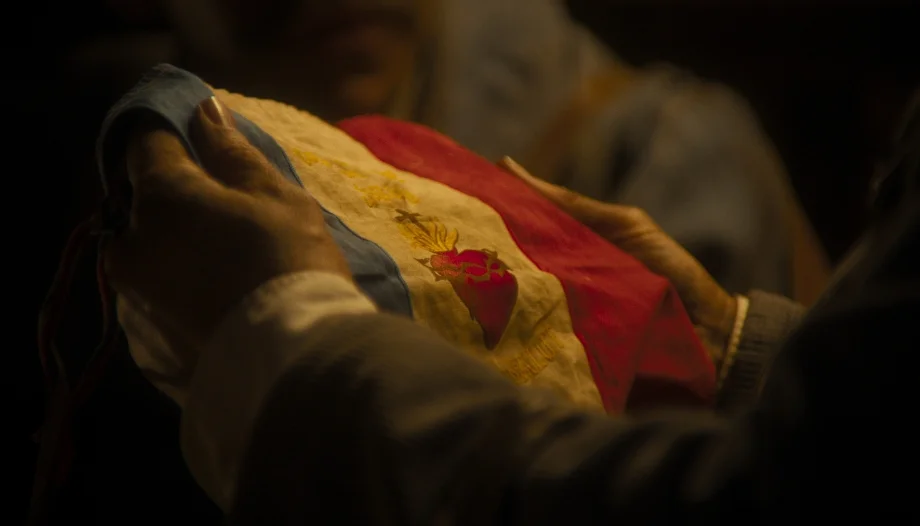
 5 ways to foster devotion to the Sacred Heart of Jesus




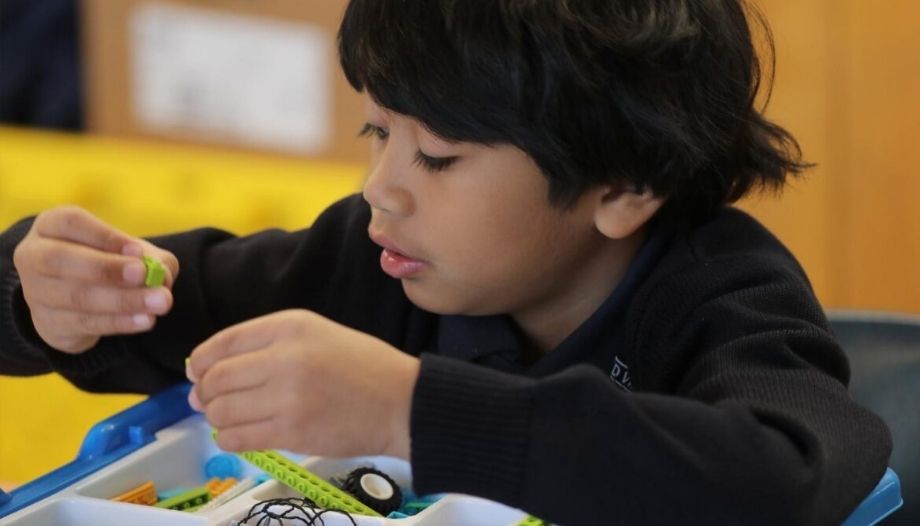
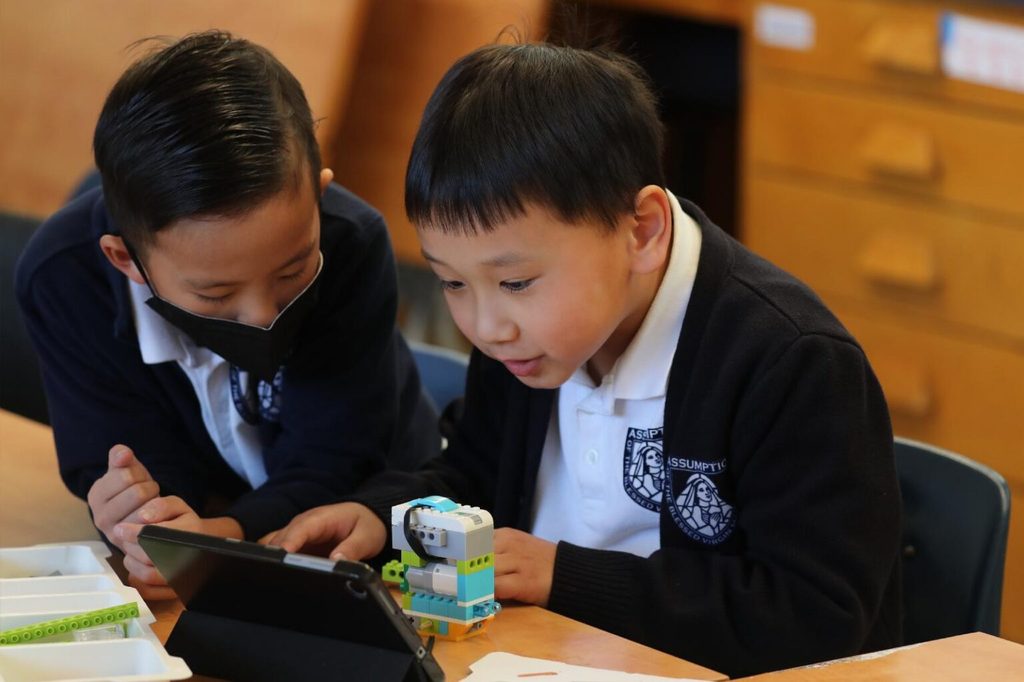
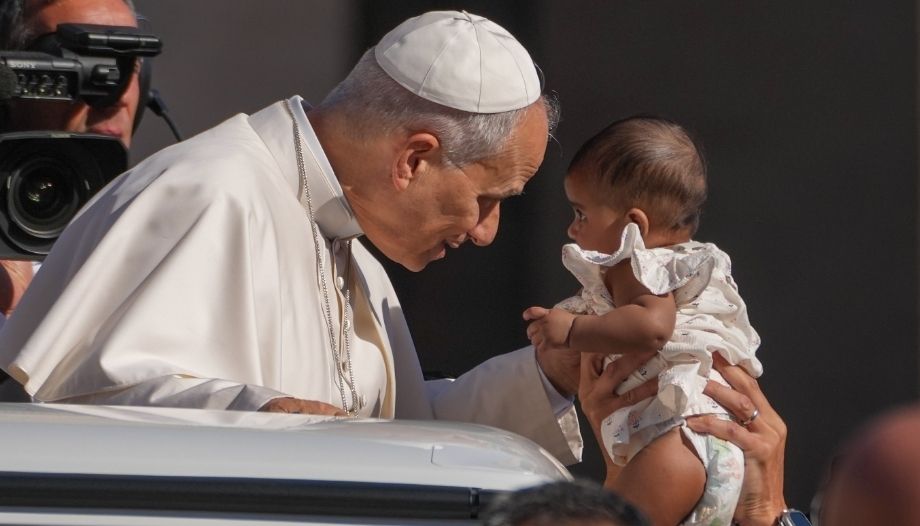
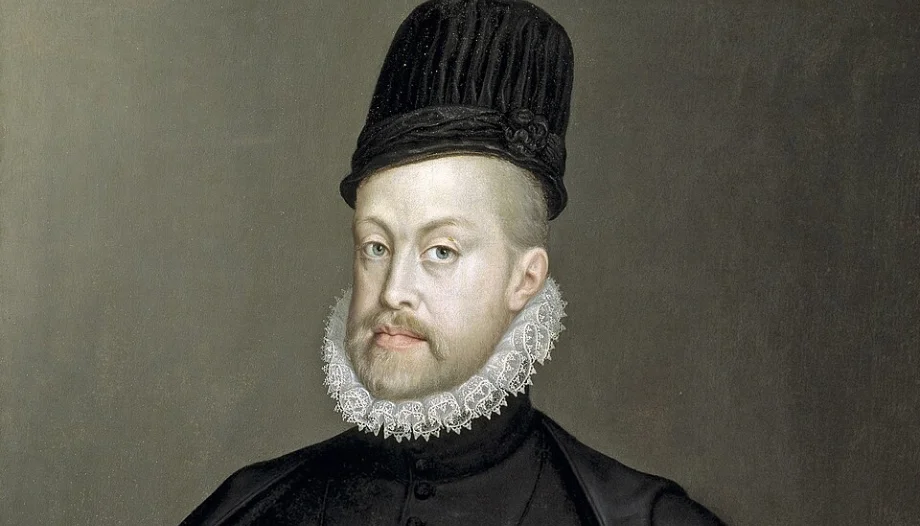
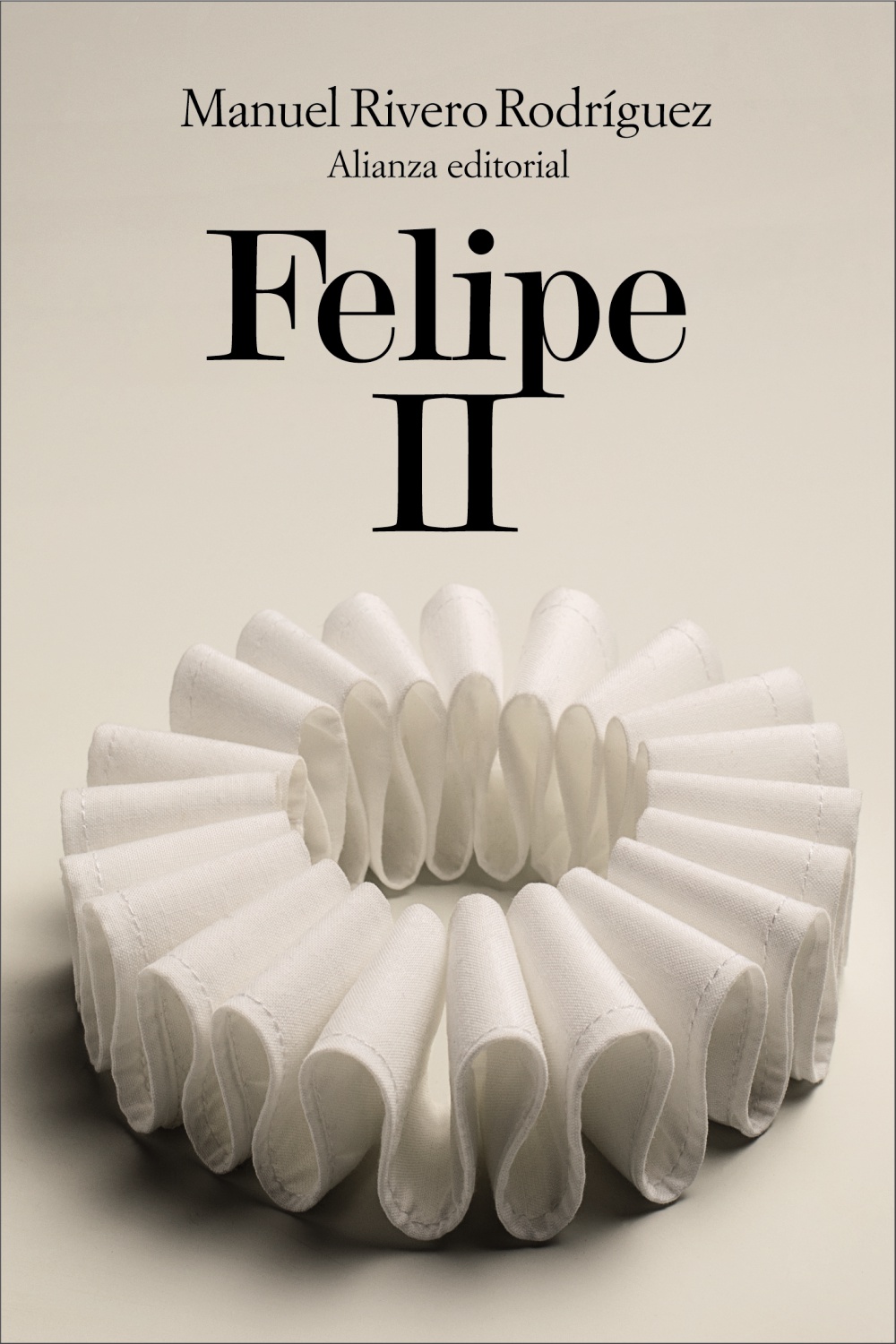
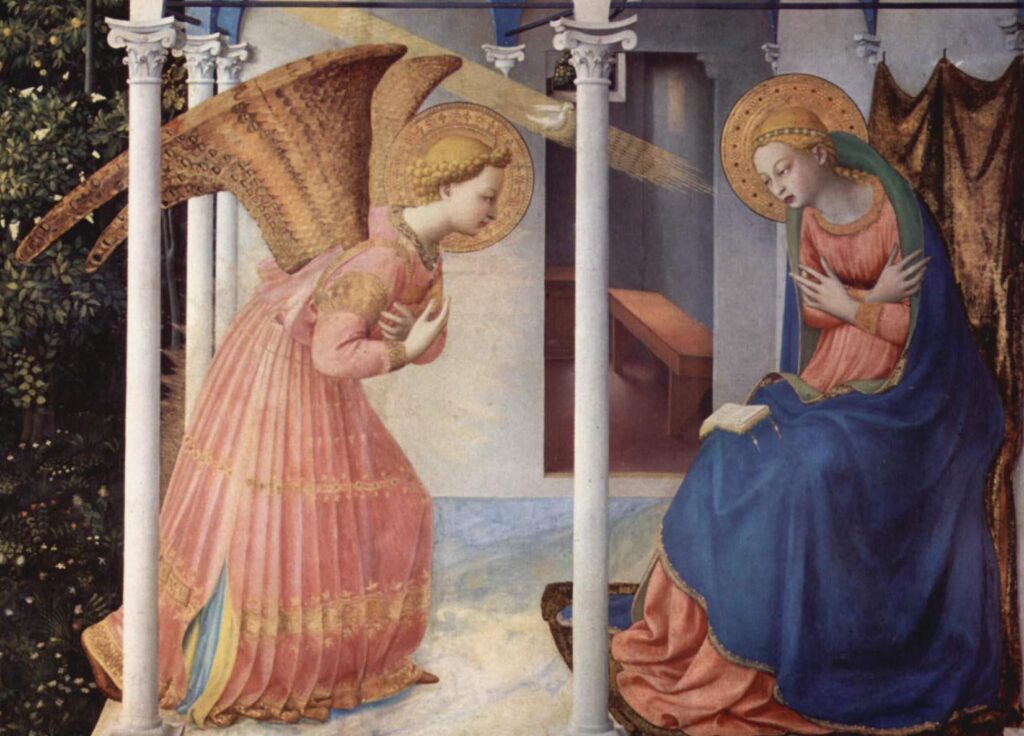
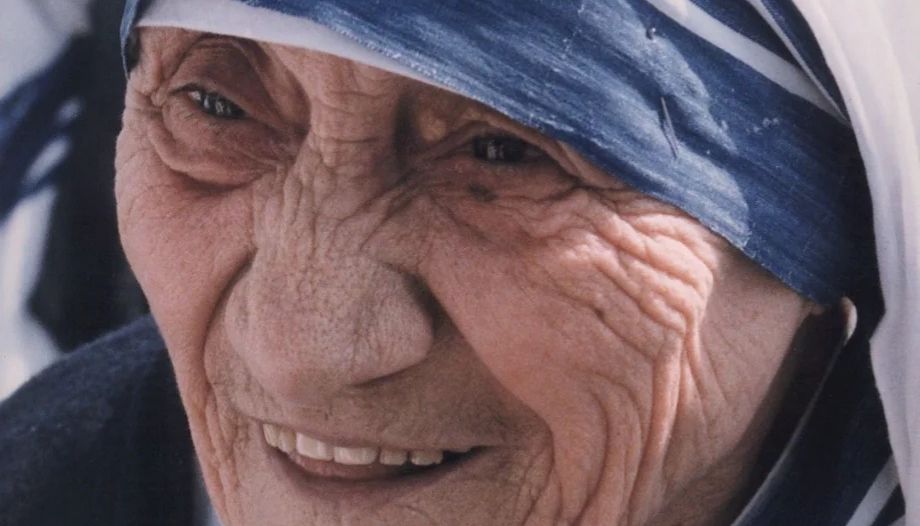
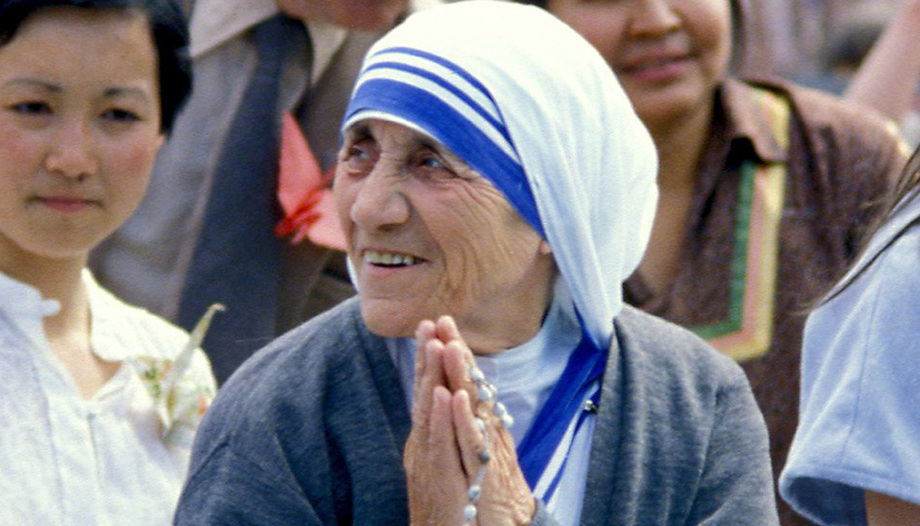
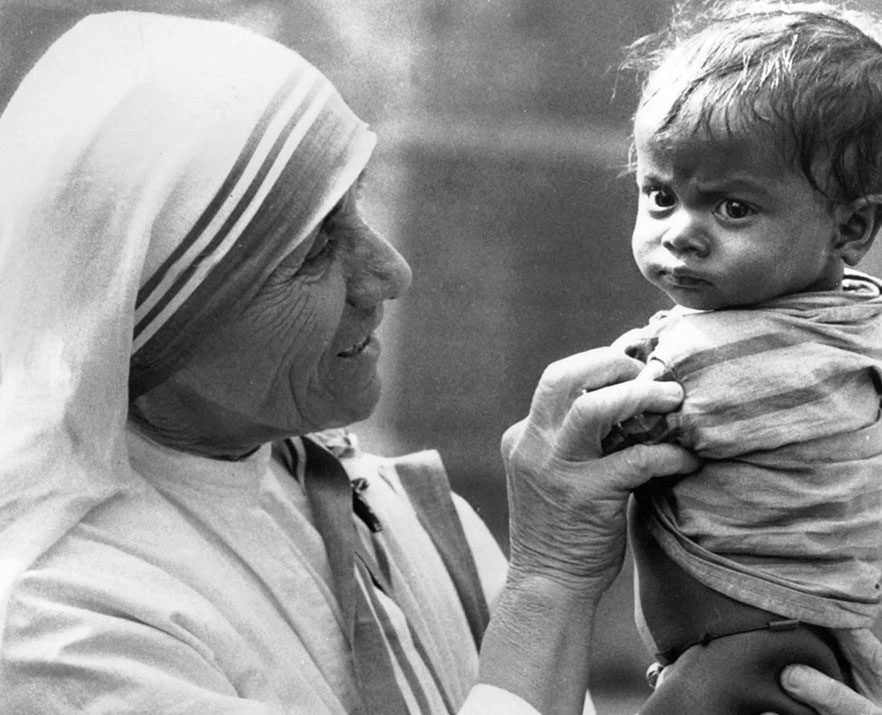
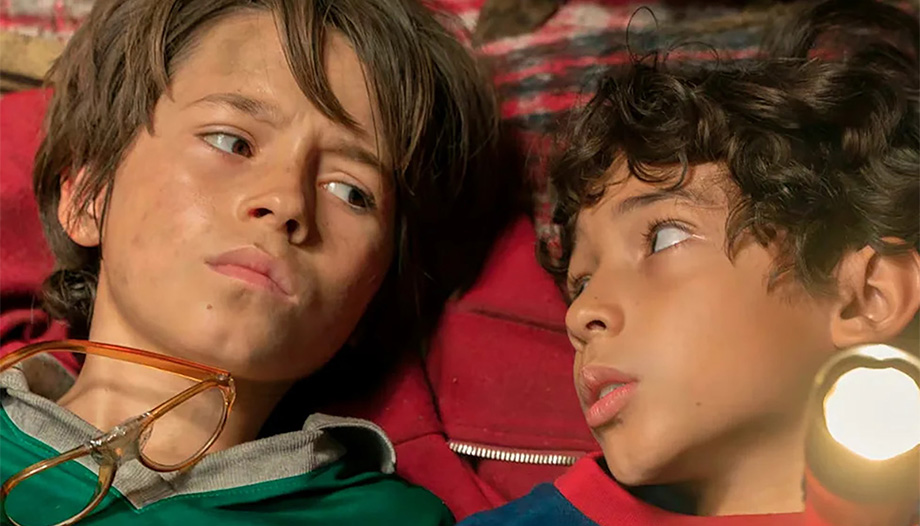
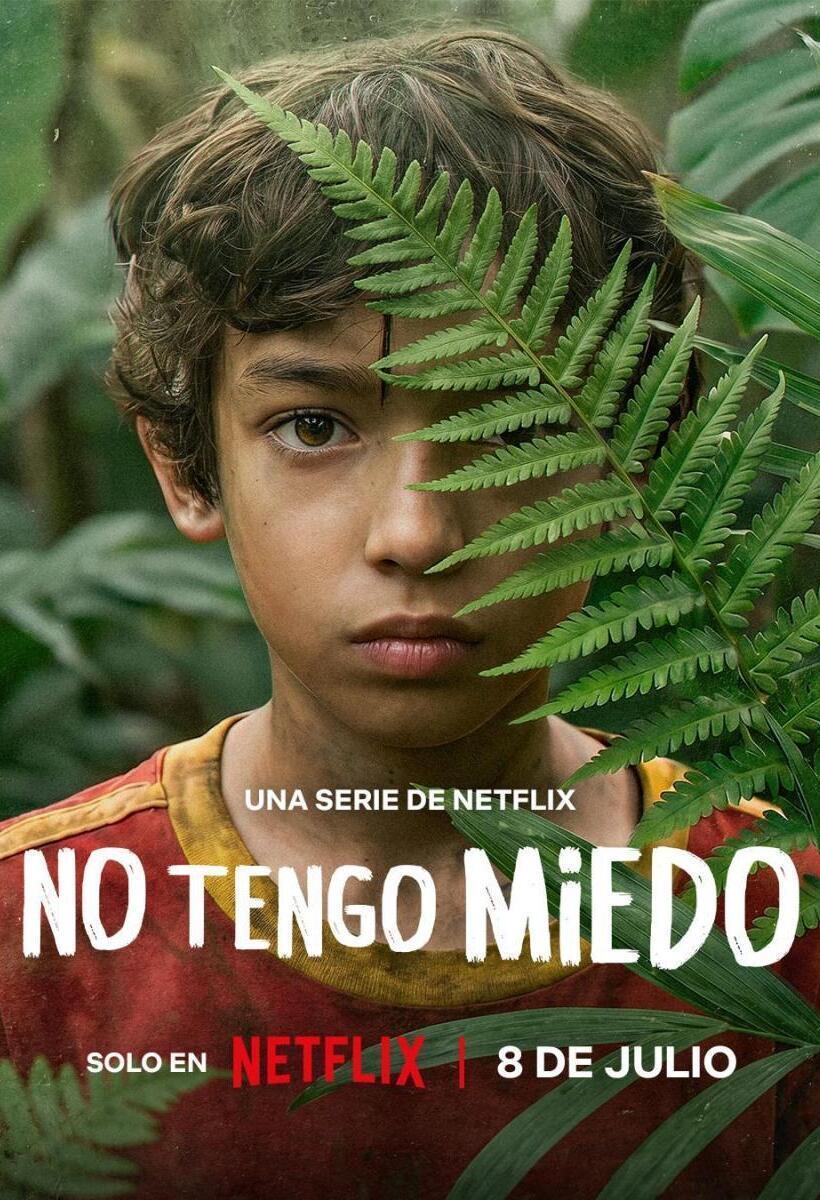

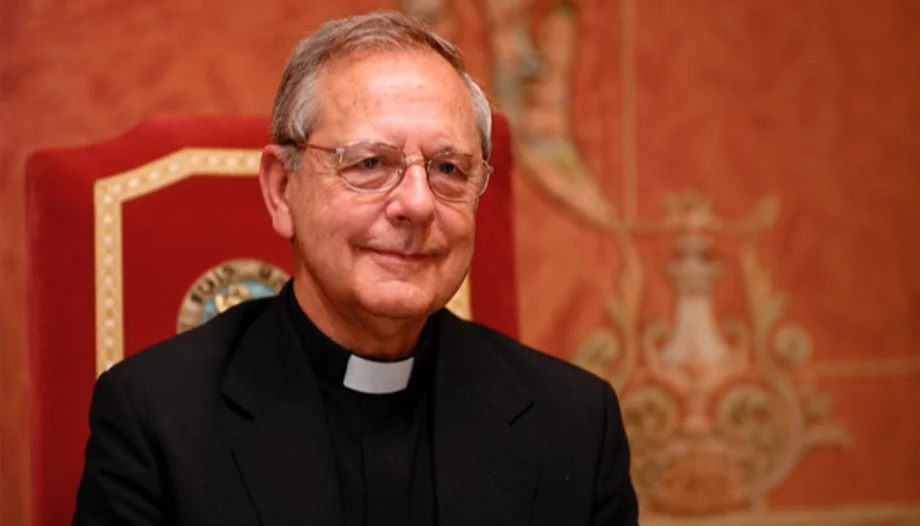


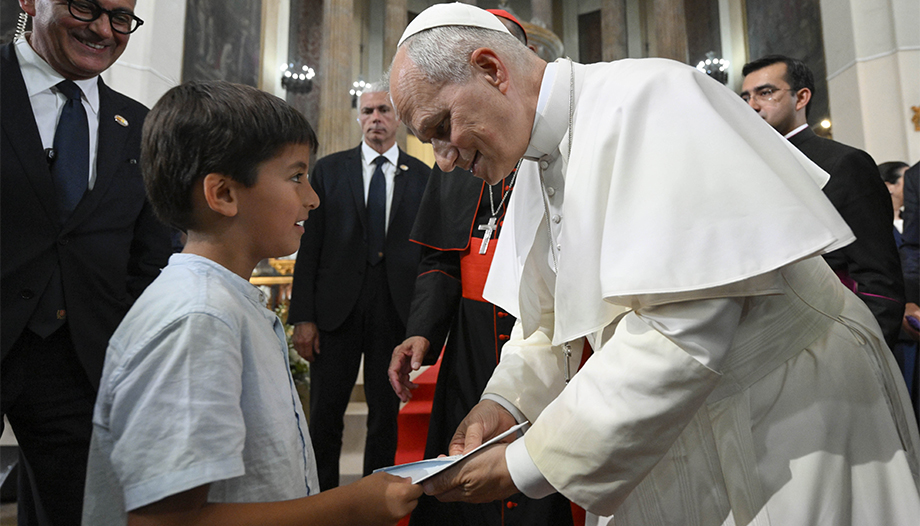
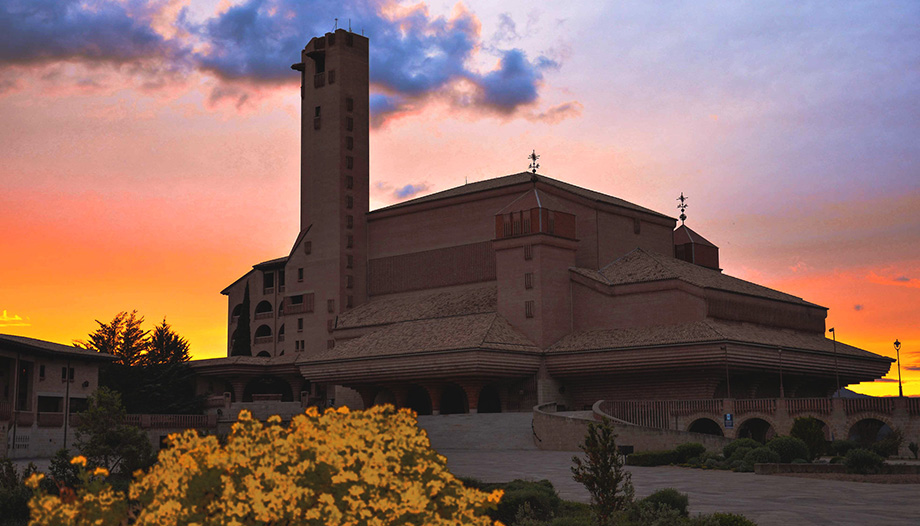
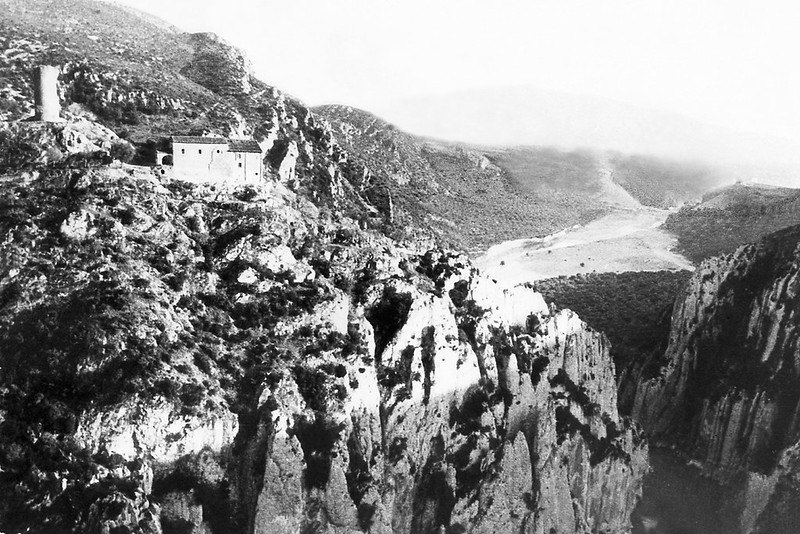
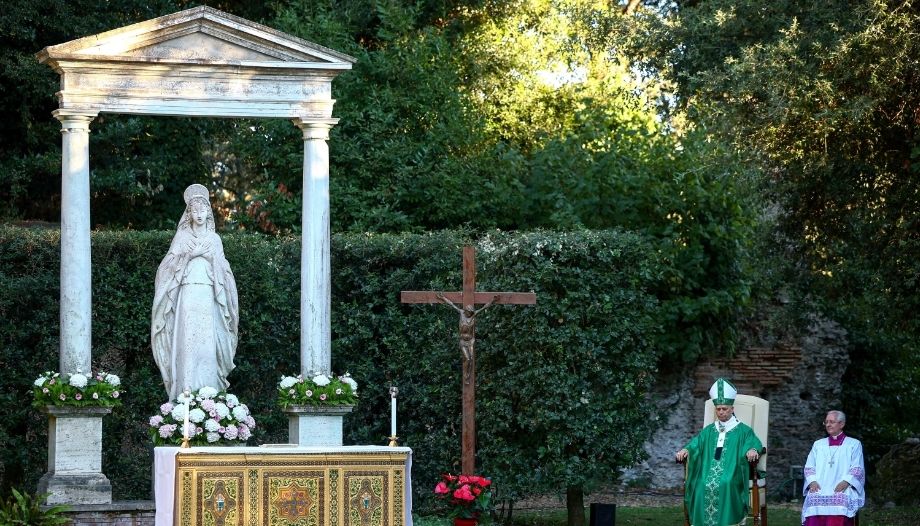
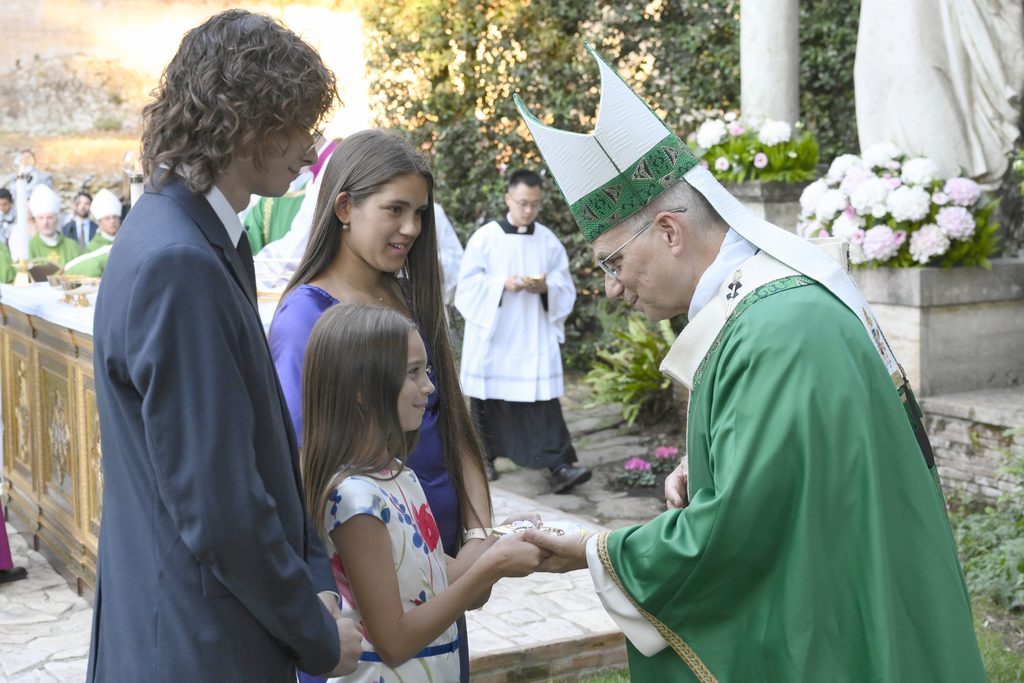
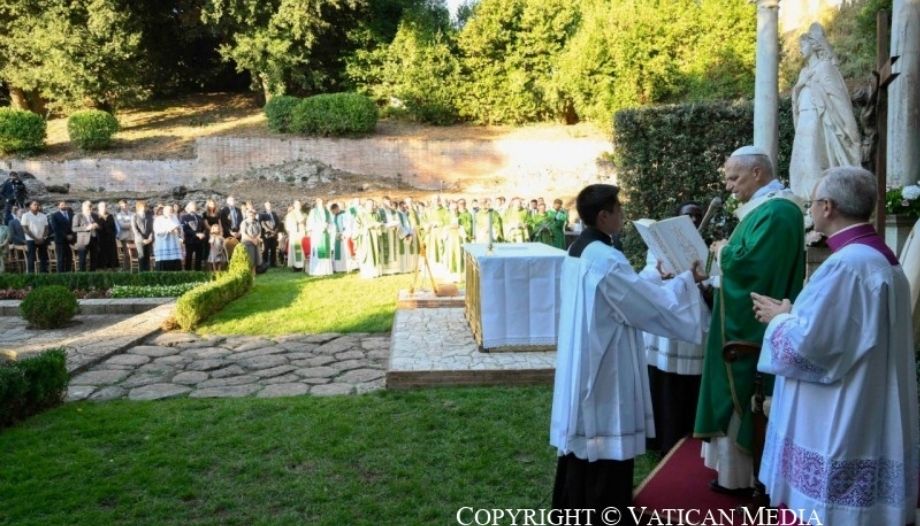
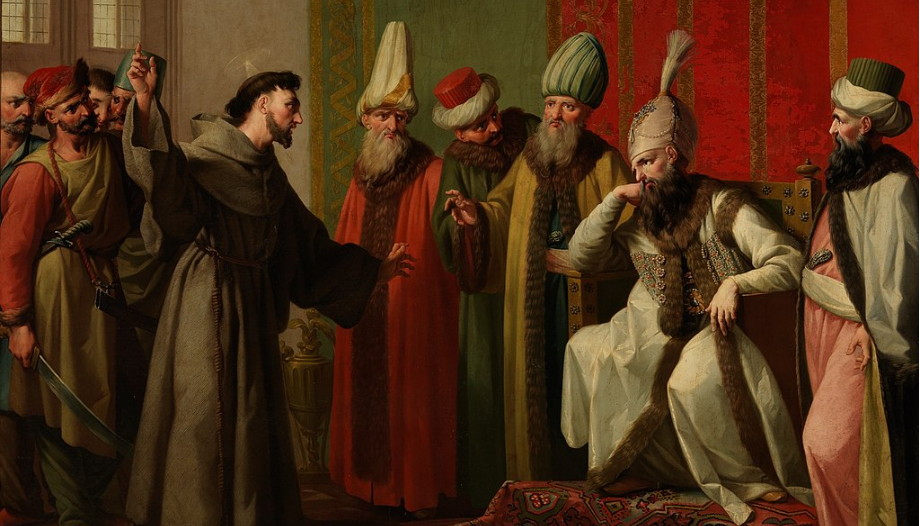

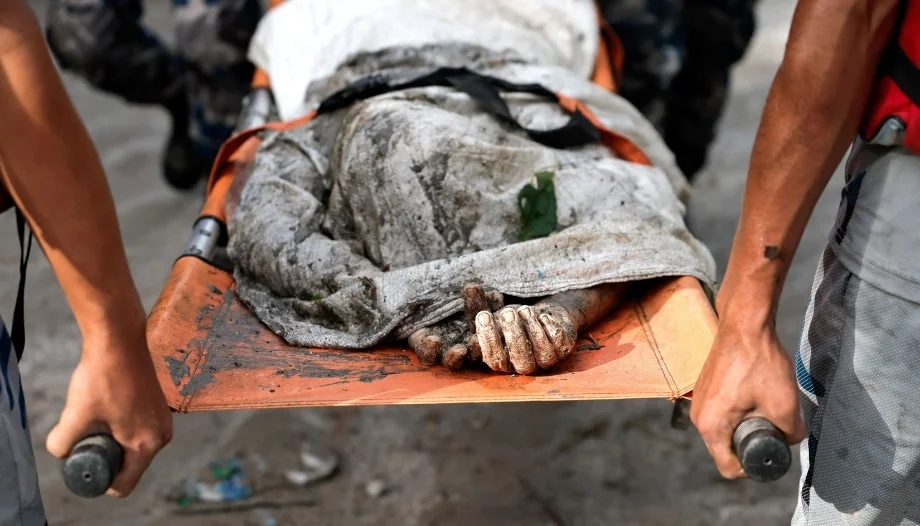
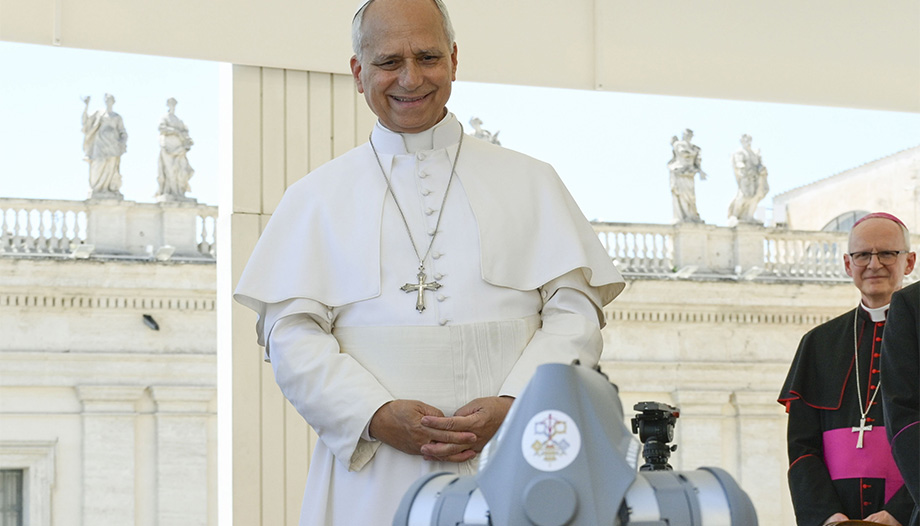
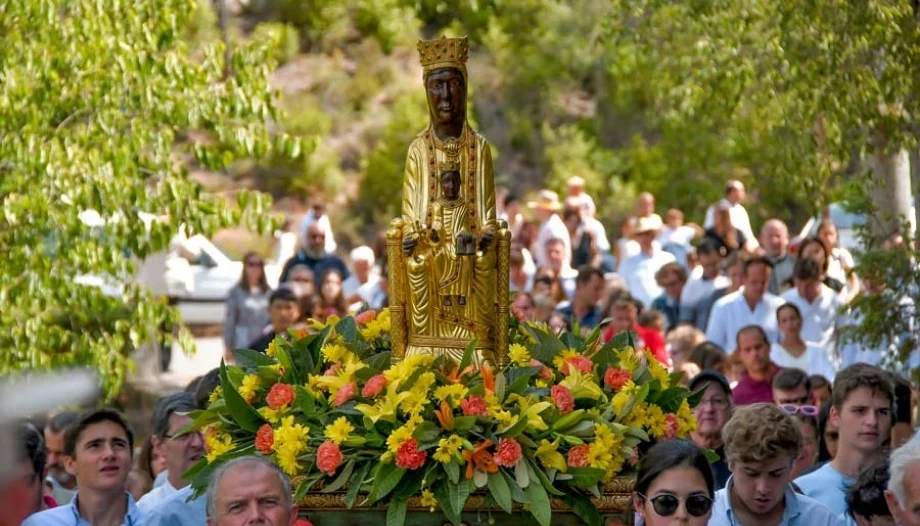
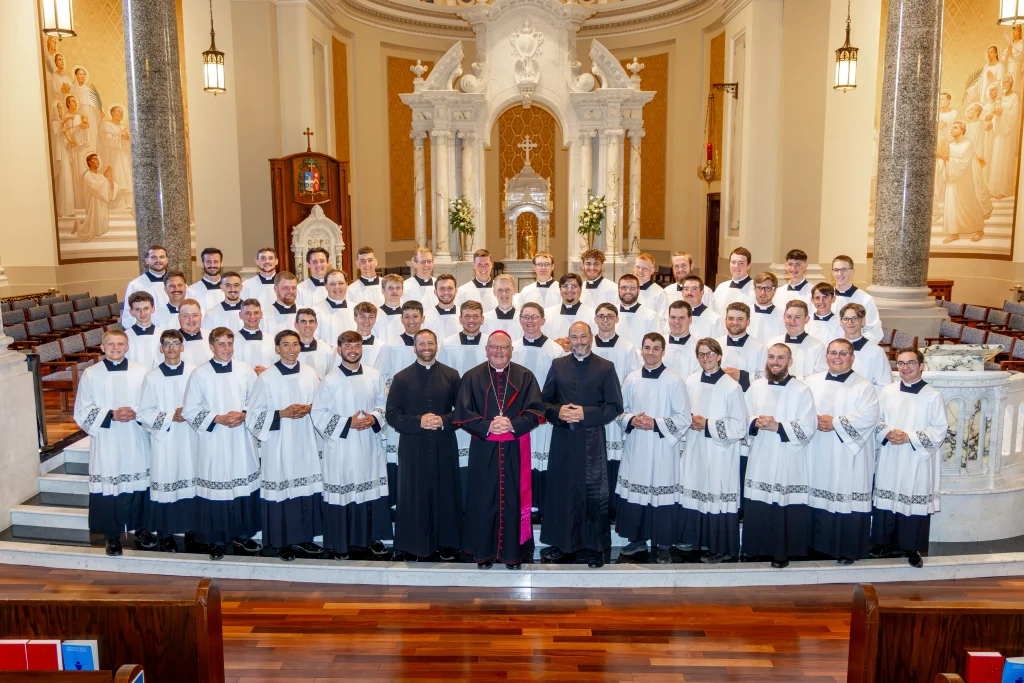

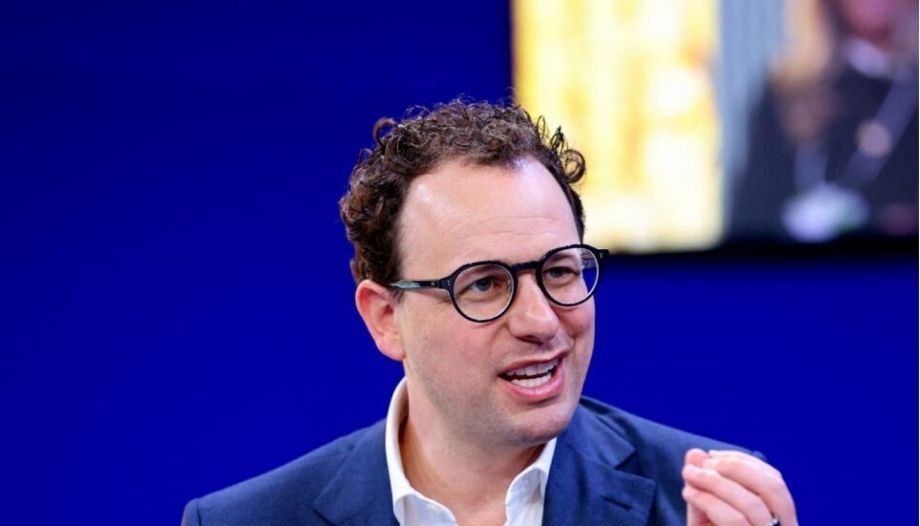
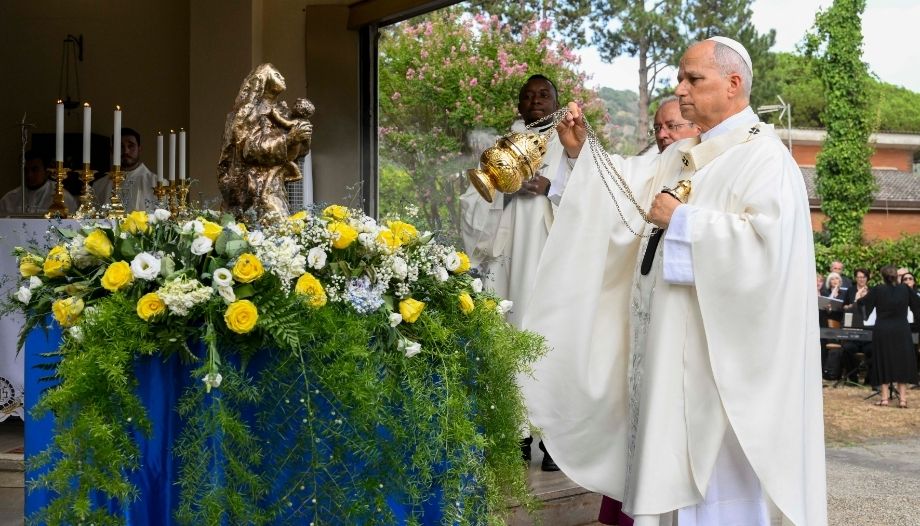

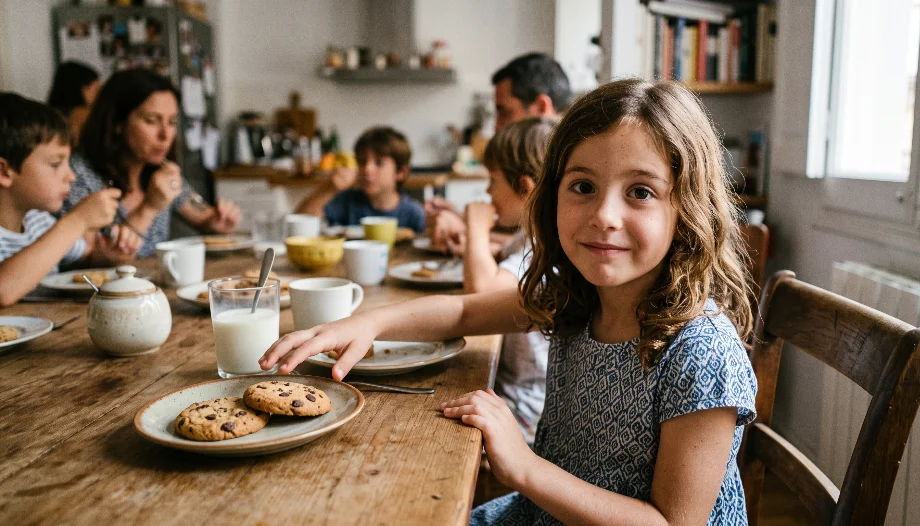
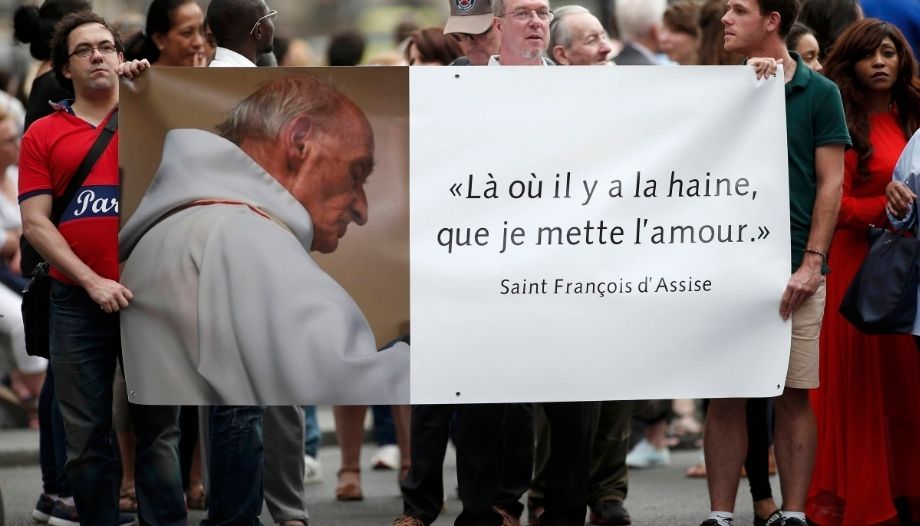
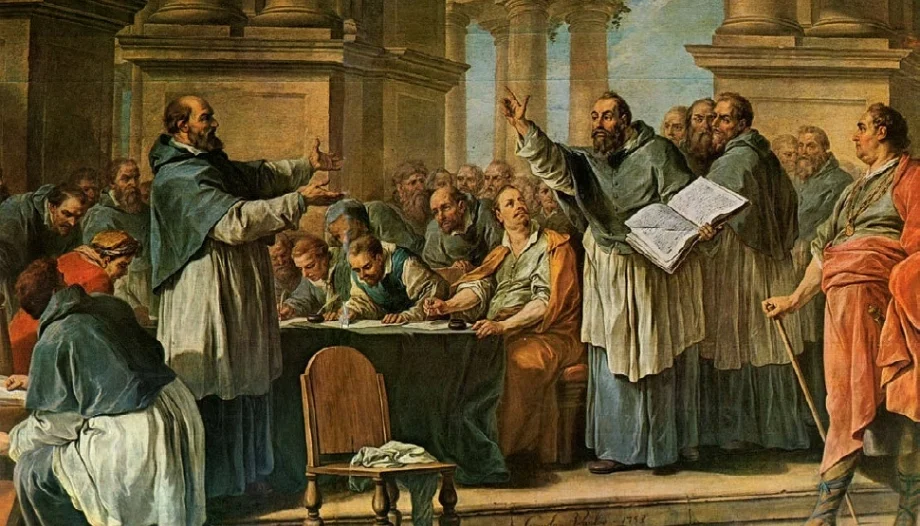

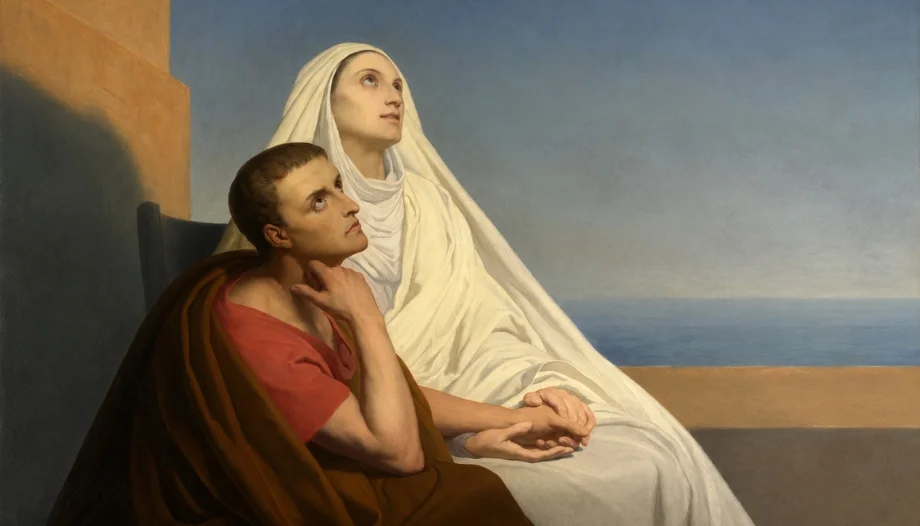
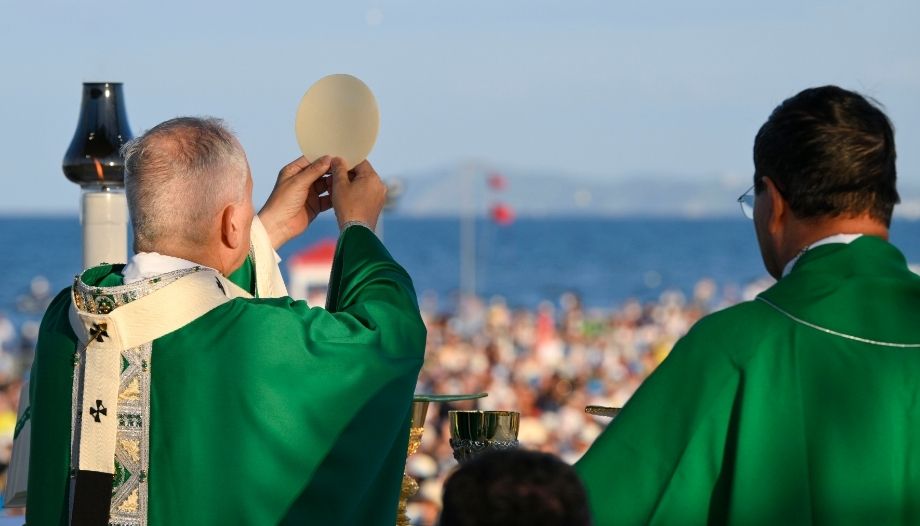
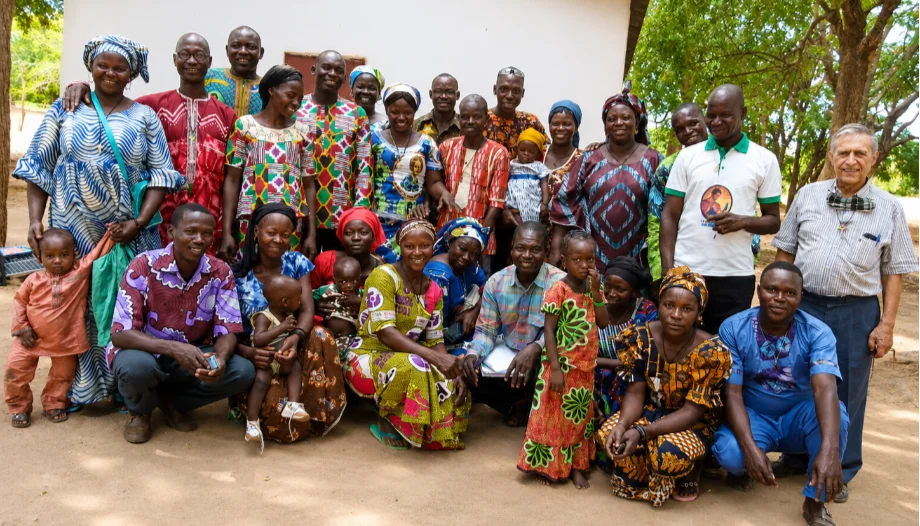
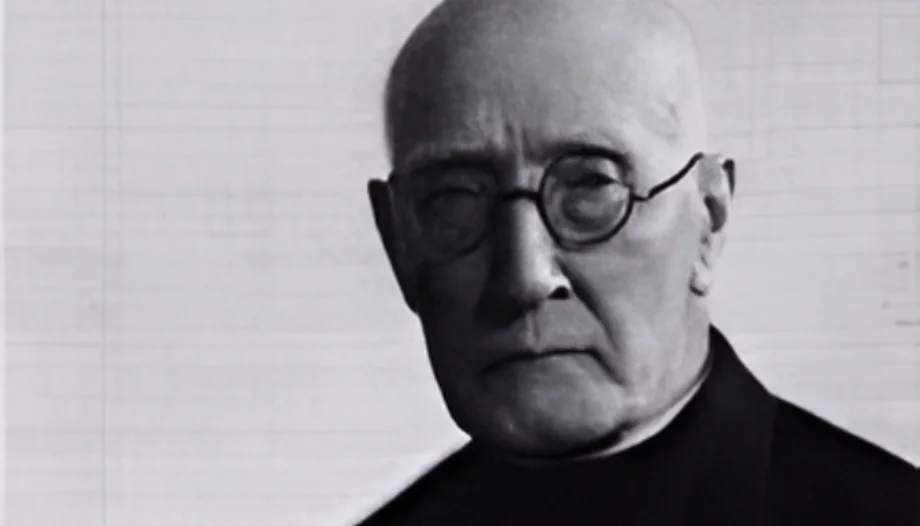
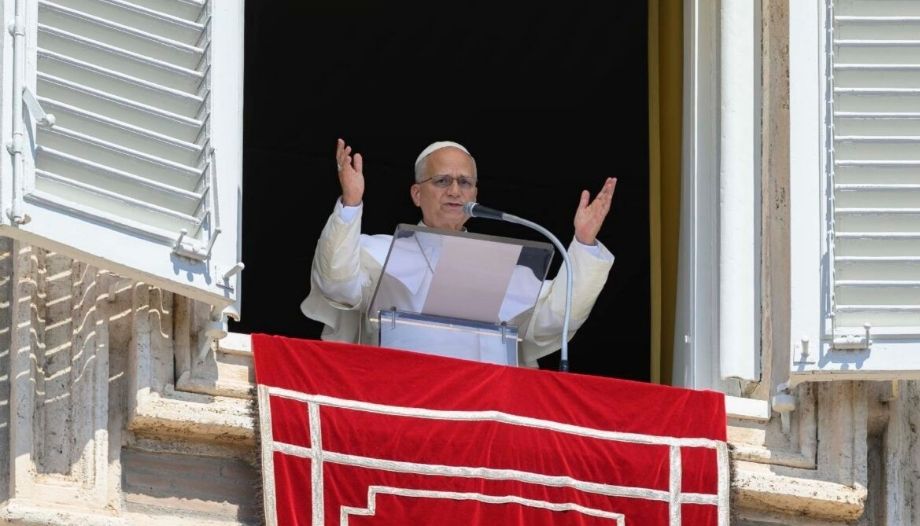
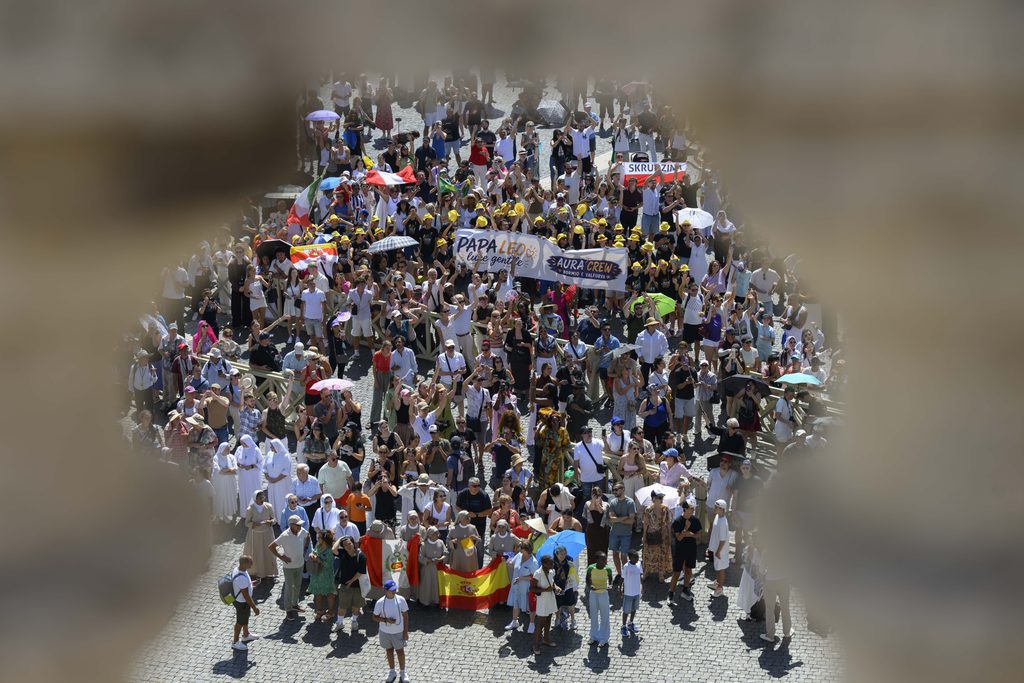

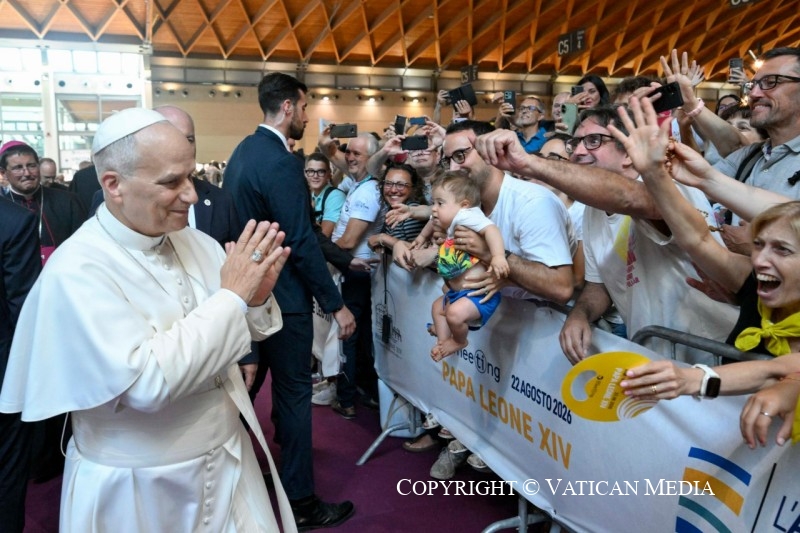
 Español
  English
  Italiano
  Français
  Deutsch
  Polski