



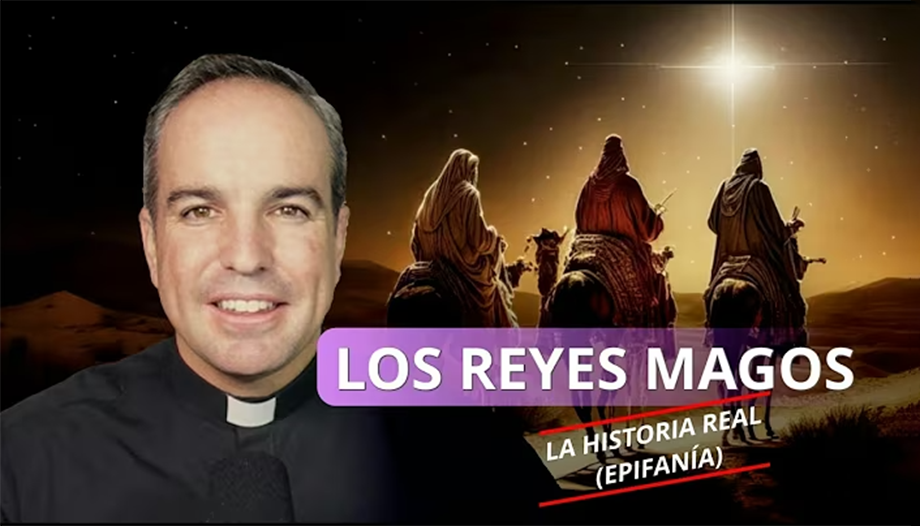
On the eve of the Feast of the Epiphany, Father Amorós has published a new video explaining the profound meaning of the mysterious visit of the wise men from the East to the Baby Jesus. Through theological and cultural reflection, the priest invites us to rediscover the Epiphany beyond the folklore and traditions associated with this time of year.
In his message, Father Amorós places the viewer in a powerful historical paradox. While in Rome, Emperor Caesar Augustus—the most powerful man of his time—slept convinced that he was the center of the world, in a cave in Bethlehem, a seemingly insignificant event was taking place that would end up changing history. Three Magi from the East, representatives of the intellectual and scientific elite of the ancient world, did not travel to pay homage to the emperor, but to bow down before a poor Child.
Drawing on a well-known reflection by G. K. Chesterton, the priest explains that the Magi symbolize all ancient wisdom and science, which had to “become small” in order to enter into the simplicity of Bethlehem.
One of the central themes of the video is what he calls “the revolution of the Epiphany.” Recalling a teaching of Benedict XVI, Father Amorós emphasizes that the Magi, astronomers of their time, lived in a culture that believed that human destiny was written in the stars. However, the Gospel account reverses that logic: it is not the star that determines the Child's destiny, but the Child who guides the star. For the priest, this detail contains a particularly timely message: human life is not subject to a blind destiny, but entrusted to a God who created it free.
The video also includes a call to action inspired by Saint Augustine. Amorós recalls that the scribes of Jerusalem knew the Scriptures perfectly well and were able to tell the Magi where the Messiah would be born, but they themselves did not set out on the journey. The saint compared them to landmarks or signposts that point the way but remain immobile. “Faith is not just knowing, it is walking,” emphasizes the priest, warning of the danger of purely theoretical religiosity.
In the final part, Father Amorós updates the meaning of the three gifts of the Magi. Today, gold represents detachment from one's own ego and comfort; incense symbolizes time devoted to prayer; and myrrh symbolizes concrete sacrifice expressed in forgiveness and closeness to those who suffer. Quoting St. Gregory the Great, he concludes that those who truly encounter Christ cannot return to their lives by the same path, but are transformed.
The priest finally encourages viewers to watch the entire video to delve deeper into these mysteries and recalls a central message of Epiphany: God loves mankind and wants them to be happy.




 Español
  English
  Italiano