



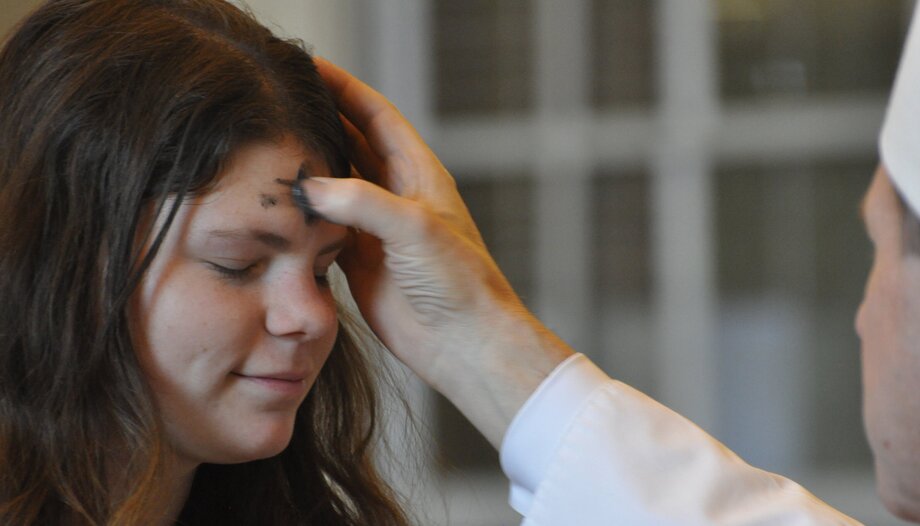
Ash Wednesday is one of the key days of the liturgical calendar in the Catholic Church. In some dioceses, it is the day when most of the faithful attend Mass.
The beginning of the Lent sets the faithful on a path of conversion and dedication which, despite what it may seem, looks to the Resurrection and Easter, the new birth, and not only to the Passion of Christ.
From the beginnings of the early Church, the example of Christ, praying and living in a mortified way in the desert before beginning his public preaching, was present in the faith life of the first communities in different ways.
Ashes and penance
– Supernatural penance, The presence of ashes, whether public or private, has always been a way of reminding man of his fragility, of his condition as a redeemed creature, therefore hopeful. The presence of ashes, with evident biblical connotations, also in the stories of repentance of David, the king of Nineveh, or the Jewish people in the first book of the Maccabees, has always been present as a symbol of this penitence and repentance.
The season of Lent was liturgically consolidated in the Church throughout the 6th century. In the last years of St. Gregory the Great, the custom of Lenten fasting began on the Wednesday before the first Sunday of Lent.
In those times, the custom of public penance was customary: penitents presented themselves before designated priests, confessed their sins and, if they were serious and public, received, as penance, a cilice sprinkled with ashes. Their penance lasted the whole of Lent, sometimes in places of prayer such as monasteries or hermitages.
In the early Middle Ages was also born the statio or penitential procession that takes place in Rome and consists of a procession presided over by the Pope, Bishop of Rome, and that goes from the parish of San Anselmo to that of Santa Sabina, both located on the Aventine at a distance of about 200 meters, every Ash Wednesday.
With the disappearance of public penance, the custom arose that both clergy and religious, as well as the faithful, received the imposition of ashes on the Wednesday before the beginning of Lent. In 1901, the Council of Benevento ratified this practice and the custom of imposing ashes spread throughout the Catholic world.
The specification «of the ashes» is related to the liturgical rite that characterizes the mass of that day: the celebrant places a small amount of blessed ashes on the forehead or head of the faithful.
According to custom, the ashes used for the rite are obtained from the burning of the olive branches that were blessed and used in the procession of palms on Palm Sunday of the previous year.
Vatican II Reform
Until the liturgical reform that took place at the Second Vatican Council, the imposition of ashes could also take place on the following Sunday, provided that the ashes had been blessed on Ash Wednesday.
In addition, the prayers for the blessing of the ashes were reduced and updated, going from four old formulas to two main options in the new missal, and the meaning of the ashes as the beginning of Lent as a time of conversion and Easter preparation was reinforced.





 Español
  English
  Italiano