



A shorter version of this article can be found here.
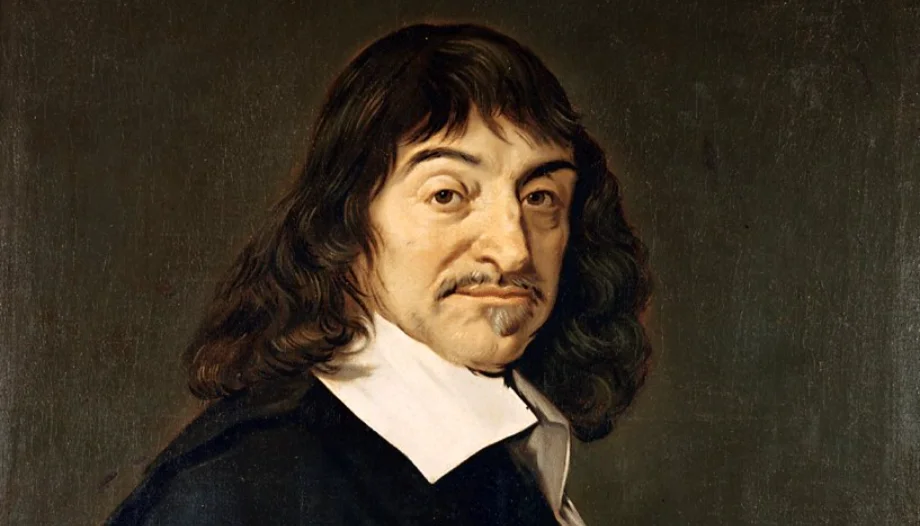
René Descartes, trained in mathematics, literature and classical philosophy at the Jesuits of La Flèche, graduated in law in Poitiers in 1616, discovers, quartered in Bavaria in the winter of 1619, his method and his vocation as a philosopher and mathematician. He settles in the Netherlands from 1622 and publishes in 1637 his Discours de la Méthode, which, together with its appendix La Géométrie, were founders of rationalist philosophy and analytical geometry. He dies in Stockholm in 1650, after four months as a
preceptor advisor to Queen Christina of Sweden.
1. Exhibition
These two booklets by the French philosopher should be considered together because, the Speech is rather autobiographical -interesting to understand the genesis of his thought- , which is rather contained, or contained in greater detail in the Meditationes, from which we will take the quotations in the second section.
René Descartes recounts in his Discourse that, at the age of twenty-three, he conceived the method that later gave rise to his philosophy. Tired of having to take as unquestionable a host of weak certainties, proposed to his mind as indisputable truths during his student life, he decided that the method he would follow to reach truth would have to be an entirely new method in philosophy that would take the best of the philosophical, logical and mathematical methods. It was to adhere to the following precepts:
“The first was not to admit anything as true unless I knew for a fact that it was true; that is, to avoid understanding in my judgments anything but what presented itself so clearly and distinctly to my mind that there would be no occasion to doubt it.
The second is to divide each of the difficulties he examines into as many parts as possible and into as many as their best solution requires.
The third, to conduct my thoughts in an orderly fashion, beginning with the simplest and easiest objects to know, and gradually ascending to the knowledge of the most complex, and even assuming an order among those that do not naturally precede each other.
And the last, to make in all such comprehensive accounts and such general reviews, that I would come to be sure of omitting nothing.”
Any person minimally familiar with mathematics recognizes that this is the method of a demonstration in this discipline. Mathematical demonstrations divide the difficulty into small “steps”, whose truth is apprehended separately and at a glance, as very evident, so that these simple steps, conclude as in synthesis, all together a truth. Thus we come to have certainty of a truth that had not been initially admitted because it was not in itself evident, but that it was possible to doubt it. In fact, René Descartes himself says in the following line: “Those long series of long, very plausible and easy reasons, which geometricians are accustomed to employ to arrive at their most difficult demonstrations, had given me occasion to imagine that all things of which man can acquire knowledge, follow one another in the same way”.”
However, although he felt capable of using this method in mathematical activity and in other sciences and fields of life, he did not initially feel mature enough to use it in philosophy as the foundation of a metaphysics of his own, so that his knowledge in all fields would be based on it. But after several years in which he acquired more experience of life, and after training himself in the use of this method with other fields of knowledge, he felt mature enough to apply it, relentlessly, to metaphysics, in a meditation that he collects in the Discourse on Method.
He begins by applying the first of his precepts to the first of our knowledge, that which comes to us through the senses. But the senses sometimes deceive us, for example when we hear voices or see images in dreams that we believe to be real, turning out, upon awakening, that they were not. Therefore, methodologically, we will always have to consider them as fallacious -that is to say, we will not count on them- since it is possible to doubt who has ever deceived.
But then he arrives at a very serious situation, because, as attributed to St. Thomas, “nihil est in intellectu quod prius non fuerit in sensu”, that is to say that all knowledge begins with the senses (in fact, even the most abstract notions that we can conceive, such as that of God, have their basis in realities initially captured by the senses, such as that of my own father, or that of a potter modeling the work of his hands). And I say serious, because having decided not to take for certain, methodologically, the data of the senses, he must conclude that he cannot take for certain any data supplied by his knowledge, since it is based on the senses. He cannot therefore give reliability to any of the ideas he has conceived, he cannot suppose that they correspond to any reality, not only to the ideas he conceives as chimeras - when he thinks, for example, of a unicorn - but also to those he conceives as really existing, such as the idea he may have of a goat (an example he himself gives). The gravity of the situation is that he has lost reality itself and the access he had to it through his knowledge.
But then, in the midst of that dark night in which his own method has plunged him, a first light is lit, a being escaped from the radicality of the first precept of his method. It is a being immune to doubt, who cannot doubt no matter how hard he tries, since he emerges from the same doubt: Himself! Indeed, if he doubts, doubt itself gives unequivocal news of someone who is doubting. And he enunciates this joyful discovery in his famous
“I think, therefore I am”.”
In this Descartes has found the first truth, the truth known in a clear and distinct way, on which to base any other truths, the first truth of the “science universelle” in which his own thought must consist, as deduced from a truth in itself evident - “give me a point of support” he quotes - as every geometrical truth is deduced from a few truths in themselves evident, called postulates (thus geometry was arranged in Euclid's elements, and thus Descartes had learned it).
And, first of all, he prepares to base the proposition “God exists” on this first truth, which he does in a way familiar to those who know the ways of St. Thomas, a way familiar to him too, since he had been instructed in the classical philosophy taught by the Jesuit fathers at the college of La Fleche, in the west of France: I cannot be the cause of myself, for if I had created myself I would not have created myself with these undesirable imperfections that are in me, beginning with the very imperfection of doubting, that is, not knowing with certainty. Then there must be at least another being, apart from me, who has been my cause. (We note, then, that he keeps intact the principle of causality, without even making it explicit, as we shall see that he also keeps intact other first principles in which he has been instructed). Either that being is the cause of itself, or it has been caused by another being. It thus goes back in a causal chain that must necessarily end in a first being, cause of itself, since if that first cause withdraws, all intermediate causes cease in their causation. It is this Being, cause of itself, that we call God. He has thus arrived at God as “causa sui,” something which may seem more or less the same as the uncaused cause of St. Thomas, but which is by no means the same thing.
He offers another proof of the existence of God, from the very idea he has of Him, as infinite being, and infinite in all His attributes: infinitely wise, good, powerful. The idea of each of these is in me, certainly, but it cannot be that it was caused by me, since I am much more imperfect than all that, and the imperfect cannot be the cause of the perfect (another first principle that has not therefore remained in abeyance in René's thought). These ideas must therefore come from a being that does have these perfections, and has them to an infinite degree. And it cannot be that there is one being who has placed in me the idea of perfect wisdom, another who has placed in me the idea of infinite goodness, and so on, but that one is the wise, the good, and the powerful, and so he concludes that there is only one God, with as many perfections as can be conceived. In particular, unity or simplicity-the fact of having no parts-is a perfection, therefore God must necessarily be simple. This is how he recovers, one by one, the attributes of God that the most classical theodicy deals with, all of them attributed to an infinite degree. (And René Descartes provides a third demonstration of the existence of God that we do not recall here because the reader already knows it, that due to St. Anselm, where he arrives at the existence of God from his pure essence: Being. It is not surprising that such a proof is so admired by the philosophers of the Modern Age).
Having arrived at this point, he is already in a good position to continue philosophizing, since, God being infinitely good and infinitely powerful, it is not conceivable that He has created me with this understanding which I have only to deceive me. Consequently, I must hold as true whatever the understanding presents to me as true, clearly and distinctly, but I must not misuse the liberty that God has given me for its use, that is, holding as true that which is not presented to it with certainty but as open to doubt.
So far two are the clear and distinct ideas that his understanding has presented to him, and therefore already with sufficient reason to trust them: the idea of the “I” as a thinking substance, as “res cogitans for he has arrived at the ”thing that thinks“ in a way that admits of no doubt; and the idea of ”God“ as ”causa sui“, for he has arrived at it from the ”I“ with a reasoning without loopholes, as when in mathematics it is demonstrated that the sum of the angles of a triangle are two right angles (so he says in his Speech).
Finally, there is a third idea that his understanding shows him in a clear and distinct way, and on which he will therefore rely: the corporeal realities that surround him, that is, “the world. But the world only insofar as it is presented to him with a clear and distinct idea, as something that his understanding can study with exactitude, without any mixture of doubt, with the instrument of mathematics. It is a question, then, of bodies conceived as ”res extensa,“ as substances that have extension. All the other qualities that we perceive in them - sound, colors, smells, taste - must therefore be reduced to extension, that is, they are secondary qualities, extension being the primary quality (the classic theme of primary and secondary qualities, which has turned out not to be far off the mark since we now know that not only sound is movement - that is, temporal variation of extension - since it consists in the movement of air molecules, but that light is also movement of the electromagnetic field, the various colors corresponding to certain frequency bands of their vibration. In any case, these are qualities that can be studied with the mathematical instrument -the nucleus of Cartesian intuition-, but what traditional philosophy would not admit is that corporeal substances be reduced to qualities -neither to several nor to only one-).
His own body appears in this framework of corporeal reality, but only as “res extensa”, as a substance that has extension. The conmittance and coordination of body and soul, “res extensa” and “res cogitans” in a single being that is me, is therefore problematic and will not be an easy subject in Cartesian philosophy. In fact, he does not seem to give a satisfactory answer to it, and it remains rather as an open subject to be dealt with by his followers.
We end up then, or at least Descartes understands it this way, in confidence: From the same doubt, we have recovered as unquestionable realities, the three perennial themes of philosophy: God, the world and I, the three clear and distinct ideas of the philosophy of René Descartes.
2. Texts
FIRST MEDITATION: OF THE THINGS THAT IT IS POSSIBLE TO QUESTION.
All that I have hitherto admitted as absolutely true I have perceived from the senses or by the senses; I have discovered, however, that the senses deceive from time to time and it is wise never to trust those who have deceived us even once.....
Finally, I am obliged to admit that of all those things which I once considered true, there is not a single one about which one cannot doubt, not out of inconsideration or lightness, but for strong and well-considered reasons. Therefore, no less must I refrain from giving faith to these thoughts than to those which are openly false, if I am to find anything true....
Consequently, I will not act badly, I trust, if by changing all my purposes I deceive myself and consider them some time absolutely false and imaginary....
SECOND MEDITATION: OF THE NATURE OF THE HUMAN SPIRIT; AND THAT IT IS EASIER TO KNOW THAT THE BODY
Archimedes asked for nothing more than a point that was firm and immobile, to move the whole earth from its place; therefore, I must expect great results if I find something that is certain and inconclusive?
I suppose, therefore, that everything I see is false; and that nothing has ever existed of what the deceitful memory represents to me; I have no sense at all: body, figure, extension, movement and place are chimeras....
There is an extremely powerful, extremely clever deceiver who always makes me err on purpose. No doubt, then, I exist too, if he deceives me; and no matter how much he deceives me, he can never succeed in making me not exist as long as I continue to think that I am something. So that, having scrupulously weighed all the arguments, it must be concluded that whenever I say «I am, I exist» or conceive it in my mind, it must necessarily be true....
I do not now admit anything that is not necessarily true; I am therefore, in short, a thing that thinks, that is, a mind, a soul, an intellect, or a reason.
THIRD MEDITATION: OF GOD, WHO EXISTS
I must examine, as soon as occasion presents itself, the question of whether God exists, and, if He does, whether He can be deceitful, since, if these questions are left aside, it seems to me that I cannot be sure of anything else....
The principal and most common error that can be found in them consists in judging the ideas that exist in me the same or similar to the things that exist outside of me; since if I only considered the ideas as ways of my thought and did not refer them to other things, they could hardly offer occasion for error.....
I must now examine, in relation to the ideas that I consider taken from things that exist outside myself, what cause moves me to judge them similar to those things....
Thus, the idea by which I conceive of God as an eternal, infinite, omniscient, omnipotent being, creator of all things that exist, except Himself, has more objective reality than those by which finite substances are presented....
It is manifest, therefore, that there must be at least as much reality in a total and efficient cause as in the effect of that cause. For whence could the effect take its reality except from the cause? And in what way can the cause bestow it on the effect, unless it possesses it? From which it follows that nothingness cannot create something, nor that which is less perfect to that which is more perfect, that is, that which contains in itself more reality?
For if we suppose that there is something in the idea which is not found in the cause, then this possesses it out of nothing; now, however imperfect that mode of being may be by which a thing is found in an objective way in our understanding by means of the idea, it is not for that reason, however, absolutely nothing, and cannot, therefore, exist out of nothing.....
And although one idea may proceed from another, there is not, however, a succession to infinity, but one must arrive at some first idea, whose cause is equivalent to an original, in which is formally contained all the reality that only exists in the idea in an objective way.....
If the objective reality of any of my ideas is such that I am certain that it does not exist in me either formally or eminently, and that therefore I cannot myself be the cause of such an idea, it necessarily follows that I am not the only existing being, but that there is also something else which is the cause of that idea.....
There remains the idea of God, in which it is to be considered whether it is something that could not have proceeded from myself. Under the denomination of God I understand an infinite, independent substance, which knows and can in the highest degree, and by which I myself have been created with everything else that exists, if anything else exists. All of which is of such a kind that the more diligently I consider it, the less it seems to have been able to come from me alone. From which it must be concluded that God necessarily exists....
MEDITATION FOUR: ON THE TRUE AND THE FALSE
First of all, I recognize that it cannot happen that He will ever deceive me. And even if being able to deceive seems to be a proof of power or intelligence, undoubtedly wanting to deceive testifies to malice or foolishness, and therefore is not found in God....
Next I experience that there is in me a certain faculty of judging, which I have certainly received from God, like all the other things that are in me; and since He does not want me to err, He has evidently not given me a faculty such that I can never err as long as I make use of it with rectitude.....
From whence, then, do my errors arise? From the mere fact that, the will being broader than the intellect, I do not keep it within certain limits, but apply it even to what I do not conceive, and, being indifferent to it, it easily deviates from what is true and good; in this way I err and sin....
And now I not only know that I exist insofar as I am a thinking thing, but I am also presented with a certain idea of corporeal nature, and it happens to me that I doubt whether the thinking nature that exists in me, or, rather, that which I am myself, is different from that corporeal nature, or whether they are both the same thing.....
There is no imperfection in God because He has granted me the freedom to assent or not to assent to certain things, of which He did not put a clear and definite perception in our intellect; on the contrary, I have imperfection in me without any doubt, since I do not use this freedom rightly, and I make judgments about what I do not clearly conceive.....
MEDITATION FIVE: ON THE ESSENCE OF MATERIAL THINGS. AND AGAIN ON GOD AND THAT HE EXISTS
For having been granted no faculty to know it, but, quite to the contrary, a great propensity to believe that ideas are emitted from corporeal things, I do not see in what way it could be understood that it is not fallacious, if they proceeded from elsewhere than from corporeal things; therefore, corporeal things exist. Nevertheless, they do not all exist in the way in which I conceive them by the senses, because the apprehension of the senses is very obscure and confused with respect to many things; but at least there exists in them all that I perceive clearly and definitely, that is to say, all that is comprehended in a general way in the object of pure mathematics.....
Existence can no less be separated from the essence of God than from the essence of the triangle the magnitude of the three angles equal to two right angles, or from the idea of a mountain the idea of a valley, so that it is no less repugnant to think of God (that is, a supremely perfect entity), whose existence is lacking (that is, whose perfection is lacking), than to think of a mountain whose valley is lacking.....
It is necessary, however, that whenever it pleases me to think of a first and supreme entity, and to draw that idea as from the treasury of my mind, I attribute to it all perfections, although I do not enumerate them one by one, nor attend to each one in particular; this necessity is sufficient for me to rightly conclude that there is a supreme and first entity, once I have realized that existence is a perfection.....
What is more manifest than the fact that there is a supreme entity or God whose essence is the only one to which existence belongs?....
But once I have perceived that God exists, having at the same time realized that everything depends on Him, and that He is not a deceiver, and having deduced from this that everything I perceive clearly and definitely is true, it follows that, even if I no longer attend to the reasons for which I have judged this to be true, just because I remember having perceived it clearly and definitely, no argument can be adduced against it which would induce me to doubt, but that I have a true and certain knowledge about it.....
SIXTH MEDITATION: ON THE EXISTENCE OF MATERIAL THINGS AND ON THE REAL DISTINCTION BETWEEN SOUL AND BODY
Although perhaps (or rather, certainly, as I shall say later) I have a body which is closely united to me, since on the one hand I possess a clear and distinct idea of myself, inasmuch as I am only a thing that thinks, and inextensive, and on the other hand a precise idea of body, inasmuch as it is only an extensive and non-thinking thing, it is manifest that I am distinct in reality from my body, and that I can exist without it.....
3. Critique
Although the thought of René Descartes is presented as a “new way of philosophizing”, and indeed it is, I will present my critique from an ancient way of philosophizing, let us say from Greek or medieval philosophy, since it attempts to be a critique from common sense, and it is common sense that collects or systematizes the Aristotelian-Thomistic philosophy. It is impossible for me to deal with the metaphysical presuppositions of Cartesian thought -undoubtedly unconscious in Descartes himself, precisely because he had made a tabula rasa of classical metaphysics-, without speaking of terms such as essence and existence. In fact, without these terms it is impossible to criticize metaphysics explicitly or implicitly in any philosophical system, even those that deny metaphysics (Descartes does not deny it, but his intellectual heirs will). And these notions are also necessary in order to understand the derivation implicit in the Cartesian idea, which will later be implemented by the history of philosophy because it is impelled by the very metaphysics that Descartes ignores in his own approach. There is much truth in Hegel's assertion that history always ends up implementing the logical derivations that were implicit in the idea.
The philosophical gesture, whose implicit metaphysics we are going to analyze, is that of deriving reality from thought, instead of the opposite derivation, natural in common sense and in philosophy, for this is the great novelty of Cartesian philosophy, or at least that is what the inheritance of his philosophy will lead to. Let us remember that before beginning this process of recovery of reality, in which first the I appears, then God, then the World, the philosopher has been submerged in a world of thoughts, of ideas that his understanding presents to him, some as having a real correlate, others as not having one, but none of which he trusts, since he has decided not to trust his own knowledge. The situation is more serious than he initially intended, and even more serious because it is the situation in which he will leave later philosophy, which will take this starting point, but not the bridges that Descartes later builds to reality because he will recognize that they are spurious. And it seems that they obey more to the prejudice of a believer who must recover at all costs the world in which he believes than to a reason of intellectual coherence with his starting point. Although Descartes himself obviously did not notice this, his followers will notice it, some of whom will no longer have those prejudices that save Descartes from the loss of common sense, and will take his philosophy to its ultimate consequences even at the cost of breaking with our ordinary feeling.
What is the metaphysics implicit in the philosophical gesture of one who starts from a world of ideas, merely thought and not coming from any observation, and pretends to deduce, as in a mathematical demonstration, the reality that corresponds to these ideas? The presupposition is that the beings he then arrives at necessarily exist, since without observing them he can, from his pure idea, demonstrate their existence. Now, God alone necessarily exists, He alone is the necessary being, and therefore Descartes is somehow taking each of the beings, surely without realizing it, for God Himself. In a word: the implicit derivation in this philosophical approach - I speak only of the approach - is pantheism. He will not arrive at pantheism, something impossible in a pious man who made a pilgrimage to Chartres to thank Our Lady for the conception of his method, but the philosophy that in him begins its journey will end in the pantheism of Hegel. Or, much more interestingly, it will end up in the pantheism immediately after Descartes, that of Baruch Spinoza, because this great metaphysician is interesting because he shows that the derivation of the rationalist approaches, which he synthesizes in a series of definitions and axioms of his philosophy, is pantheism, reaching in a few pages what humanity will take almost two centuries to reach.
We can say the same thing in more metaphysical terms: the ontology implicit in Descartes“ approach is an essentialist ontology, whose natural derivation is idealism. Indeed, if from the very idea of beings I am willing to prove by philosophical reasoning their existence, I am implicitly supposing that their existence is included in their essence-what we have earlier called ”necessary being“-and this essentialism, or dissolution of existence in essence, of being in the idea, was already present in the philosophy of the Spanish Jesuit Francisco Suárez, a philosophy in which Descartes had been trained, for it was the philosophy taught at La Flèche and indeed throughout the Catholic world of the time and even in the Protestant world. Indeed, in his Disputationes Metaphisicae, Francisco Suárez affirms that there is no real distinction between essence and existence, but that it is only a distinction of reason, that is, something that we make, but without real correspondence (Francisco Suárez takes philosophy along this path with the good intention of not ignoring the scholasticism of the two previous centuries, as he declares in his work. This, certainly, goes in that direction since the immediately subsequent John Duns Scotto puts a form proper to each being, the forma haecceitas, or form of ”this thing", so that it can be said that each being has a particular essence of it. If essences, then, are counted by existences, the reduction of existence to essence, of being to idea, seems close).
It is difficult to gauge to what extent the essentialist environment of the time could have influenced Descartes' philosophical attitude, but what is certain is that essentialism is the metaphysical basis that can sustain such a philosophical attitude, and this explains why the philosophical derivation of Cartesian thought is German idealism, where all being has already been reduced to idea, in what is rather a panlogism: God, for Hegel, is Idea. Idea in itself, Idea for itself, Idea outside itself, but to explain this would be to explain Hegelian thought, which we will only do later.
It may be objected that perhaps I have not been respectful to Descartes in not giving credit to his “I” as a reality found apart from his thought world, but to this I will reply with Leonardo de Polo that Descartes believes he has found the “I that thinks” when what he has actually found is something very different: the “I thought.” Indeed, once knowledge has been deprived of credit and one has been plunged into a world of pure thought without any real correlate - Descartes' second metaphysical meditation - the self that appears later - in the third meditation - cannot be the real self, but a self that is the fruit of his reasoning, a thought self. And as a consequence, the reality that he will base on the invention of that self, will also be a thought reality. Vernaux puts it this way: Can a chain be hung from a nail painted on the wall? Answer: yes, it can. You can hang a chain, if it is also painted on the wall. This is the metaphor with which he explains the true situation in which Descartes finds himself, although he does not realize it. The example given by Immanuel Kant in his Critique of Pure Reason is also graphic: a miser who tries to become immensely rich by adding zeros to the right of his assets in his account book. It is true, yes, that he becomes rich, but only in his account book, merely imaginary wealth (Kant gives the example as a critique of the argument for the existence of God in St. Anselm, but it is valid, since the argument by which Descartes goes from thought to reality rather than vice versa, is nothing but a variation of St. Anselm's argument, and in fact the philosophy that will derive from Descartes are variations on this argument).
In any case, whether one or the other is the valid interpretation of the famous Cartesian passage, the fact is that the interpretation we give here - the self is thought, knowledge goes from thought to reality - is the version of Descartes that will have philosophical descent, and it is this that matters in a history of thought.
Much has been written about the “cogito” as the starting point of critical philosophy, as opposed to the “res sunt”, the affirmation that things are - pure observation of being - as the starting point of classical philosophy before this revolution. For the Greeks and for medieval philosophy, being was not a question, for if being is called into question there is nothing more to be said in philosophy, since it is the first thing we know, and appears in the expression of all knowledge, as copula signifying reality: “Ens est primum cognitum in intellectu, quasi notissimum, de quo dubitare non possumus et in quo omnes conceptiones solvuntur” Being is the first thing known in intellect, as most evident, of which we cannot doubt and in which all conceptions are resolved. Can we, starting from the “cogito”, from the Cartesian starting point, arrive at the classical “res sunt”? Descartes, of course, would answer yes, for that is exactly what he intends to do in his philosophy, but we have already commented that the key step of his reasoning is spurious.
In fact, there are many who understand that a philosophy that starts from thought is condemned to remain in thought, that is to say that the bridge from the “cogito” to the “res sunt” is impossible in philosophy, a chimera. But at the same time they are of the opinion that, once this starting point has been established in philosophy, it is impossible to get rid of it, so that all subsequent philosophizing must be Cartesian in its origin, as Husserl comments in his “Cartesian Meditations”, sinning, any return to philosophy initiated in being, of archaism and naivety.
In fact it is Husserl, in my opinion, who in a more vigorous way has attempted a philosophy of Cartesian origin that does not have a skeptical end but ends in being, proceeding in a rigorous way. The “Logical Investigations” where he establishes the science that analyzes the cogitationes (or phenomena), direct complement of the Cartesian cogito, still has, in the intentionality of thoughts, a reference to the real. But in his later work “Ideas for a Pure Phenomenology and a Phenomenological Philosophy” it seems that the final drift is towards idealism.
Carlos Cardona leaves in his “Metaphysics of the Intellectual Option” the dilemma between the “cogito” and the “res sunt” as a pure option, stressing very much the irreducibility of one in the other, but adding that the “res sunt” is the intellectual attitude that is natural in man -naturally open to being- , the other initial position having a forced, voluntarist character, for which a “De iis omnibus dubitabo” is necessary, a will to doubt all these things, as Descartes says of what is perceived by the senses, since our knowledge does not proceed naturally in this way. In fact, at the end Cardona goes further and affirms that nowadays, once we know from the history of philosophy and political history the point of arrival of the “cogito”, it is already a moral option.
Leonardo Polo does not like this solution to the problem because it reduces to mere choice nothing less than the starting point of our philosophical thinking. In fact, it seems that a good part of Polo's gnoseology is a response to this question. In the second volume of his Positive Philosophy Course, He goes on to say: What do we know primarily, the idea (which he calls the object, since it is ob-iactum before the understanding), or the entity, which is the idea? His answer seems to be: We know primarily the idea. But it is not that through the idea we know being, therefore in a mediate way, but that in the idea we know being, in the idea “being is given” to us, being “becomes present” immediately in the idea, it is “what there is” in the idea (current version of the classical understanding of the act of knowing as coactuality of forms, form in the entity that ends up in form in my faculty of knowing. As opposed to the Kantian system, where there is only form in my faculty of knowing, what Kant calls the “a priori forms”).
However, I believe that it has been overemphasized that Descartes“ starting point is the Cogito, and little emphasis has been placed on the Method, even though it is in the title itself and in the initial part of his main work. This ignores the fact that the new philosophy was hailed in its time as a method, as the ”new way of philosophizing," as much or more than on account of its content. In fact, I believe that Descartes' true point of departure is not the Cogito, but his Method, for the Cogito is already a consequence of his method. By this I mean that it is the only possible way to begin philosophy if one has first accepted his method. To observe this, let us remember that it is in fact the emulation in philosophy of the mathematical method. Now mathematics, and in particular Euclidean geometry which he tries to emulate, is nothing but a chain painted on the wall - the theorems - hung on a nail painted on the wall - the axioms, which are not affirmed but postulated (postulare = to ask; This is legal in mathematics since the chain we are going to make hang from them must be a thought chain, since mathematical objects are only idealities without real existence (there is no such thing as a single triangle, since any one that is drawn will have some thickness on its sides). But it is by no means legal in philosophy, where we do not ask ourselves about idealities, but about beings.
Let us consider, as a touchstone, the demand for clear and distinct ideas, so characteristic of Cartesian philosophy (and in fact of all its inheritance, modern philosophy). This demand emulates the fact that in geometry, and in every science that comes to be constituted as a logical consequence of postulates - later physical theories will also be formulated in this way - the ideas are, rightly, clear and distinct, since the scientist himself has constructed them with that true definition of the object under study that are the postulates of the theory (object defined as everything that fulfills those postulates). By demanding the same in philosophy, we are producing a transfer from the scientific method to the philosophical one, the consequence of which will be the very cancellation of philosophy as wisdom, since this demand cannot be satisfied by human thought, nor therefore in that systematization of its own which is philosophy: I do not have a clear and distinct idea of what human dignity is, as I can have it of what is, for example, a parallelogram. However, I know that for the sake of a man's dignity I cannot make him my slave.
In short, and if this diagnosis is correct, the starting point of the Discourse of Method would admit a criticism: it is an ERROR OF METHOD.
Professor Emeritus of Algebra, Faculty of Mathematics, Universidad Complutense de Madrid.




 Español
  English
  Italiano