



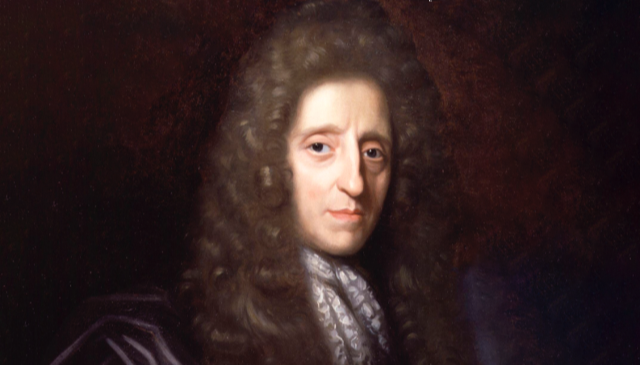
A shorter version of this article can be found here.
This is one of the most important works ever written on the theory of knowledge, to the point that it has sometimes been divided into two eras, before and after the work we are about to present and comment on. In part it has had so much repercussion because of the practical sense with which it is written -in this it is reminiscent of the excellent political work of the same author-, and because it is written from common sense (and even a sense of humor, when it refers to skeptics, doubting whether what they see exists and whether its very existence is a dream). It seems that, in one of the many meetings that this man of action had, a question of morality had arisen, and they did not know if it made sense to discuss it since they were not clear if it was a matter that could be known with certainty and objectivity, so they decided to study this point each one on his own, or that John Locke would study it, the fact is that it was Locke who really did his homework. And the homework was this voluminous book, written with little order, which is reflected in its frequent repetitions, because his activity left him little free time, and he had to take and retake the project again and again, so he repeatedly presents his excuses to the reader.
The book has four chapters, but we will only comment on the ones I consider most important, because in a way they include the others: the second book on ideas and the fourth book on knowledge. That is to say, we will speak first of what we see in reality - the ideas - and then of what we can know about them (the first chapter is a rejection of the very Cartesian theme of the innatism of ideas, whose pretended universality he sees nowhere - there being very little agreement on them - and is incidentally a rejection of first principles, which he understands as innate principles, ignoring, it seems, that for Scholasticism they are habits of knowledge, and therefore not innate but acquired. The third chapter deals with the word, a very important subject for Locke, and very topical today: but it comes to be included in the second, because it comes to say that our names are signs of ideas, as these are signs of things. Common names correspond to abstract ideas, a subject of which he speaks at length in the second chapter.
Locke takes the word ιδεα in the Greek sense of the seen or perceived, a word of the same root as the verb ειδειν, which means “to see” (in fact, in Greek, it also had the metaphorical sense of “the known” This explains the two senses given to this word in the rationalist philosophy of Descartes and in the empiricist philosophy of Locke. Plato and Aristotle used this word in the metaphorical sense of that which is “known” - or that which is “seen” with the intelligence - which Thomism will translate by the “essences” of beings. This is the sense that we give in the usual language to this word when we speak, for example, of “the idea” of man to refer to his essence).
Our knowledge begins with “ideas” in the strictest sense of that which comes to us through the senses, which he calls “simple ideas”. But this does not mean only colors, tastes, sounds, aromas, tactile sensations, but also considers what comes to us through our inner senses: our idea of the self, although we do not see ourselves, hear ourselves, etc., is perceived by our inner sense in what he calls “reflection”.
And the fact that an idea is simple does not mean that we perceive it only by one sense, as for example the idea of corporeality that we perceive not only with sight but also with touch that tells us “tate, here you have encountered a body”, or even many times we perceive them at the same time with some external senses and with the internal sense.
Moreover, the same simple idea can be presented in different modes. Perhaps the English word “modes” would cause some difficulty to an old English translator, but nowadays we have so Anglicized our language that even our hand watch has different “modes”: for chronometer, for alarm, or simply to tell us the time. Thus, for example, the simple idea of “I” can be presented in different “modes”: as the “thinking I”, as the “doubting I”, as the “rejoicing I”, and so on.
An important example of simple idea is for Locke space or extension of sensory apprehension, of which the various spatial forms are simple modes. And another important example is duration, of reflexive apprehension - that is, by internal sense - as a succession of instants or possibility of change of attention, passing from one idea to another. (This will influence Kant, who greatly admired Locke, because also for Kant time will be in our faculty of knowing, although he will add that it is only in it).
In order to facilitate the next step, in which the formation of complex ideas will be considered, let us conclude this presentation of simple ideas or modes by saying that man - and this differentiates him from animals - is capable of abstracting simple ideas by considering them as independent of the concrete existences that have caused them in us and of the other simple ideas that we have perceived in coexistence with them. Thus, for example, when we form the simple and abstract idea of whiteness, it no longer refers to the body that has produced in us the simple concrete idea of the color white.
The other type of ideas Locke considers are complex ideas, or ideas formed from simple ideas, by which he means mixed modes, substances and relations.
Mixed modes, or complex ideas in the strict sense, are the ideas that we form in the mind by composing several simple ideas or modes, either because we perceive that they coexist in some being-a substance, something of which we will speak below-or by forming nominal essences through composition at will of simple ideas.
An example of mixed mode apprehended by coexistence of several simple ideas in a being would be the concept of metal, defined by certain properties such as having brightness, thermal and electrical conductivity, ductility, malleability. An example of a mixed mode composed at will or whim without our perceiving coexistence in any being could be the concept of unicorn, if by such we understand an ungulate with a single horn, or any other fictitious being or chimera. Our ability to form nominal essences is very important in science, since the concepts of scientific theories, as for example the quantity of motion (product of mass by velocity), are nominal essences formed at will because of their usefulness for the formulation of the scientific theory.
We arrive at the complex ideas classically called substances, a philosophical notion that Locke seems to accept reluctantly, not so much for respecting tradition as for being unable to articulate his own description of human knowledge without this notion. It is that we perceive certain simple ideas, which come to us through the senses, as always grouped and “seen” by us in the same being, which would be the support of those simple ideas and of others that we do not perceive. He calls the complex idea formed by all of them substance, although he also refers to substance in the classical sense of being that “sub-is” or “is-under” our perceptions as a support of them, as being not perceived but cause of perceptions. He calls these simple ideas or perceptions qualities of substance when he considers them as their potentialities to cause impressions in us.
Thus Locke sees quality as an active potentiality in substance - the potentiality to make an impression - to which corresponds in our understanding a passive potentiality - the potentiality to receive that impression or idea. However, he only affirms this properly of primary qualities, for Locke distinguishes between primary qualities -extension, with its modes of form and motion, and quantity- and secondary qualities, which would be the rest of the external sensations: sounds, colors, tastes, smells. Locke expresses his conviction, common with the mechanists, that secondary qualities are reduced to primary ones, so that only these correspond to a potentiality in substance, and the rest is provided by our subjectivity.
Thus the movement of the molecules of a membrane - that of a drum, for example - is then the movement of the particles of the air, and this is ultimately the movement of our eardrums that transmits the sensation of sound (and he is not far off the mark in his assumption that all sensations are reduced to movement: today we know that color is also reduced to movement, but not of air or of any space-filling ether, but movement or vibration, even in empty space, of the electromagnetic field at each point: the different colors correspond to frequency bands within the visible spectrum).
Relationships, finally, are “ideas” or “something seen” in a broad sense of the term “seeing,” for we see a relationship between two ideas when we are able to see both juxtaposed,“ Locke says in a special effort to explain himself, ”as in a single glance. It is then that one leads us to the other, having seen the relation between them. (I would explain this by saying that we "see" the relation of the articles of a law, for example, when we grasp their concatenation -quite different from seeing them separately as a disjointed and indigestible mosaic for the student- so that the memory of one article leads us to the memory of another that we have related to it, that is, we have grasped both in a single glance). As I have said, the relation is a complex idea only in a broad sense, since once juxtaposed the two ideas form a single idea.
Once the ideas have been classified, Locke classifies them: whether they are clear, that we perceive their content well, or they are dark; if they are different, well differentiated from other ideas, or if confusing, not well delimited from them.; if they are real, that is, whether there is something in reality that corresponds to this idea, or whether they are fictitious; and if they are real, whether they are appropriate or inadequate to their true value, i.e. whether or not they are a true and fair view of it.
In the case of simple ideas, there is little to say, because of their very platitude: the idea is clear and distinct, for no one pretends that a color, for example, is more than that color, and it is supposed to be distinguishable from another color, or from a sound. They are real because, if we receive an impression, there must be a quality that has caused it, and no one in his right mind doubts this because these impressions are sometimes dreamed. Locke says that the heat of a fire that is burning me is very different from the heat of a fire that I am dreaming. And they are appropriate because they correspond to the qualities that have caused them.
The mixed modes are also clear and distinct, as are the simple ideas of which they are composed, if this composition has been clear. But they can be real or fictitious, for I have been able to compose simple ideas that are not given composed in reality, that is, that do not coexist in any substance, as when I have imagined a unicorn. And they are adequate because there is in them nothing more than what is said in their definition.
We arrive at substances. These are real, for no one in his right mind can think that the beings that we perceive through their qualities, that is, through their potentialities to produce impressions in us, do not exist. But the idea of a substance is not clear and distinct, but obscure and confused, for we can never know what that being is, and what other qualities, besides those we have perceived, may compose that complex idea of substance. The complex idea that, as a mixed mode -as a nominal essence or definition- , we can form of it will always be clear and distinct but insufficient: fewer qualities will always enter into that definition than those that substance really has, which will always remain obscure and confused for us. In short, the complex ideas (in the strict sense) that we form of substances (complex ideas in the broad sense) are always inadequate.
It is for this reason that Locke thinks that the notion of substance is of little use in philosophy, since we know nothing about them, but only suppose that certain impressions we perceive are qualities “of something,” but that “something” remains unknowable to us.
Locke deals in the last chapter with the adequacy of our ideas with the known reality (of truth, then, since “veritas est adaequatio inter intellectus et rei”). He only calls the propositions we formulate about them knowledge when we have certainty about them, and he speaks of mere judgments when we only see them as probable.
Using the word knowledge in this precise sense, Locke says that there can be true knowledge of propositions dealing with modes, simple or mixed, because they are ideas that we have clearly and distinctly, and in fact adequate ideas. In particular, there can be true knowledge of identity or diversity among ideas; or in statements dealing with whether simple ideas grouped together in a complex idea appear grouped in some reality, or is it a fictitious grouping.
As for the propositions that refer to substances, he says that they can never be the object of true knowledge, and that they will be simply judgments, formulated with greater or lesser probability, but never with certainty, since we do not know what the substance is. In a certain way this lack is what comes to remedy the capacity of our intelligence to formulate judgments about something of which we do not properly have knowledge.
And as for the relation between ideas, Locke says that true knowledge of such relations is possible. In particular, we can have knowledge of the relation of causality or necessary coexistence that can be given between ideas, that is, we can come to know that whenever certain simple ideas coexist in a substance, whenever a certain nominal essence is given in that substance, there must also coexist the ideas that have been shown to stand in necessary relation to them.
For example, this would be so if it were shown that whenever the qualities of gold (a certain luster, color, ductility, malleability, resistance to oxidation) that are taken as its nominal essence or definition are given, these qualities imply its property of fixity, or of not being consumed in fire. However, he is of the opinion that knowledge of such relations is rare (this is precisely the kind of knowledge in which physical science consists, and that is why it was then rare, because it was then in its infancy. Thus, for example, we define gold today by a single quality, its atomic number 59, from which the solid state theory deduces, using quantum mechanics, its chemical properties and also the physical properties of brightness, ductility, malleability, and it can even be shown that it must also have the property of fixity mentioned by Locke).
What he sees as very rarely realized in the sciences of nature, he sees already realized in geometry, true knowledge that studies the relationships between certain types of ideas, geometric objects, whether or not they exist in reality (some of them certainly exist in reality, but in an approximate way, never in the exact way in which geometric science contemplates them).).
This is how he arrives at what was the motive of this long study: whether a valid knowledge of morality is possible. And he comes to the conclusion that knowledge of general morality is possible, since it deals with relations: the general moral norm can be derived from the relations that creatures must have with their Creator, even if neither creatures nor Creator exist. And also about special morality there can be valid knowledge, since it deals with the relations existing between concrete acts and the general moral norm.
It is thus that this man of integrity, who took his assigned task seriously, concludes that true and objective knowledge about morality is possible.
b) Texts
BOOK TWO: OF IDEAS
In the first place, our senses, which have dealings with particular sensible objects, transmit respective and different perceptions of things to the mind, according to the varied ways in which those objects affect them....
The other source from which experience supplies ideas to the understanding is the perception of the inner operations of our own mind... Such are the ideas of perception, of thinking, of doubting, of believing, of reasoning, of knowing, of willing....
It can be properly called internal sense. But just as I called the other one sensation, I call this one reflection.
Division of simple ideas ... First, there are some that penetrate our mind by only one sense; Second, there are others that enter the mind by more than one sense; Third, others that are obtained by reflection alone; And fourth, there are some that break through and suggest themselves to the least by all the ways of sensation and reflection.
VIII
Ideas in the mind. Qualities in the bodies. In order to better discover the nature of our ideas and to discourse intelligibly about them it will be convenient to distinguish them insofar as they are ideas or perceptions. And this, lest we should think (as perhaps is usually done) that ideas are exactly the images and likenesses of something inherent in the subject that produces them, since most ideas of sensation are no more in the mind the likeness of something that exists outside of us, than the names that signify them are a likeness of our ideas, although hearing those names does not fail to provoke them in us.
These qualities I call the original or primary qualities of a body, which, I believe, we may note produce in us the simple ideas of solidity, extension, form, motion, repose, and number.
There are qualities such that in truth they are nothing in the objects themselves, but powers to produce in us diverse sensations by means of their qualities.
The ideas of the primary qualities are similarities; but not so the ideas of the secondary qualities. Whence, I think, it is easy to draw this observation: that the ideas of the primary qualities of bodies are resemblances of those qualities, and that their models really exist in the bodies themselves; but that the ideas produced in us by the secondary qualities in nothing resemble them. There is nothing that exists in the bodies themselves that resembles those ideas of ours.
XI
Composing ideas. Another operation that we can observe with respect to his ideas is composition, by which the mind gathers together several of those simple ideas that it has received by the ways of sensation and reflection and combines them to form complex ideas.
Abstraction (...) The mind makes particular ideas, received from particular objects, become general, which is done by considering them as they are in the mind those appearances, that is, separated from all other existence and from all the circumstances of real existence, such as time, place or any other concomitant ideas. This is called abstraction, by means of which the ideas taken from particular beings become representative of all those of the same species....
The mind has the power to consider several united ideas as a single idea, and this is so not only as they occur united in external objects, but as it itself has united them. Ideas thus made up of several simple ideas united together I call complex ideas. Such are beauty, gratitude, a man, an army, the universe... Complex ideas are made at will.
Complex ideas are [mixed] modes, substances or relations.. I call modes [it is understood that he means “mixed modes”] those complex ideas which, however composite they may be, do not contain in themselves the assumption that they subsist by themselves, but are regarded as dependencies or affections of substances... Such are the ideas signified by the words triangle, gratitude, murder, etc.
Simple and mixed modes (...) There are some that are just variants or different combinations of one and the same simple idea [simple modes, and when they are combinations of more than one idea, mixed modes].
XIII
Idea of space. Above I showed that we acquire the idea of space by sight as well as by touch. ...
The shape. There is another modification of this idea of space, which is nothing more than the relationship that the parts that complete the extension have to each other....
The notions of substance and accident are of little use to philosophy. Those who first hit upon the notion of accidents as a kind of real beings that needed some thing to which to be inherent, were compelled to discover the word substance, to serve as a support for accidents....
We are satisfied with the answer and good doctrine of our European philosophers, when they tell us that substance, without knowing what it is, is that which sustains the accidents. Of substance, then, we have no idea what it is, and have only a confused and obscure idea of what it does... If the Latin words inhaerentia and substantia were plainly translated into the English words corresponding to them, to express the action of adhering and sustaining, it would show how little clearness there is in the doctrine of substance and accidents, and would show what use that doctrine is in the decision of philosophical questions.
XXI
We could explain the nature of colors, of sounds, of tastes, of odors, and of all the other ideas we have, if our faculties were sufficiently acute to perceive the various modifications of extension, and the various movements of those minute bodies which produce in us all these different sensations.
How ideas about substances are formed ... The mind notices, moreover, that a certain number of these simple ideas always go together; and that being presumed to belong to one thing, they are designated, thus united, by one name, since the words accommodate themselves to the common apprehension... For as I have already said, not imagining in what manner these simple ideas can subsist by themselves, we are accustomed to suppose some substratum where they subsist and from which they result; which we therefore call substance ... While it is certain that we do not have any clear or distinct idea about the thing which we assume to be the support.
The now secondary qualities of the bodies would disappear if we could discover the primary qualities of the tiny parts.
Sensation convinces us that there are extensive solid substances, and reflection that there are thinking substances. Experience assures us of the existence of such beings, and that the one has the power to move the body by impulse, and the other by thought.
XXV
What is the relationship ... When the mind considers a thing in such a way that, as it were, it brings it to be placed next to another, and looks at one and the other, it is, as the word indicates a relationship ... relative terms respond to them with a reciprocal allusion, such as father and son; major and minor: cause and effect ... The whole, taken as a whole and considered as one thing, and producing in us the complex idea of one thing, which idea is in our mind as a single picture.
Moral relations. There is a type of relationship which is the conformity or nonconformity between the voluntary actions of men with respect to a norm, to which they are referred and according to which they are judged.
Moral right and wrong. Therefore, good and evil, morally considered, are nothing more than the conformity or nonconformity between our voluntary actions and some law.. By divine law I mean the law which God has established for the actions of men, whether it has been promulgated by the light of nature, or by the voice of revelation.
XXIX
Our simple ideas are clear when they are just like the objects themselves, from which they come ... As for complex ideas, since they are formed from simple ideas, they will be clear to the extent that the ideas of which they are composed are clear....
XXX
Simple ideas are all real ... Mixed modes and relations having no other reality than that which they have in the minds of men, nothing is required of that kind of ideas to make them real ...
The ideas of substances are real ... insofar as they are combinations of simple ideas actually united and coexisting in things outside of us.
XXXI
I call adequate those [ideas] which perfectly represent those archetypes from which the mind supposes they have been taken....
Simple ideas are all right... because, as they are but the effects of certain powers in things, adapted and ordered by God to produce in us such sensations, they cannot but correspond and be adequate to those powers....
The modes are all adequate. Since our complex ideas of modes are voluntary collections of simple ideas that the mind assembles, without reference to any fixed archetype or model that exists somewhere, they are ideas that are and cannot but be adequate ideas....
The ideas of substances, insofar as they refer to real essences, are inadequate. The complex ideas we have of substances are, as has been shown, certain collections of simple ideas... Such a complex idea cannot be the real essence of substance....
BOOK FOUR: KNOWLEDGE
I
All that we know or can affirm about ideas is that one is or is not the same as another; that it coexists or does not coexist always with another idea in the same subject; that it bears this or that relation to another idea; or that it has a real existence beyond the mind. Thus this proposition, blue is not yellow, is a disagreement in identity; that of the two triangles of equal bases between two parallel lines are equal in area, The proposal, which states the following iron is susceptible to receiving magnetic impressions is an agreement of coexistence; and the words “God is” contain an agreement of real existence....
Of coexistence. It belongs particularly to the substances. Thus when, speaking of gold, we say that it is fixed, the knowledge of this truth does not go beyond this, that fixity, that is, the power to remain in fire without being consumed, is an idea that always accompanies and is always attached to that particular kind of yellowness, heaviness, fusibility, malleability and solubility in aqua regia, which make up the complex idea signified by the word "fixed". gold.
III
Our understanding of identity and diversity is as far as our ideas go...
Regarding coexistence, it achieves very little...because we do not know the connection between most simple ideas...especially secondary qualities...since no connection between secondary and primary qualities can be discovered [this science has been able to discover, but it was then in its infancy]....
Regarding actual existence, we have an intuitive knowledge of our own existence; a demonstrative knowledge of the existence of God, and a sensible knowledge of the existence of a few things.
IV
How can the mind, since it perceives only its own ideas, know that these are in agreement with the things themselves?
Simple ideas ... Thus, the idea of whiteness or bitterness, as it is in our mind, responding exactly to that power which any body has to produce it in the mind, has all the real conformity it can or should have with things outside of us ...
Our complex ideas, except those of substances. They are archetypes forged by the mind, without the purpose of being a copy of anything that serves as an original.
Therefore, the reality of mathematical knowledge ... It is knowledge of our own ideas ... because real things do not enter into its propositions ... and therefore the mathematician is certain that all his knowledge about that idea is real knowledge ... and he can be certain that everything he knows about those figures, even if they only have an ideal existence in his mind, will also be valid if they come to have a real existence in matter ... Existence is not a requirement for knowledge to be real ...
Since we do not know the real constitution of the substances on which our simple ideas depend (and which is indeed the cause of some of them being closely united in the same subject, while others are excluded), of very few can we be sure that they are or are not congruent in nature, beyond the knowledge attained by experience and sensible observation. On this, therefore, is founded the reality of our knowledge about substances, namely, that all our complex ideas about them must be such, and only such, that they are formed from simple ideas that have been discovered to coexist in nature. To that extent our ideas are true, and, although they may not be very exact copies of substances, they are nevertheless subjects of all the real knowledge we can have about substances.
VI
No proposition can be known to be true unless the essence of each species mentioned is known. ... This, dealing with all simple ideas and [mixed] modes, is not difficult to do, because, in such cases the real essence and the nominal essence is the same ... it is not possible for any doubt to exist as to ... what things are comprehended under each term ... But in substances, where a real essence, distinct from the nominal, is supposed to constitute, determine and limit the species, the scope of the general word is very uncertain, because we cannot know what is, and what is not, of that species....
Few are the universal propositions about substances whose truth can be known ... because only in a few cases can the coexistence of their [simple] ideas be known ... For example, the fixity of gold has no necessary connection, that we can discover, with color, weight, or any other simple idea of those which form our complex idea of gold.
IX
We possess a knowledge of our own existence, by intuition; of the existence of God, by demonstration; and of other things by sensation.
XIV
Judgment makes up for lack of knowledge. The mind has two faculties concerning truth and falsehood: First, the knowledge by which the mind perceives with certainty ... Second, to gather or separate ideas when their certain agreement or disagreement is not perceived, but merely presumed.
XV
The probability is to make up for the lack of knowledge ... since it makes us presume things to be true before we know they are true.
XVII
Inferring is nothing more than showing a proposition to be true by virtue of another proposition previously established as true.
The syllogism is not the capital instrument of reason.. I believe that there is hardly anyone who proceeds by syllogisms when he reasons with himself.
c) Criticism
Let us begin by pointing out what seems to me to be a great success in Locke's philosophy: the basis he offers for understanding the scientific method. Locke has said that the human mind can conveniently form those complex ideas which he calls mixed modes and come to “know” - a strong word for Locke because in him it means certainty - the relation they bear to other ideas, which relation allows us to understand their observed coexistence in substances, which will no longer appear as casual coexistence, but as necessary coexistence.
This is the essence of the scientific method, and Locke rightly says that on few occasions has it been possible to achieve this kind of knowledge, since at the time John Locke writes his Essay The science of nature is at its dawn (Let us bear in mind that he publishes in 1690, that is, three years after the publication of Isaac Newton's Philosophiae Naturalis Principia Mathematica, a work in which physical science is brought to light, as a theory deduced from postulates, after several centuries of gestation, if we call this the establishment of its empirical basis throughout the centuries, medieval, renaissance and baroque).
Through mere observation, in a merely empirical phase, we only come to the conclusion that certain ideas - “something seen” in us, but qualities in bodies - always coexist, but we only come to know the reason for this coexistence when we come to “see” the relation existing between these ideas. In the definition of scientific theory, on the other hand, we form with several simple ideas-several qualities of bodies-a complex idea in the strict sense of mixed mode or nominal essence, susceptible of being studied in that theory. With the postulates of the theory and what is derived from them, properties can be deduced from that definition that must necessarily occur wherever the ingredients of the definition concur. The construction of the object in scientific theory is thus given by the axioms or postulates of the theory and by its definition in the language of the theory. Since the object is nothing more than the definition we have given of it, we have a clear and distinct idea of it, since we ourselves have created it by defining it.
As an example of the difficulty that this type of knowledge entails -knowledge of relationships between complex ideas- and as an explanation for the fact that it has so rarely been achieved, Locke has cited the case of gold, since he understands that it would be very difficult to deduce from the defining properties that have been given for gold -metallic luster, yellow color, malleability and ductility- other properties such as fixity, that is, the property of not being consumed in fire.
As we have said, today, in the context of quantum mechanics, gold can be defined by a single property: its atomic number 59. From the principles of quantum mechanics we can deduce the number of electrons that must be in each energy level (irreducible representations of the SU(2) group) and then deduce the number of electrons in the last shell, responsible for the chemical properties of the element. Similarly, the physical properties of gold such as fixity, and also ductility, malleability, metallic luster and yellow color (certain frequency of the visible spectrum), which had historically been taken as the definition of gold, are deduced. Thus, this object under study in quantum mechanics has been constructed with the statement of the principles of the theory and that of its particular definition: that its atomic number is fifty-nine.
Locke has thus given us a magnificent basis for explaining what scientific knowledge is, and also the reason why it proceeds by means of clear and distinct ideas, since scientific ideas are complex ideas-in the strict sense of mixed modes-which are merely nominal essences created by us in scientific theory. But I think he has done philosophy a disservice by concluding from what is evident - that we have no clear and distinct idea of substances - something that is no longer in any way evident: that substance must therefore be a useless notion in philosophy. The implicit reason why Locke speaks of the uselessness of the notion of substance in philosophy is that, in the intellectual environment of his time, since the work of Descartes, all human knowledge must be required to be articulated in clear and distinct ideas in order to be true.
This requirement is met, as I have said, by complex ideas in the strict sense - the mixed modes or nominal essences - such as the ideas whose relations are studied by scientific theories, but it is not met by those complex ideas in the broad sense that appear in philosophy under the name of substances. Therefore, when Locke demands of ideas in philosophy the same clarity and distinction of the ideas of the sciences of nature, in the same way that Descartes demanded of philosophy the same clarity and distinction as of mathematical science, he is demanding of philosophy not its own but that of science, which is, in my opinion, the erroneous Leitmotiv of modern philosophy.
As we have seen, John Locke will not, however, get rid of substances in the exposition of his philosophy, since he needs them for his key notion of coexistence of simple ideas in the same substance, as qualities of it. But his desideratum will be carried out in the following century by Berkeley and by Hume. The philosophy of this radical man, David Hume, will leave no trace of this absolutely necessary notion for human thought: it is true that in our usual discourses we do not speak of substances, but we speak of beings as existent, that is, as something that underlies our impressions, which is the meaning of this philosophical notion.
If we cannot speak of existing beings but only of colors, sounds, etc., as becomes the case in the work of David Hume and of any other who takes at face value the joke of dispensing with substances, we are left totally disarmed for ethical discourse and in general for any discourse that is not merely scientific: philosophy, and with it human wisdom itself, of which this is but its academic presentation, has thus begun the path of self-destruction.
This has been a brief prospection of the future, but if we now look into the past of this work which has influenced modern philosophy so much, we will see in it reminiscences of Ockham's Summa Logicae by which it might be considered the “venerabilis inceptor” of the late Middle Ages as a precursor or beginning of modern philosophy. In reality, Ockham was not a nominalist but a “conceptualist”, and the same I think could be said of Locke, something I will explain by recalling the key concept of abstraction in both Ockham and Locke.
For Ockham, this did not consist in an intellective intuition of beings, as in Aristotle, in which our understanding captures the essential of a being, then making further abstractions from that first abstraction, but consisted in the formation of a nominal essence that gathered some common features in different beings, which he saw as similar in that precise sense. This was a universal for Ockham. It is false, then, that Ockham denied universals, as is sometimes taught in philosophy classrooms, for in fact he continually speaks of them in his main work Summa totius Logicae, Rather, his “conceptualism“-which distances him from the Aristotelian tradition-consists in the fact that these universals are not abstracted by man, but constructed by him.
And the fact is that what Ockham called abstraction is in reality a construction, since it is a choice of a few properties to form with them a nominal essence, just as we do in science! In fact, the first concepts constructed to study the initially called “natural philosophy” - and today called physical science - such as uniform motion, uniformly accelerated motion, and average speed were born in the same place, Oxford, and at the same time, the first half of the fourteenth century, as nominalism, or rather conceptualism, of Ockham in philosophy (the previous 13th century having ended with a “subtle doctor”, the blessed Duns Scotus, in that same Oxford, who put an essence in each existence, a philosophical gesture precursor of an Ockham who did not consider more real essences than the existences themselves - a real identification of essence and existence that Francisco Suárez would later take up again in the last chapters of his Disputationes Metaphisicae- universals consisting therefore in mere nominal essences or human constructions).
For Locke, abstraction in the Aristotelian-Thomistic sense does not occur either, for although he does not deny substances, he says that they are unknowable by our understanding. The abstraction that occurs in the mixed modes is the sum of the abstractions carried out in the ideas or simple modes, which consists only in considering them separated from the real beings from which they proceed and from the other simple ideas coexisting with them in those beings, just as whiteness expresses the abstraction of the white color of a concrete body. And this is followed by the abstraction of mixed modes in Locke - exactly the kind of abstraction of scientific concepts - which is already a construction, not an abstraction, as in the Summa Totius Logicae of the “venerabilis inceptor” of Oxford. We conclude, then, much as we did with our critique of Descartes: we meet again the gnosceological gesture of science where the gnosceological gesture of philosophy was expected.
Let us end with this consideration, so as not to depart from common sense: 1) We know that things are (and up to here Locke would agree, he had not lost being). 2) We know what things are. 3) Our knowledge of what things are is not exhaustive, it does not exhaust what they are. 4) God's knowledge of what things are is exhaustive, it does exhaust what they are. I believe that this is the common sense of medieval philosophy, and that which, in my opinion, was lacking in John Locke, influenced, in my opinion, by a certain atmosphere of admiration for the clarity of science, precisely in the one who was to show so much common sense in his political theory, inspiring a constitutional monarchy in England.
Complutense University of Madrid. SCS-Spain.






 Español
  English
  Italiano