



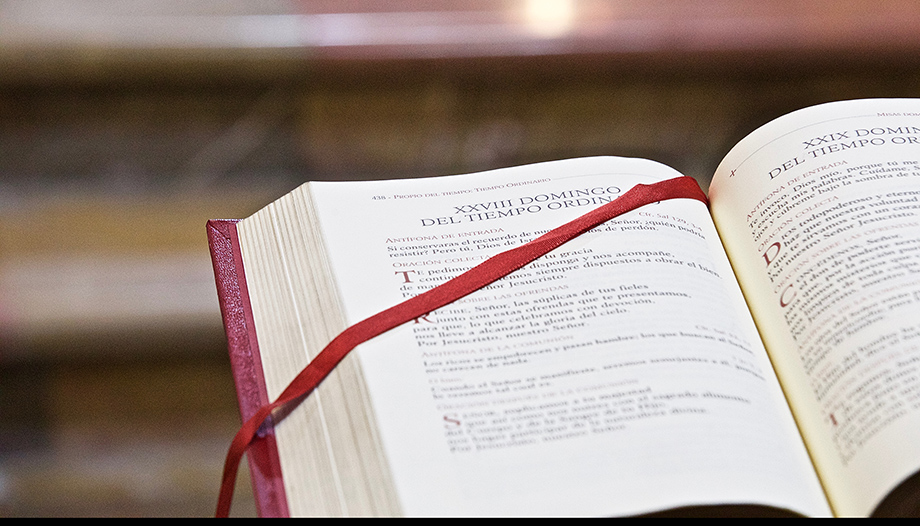
The Christmas liturgy offers us the opportunity to celebrate four Masses at different times: the Vigil Mass, Midnight Mass, Dawn Mass, and Day Mass. Each has its own beauty, but I am particularly drawn to the Dawn Mass. Dawn is a particularly beautiful and luminous time of day, and its symbolism captures the mystery of Christmas in a deeply expressive way.
In the Benedictus Zechariah proclaims that “Through the tender mercy of our God, the sun rising from on high will visit us, to shine on those who live in darkness and in the shadow of death.”At Christmas, this sun that rises from on high truly dawns upon us. Jesus Christ is the true Dawn that has come. The antiphon of the Vigil Mass echoes this: “And tomorrow you will see the glory of the Lord." (Exodus 16, 7).
Another reason why I like the Dawn Mass is because of the choice of readings. In St. Paul's letter to Titus, we read: “When the kindness of God our Savior and His love for mankind was revealed”(Titus 3:4). This is the true Dawn: the tenderness and goodness of God revealed in the person of the Child Jesus. This tenderness is not sentimental; it draws us in. It is a force.
Christmas is the rediscovery of God's revelation in the Child Jesus, in a way that allows us to draw closer to Him. As a child, He comes to us helpless, poor, and vulnerable, so that we can draw closer to Him in the same way. Joseph Ratzinger comments: “In the Child Jesus, the defenselessness of God's love is manifested in the most obvious way: God comes unarmed because he does not want to conquer from the outside, but to win from the inside, to transform from within. If there is anything that can overcome man, his arrogance, his violence, and his greed, it is the defenselessness of a child. God took it upon himself in order to overcome us and thus lead us to ourselves.".
God comes to us with radical tenderness, and this is the love that changes the world. From the beginning of his pontificate, Pope Francis has encouraged us not to be afraid of tenderness. It is not a virtue of the weak, but a sign of inner strength and capacity for attention, compassion, and love. He affirms: “We must not be afraid of kindness, of tenderness!”.
This is precisely what the shepherds set out to see in the Gospel of the Dawn Mass. “Let's go to Bethlehem!” These words from the shepherds express the true meaning and spirit of Christmas celebrations. They remain valid for all Christians, especially during this Christmas season. Let us go and see what the Lord has revealed to us. This should be our attitude at Christmas. We have received the news of the birth of a child; let us go forward to see that Child, to confirm the sign of God's tenderness that has been revealed to us in a baby. The invitation to set out on the road to Bethlehem is an invitation to encounter God's joy, goodness, and tenderness, and then to share them.
We want to start afresh at this Christmas time because we know that contact with the loving kindness of our God will always give us the strength and impetus to continue on our path. It is the strength of humble love, as Dostoyevsky so beautifully expresses it in The Brothers Karamazov, where the starets Zosima says to Alexei: “Always choose humble love, always. Once you have chosen it, you will always have what you need to conquer the whole world. Loving humility is a powerful force, the most powerful, and there is nothing in the world that can compare to it.."
We want to start again from this powerful force. A few weeks ago, we began the new liturgical year, and as Ratzinger pointed out, the liturgical calendar did not initially develop from the perspective of Christ's birth, but from faith in his resurrection. It was Easter, not Christmas, that gave the first impetus to the Christian faith and the existence of the Church. Today, this impetus can be rediscovered in the power of a child's tenderness. Let us go to Bethlehem, because there “the goodness of God our Savior and his love for mankind was revealed".



 Español
  English
  Italiano