 The Theology of the Second Vatican CouncilThe Pope's catechesis will address Vatican II and evangelization
Today we often hear talk of welcoming, listening and dialogue. In this context, what significance can it have that Leo XIV invites us, after the Jubilee Year, to “rediscovering Vatican II”.” in your documents?
John Paul II affirmed that this Council is“the great grace from which the Church has benefited in the 20th century.”. In continuity with his close predecessors, Leo XIV has said that the Vatican II remains “the polar star”of the way of the Church.
Is it not, then, that the Council enlightens us about how God has welcomed us, listened to us and dialogued with us? Is it not that it guides us to accept what the Lord wants to reveal to us, so that we may be right on our way, being salt and light for humanity?
The Second Vatican Council, a new dawn
In his introductory catechesis (cfr. General Audience 7-I-2026), Pope Prevost has pointed out how, supported by the rich biblical, theological and liturgical reflection that had gone through the twentieth century, “the Second Vatican Council has rediscovered the face of God as Father who, in Christ, calls us to be his children”.”(cfr. Dei Verbum).
Likewise, “has looked at the Church in the light of Christ, the light of the nations, as the mystery of communion and the sacrament of unity between God and his people." (cfr. Lumen gentium); “has initiated an important liturgical reform, placing the mystery of salvation at the center and the active and conscious participation of the entire People of God. (Sacrosanctum concilium).
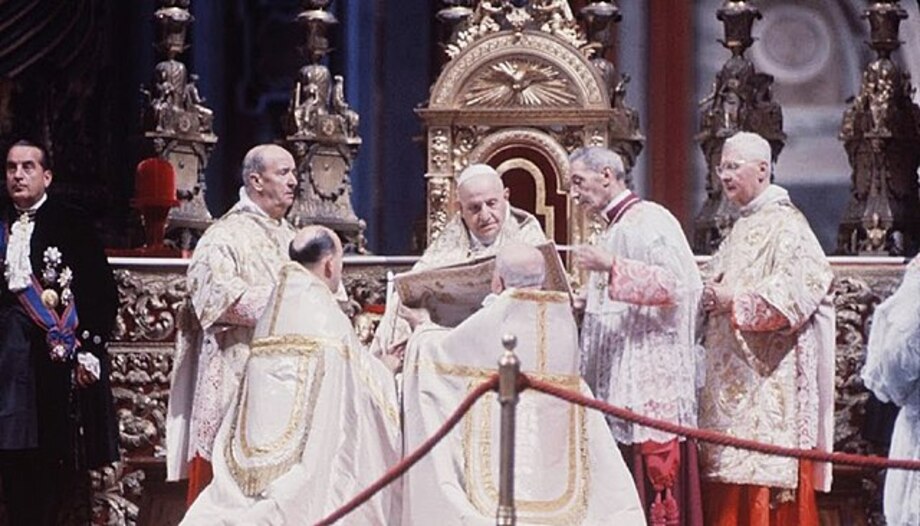
At the same time, Vatican II, which John XXIII considered to be a new dawn for the Church, has prompted us to “to open up to the world and to embrace the changes and challenges of modern times.in dialogue and co-responsibility".
Pope Prevost stressed that, thanks to the Second Vatican Council and following the guidelines of St. Paul VI, “the Church becomes a word; the Church becomes a message; the Church becomes a colloquy.” (Ecclesiam suam, 34). A dialogue that extends through ecumenism, interreligious dialogue and with people of good will.
Friends called to prayer
In order to illustrate this dialogue, Leo XIV began with the dogmatic constitution Dei Verbum on divine Revelation (cfr. General Audience, 14-I-2026). By means of Revelation, God wished to establish a dialogue with humanity, calling each one, like a Father, to friendship and intimacy with him (cf. Jn 15:15).
From the very beginning of the world, God offers himself to dialogue with our first parents. Throughout salvation history, he freely establishes a covenant with humanity. “With the coming of the Son in human flesh, the Covenant opens to its ultimate end: in Jesus, God makes us sons and calls us to become like Him in spite of our fragile humanity.”In this way he offers us the likeness of God not through sin (cf. Gen 3:5), but in union with his Son made flesh.
And so the Pope points out: “God's Revelation, therefore, possesses the dialogical character of friendship and, as happens in the experience of human friendship, does not tolerate silence, but is nourished by the exchange of true words.". “God. speaks to us.”, says the Council. This, in the case of God, means that he not only shares information and news, but reveals to us who we are.
From this, Leo XIV deduces the necessity of the prayer, in which we cultivate friendship with the Lord. Both prayer and liturgical and community, where God speaks to us through the Church, such as the prayer staff, the dialogue of each one with God: “During the Christian's day and week, time dedicated to prayer, meditation and reflection cannot be missing. Only when we speak ‘with’ God can we also speak ‘of’ Him.".
Jesus, Mediator and Fullness of Revelation
The Revelation -he explained the following Wednesday (cfr. General Audience 21-I-2026)-not only communicates ideas (as interpreted by a certain rationalist tendency in recent centuries), but also shares a history and calls to personal communion with God. This is fully realized in Jesus Christ: “The intimate truth about human salvation is made manifest to us by revelation in Christ, who is both mediator and fullness of all revelation.” (Dei Verbum, 2).
In fact, in the words of Leo XIV, “Jesus reveals the Father to us by involving us in his own relationship with Him.”. This is how we come to know God“.“in the same way that we are known by Him”. And our true identity is made manifest to us: we are children of God, created in the image of his Son, the divine Word, and called to a full life in him. We - through Baptism - are made adopted sons (cf. Galatians 4:5) of God (that is, we are made sons by adoption, not by nature as Christ is, although this “adoption” is very different from human adoption, which is only a legal process by which someone acquires a kinship and becomes the subject of certain rights).how does Christ carry out this revelation of the Father? Precisely he does it “with its own humanity”and through different stages, which are completed with the sending of the Holy Spirit (cf. Dei Verbum, 4). This, the Pope points out, means that we cannot know him if we take away some of Jesus' humanity, for this in no way diminishes his divine being.
He stresses that what saves us and summons us is not only the death and resurrection of Jesus, but also “...".“his very person’: the Lord who becomes incarnate, is born, heals, teaches, suffers, dies, rises again and remains among us.”. Therefore, “to honor the greatness of the Incarnation, it is not enough to consider Jesus as the channel for the transmission of intellectual truths.".
Sacred Scripture and Tradition
On Wednesday, January 28, Leo XIV explained the relationship between Sacred Scripture and the Tradition of the Church. The Council presents them as two channels that proceed from the same source and tend to the same end (cf. Dei Verbum, 9). For this reason, the Fathers say, and the Catechism of the Catholic Church takes up, that Sacred Scripture is written more in the heart of the Church than materially written. Tradition “progresses” in the Church with the help of the Holy Spirit (cf. Dei Verbum, 8).
And this happens concretely through the reflection and study of the believers, their experience from the intelligence of spiritual things and above all, with the preaching of the successors of the apostles (the bishops) (cfr. Ibidem).
In summary: “The Church, in her doctrine, in her life and in her worship, perpetuates and transmits to all generations all that she believes.” (Ibidem(This is what Tradition consists of: that the Church transmits, hands on all that she believes, celebrates and lives; and in this ensemble the Word of God is transmitted).
In the words of the Pope: “The Word of God, therefore, is not fossilized, but is a living and organic reality that develops and grows in Tradition. Tradition, thanks to the Holy Spirit, understands it in the richness of its truth and incarnates it in the changing coordinates of history.".
At this point Leo XIV evokes St. John Henry Newman when in his work The development of Christian doctrine compares Christianity (as a community experience or as doctrine) to a living seed that grows thanks to an interior life force (cf. Mt 4:26-29). This is, the Pope adds, the “deposit” of which St. Paul speaks in his letters to Timothy (cf. 1 Timothy 6:20; cf. 2 Timothy 1:12-14; cf. Dei Verbum, 10) and that it must be faithfully transmitted in its entirety.
In short, it can be concluded that the Word of God is transmitted not only in Scripture but also in the whole of Tradition and therefore in the whole life of the Church: doctrine, liturgy, moral orientations, etc. In fact, the Word of God is expressed in various ways that form a symphony (this is the theme of the “analogy of the Word”, cf. Verbum Domini, 7). The Word and the Spirit always go together.
Word that nourishes life and love
Wednesday, February 4, was dedicated by Leo XIV to Sacred Scripture as the Word of God in human words. The Word of God (which is not reduced to words like ours, but gives us a participation in his very life) also uses human language., although it transcends them. This has some important implications (for it is not only a divine nor only a human language).
In the first place, that the human authors are not passive instruments of the Holy Spirit, but“.“true authors”of the sacred books (cfr. Dei Verbum, 11), which makes divine inspiration greater and more perfect.
Therefore, when interpreting these texts, one cannot disregard the historical environment in which they were written and the various literary forms used (this is what is usually referred to as the “literal sense”). If this were not done, one would run “the risk of giving rise to fundamentalist or spiritualist readings of Scripture, which betray its meaning".
This principle that Revelation relies on human language is also valid for the proclamation of the Word of God: “if [this proclamation of the faith] loses touch with reality, with the hopes and sufferings of men, if it uses a language that is incomprehensible, uncommunicative or anachronistic, it becomes ineffective”. Hence, in every age, we must repropose the Word of God with new languages (cfr. Evangelii gaudium, 11).
Secondly, it is also reductive “...".“a reading of Scripture that neglects its divine origin and ends up understanding it as a mere human teaching”as something to be studied simply from a technical point of view or as only “a text from the past” (cf. Benedict XVI, Verbum Domini, 35).
This can be avoided in the context of the liturgy, which seeks to speak to the believers of today, to touch their present life with its problems, to enlighten their conduct and the decisions they have to make. But it is only possible when the believer reads and interprets the sacred texts under the guidance of the same Spirit who inspired them (cf. Dei Verbum, 12).
In this sense, the Pope adds, “Scripture serves to nourish the life and charity of believers, but (...) even as it embraces all dimensions of life and reality, it transcends them.”. That is why “cannot be reduced to a mere philanthropic or social message, but is a joyful proclamation of the full and eternal life that God has given us in Jesus.".
Word of God and life of the Church
In the fifth and last catechesis on the Dei Verbum (cfr. General Audience, 11-II-2026) Leo XIV explained the relationship between the Word of God and the Church. She has always venerated the Scriptures as the place of encounter with God, as well as the Eucharist and Tradition as the rule of faith. Moreover“the original place of scriptural interpretation is the life of the Church.” (Verbum Domini, n. 29).
If revelation is a dialogue in which God speaks to men as friends (Dei Verbum, 2), especially in prayer, Sacred Scripture strengthens the Christian community. And therefore, “love for the Sacred Scriptures and familiarity with them should guide those who exercise the ministry of the Word: bishops, priests, deacons, catechists, etc.”It is also at the center of the work of those who dedicate themselves to the biblical sciences and to theology in general.
Sacred Scripture, Leo XIV points out, nourishes faith, drives the mission in every Christian and in the Church as a whole, and quenches our thirst for meaning and truth. “Living in the Church, one learns that Sacred Scripture refers totally to Jesus Christ, and one experiences that this is the profound reason for its value and power. Christ is the living Word of the Father, the Word of God made flesh.".




 Español
  English
  Italiano