



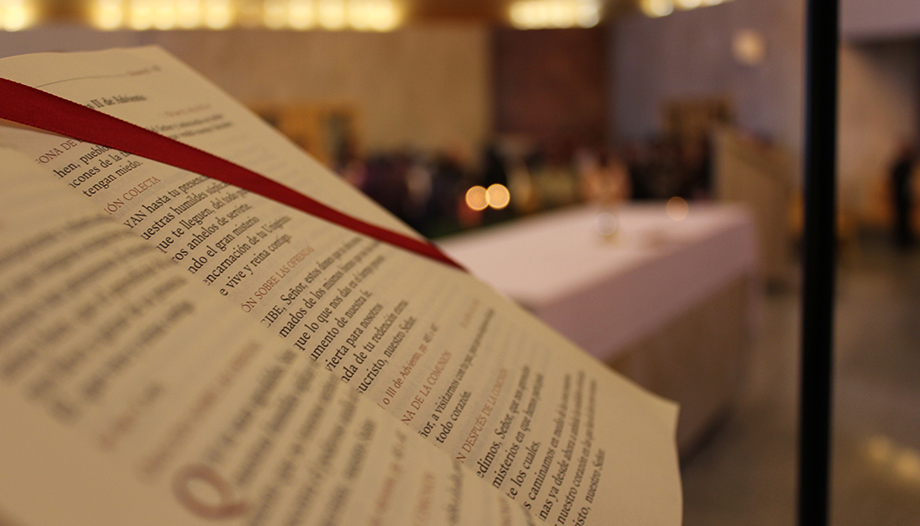
The Gospel scene that today's Liturgy offers us for our Lenten gallery is the healing of the man born blind. From its opening to its closing lines, the theme that dominates the entire narrative is that of sight and blindness.
The scene begins simply: “And as he passed by, Jesus saw a man blind from birth.”. A dialogue follows, and then Jesus reveals himself as the Light of the world. Finally a dramatic healing takes place that involves both Christ's initiative and man's cooperation. Jesus acts, but man must respond. Obeying the Lord's command: “He went, washed himself, and came back with sight".
This man, blind from birth, is an image of each one of us. We were conceived in sin, but God's mercy has come to meet us. Like the blind man sent to be washed, our Lenten journey reminds us of our constant need for conversion. Sin blinds us, distorts our vision and prevents us from seeing clearly. That is why we need to be washed again and again to regain our sight. The call to ongoing conversion during Lent is made very concrete in the frequent celebration of the sacrament of reconciliation.
True conversion is not only repentance from sin, but also allows us to see with God's eyes, to see as God sees. God's gaze goes beyond appearances and reaches the heart. This theme of sight is also central to the first reading. When Samuel goes to anoint a king among the sons of Jesse, he allows himself to be impressed by appearance and stature. But the Lord corrects him: “Don't look at his appearance or how tall he is, because I've ruled that out. It is not a question of what man sees. For man looks at the eyes, but the Lord looks at the heart.”. This divine way of seeing is beautifully expressed in the preface of the Mass: “Through the mystery of the incarnation, he led the human race, a pilgrim in darkness, to the splendor of faith.”. This step towards the light of faith is God's call to us.
Seeing as God sees requires faith. Faith gives us the vision of Christ; it grants us the supernatural sight we so desire. The man blind from birth, after receiving his bodily sight, still had to take one more step: the step toward spiritual sight. His recovered sight enabled him to meet Christ and believe in Him. This contrasts sharply with the Pharisees, who saw physically, but refused to believe. Although they claimed to see, they remained spiritually blind. That is why Jesus says to them: “If you were blind, you would have no sin; but since you say “we see,” your sin remains.".
The importance of seeing with the eyes of faith is expressed in the decisive question that Jesus asks the healed man: “Do you believe in the Son of man?”. In recognizing what Jesus had done for him, the man passes from the physical light to the light of faith and professes: “I believe, Lord”. This path of growth cannot be said of the Pharisees, who consider themselves healthy and in no need of healing.
As we approach the celebration of Easter, we are invited to wash the eyes of our faith, so that we may see as Christ sees. We are called to remove all sin that clouds our vision and darkens our heart. This requires humility, the humility to recognize that we are not perfect and the courage to repent of our sins, our false securities, our ideologies and our selfishness.




 Español
  English
  Italiano