



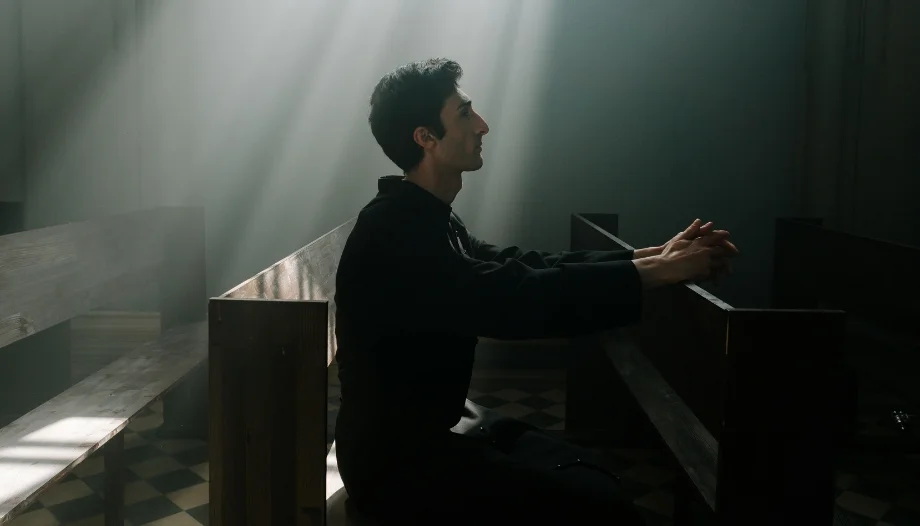
When talking to psychiatrist and psychologist friends, they tell me that it is increasingly common to find people with a Christian upbringing in their offices who express a desire for freedom from the commitments they had made at a certain point in their lives. Married people who regret having done so, priests who want to marry, parents who do not want to be responsible for their children, wives who are fed up with their husbands and want to rebuild their lives independently, religious men and women who long to enjoy the pleasures of the world...
What all these situations have in common is a longing for freedom or autonomy that reveals that the person does not feel free, and they interpret these commitments as an intolerable burden that begins to enslave them. This tension between the commitment made and the desire for autonomy tears at the person's psychological interior to the point of creating real anxiety, depression, and very serious internal conflicts that, at the very least, produce a continuous feeling of dissatisfaction and unhappiness of such magnitude that it leads to a pathological state of constant complaint and aggression against oneself and against the person or institution that threatens one's freedom.
This situation invariably leads to the temptation, sometimes determination, to send everything “to hell,” following the style of Camilo José Cela. As this phenomenon seems to be very common, I have decided to reflect on the origin of this situation.
The spirit
Humans are not only composed of a body and a rational soul. There is a third element that, in addition to the rational soul, distinguishes him from other animals, and it is called “spirit.” Talking about spirit is not fashionable, especially in the fields of psychiatry and neuroscience, where some want to reduce the mind, consciousness, or psyche—elements of the human soul—to mere brain activity. And I don't want to talk about the soul, but about the spirit.
That image and likeness of God, which exists within every human being, is of fundamental importance because it allows us to recognize ourselves and to recognize how to treat others. It is the source of our freedom and our capacity to love, and both are intrinsically linked.
I believe that the difficulty we have in recognizing or denying the spirit of God within us arises fundamentally for two reasons: on the one hand, God, whose laws could constitute a threat to our freedom, and on the other, the experience of perceiving the suffering or injustice endured by the innocent in the world. Almost no one is an intellectual atheist, but there is a great deal of emotional atheism for these reasons. It is precisely the threat to our freedom that I wanted to continue reflecting on.
The relationship with God
Genesis contains an interesting account of what our relationship with God was like. It consisted of a family relationship, spontaneous conversation, and trust. However, evil already existed in the world, and the aim was to introduce it into man. And the serpent knew well how to tempt Eve. First, by presenting God as a tyrant: “So God has told you not to eat from any tree in the garden?” (Genesis 3:2). First lie: “just one”, Eva replied.
The serpent attacked again, this time treating God as envious: “It is that God knows [...] that you will be like God in the knowledge of good and evil.” (Gen 3:5). And now, he had achieved his goal. The immediate effect this had on Eve and her partner was that they no longer saw God as He really was: a Father who had given them the entire creation.
The immediate consequence was that the image and likeness of God at the core of her being, the spiritual dimension, became distorted: now a tyrannical, cruel, capricious, envious, and domineering god dwelled within her, who would take on different names throughout history and generations, such as Baal, Moloch, Jupiter, or Zeus. How we treat ourselves and others will depend on this new image we have of God. If the inner god is vengeful, we will also be vengeful, and if he is destructive, we will also adopt this attitude, even against ourselves, and if he is a master, then we will tend to dominate others and feel like slaves to God.
Slaves
Let us continue to dissect the origin of this feeling of being a slave. It is very common in the religious world to use the word slave or servant to refer to the relationship between man and God. That is why we were created, according to the Catechism of the Catholic Church: to serve, to give glory to God, and to be happy (cf. CCC, 356 and 358).
He placed us there to work and care for Eden. It was a task, but he did not create us to work in the garden. If man had been created to work, then creation would be more important than man. God would be the master of the garden, and we would be his servants or slaves who had to care for it. Caring for the material creation would be a task assigned to man for God's service, rather than a gift from God to man, who would feel happy caring for it and working in it. If we do not understand this well, we may feel like slaves to work. And this was the first consequence: seeing God as a God who makes me his slave and servant, whom I must fear.
The entire history of the Old Testament can be summarized as God's relationship with a people who are clumsy and hard-hearted: who see but do not understand, and do not know how to love. Only a few knew how to love God freely, albeit with no small difficulty, such as Abraham, Isaac, Jacob, and Moses.
Redemption
This relationship between God and his people was a rescue operation. God helped his people to bring them out of slavery into freedom, from Egypt to the Promised Land, and it culminated with the coming of Jesus Christ. With his coming, a turning point began that sought to restore the original idea of God within man, so that he would not feel like a slave but like a son and heir. We began to abandon the relationship of fear for a relationship of love.
God continues to want to rescue us from the only slavery that truly exists, which is that of sin, but there have always been and always will be people who want to remain slaves and return to Egypt. God insists: “I no longer call you servants/slaves […] I call you friends.” (John 15:15). We can never feel like servants or slaves, because now we are friends of God. What's more, we are now children of God! John expresses this forcefully in his first letter: “See what love the Father has given us, that we should be called children of God; and so we are!” (1 John 3:1).
Language and perspectives
So where does this insistence on continuing to call ourselves slaves or servants rather than children in our relationship with God come from? It is true that, as Campoamor says, “In this treacherous world, nothing is true or false; it all depends on the color of the glass through which you look at it.”. And that lens through which we view things and events in life can be transparent, dirty, or broken.
This perception of oneself as a slave has a dual origin: on the one hand, it stems from an internal problem, from the lens through which one views the world, from an erroneous idea of God that the serpent has instilled in man, the original temptation we spoke of earlier, leading us to believe that God is a master and tyrant who can capriciously do whatever he wants with our lives. We feel threatened by God, whose moral laws prevent the development of our freedom, instead of seeing that his rules give happiness and life to man (Deuteronomy 4:40; John 6:63). This threatening conception of God automatically leads to the destruction of the source of Love within ourselves and, consequently, of our freedom.
On the other hand, there is an external origin: the misuse of language that makes us think, through the use of words, that our relationship with God is one of slavery. There are many Christian prayers, many of them of medieval origin, in which the person praying renounces their freedom to submit to God. How barbaric! If this renunciation becomes effective, it is not surprising to hear lamentations about life and the commitments made. And I would do the same. If God is seen in this way, as a master and I as a slave, we are heading straight, usually unconsciously, towards an affective atheism that will lead us to expel that god from our lives. And rightly so. It would then make perfect sense to say “God is dead. We have killed him.” (Nietzsche) when I kill within myself that kind of god who does not coincide with the true God. And I will consider that death a triumph that will place me once again in a position of freedom to return to the true God.
Servants
Let's continue to dissect the concept of slavery. There were many ways to serve in the ancient world. The word doulos in the masculine form often meant slave or servant, but in the feminine form it also had another meaning. One of the meanings of δούλŋ (doula), refers to the work done by certain women in accompanying pregnancy, childbirth, and the postpartum period. They were not midwives. They were servants who emotionally supported their mistresses in these circumstances. Servants who were considered part of the family. There were also doulas thana, which offered support services for terminal illnesses.
In general, in the canonical Gospels, the word most commonly used in Greek is δούλoς, doulos, which is translated into Latin as Hello, slave, in most cases, or servant, less frequently. The fundamental difference between the two, despite being the same word, is that the slave was the property of his master, as if he were an object, and the servant could cultivate his master's land and received a certain degree of protection without severing ties with his master. But the most puzzling thing is that if there was a specific word in Greek to refer to a slave (σκλάβος), why is δούλoς, doulos, used? Why is the word slave (σκλάβος) never used in the Gospels written in Greek, but it is used in the translations?
Another word is also used in the Gospels: διακονος, diakonos, which is translated as servant or attendant, as for example when Jesus said: “…I have not come to be served but to serve…” (Matthew 20:28). The reason why these words are translated from Greek into Latin as slave, servant, or server depends on the intention of the translator, St. Jerome, in the fourth century AD. For example: in the parables of the Lord, the word doulos, and is translated into Latin as Hello and into Spanish as slave or servant interchangeably.
St. Paul in Philippians 2:7, when he says “He emptied himself, taking the form of a slave” resort to doulos, Hello in Latin and siervo or esclavo in Spanish. However, it is also noteworthy that in the passage of the Annunciation of the Virgin, δούλŋ is used. (doula), and is translated as handmaid to Latin and slave to Spanish. Saint Luke would receive direct testimony from the Virgin Mary about what happened at the Annunciation, and isn't it strange that the Virgin Mary calls herself a slave of the Lord (Luke 1:38)? She who did not need to be redeemed from sin, since she was conceived without it and committed none. Is it correct, then, in this case, to misuse the word slave when translating from Greek and Latin?
If we read the passage about the Annunciation carefully, we see that the Angel informs her that her relative Elizabeth, now advanced in years, “The one they called barren is six months pregnant.” (Luke 1:36). And Mary replies: “Behold the handmaid of the Lord” (Luke 1:38). Could it be that Mary would offer herself as doula to accompany Elizabeth during her pregnancy, childbirth, and postpartum period after the Angel's announcement, as she did immediately? Is it correct to call God's freest creature a slave? Why, when Jesus says he has come to serve, does he use the word deacon and not slave? And, above all, why, when there is a specific word for slave in Greek, is it not used anywhere in the Gospels?
Ways of thinking
Feeling like a slave in Christianity is very common and dangerous. And it could be that this way of thinking is inherited from the Middle Ages. Ways of thinking like this have occurred throughout the history of the Church. Another possible example would be that, until not many years ago, it was inconceivable that a married person could achieve holiness. As we said, there are many texts and contexts where the word slave appears frequently in the canonical Gospels, behind situations where the protagonists feel like slaves. One of the most significant occurs in the parable of the prodigal son. The younger brother, upon returning repentant to his father, says: “I am not worthy to be called your son: treat me as one of your laborers.” (Luke 15:19). And the older son, who had apparently never left his father's house, says: “Look: in all the years I have served you, I have never disobeyed an order of yours.” (Luke 15:29). Both feel like slaves. One wants to eat acorns and cannot, and the other can eat lamb but does not want to. Both have the same disorder. Both the one who returns and the one who stays. And this is very toxic in the religious life of those who call themselves Christians.
Feeling loved
It is absolutely necessary to love and feel loved in order to act freely. And we cannot love while feeling like slaves or servants; we must do so freely from the new perspective that Jesus Christ has brought us: We are now children of God! And we cannot be loved by just anyone and in any way.
Let's take an example: there are 32 million pets in Spain and 85% of the Argentine population has one. Why do many people adopt so many pets in their homes instead of adopting or having children? I don't think selfishness or convenience is the root cause of this phenomenon. I think that, in many cases, there is an underlying need to feel loved by someone in an unconditional and automatic way, not freely. And animals, especially dogs and cats, know how to do that very well. Perhaps deep down, I am not capable of accepting that someone free would love me like a child. I don't want to take the risk of someone free loving me or stopping loving me, and I prefer to be loved by a slave. But God did take the risk of creating free man, made in his image and likeness, who would love him voluntarily.
Let us stop feeling like slaves or servants in our relationship with God. Let us correct our language. We have been called to divine filiation, not servitude. When Jesus used the term slave or servant, it was before his death and Resurrection. Now, we have been redeemed, we belong to him, but in a father-child relationship. Let us do nothing without love, just as a good mother or father does not feel like a slave or servant to their spouse or children.
Let us rectify this as soon as possible, or we will turn our commitments as Christians into unbearable rules, and we will end up psychologically disturbed. God wants happy children who love him freely. Let us convince ourselves that, in the light of the Resurrection, we are no longer slaves to our miseries. Christ has pleaded with his Father that we should no longer call ourselves that. Let us not insist on calling ourselves that. Just as there was a first idea of marriage at the beginning of creation, so too was there a first idea of God as Father within us, which we may have distorted.
Let us abandon the language of slaves and recover, with a clear and transparent gaze, the true, original, and genuine image of God that lives within us. I am convinced that, by seeing God within us in this way, we will treat ourselves and others better, our commitments will cease to be burdens and become sources of life and happiness, and, incidentally, we will stop giving psychologists and psychiatrists so much work.
Full member of the Royal National Academy of Medicine of Spain.




 Español
  English
  Italiano