




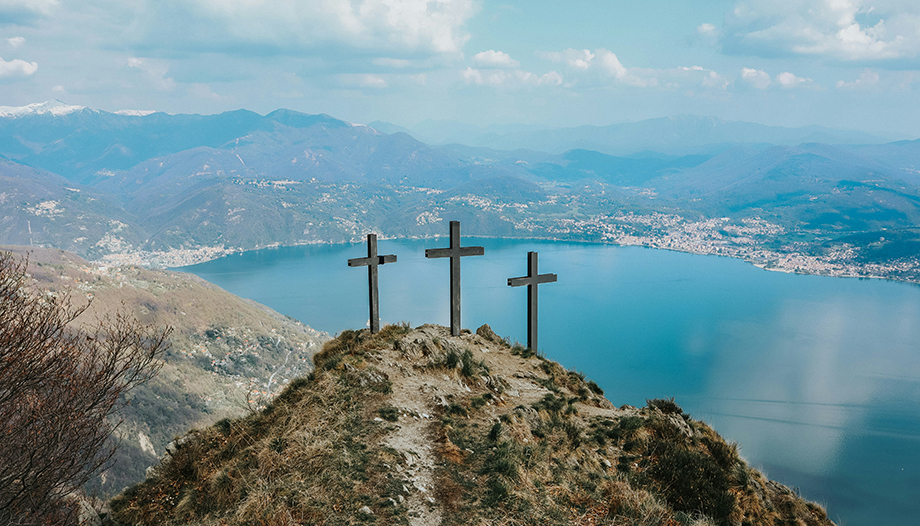
Human existence has some unfathomable wells to which it is difficult to peer into. They are those that make us experience vertigo, the insecurity of those who do not know the sharp edges and shapes that carve its abrupt rim. The mystery of pain is one of these wells. Perhaps one of the deepest and unintelligible, where reason loses the battle on many occasions and, paradoxically, the one that returns the most accurate reflection of each of us.
Every life has pain, life is born of pain, and even so, man feels a natural repulsion towards something that, lived without meaning, finds no explanation within the call to fullness that is found in the human soul as the image of God that it is. This is why it is to God that the eternal question about the meaning of pain is addressed, as St. John Paul II pointed out in his Apostolic Letter Salvifici Doloris: "Why evil? Both questions are difficult when asked by man to man as well as when asked by man to God. In fact, man does not ask this question to the world, even though suffering often comes from it, but he asks it to God as Creator and Lord of the world. Christ gives the answer to the question about suffering and about the meaning of suffering, not only with his teachings, that is, with the Good News, but above all with his own suffering”.
For those who think that Christians “persecute pain” or for those who, on the contrary, accuse them of hiding the less kind face of the world in a kind of beatific consolation, the cross is still the answer. That answer was the one received by Simon of Cyrene, the one who “passed by” and was “forced” to carry the Cross of Christ. No word of the Cyrenean is recorded in the Gospels, neither of complaint, nor of the contrary. He is the man of silence, the one who accompanied the steps of a condemnation that was not his... but it was for him.
The Life of God passes through the cross, but not as a symbol of death, of despair, but as a key to Life. As the meditation point that accompanies the Second Station of the Cross says Stations of the Cross Written by St. Josemaría “There is a kind of fear of the Cross, of the Cross of the Lord, in the environment. They have begun to call crosses to all the unpleasant things that happen in life, and they do not know how to carry them with the sense of children of God, with a supernatural vision. They even remove the crosses that our grandparents planted on the roads...! In the Passion, the Cross ceased to be a symbol of punishment and became a sign of victory. The Cross is the emblem of the Redeemer: in quo est salus, vita et resurrectio nostraTherein lies our health, our life and our resurrection.
Life and death. Cross and light. Pain and joy. Antonyms of human life which is, in itself, the contradictory paradox of two that are one. The Christian knows that it is not a matter of “seeking” pain but, rather, of accepting the pain that comes and accompanying and relieving the one who suffers: to be, in short, a silent Cyrenean.



 Español
  English
  Italiano