


I recently came across a quote by John Paul II that caught my attention once again: “In one’s vocation, both God’s unconditional love and the exaltation of human freedom shine forth.”. How is it possible to reconcile the existence of a divine plan (vocation) with human freedom—the exaltation of freedom!—?
One line of thought, which has gained traction in recent years, asserts that God’s will consists in having created human beings free. God loves you and wants you to be free: your vocation is summed up in the way you choose to respond freely to God’s love. In this process, the only determining factor is that which stems from each person’s individual talents and circumstances—something that is, ultimately, contingent. Beyond that, it is generous creativity that shapes one’s calling.
This perspective is encouraging and helps us realize the full potential of our freedom, but it also presents some challenges. I became aware of this while reading the book In Your Hands, Father, by the Belgian Carmelite Wilfrid Stinissen. The book follows three steps: “Accepting God’s Will,” “Obeying God’s Will,” and “Being an Instrument of God.” In the second step, the author explores the idea that “God’s will is not written anywhere in heaven. Since God has given us free will, He also wants us to use it. As long as we do not expressly violate God’s manifest will and the laws of the Church, we can decide for ourselves what we want to do.”.
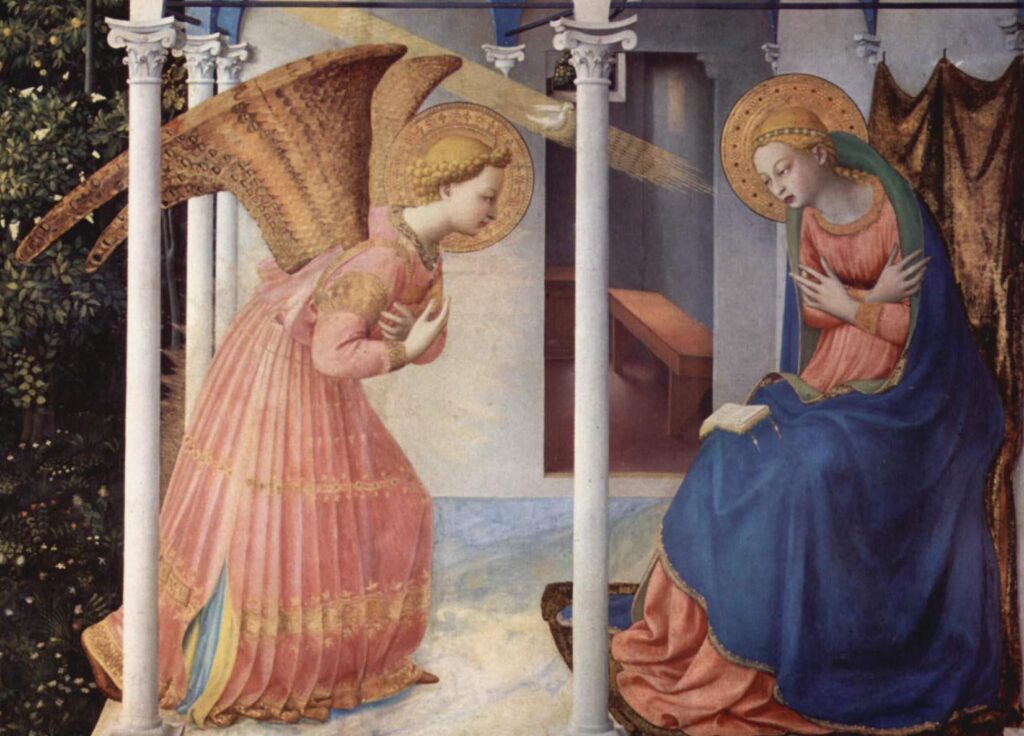
That was how a philosophy professor explained God’s plan for each of us. Years later, the same author asked “to a good friend whether God wanted something at every moment, even in the smallest things. The answer was immediate: ‘Of course—otherwise, obedience would be meaningless.’”. It sounds strong, but it’s easy to understand: if there is no specific will, it’s not possible to speak of obedience. And, in fact, if God had not had a will for Mary, she would hardly have decided to become the Mother of the Messiah (much less would she have achieved it through her own generosity alone…). Jesus, too, was clear about what the Father was asking of him at every moment—and doing so was his sustenance.
If God has a specific plan, does freedom boil down to saying "yes" to what God determines? The 2018 Synod of Bishops, dedicated to young people and vocation, highlighted the need to reflect on that relationship while avoiding any determinism and everything extrinsicism: “A calling is neither a prewritten script that a person should simply recite nor a theatrical improvisation without a outline”.
What Stinissen helps us understand is that it is possible to walk the path of God’s will—a very specific will—from a place of profound freedom. This is how the saints of every age have experienced it. Perhaps this is the decisive point: for those who still see themselves as individuals distinct from God, it is impossible that his will not be seen as an imposition, however slight it may be. He can be encouraged to trust in God, who created him free; and he can be helped to see that the divine will is nothing other than his own happiness, and that God created him free to put that radical capacity into play… But none of that is enough to convince someone if they see God as a stranger.
The divine call can only be understood and lived with complete freedom through a personal relationship with God. His will can be a path to freedom, to the extent that one’s own life is conceived within communion with Him. In this way, love put into practice illuminates reality: Love is knowledge itself, according to the well-known saying of St. Gregory the Great, love itself is knowledge. Love lived out allows us to understand our vocation in a way that was previously incomprehensible. Richard of Saint Victor put it this way: Where there is love, there is sight -“Where there is love,” one might translate it—the ability to see what was once hidden is revealed.
Thus, those who are united to God through love experience their calling as an invitation to complete freedom. On the other hand, those who do not live that love are unable to understand it. In short, the phenomenon of vocation can only be fully understood through union with God, in union with Him.
If this is the case, rather than trying to explain the phenomenon of vocation through the relationship between obedience and freedom, we should approach it through the concept of communion and calling. Leo XIV recently touched on this when answering questions from little Renzo in Barcelona: “More important than asking yourself whether you will be a priest, a doctor, a teacher, a parent, or anything else, is asking yourself if you want to be a friend of Jesus. Because friendship with Jesus brings us joy, sets us free, and helps us see, step by step, the vocation and the path that God has planned for each of us.””. For those who are friends with someone, the idea of sharing a project with that person is not an external demand, but something as natural as life itself. For those who live in friendship with Christ, his proposals are more their own than their own desires. And in responding to that call, they will put their entire freedom on the line—a freedom that is both obedient and creative.





 Español
  English
  Italiano