




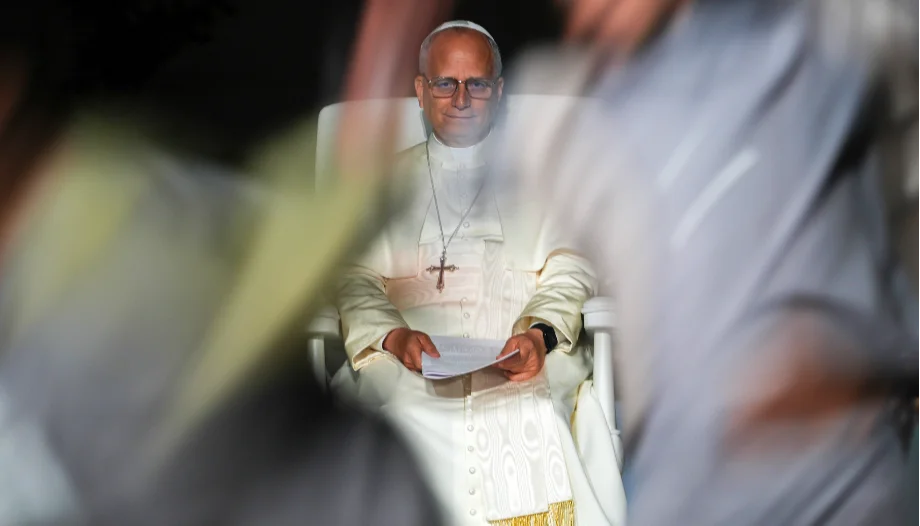
On January 6, Pope Leo will close the holy door of St. Peter's Basilica, bringing the Jubilee Year of Hope to an end. It is the same door that Francis opened twelve months ago, summoning what little strength he had left, and which—in a gesture very characteristic of him—he left open.
So much has happened since the night of December 24, 2024! Millions of people have made pilgrimages to Rome to gain indulgences in the major basilicas. We accompanied Pope Francis during his illness and bid him farewell, witnessed a conclave in real time, enthusiastically welcomed a new pontiff with Augustinian charisma and passports from the north and south, and returned to Tor Vergata another August, 25 years later.
We experienced the first steps of Leo XIV with intensity, and now it has been the pope himself who has ushered us into a serene period, without big headlines, of small, well-thought-out steps and a calm that is as unremarkable as it is longed for.
Accompanied by the half-smile that characterizes his expression, Leo XIV has been steering the ship of the Church in recent months with deliberate calm. He does so with the certainty of having plenty of time ahead of him and in a seemingly paradoxical way: on the one hand, emphasizing his fundamental continuity with the Argentine pontiff, and on the other, distancing himself from him in form and style.
Prevost has made important decisions: he has appointed his successor as head of the Dicastery for Bishops, he has written the apostolic exhortation “Dilexi Te” on love for the poor, and he has made his first trip as Peter's successor to Turkey and Lebanon, on the occasion of the 1700th anniversary of the Council of Nicaea.
That half-smile warns us that 2026 will surely not bring any big news, but rather continued progress with equal parts determination and caution. The choice of the name León takes on its full meaning here.




 Español
  English
  Italiano