



A Russian writer told of a nightmare he had had. It is the tragic death of a horse, victim of the brutality of men, contemplated also by a child, and narrated with the depth of Fyodor Dostoevsky. At the door of a tavern there is a vulgar horse tied to a huge cart. It is not a percheron, but a miserable animal, old and skinny, on which many blows have already rained throughout life.
The owner -Mikolka- comes out of the establishment totally drunk, and with him a number of people who are also drunk. Mikolka insists that everyone gets on the wagon. The people laugh, how is he going to take them with such a jerk? Mikolka is hurt by the mockery, and insists: “Get in! We'll gallop! I'll make him gallop!”.
Indeed, the cart is filled with drunks; others remain below laughing. Giddy up! But the animal can hardly move: “He moves his legs in short strides, he gasps, he bends under the blows of the three whips that come down on him relentlessly”.
The brutality of man
The owner gets angrier and angrier. He invites more people to come up, and continues to unload a barrage of lashes. “He takes us all or I'll kill him.” Everyone is encouraged to strike. Mikolka shouts, “In the eyes, in the eyes!” Seeing that it is already useless, he pulls out a pole from the bottom of the cart and hits the rocín with both hands. The latter keeps trying to move forward a little, but he has no strength.
Finally, Mikolka leaves the pole on the ground and lashes out with an iron rod. With all his strength, he delivers a tremendous blow to the spine, in the middle of the spinal column. The animal falls to the ground on its back. They all beat him to death: “The rocín stretches out its nose, breathes heavily and dies”. Thus ends the story.
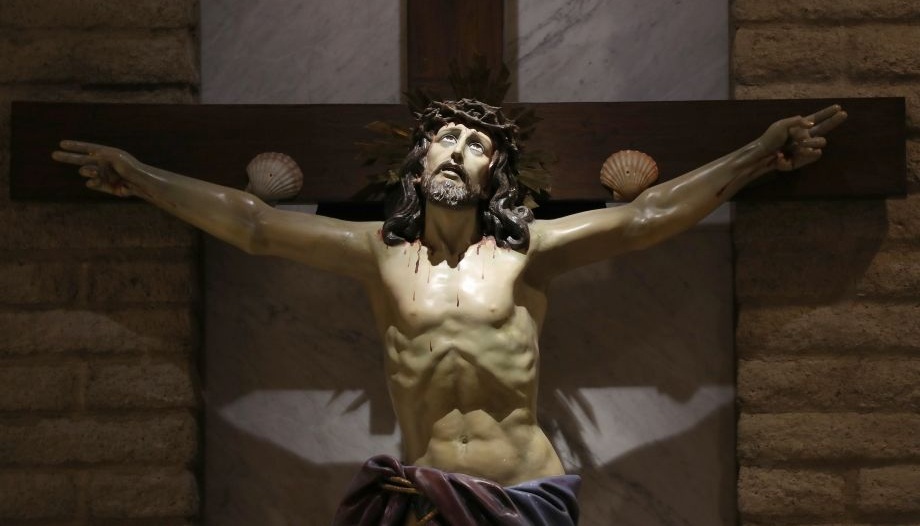
When we consider the Passion of the Lord, we have to think that it is not about the death of an animal; that it is the brutality that can be committed, and was committed, with the Son of God. Perhaps it is better to seek silence during Holy Week to help us to pray. This makes things much easier. A silence that makes it easier to listen to the voice and life of Christ.
Meditating on the Passion of the Lord
From Palm Sunday onwards we remember, in a more intense way, the drama of Calvary. It is a reminder of God's love for man. The processions help us to imagine it on the outside and the Gospel shows us how to live it on the inside. A God who for love of us becomes man, to die crucified for our salvation.
Meditating on the Passion of the Lord has always been the most advisable thing for the life of every Christian. Many centuries ago it was recommended to us that a time of prayer meditating on the Passion of the Lord is better than a pilgrimage to the Holy Land, on foot, on bread and water. And it is logical that we are eager to go to Jerusalem, to tread where the Lord passed.
Happy Holy Week! It is not happy because we see how Christ dies, but because he is resurrected and the Resurrection is the most important day of the year, and a new eternal life begins for each one of us.




 Español
  English
  Italiano