



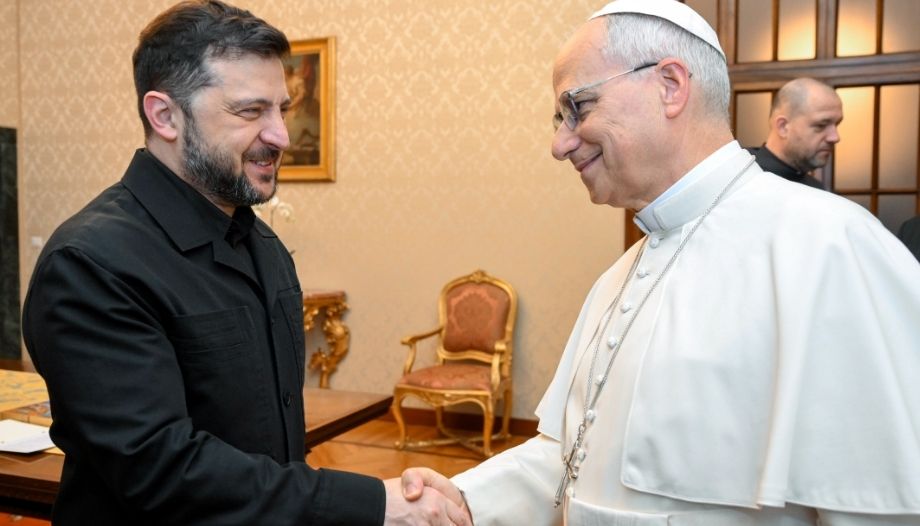
Vatican diplomacy is one of the oldest in the world. For this reason, the nuncios - ambassadors of the Holy See to various countries and international organizations - act as deans of the diplomatic corps, at least in countries with a Catholic tradition.
Certainly, the Holy See represents an institution of an eminently spiritual character as the Catholic Church, but it has an enormous influence throughout the world, since the Vatican maintains relations with more than 180 countries.
Although often used interchangeably, it is useful to distinguish between the Holy See, the Vatican and the Catholic Church. In brief, the Holy See is the central government of the Catholic Church, composed of the Pope and the Roman Curia, with international juridical personality to represent the Church in the world.
The Vatican (or Vatican City) is the sovereign state, the physical place or territory that serves as the seat and guarantor of independence for the Holy See. The Catholic Church, on the other hand, is the global community of the faithful who follow Christ, governed by the Pope through the Holy See, and has its physical and spiritual center in the Vatican, where the See of Peter is located.
Macro-politics and micro-politics
Although these lines are mainly dedicated to Vatican macro-geopolitics, I am convinced of the power and influence, even greater, of its micro-geopolitics, whether through nuncios and local ecclesial representatives (bishops, religious superiors, spiritual leaders, etc.), or through the actions of Christian communities and individual Catholics in their countries, cities and neighborhoods, according to their vision of man and society.
In fact, while the Vatican is only a small structure of the Church, there are many baptized and each one has the responsibility to carry forward the mission of the Church, entrusted to it by its founder.
The Church, a strong ‘soft power’
In this sense, there is no doubt that the Church is the strongest ‘soft power’ in existence. We all remember the famous anecdote in which Stalin wondered how many divisions the Pope had, and Pius XII, as soon as he heard of the death of the Soviet leader, replied: ‘Now Stalin will see how many divisions we have up there (heaven)’.
Jokes and micro-geopolitics aside, it is obvious that the Church, the papacy and the Vatican play a determining role in world geopolitics, and if Rome is important at the political level it is, above all, because it is the seat of the successor of Peter, the global moral authority par excellence.
In confirmation of the geopolitical role of the Church, Pope Leo XIV, last December 6, in an audience to receive the credentials of several new ambassadors, declared that the Holy See will never be “a silent spectator in the face of grave disparities, injustices and fundamental violations of human rights.”.
The essence and modalities of Vatican geopolitics: 5 concepts and images
One could summarize in five concepts and images the characteristics that, in my opinion, describe the essence and modalities of Vatican geopolitics, at least since the end of World War II.
Specifically, I have called them: geopolitics of mediation, geopolitics of forgiveness, geopolitics of sincerity, geopolitics of peace and geopolitics of patience and discretion.
These five dimensions are interwoven and are present in one way or another in all the diplomatic and political action exercised by the Holy See in the world. Let us look at them one by one.
Geopolitics of mediation
The events of April and May 2025 - the death and funeral of Pope Francis, the conclave and the election of Leo XIV - were events of such magnitude that they became geopolitical scenarios in themselves. A geopolitics that occurred almost by chance, without being sought after.
In those moments, the Church became a central actor, subject and object of communication. Without detracting from the informative work carried out by the Vatican Dicastery for Communication or by the thousands of journalists present - there were more than 6,600 accredited journalists - it can be said that the events spoke for themselves. The director of the Sala Stampa Vaticana himself, Matteo Bruni, acknowledged this, explaining that the role of his office was “not to stand in the way, but to let reality speak for itself” (a commentary in a special volume of Church, Communication and Culture, published last October).
Precisely because of the attention, weight and interest that moments like the ones mentioned above acquire, things like this can happen...
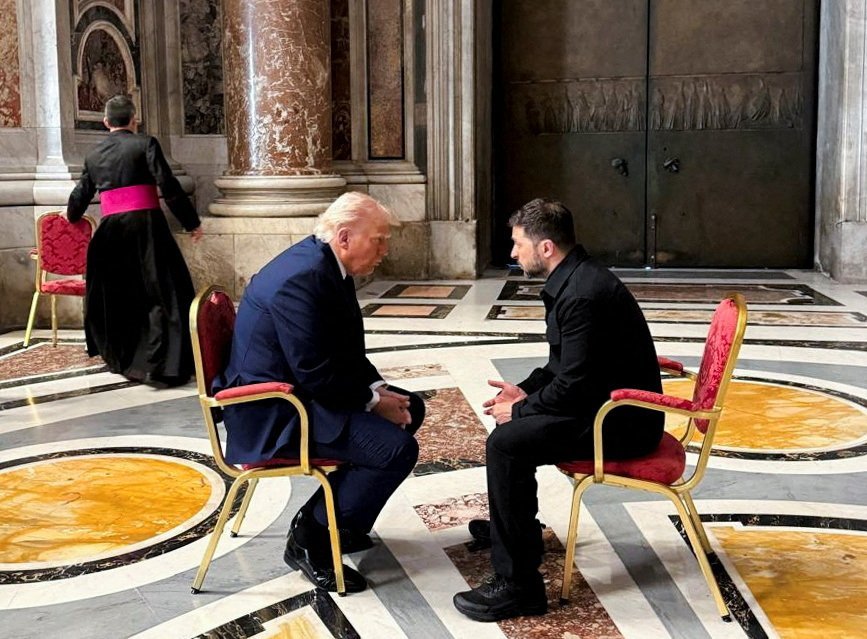
What the two presidents said to each other is partly unknown to us (although the social media irony about Zelenskyy confessing to Trump escaped no one), but only an occasion like the funeral of a Pope (Francis) could bring these two figures together and do it in this context.
This is not the first case, nor will it be the last, of bilateral political meetings facilitated by religious contexts. We see, therefore, in action what we could call the geopolitics of mediation: even before being an actor, the Vatican is a stage and mediator of geopolitics.
In fact, in the case of the Russian-Ukrainian war the Holy See has offered itself as mediator and the current Pope has recalled on several occasions that the doors of the Vatican are open for both contenders to meet and dialogue.
In the case of the war in Ukraine, the Church's role as an impartial mediator has not been incompatible with Pope Francis' decision to send Cardinals Krajewski (Limosnero of the Pope) and Zuppi (president of the Italian Bishops' Conference) to the conflict zone on several occasions for humanitarian reasons.
Priority to multilateralism
However, it is worth remembering that the Church has always defended and given priority to multilateralism. An example of its major results was the birth of the Organization for Security and Cooperation in Europe (OSCE), to which the Vatican contributed significantly with ideas and proposals.
Certainly, today the role of the OSCE has been greatly compromised by the war in Ukraine, as the unanimity-based decision-making mechanism makes any agreement impossible when the contenders in a conflict are members of the organization.
It is not possible to present here all the cases of Vatican mediation in various political conflicts in contemporary history. Suffice it to cite the Holy See's mediation between Chile and Argentina in the late 1970s in their territorial dispute over the Beagle Channel, which was resolved with a peace and friendship treaty signed definitively in 1984, or the leading role of the Community of Sant'Egidio in the peace accords for the civil war in Mozambique, signed in Rome in 1992.
Geopolitics of forgiveness
A second teaching is provided by another striking image: that of Pope Francis kissing the feet of South Sudan's political leaders in April 2019.
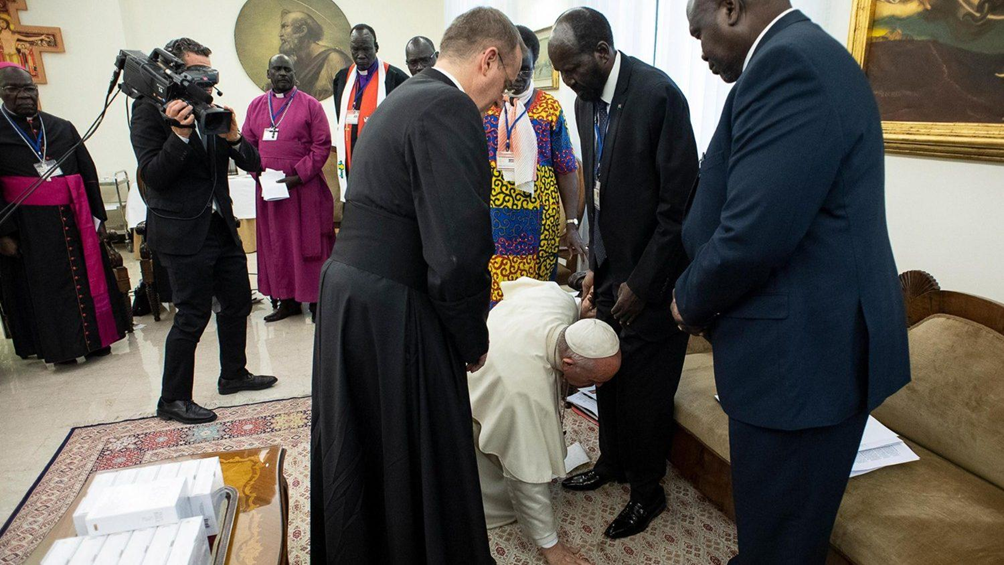
Images such as this have a powerful communicative and geopolitical impact, and could be considered examples of a geopolitics of forgiveness. In the face of a conflict with terrible consequences for the civilian population, the Pope summoned the leaders in dispute to promote their reconciliation.
In the global political context, the Church is practically the only institution that speaks of forgiveness and reconciliation.
Many others could be added to this episode, such as, for example, the one represented by the photo of John Paul II listening to his assailant, Ali Ağca, in prison, in 1983, after the 1981 attack.
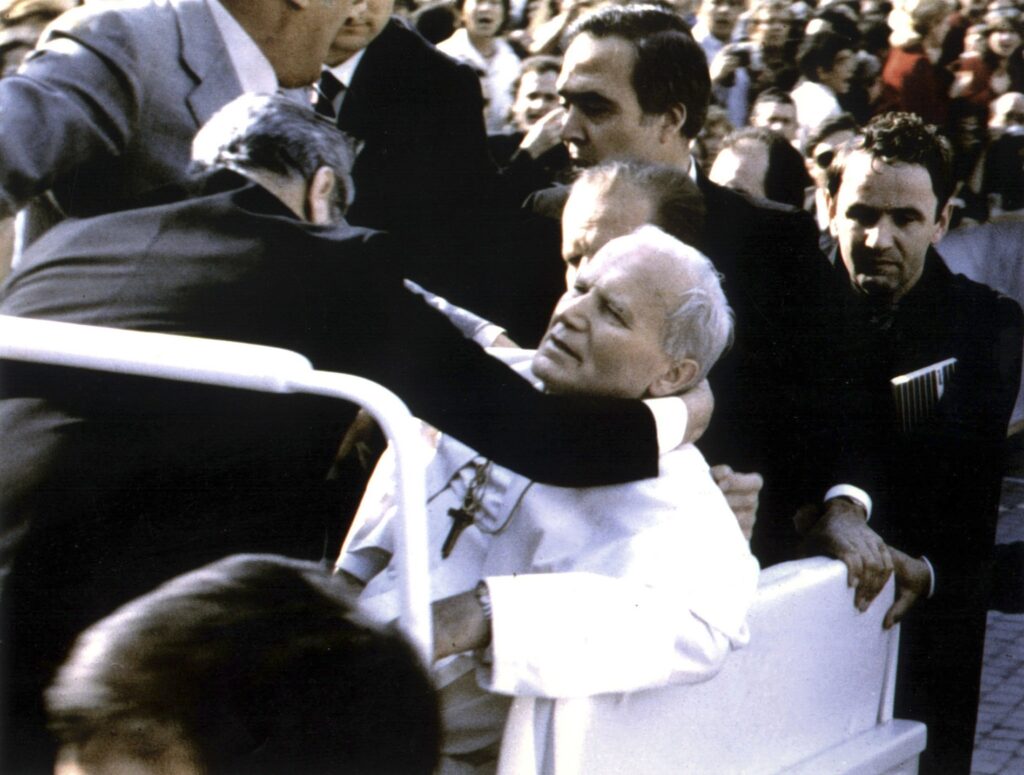
The geopolitics of forgiveness is closely linked to the concept of gratuitousness and service: although the Church speaks and does geopolitics, it proceeds following the example of its founder, Christ, who died on the cross offering his life out of love for humanity.
As is evident, this gratuitousness is opposed to the predominant social behavior and explains in part why the Church is and will always be a sign of contradiction.
Geopolitics of sincerity and coherence
In the above-mentioned meeting with various ambassadors (December 6), Leo XIV recalled that “the diplomatic work of the Holy See, modeled on Gospel values, is constantly oriented to serve the good of humanity, especially by appealing to consciences and remaining attentive to the voices of the poor, of those who find themselves in vulnerable situations or are pushed to the margins of society.”.
It is a diplomacy of clear and declared objectives, a sincere and coherent geopolitics. To carry it out, the Church does not need or want to change its identity or the doctrine received from Christ, but to renew human relations.
Most of the world's problems are “ecumenical”, that is to say, they affect many and must be tackled with the collaboration of all. And it is precisely a clear and honest institutional identity that facilitates dialogue and enables the Holy See to collaborate with geopolitical actors of very different ideological orientations: religious denominations, political governments, international associations, etc.
Among other aspects, this approach makes it possible to work together on such essential issues as religious freedom (not only of Christians) or the dignity and defense of the most vulnerable (ethnic minorities, the sick, the elderly, the unborn, etc.), and many of them expect and desire - not always in a declared way - the prophetic voice of the Pope and the Catholic Church.
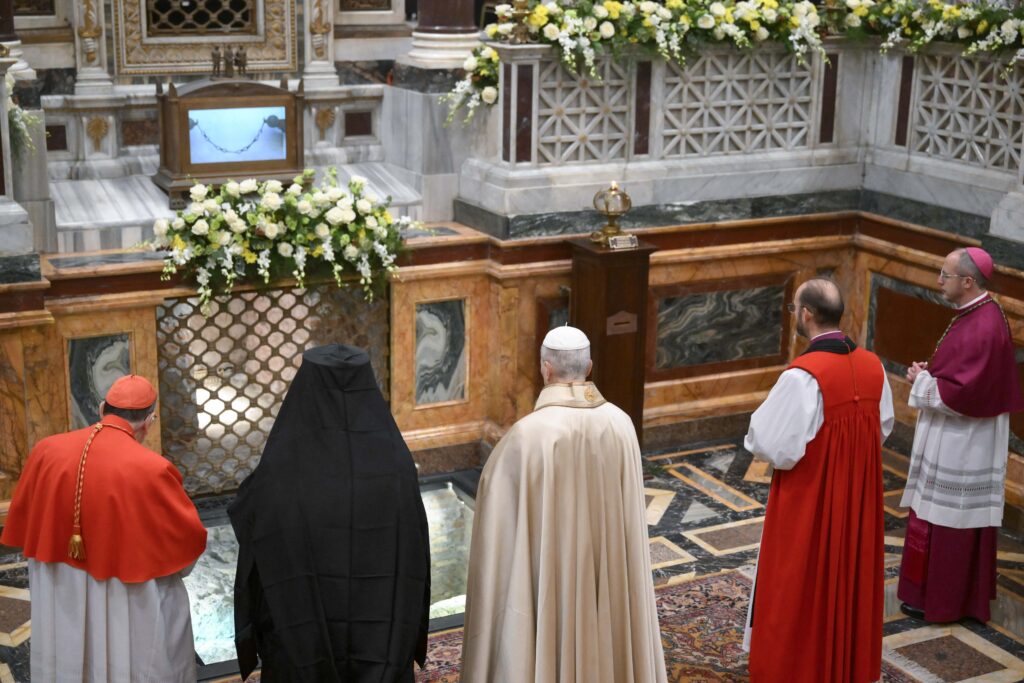
The identity given by the Christian faith also has consequences for the consistency of the Vatican's geopolitics. While civilian governments change their foreign policy according to the ideology of the party, or worse, of the ruling leader, the Church acts in diplomacy without betraying its principles.
This openness can also be seen in the fact that Vatican diplomacy does not feel conditioned by the size or political importance of its interlocutors.
Among other examples, he is not afraid to reject ambassadors proposed by world powers (as the Holy See did with the three initial candidates proposed by Barack Obama as successors to Ambassador Mary Ann Glendon), to speak his mind about injustices and ongoing conflicts (such as
the invasion of Gaza by Israel in the interview of Cardinal Pietro Parolin to Vatican News and harshly contested by the Israeli government), or to establish agreements with small islands in the Indian Ocean (such as Timor-Leste).
In fact, it is very significant how the newspaper of the Holy See, L'Osservatore Romano, shows so much interest and analytically addresses the politics of remote areas of the world, because for the Church all men are children of God and have the same dignity.
Precisely because of this, and because of its ethical dimension, the Holy See is recognized as having a fundamental role in international forums, even those that might seem far removed from “spirituality”, such as the International Atomic Energy Agency (IAEA), located in Vienna.
Geopolitics of patience and discretion
To the above dimensions, a new one can be added: the geopolitics of patience and discretion.
The expert former Italian ambassador and current ambassador of the Sovereign Order of Malta to the Holy See, Antonio Zanardi Landi, has defined this Vatican geopolitical dimension as “strategic patience”, exemplified in the constant and prudent diplomatic action of the Holy See in countries with a Christian minority (such as Saudi Arabia or Pakistan) or an Orthodox majority (such as Russia or Serbia), where progress is slow but evident, or in the countries of the Middle East, where any departure from the norm provokes new tensions.
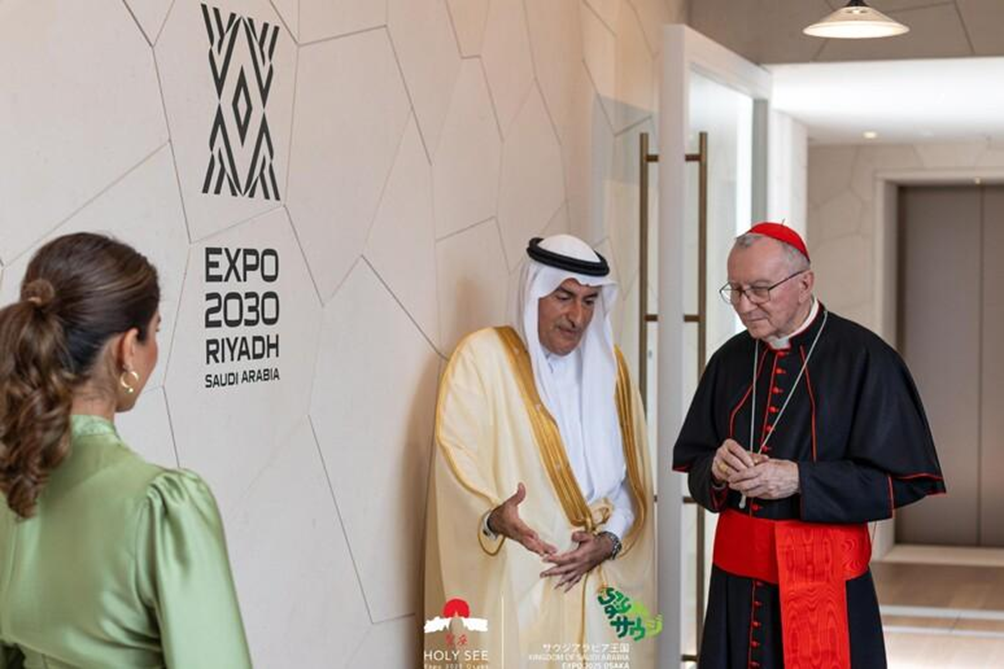
In many of these places, the representatives of the Catholic Church act through reserved channels, behind the scenes, with the objective of achieving the maximum possible, in a wise, patient and artisanal geopolitics, almost handmade, which is often more successful than that carried out through great public declarations that humiliate those involved in dynamics of winners and losers.
And, undoubtedly, although real history does not always leave traces, many diplomatic results are the fruit of the “fork diplomacy” that often accompanies personal relationships.
Magisterial documents also have their weight and influence, often indirectly, since they lay the foundations for debate on relevant geopolitical issues. Suffice it to mention here cases such as the encyclical Rerum novarum (1891), by Leo XIII, which addressed the social and economic question and gave rise to the modern social doctrine of the Church, or in recent times, Laborem exercens (1981), by John Paul II, on the value of work, Caritas in veritate (2009), by Benedict XVI, with its criticism of an unregulated financial market, and Caritas in veritate (2009), of Benedict XVI, with its critique of an unregulated financial market, and Pope Francis’ apostolic exhortation Evangelii gaudium (2013), with its renewed critique of the thesis of the positive effects of capitalism - taken up in part by Leo XIV in his recent exhortation Dilexi te. Or Francis' encyclicals dedicated to respect for creation (Laudato Si', 2015) and peace among peoples (Fratelli tutti, 2020).
Geopolitics of peace
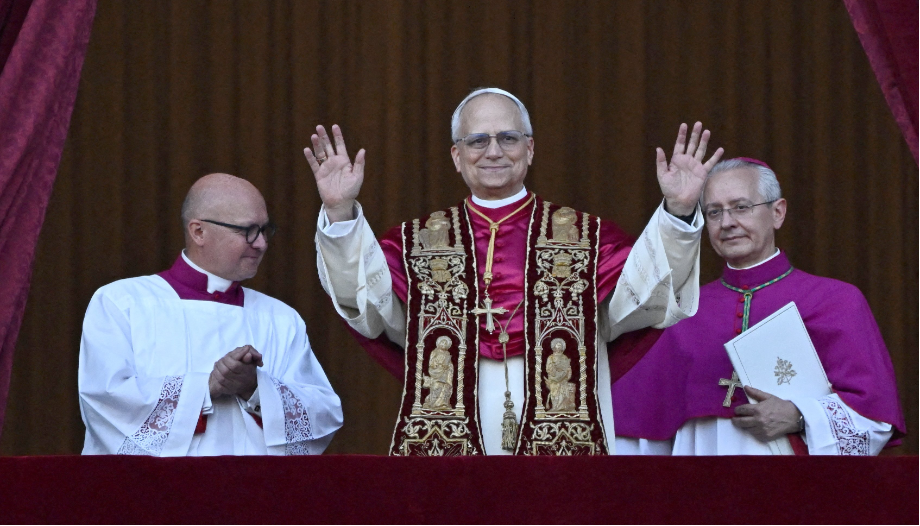
Finally, the geopolitics of peace. From the beginning of his pontificate, Leo XIV insisted on what we might call a geopolitics of peace.
As soon as he was elected, his first words from the balcony of St. Peter's Basilica were “peace be with you”. This greeting of Christ to his apostles (John 20:19) has become the guiding thread of his pontificate.
In the audience he granted to journalists following the conclave, a few days after his election, the Pope proposed to those present to promote peace through “unarmed and disarming communication”.
On numerous occasions, as in his recent address before the Urbi et Orbi blessing on Christmas Day, the Pope has recalled so many active conflicts in the world, always asking for a peaceful solution.
And he does not speak of a theoretical or ideal peace, but is convinced that “peace is possible and that Christians, in dialogue with men and women of other religions and cultures, can contribute to building it” (Angelus, December 7, 2025).
In this sense, for Leo XIV peace is not only the absence of conflict but “an active and demanding gift that comes from the heart” (Speech of December 6, 2025, during the presentation of credentials of some ambassadors).
Of course, the Holy See seeks a lasting peace, not just a freeze on existing conflicts.
In this sense, Pope Leo XIV follows the concept of peace of his saint of reference, St. Augustine: Pax est tranquillitas ordinis, that is, true peace is not so much the absence of problems, but the serenity that results from everything being in its right place and oriented towards God, its ultimate goal, implying an interior order of the soul and a social order based on justice and charity, where all love each other and seek mutual good.
In the end, peace is the fruit of justice, freedom and solidarity, and it is not possible where there is injustice.
To achieve this peace, the Pope sees the Church and its members as a fundamental instrument. “This, brothers and sisters,” he said at the Mass inaugurating his Petrine ministry, “is our first great desire: a united Church, a sign of unity and communion, a leaven for a reconciled world. Not for nothing is the motto of the papal coat of arms In illo unum uno (”In the one Christ we are one“).
Personalities count
We have summarized the main features of the geopolitics of the Holy See. If I have insisted on the consistency of its orientation, however, I cannot ignore that there are evident differences between pontificates, whether for personal or circumstantial reasons.
For example, while St. John Paul II was a pontiff who promoted the fall of communism in Europe (think of his public support for the Solidarnosc trade union), Benedict XVI concentrated on containing the onslaught of relativism, and Francis shifted the axis of geopolitical interest towards the peripheral world, mainly visiting countries with a Catholic minority or appointing cardinals from almost unknown cities, among others.
It is still too early to say what his approach to world geopolitics will be, but his North American geographic origin and, at the same time, his international background (he has visited almost 50 countries as superior of the Augustinians), will probably make it easier for him to face global challenges with a broad vision and a less personalistic approach than his predecessor.
Successes, failures... and more successes
Certainly the moral authority of the Pope or of the Church as a public institution does not guarantee the success of his interventions in favor of peace or reconciliation.
As history shows, there are cases in which the voice of the Pope and the Church have produced the desired effect: for example, the efforts of John XXIII in the Cuban missile crisis (1962) or the aforementioned territorial conflict between Argentina and Chile (1978). But there are not few failures of papal initiatives in this area.
geopolitical, especially in the case of war conflicts: such as the interventions of John Paul II against the Second Gulf War, or the personal initiative of Pope Francis before the Russian embassy in Rome to stop the invasion of Ukraine.
Certainly, the actions and words of the pontiffs and other ecclesial leaders can have very different and even opposite results. But this human geopolitics is accompanied by a dimension that cannot be forgotten and that is always successful: the supernatural geopolitics of prayer.
We know, because Christ has said it, that prayer always bears fruit and is always successful, even if it is often not visibly perceived. For example, the fruits of holiness of the numerous prayer vigils and fasting days promoted by the various pontiffs for the sake of peace are and will always be incalculable.
For all these reasons, it is possible to end up remembering that the Church is the most powerful ‘soft power’ that exists and will continue to be so if it is faithful to its evangelical principles.
————————
Daniel Arasa is Dean of the School of Institutional Communication (Pontificia Universidad de la Santa Cruz).
———————–




 Español
  English
  Italiano