


It seems that social upheavals or tragedies occur far away... in Venezuela, Greenland, Ukraine, Iran, Eastern Congo,... Until it touches you closely, like those affected by the DANA, or those affected by the biggest railway accident of the Spanish High Speed, which occurred on Sunday afternoon, January 18 in Adamuz. There were 45 dead and as many injured, affected by this fatal accident.
The indignation is very great for logical reasons, the poor state of the infrastructure. And because aid took longer than expected in a catastrophe.
Accepting fragility or taking refuge in victimhood
But if we look at the final reasons why this type of events happen, the well-known words “When it touches you, not even if you take it off, and when it doesn't touch you, not even if you put it on” make sense, because destiny is inevitable, since providence is at work.
The words of the Gospel also gain prominence: “we know neither the day nor the hour”. This situation speaks to us of the very condition of human beings, and in the face of which there are only two possible positions. The first is to accept our vulnerability, limitations and fragility in order to be better persons. As Fidel, who lost his mother in the accident, who was praying the rosary at the time, has shown us with his testimony, as Francisco Otamendi has told us here, in Omnes.
But it is possible to do the opposite, to make the wound suffered by the loss of a loved one or by being a victim, my identity, that is to say, to fall into fruitless victimhood.
The true test of Christian maturity
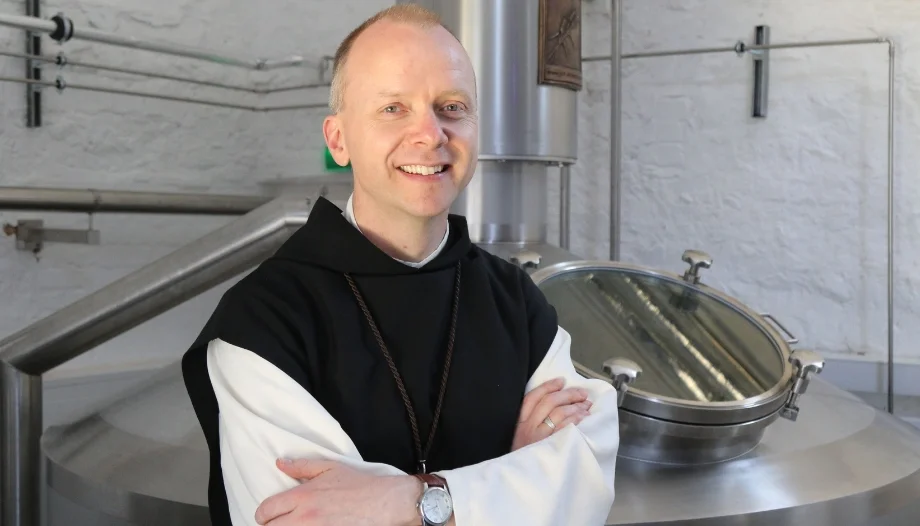
Norwegian intellectual and prelate of Trondheim, Erik Varden, explains both situations very clearly. On the one hand, he shows us what the “absorbent cotton test” is to know if we have learned our lesson in situations like this: “The more time passes, the more convinced I am that to know if someone is growing as a Christian and is acquiring wisdom, you have to see if that person is able to live in peace while being vulnerable”. This is what he explained in an interview with Nuestro Tiempo in October 2024. To this he added, when asked, "What is vulnerability?
“Recognize your finitude. Recognize that you are not enough for yourself. To recognize that you can suffer, that other people can hurt you and that you cannot protect yourself”. As icing on the cake, he added: “We must try to internalize this truth, to look at ourselves and let ourselves be looked at by that God whose face is... peace. We say it at Mass every day: ”Peace I leave with you, my peace I give you“. This peace is not a feeling but the presence of Someone, as St. Paul said: «Christ is our peace. With that peace I will be able to live my vulnerability, face my fears and learn to begin to believe in the possibility that, perhaps, love is real».
Wounds that do not define identity
More recently, in the Omnes Forum, spoke to more than 250 people who gathered in the Aula Magna of the CEU San Pablo University in Madrid, for the presentation of his latest book “Wounds that heal» (Encuentro Publishing House), about the danger of victimization.
When personal wounds are exposed publicly, demanding recognition and reparation, we have a problem. Because sometimes it is necessary to show the wounds, but the risk is, as she tells us, in turning them into your identity: “when we say ‘my wound is me’”. Because your identity is not your wound, but your personal characteristics and your decisions, such as the coherence of your life, your virtues and your vital purpose.
We can learn from Varden to put life's setbacks in place. It is not so much what happens to us, which can be lethal, but how we interpret it and place it in our lives.




 Español
  English
  Italiano