




 Who does Christmas bother?5 gift ideas to give and help at ChristmasGive me back my Christmas, you have "taken it away".
The liturgical year begins with Advent, a time of preparation for the celebration of Christmas. I conducted a brief survey among friends, asking them to answer a single question:
What does Christmas mean to you?
I received a wide variety of responses:
- It is the holiday on which we celebrate the birth of Jesus Christ.
- It is a time of peace, of togetherness among friends and family.
- It is a time of joy, hope, and faith.
- It's the holiday season, you have to buy gifts, organize dinners, fulfill commitments.
- It is a beautiful family life filled with hugs, affection, and unity.
- It's a time of year that makes me sad.
- It's an opportunity to talk to children about their best friend: the baby Jesus.
The truth is that Christmas is a holiday celebrated in more than 160 countries, practically all over the world, for religious and cultural reasons, but also for commercial reasons. It is celebrated on December 25 and is one of the main holidays for Christians, as we commemorate the birth of Jesus Christ in Bethlehem (West Bank, Palestine), from which we count the time of our era.
In many ways, this celebration promotes family unity, love, peace, and gift-giving, with traditions such as the Christmas tree, special dinners, and the figure of Santa Claus (Saint Nicholas).
La Befana in Italy is a legend that tells how the Three Wise Men lost the star and an old woman they called “the witch Befana” helped them find it. The grateful magi invited her to go with them, but she refused. She later regretted her decision and tried to catch up with them, but she couldn't. She then wanted to make up for her bad decision and distributed gifts to children on their behalf. Now she is known as Grandmother Befana, who brings gifts every Christmas.
In Ireland, there is a story about a little bird that kept the baby Jesus warm while Joseph was out getting supplies. The bird flapped its wings so that the flame would not go out. The flames burned the little bird's chest, but it did not fly away. The Virgin Mary blessed it, saying, “Brave little bird, you have helped to keep the son of God warm, and for that I give you my blessing. From now on, you will be called Robin, which means red breast, and you will always be proud of the good deed you have done.”.
In the Netherlands, there is a figure called “Sinterklaas,” inspired by Bishop Saint Nicholas, who lived in Italy in the 4th century and was known for giving gifts to those in need. Dutch immigrants brought the tradition to the United States, and the name of this character evolved into Santa Claus (in Spanish: Papá Noel, due to the influence of France, where this character was called Père Noel).
In Germany, there is a story about Christmas spiders. They saw a family decorating a small tree with lights. When the family went to sleep, they sighed with longing to live in that tree and wanted to use their creativity to make it their own home. They approached and filled the little tree with their webs. They say that Santa Claus saw this in the early morning and assumed that the family would not like to see their tree like that. He also understood the spiders' longing, and so that everyone would win, he blew on the cobwebs and they turned into baubles. So today, trees are decorated with lights and various objects, remembering Santa Claus' kind gesture.
In the United States, the story of Rudolph the reindeer is shared. His big red nose made him the target of ridicule. But one day, when Santa Claus needed light, he discovered Rudolph's uniqueness and asked for his help in guiding the sleigh and delivering gifts to children.
Some traditions based on the Gospels that evoke God becoming man:
In Mexico, there are posadas; in Colombia, there is “la novena”; all over the world, people sing Christmas carols, set up nativity scenes (representing the birth of the baby Jesus), enjoy Charles Dickens“ ”A Christmas Carol," or the fantastic tale of the fourth wise man...
Although some of these traditions are secular, they all capture the spirit of Christmas. The spirit of kindness, generosity, and gratitude. The spirit of unity, forgiveness, and peace. This is Jesus!
We cannot deny his influence throughout the world. Every Christmas, we are called to know him better, to love him more, and to serve him better.
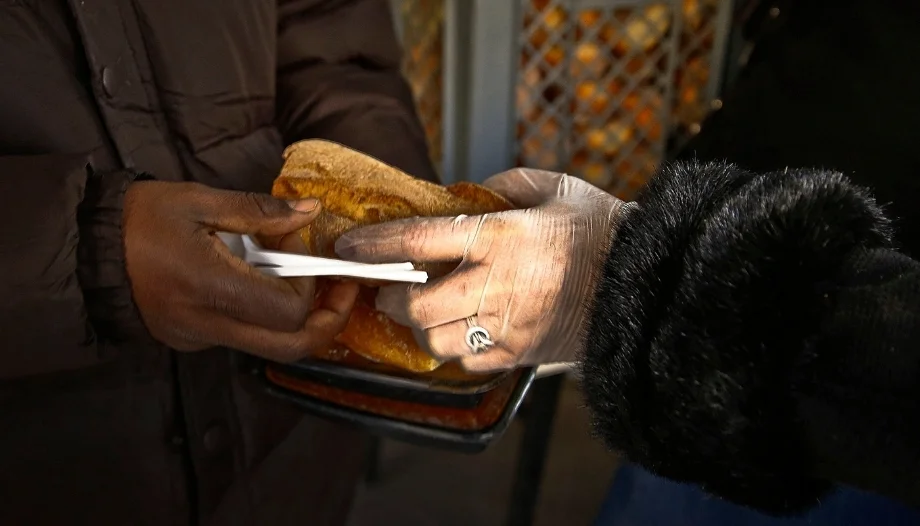
May Jesus be born in our hearts this Christmas, transforming us so that we may place all our trust in Him. May He move us to love Him in our brothers and sisters. May we do good without ceasing, knowing that everything we do for one of our little brothers or sisters (the poor, the sick, those who feel lonely or sad...) we do for Jesus!




 Español
  English
  Italiano