


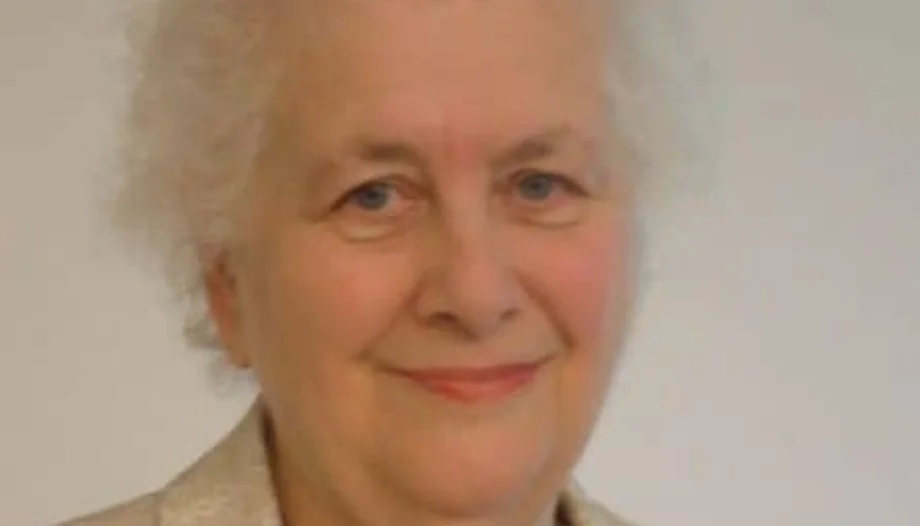
Gabriella Morreale de Castro (1930-2017) was born in Italy, and was educated in Vienna and Baltimore, in a family of high cultural level. She attended high school and university in Malaga and Granada, where her father was assigned as consul. She became a Spanish citizen when she married Francisco Escobar del Rey, also a scientist and CSIC research professor, in 1953.
Obtaining several research grants from the CSIC and the University of Granada allowed him to complete his doctoral thesis in 1955. On the advice of Professor José María Albareda, the couple changed their residence, convinced that in order to carry out quality research they needed to broaden their training in Madrid. From here they spent time at the University of Leiden (Holland) in the Department of Endocrinology and Nutrition. They learned techniques and methods that would later allow the development of quality biomedical research in Spain. In 1957 he won a position as scientific collaborator at the emblematic Centro de Investigaciones Biomédicas (CIB) of the CSIC.
He held various management positions in the Endocrinology and Nutrition Laboratory of the University of Leiden, the Faculty of Medicine of the Autonomous University of Madrid, the Institute of Endocrinology and Metabolism of the Gregorio Marañón Hospital, and the CIB in Madrid, teaching at these centers, and training many scientists in endocrinology. In 1962 he was promoted to research scientist and in 1970, also by competitive examination, he reached the highest scientific category of the CSIC, that of research professor.
He dedicated his work to the investigation of the role of iodine and thyroid hormones in brain development. He demonstrated the role that these hormones have in the pregnant woman on the brain development of the fetus, showing the nutritional needs of iodine in the mother. In the 1970s, he initiated the routine measurement of thyroid hormones in the blood of newborns to prevent congenital hypothyroidism and cretinism. Thus, its impact on the prevention of mental retardation in public health actions has been very remarkable.
A woman of deep religious convictions, she did not hesitate to affirm to all those present, in a tribute received at the CSIC, that “science, yes, is the driving force of my life, but after God and my family”.





 Español
  English
  Italiano
  Français
  Deutsch
  Polski
  简体中文
简体中文