




Stranger Things will mark Christmas 2025 with the premiere of its latest episodes, in a highly intelligent commercial maneuver to turn the phenomenon that is already part of the «emotional map» of an entire generation. It is not difficult to imagine that, in a few years' time, many will watch it again every December, not so much for the plot as for the precise memory of that Christmas when they discovered it for the first time. Thus, the series will end up functioning almost as an anchor: it will not be revisited. Stranger Things, we will return to «that Christmas.».
Those of us born in Spain during the 1980s experienced something similar, although without an algorithm to predict it. We too carry with us a small Christmas canon that does not respond to aesthetic criteria or film buff hierarchies, but rather to pure emotional sedimentation. Our sentimental Christmas archipelago, you might call it, consists of films we have seen over and over again, almost always on the same days, which have ended up merging with the liturgical calendar of the year.
At the top of my list—personal and subjective, of course—would be A Charlie Brown Christmas (1965), which a certain pay TV channel aired every December, with that spindly tree injecting us with a good dose of gentle sadness every year and teaching us that Christmas could be melancholic without ceasing to be real.
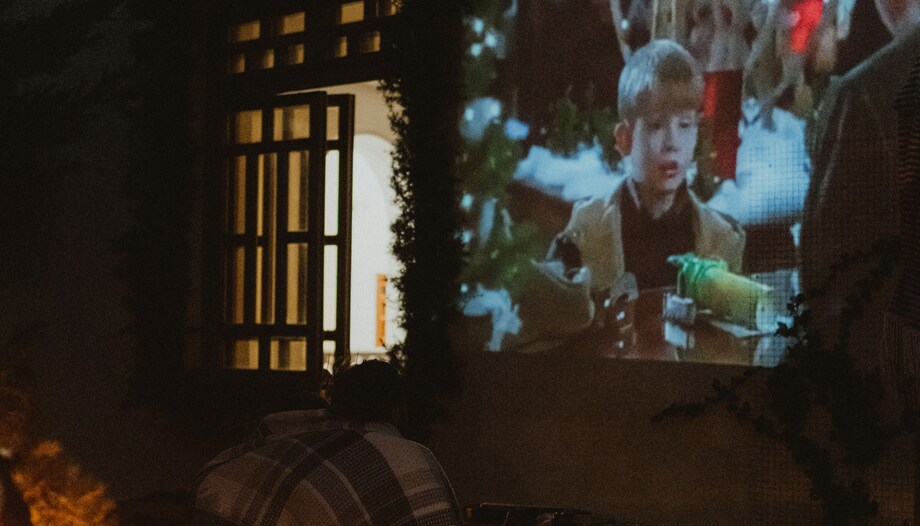
After Mickey's Christmas Carol (1983), many people's first encounter with Dickens, with ghosts that were more laughable than frightening and whose opening, If you hear it after all this time, it will give anyone who listened to it as a child a pang of nostalgia. Soon after, the problems would arise: Gremlins (1984), which shed supposedly Christmas lights on the chaos of those slimy creatures coming out of the presents; and Home Alone in its two parts (1990–1992), authentic domestic rituals where laughter was repeated exactly the same every year, with no wear and tear except for the old VHS tape on which we watched it.
Tim Burton also snuck into that Christmas, perhaps not so much as a director as a builder of imaginary worlds, infiltrating our domestic December with his twisted fairy-tale aesthetic. Edward Scissorhands (1990), with that artificial snow and that wounded tenderness; and The Nightmare Before Christmas (1993), both gothic and festive at the same time, became part of our Christmas memories as naturally as carols or tinsel.
They entered that same ecosystem. The Muppet Christmas Carol (1992), an unlikely blend of humor, tenderness, and redemption, and El príncipe de Egipto (1998), which, while not strictly Christmas-themed, was deeply solemn, biblical, and grand, enough to fit in with those days when everything seemed to have to be important. Closing my own canon, Wallace & Gromit: A Grand Day Out (1989), a must Christmas film that crept into our imagination with very British humor and an air of quiet after-dinner conversation.
Then they would arrive Harry Potter, Lord of the Rings, Avatar and other monumental sagas. We enjoyed them, of course, but they no longer affect us in the same way. Those films would end up being the territory of the next generation, the one that grew up stuffed with event premieres and planned marathons. For us, the canon was already closed.
And there is no clear conclusion to any of this. There cannot be. How can you put an end to a column that has been nothing more than a frozen snapshot of days gone by? Returning to those films every Christmas does not open up any future or promise any renewal.
It is, at heart, a deliberate and self-indulgent splash in the puddle of the past. Something sterile, unproductive, repetitive. A complete waste of time. And perhaps, for that very reason, so human.
Because in a world that demands more than ever advancement at all costs, progress for progress' sake, the feverish economization of time, there is something deeply necessary about stopping just to return. Without learning anything new. Without updates cultural activities of any kind. Without growing. Solely for the almost childish pleasure of returning.






 Español
  English
  Italiano
  Français
  Deutsch
  Polski
  简体中文
简体中文