


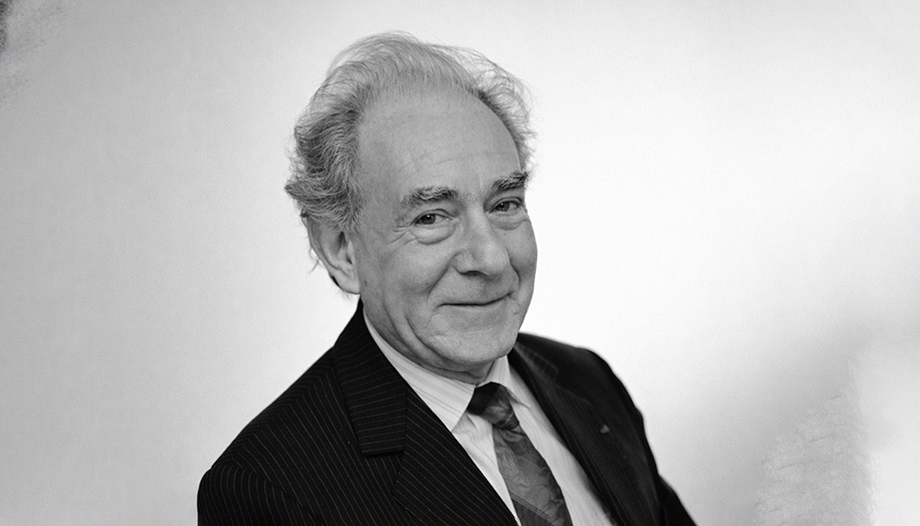
In 1978, Jean Delumeau published in French his impressive book Fear in the West, which would be translated into Spanish by Taurus eleven years later (1989) with a subtitle that more precisely defines its theme XIV-XVIII centuries: A city under siege. The 2019 Spanish edition includes a luminous foreword by Amelia Valcárcel: “Delumeau wanted to write a new history of our world in which the keys could be sought outside the ordinary records. Not in economics or geopolitics, but in feelings. And he chose a particularly remarkable one, fear.”(p. xi). It is worth pausing here to consider what percentage of fear is in our personal and collective decisions and how much of that fear is reasonable. In the light of history and progress, we could perhaps establish how many acts, rightly or wrongly, occurred motivated by a completely unfounded fear.
"In fact -added Valcárcel. the world has recently ceased to be apocalyptic, if it has ceased to be apocalyptic at all, and this long peace of ours is not just a temporary suspension.” (p. xii). Perhaps that temporary suspension ended with the pandemic or with the wars in Ukraine and Palestine, in any case, the long peace no longer exists today and the world is beginning to appear apocalyptic again.
Categories of fears
Jean Delumeau talks about different types of fear: external, internal, psychological, spiritual... and how they are used for political purposes. Although his book is limited to the period between the 14th and 18th centuries, most of the fears that Delumeau identifies are still valid today: From the fear of disease - medieval and modern plagues became the threat of pandemics - to the fear of preservatives that may poison our food, to the endocrine disruptors that infest the creams we use to try to slow down the effects of the sun or age, to the social ostracism to which we may be subjected when we make an unfortunate comment on social networks. Even witchcraft, which we could equate to the ageism that surrounds us... After all, the average witch is an old woman; or to any kind of incident that ends in a witch hunt. Although the modern inquisition is more about social and psychological harm than physical torture, though not always. And, of course, the permanent fear of war, including nuclear holocaust.
In short, we have not evolved much in the West since medieval times when it comes to fear. Evidently, it is a human emotion that we don't seem to be getting rid of. Sharing and socializing fear sometimes seems counterproductive, yet should it be taboo?
The prism of emotions
Studying history from the point of view of emotions - or from any other approach other than political or economic - brings us closer to other human beings who have lived before us. Politics and economics require a more solemn, suit-and-tie approach, while emotions, feelings, relationships between people do not need a special wardrobe, nor a knowledge of specific and complicated terms; all people have feelings and emotions, and we act from them most of the time. Our decisions are not political, nor economic, they are largely emotional. And emotions, although the nuances are many, are more or less six: joy, disgust, anger, fear, surprise, sadness, depending, of course, on who you ask, the range can be extended. Who has not felt them not just once, but once every ten minutes? However, history is not traditionally studied from there; we do not study ourselves from emotions. That is why it is fascinating to delve into Delumeau's book.
If we were to make our own personal statistics by enumerating the occasions on which fear of something specific ended up closing, for example, a friendship, or by identifying how much time, which is our historical capital, we have lost because of fear. Would it have been worth it? In the end, Delumeau's review, more than a century after his birth, should make us grow individually, with the slight but irrefutable weight that our life has in the collective history of the West, and in particular, in the fear in the West, which, far from stopping, increases.
However, the title of the work and the theme should not mislead us. As Valcárcel points out at the end of the prologue: “His main thesis, often hidden by the enormous amount of data with which he supports it, is that Europe is above all Christianity and that this religion, its contents, have never been as accepted, known or dominant as we might suppose. That only now they are revealing themselves and becoming collective. That without them we cannot understand what we are and what characterizes us. It is a book, shall we say, of enormous historical self-analysis. Essential to understand what we can expect today.”(p. xv). Do we know how to distinguish clearly what is Christianity and what is the political history that has accompanied it? Can we separate the message from the envelope in which it has been wrapped? Undoubtedly, this is a decisive task for Christians in the 21st century.






 Español
  English
  Italiano
  Français
  Deutsch
  Polski
  简体中文
简体中文