



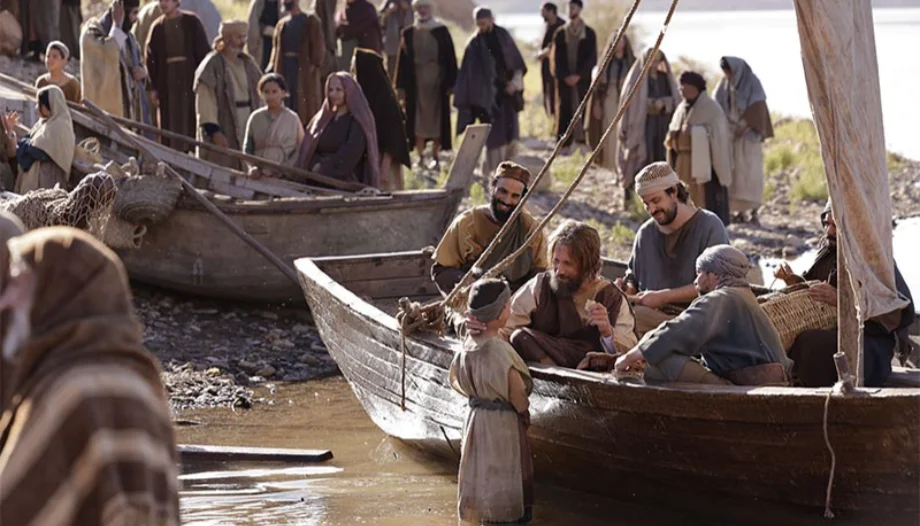
Next Thursday, March 26th, the film will be released in Spanish theaters. The Last Supper, a new cinematographic approach to the final moments of the life of Jesus Christ. The film is presented with an overtly positive tone and a clear evangelistic zeal. Producers Michael Scott, David A.R. White, Troy Duhon and Shawn Boskie are the same people who produced the successful film of The case of Christ.
As with any portrayal of the life of Christ on the big screen, its reception will necessarily be mixed. Not even recent high-impact productions such as The Chosen have achieved unanimity among audiences. In this regard, The Last Supper will be no exception: your particular proposal may connect deeply with some viewers, while others may find aspects with which they do not connect.
The film opts for a well-defined narrative approach: it does not intend to cover the entire Passion, but to focus on the episode of the Last Supper and its immediate prolongation. This cut allows us to delve into an aspect that does not always receive so much attention on the big screen: the experience of these events from the point of view of the apostles, with St. Peter as the main protagonist.
One of the successes of the film is its effort to contextualize the Last Supper in its Jewish setting. The film clearly explains what the Passover celebration meant for the people of Israel, highlighting both the continuities and the novelties introduced by Jesus Christ. This pedagogical aspect adds depth and can help the viewer to better understand the theological meaning of the moment.
Likewise, the story places a notable emphasis on Peter's leadership and on his primacy, presented as an explicit choice of Christ. In parallel, an interesting contrast is constructed between Judas Iscariot and Peter himself: two figures marked by betrayal, but differentiated by their subsequent attitude. While Judas is defined by despair, Peter appears as an example of human frailty open to forgiveness.
From the technical point of view, the film is quite good. The shooting, editing and music effectively accompany the tone of the story, without great fanfare but with enough quality to sustain the narrative and its emotional charge.
However, there are also elements that may give rise to discrepancies (Attention, spoiler). The representation of Jesus Christ is always a complex challenge, conditioned by the personal expectations of each spectator. Moreover, the role of the Virgin Mary appears in a very secondary way. This aspect may be due to the nature of the production, the result of a collaboration between Catholic and Protestant sensibilities, which leads to a more neutral approach to potentially controversial issues. However, it cannot be said that it is a Protestant film or anything like it, since it shows very well the primacy of Peter and the Eucharist.
Overall, The Last Supper is presented as a recommendable film for those who approach it with a willingness to appreciate its intention and message.






 Español
  English
  Italiano
  Français
  Deutsch
  Polski
  简体中文
简体中文