



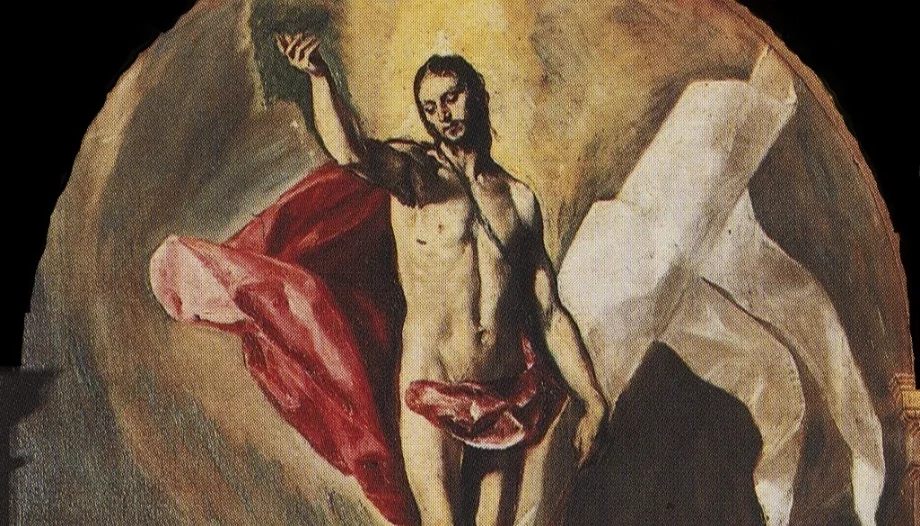
Christ is risen! This is the great mystery that we are celebrating these days and that fills us with joy and hope.
Pope via lucis is a practice of Christian piety that helps us to relive this mystery, the greatest of our faith, through prayer.
Let's start with a little anecdote. I am a priest and I was going to preach a retreat course a few days after having lived Holy Week. In the retreat course I like to propose to the participants to live the devotion of the Way of the Cross so that they can enter into the Passion of the Lord and, by reliving those moments, rediscover the pain of sin and the love of the Lord. But, that year, I thought: the Way of the Cross?
We are celebrating the Resurrection, my head was a little reluctant to do the Way of the Cross; is there nothing more suitable for these times? I did what we usually do in this digital age. I went on the internet and came across a devotion I had never heard of before: the via lucis. When I discovered it, I was filled with joy and said to myself: this is mine.
The first text I found was that of the priest José Luis Martín Descalzo. I adapted it to the needs of the attendees, I made a booklet for each one and we prayed it. The attendees were surprised and grateful; they had never prayed in this way with the Resurrection. They were enriched by the experience. Since then, every year, when I preach a retreat course at Easter, I propose to the participants to live the practice of piety of the via lucis.
What does the via lucis
But, we have to ask ourselves, what is the via lucis? As its name indicates, it is the path of light.
We answer the question we have asked ourselves with words from a document of the Catholic Church, the Directory on popular piety and liturgy- in which it is officially recognized for the first time.
“Through the exercise of the via lucis the faithful recall the central event of faith-the Resurrection of Christ-and their condition as disciples who in Baptism, the Paschal sacrament, have passed from the darkness of sin to the light of grace (cf. Col 1:13; Eph 5:8)”.
In the exercise of the Way of the Cross we follow the steps of Jesus towards the cross, in the first moment of the Paschal event, it helps the faithful to engrave these scenes in their minds and hearts and to grow in their love for Jesus, meditating on what he accomplished for us. In a similar way, with the via lucis, The "The Easter of Jesus," which has emerged in recent years, helps to fix in the memory and in the hearts of the Christian faithful the second moment of Jesus' Easter, his victory, his glorious Resurrection and the sending of the Holy Spirit.
And as the document points out, the via lucis, Moreover, “it can become an excellent pedagogy of faith, because, as it is often said, it can become an excellent pedagogy of faith, per crucem ad lucem. With the metaphor of the road, the via lucis, The first step is to acknowledge the reality of pain, which in God's plan does not constitute the end of life, and then to hope for the true goal of man: liberation, joy and peace, which are essentially paschal values.
Culture of life
Together with all of the above - the document adds - “in a society that is often marked by the ‘culture of death’, with its expressions of anguish and apathy, it is a stimulus to establish ‘a culture of going’, a culture open to the expectations of hope and the certainties of faith”.
It is true, a person who believes in the Resurrection of Christ, who meditates on it, who carries it in his head and in his heart is a person of hope, who loves life. This is what he really hopes for when he walks through this world with its sorrows and its joys: to live forever.
The history of the via lucis is simple. It is a recent devotion, but it already has a bit of history. Sabino Palumbieri, a Salesian, professor of philosophical anthropology at the Pontifical Salesian University in Rome. He designed fourteen stations from the Resurrection to the sending of the Holy Spirit.
A new text
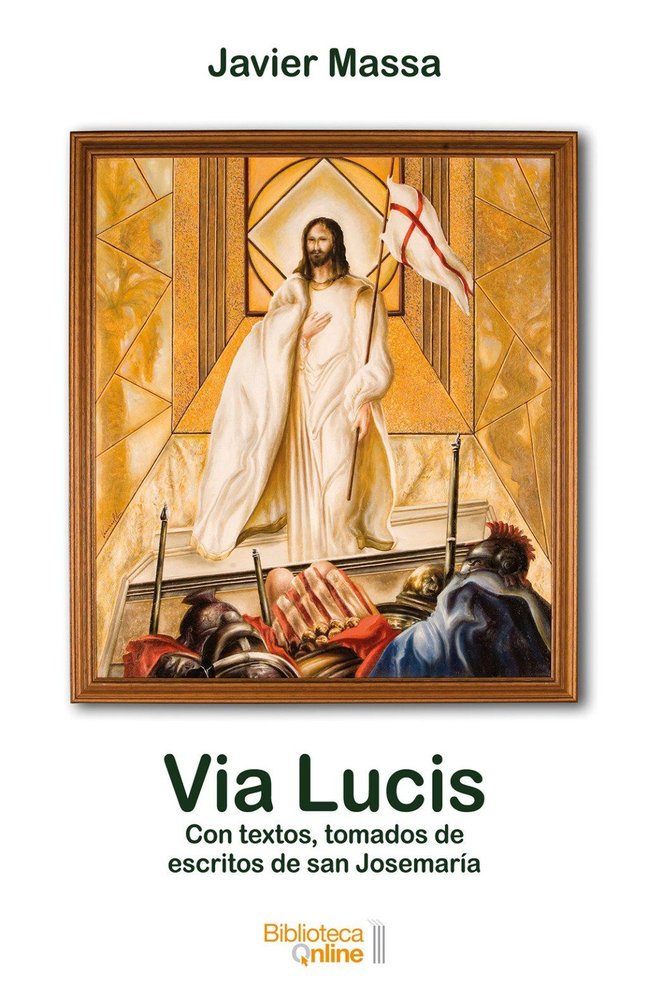
A contribution to the dissemination of the via lucis is the one that I offer readers in a published work recently. Via lucis with texts taken from St. Josemaría.
The images and titles of the stations correspond to the via lucis that has been erected at the entrance of the chapel of the Blessed Sacrament in Fatima. They are, as D. Sabino devised, fourteen stations.
1st Station: Jesus rises from the dead
2nd station: The disciples find the tomb empty
3rd Station: Jesus announces to Mary Magdalene his Resurrection.
4th station: The disciples of Emmaus
5th Station: Jesus makes Himself known in the breaking of the bread
6th Station: Jesus shows himself alive to his disciples
7th Station: Jesus confers on the Apostles the power to forgive sins
8th Station: Jesus confirms Thomas' faith
9th Station: Jesus appears at the Lake of Tiberias
10th Station: Jesus confers the primacy to Peter
11th Station: Jesus entrusts the disciples with a universal mission
12th station: The Ascension of the Lord
13th Station: With Mary in the expectation of the Holy Spirit
14th Station: Jesus sends his disciples in the Spirit promised by the Father
The titles of the stations describe the path that is followed in the exercise of the via lucis from the moment in which Jesus is placed in the tomb until the sending of the Holy Spirit. As it could not be otherwise, the presence of the Virgin Mary and the Sacrament of Reconciliation and the Eucharist are also present. Each in their own way, in the living presence of Jesus, they transmit to us the new life that he brought us with his Resurrection.
I wanted to keep the text simple, above all so that it could be prayed either individually or in a group, and so that it would not take too long. Each scene follows the same outline: a brief text from the Gospel, a commentary with words from St. Josemaría, and an antiphon at the beginning of each scene that recalls and engraves in the soul the mystery of the Resurrection that we are celebrating.
Although the via lucis is in its first steps, the way to live it is in front of the Tabernacle -the living presence of the risen Jesus- and the lighted Paschal candle, symbol of the Resurrection. Since it does not have a penitential character, the postures of the faithful and of the priest would be standing -for the Gospel and the enunciation of the stations and the antiphons- and seated -to listen to the Gospel-.
We hope that this devotion, which can do enormous good to the Christian people, will spread, celebrating the Life that Jesus has brought us with his Resurrection. Filling us with hope in a world that is so often marked by enormous suffering. May it be a balm in the face of so much pain and lack of hope.
Pope via lucis As with the Way of the Cross, it has its proper time, which is Easter and Sundays, but it can be prayed at any time of the year. It always helps to raise the soul in hope.
Via Lucis: With texts taken from the writings of St. Josemaria
Priest





 Español
  English
  Italiano
  Français
  Deutsch
  Polski
  简体中文
简体中文