



 Pedro Ballester. God smiles from a hospital bedBlessed and shameless youthYou cannot make yourself holy. But God can make you holy. And He wants to
Pedro Ballester (1996-2018) was a student who studied at Imperial College London and later at the University of Manchester. He was a member of the Opus Dei, But his life was marked by a serious illness that he faced with a deep faith and an attitude that had a strong impact on those around him, to the point that many consider his life an extraordinary example of holiness in the ordinary.
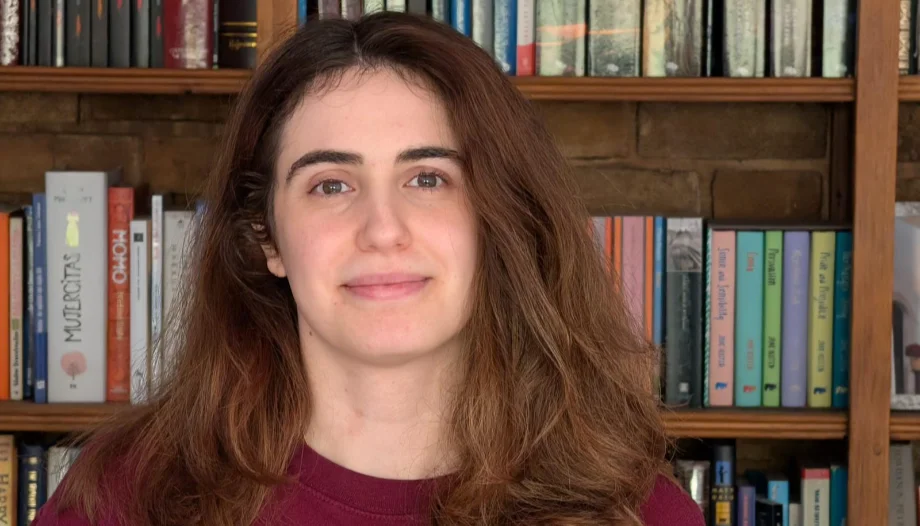
His new biographer, Paloma López Campos - editor-in-chief at Omnes - has researched his life, especially being in close contact with the family. She has been able to interview parents, siblings and some cousins, an experience that has allowed her to know first-hand what Pedro was like in his most intimate environment. In the end, telling the story of Pedro's life also implies telling part of his family intimacy.
Peter is one of the many examples of young Christians who have died with a reputation for holiness in recent years. A list headed by Carlo Acutis, but which has a good list of followers, such as the Sister Clare o Marcos Pou.
There is already a biography of Peter written by one of the priests who knew him best. What does this new work bring to the table?
-I think they are different perspectives. Jorge Boronat's biography is very good, and it is written by someone who belongs to Opus Dei and who was very close to Pedrito. That gives it a very special closeness.
What offers my biography is another look. On the one hand, that of a young person. I am 25 years old, and I still have very recent university years, which is precisely what he lived through. On the other hand, it is the perspective of someone who has not been a direct part of his life, nor does he belong to Opus Dei.
I have seen everything I am telling from the outside, through the eyes of someone of his generation. My objective was very clear: to tell young people that we have before us a young man who lived the message of Christ in a way that is very close to our circumstances. I have not discovered anything new; the facts are what they are. But I do try to offer a different reading, more accessible to young people.

Where does Peter's reputation for holiness come from?
-Although it is for the Church to decide the sanctity of any Christian faithful, I personally believe that he is a saint. I think he lived the virtues to a heroic degree, which in the end is what defines a saint.
However, I insist very much on an idea that seems to me fundamental: Peter is not a saint because of his illness or his vocation. To reduce him to that would be to greatly impoverish his life. He is a saint because in every little detail he said yes to God.
He was a good friend, a good son, a good brother, a good student..., and all this with difficulties, because he had defects like everyone else. His holiness is in his daily life, in how he responded to what God asked of him at every moment.
You speak of “virtues in heroic degree”. How do you understand that in someone so young?
-I believe that to live them to a heroic degree is to live them like Christ, who is always the reference. In Peter we see it in very concrete things. For example, when he was already very sick and tired, sometimes he would get angry if there was noise in his room. He could even ask people to leave.
But the impressive thing is what came next: he called them back to ask for their forgiveness. Therein lies the heroism. Not in not failing, but in realizing, rectifying and starting over. This ability to constantly start over is, for me, profoundly heroic.
Was he like that since he was a child or did he change over time?
-Since he was a little boy, he had been a natural, but he knew himself very well and knew where he had to improve. For example, he had a certain «quickness,» he could be a bit impatient. The nice thing is that he worked on those aspects from a very young age. He was polishing his character little by little. He died very young, but he had already made an important journey in that sense.
What surprised you the most when researching his life?
-His normality. When you read biographies of saints, sometimes it seems that you are dealing with someone exceptional from the beginning, almost unattainable. But when you meet his family and listen to them talk about him, you realize that he was a completely normal guy.
That's what struck me the most: that there was nothing extraordinary about him in appearance. He was a typical classmate, the neighbor next door. And that's precisely why his life is so challenging, because he's telling you that you can live like that too.
Are there any anecdotes that show your more human side?
-Pedrito lived in the digital era, like all of us. He loved watching videos on YouTube, often on topics that interested him. But he could get hooked and end up wasting time in front of the screen, something we can all relate to.
There is a lot of talk about the “Pedrito effect”. Have you noticed it too?
-Yes, where I noticed it most was in his family. In spite of having lived through such a hard illness and the loss of a son and a brother, there is a very deep peace in them.
When you talk to them, they get emotional, their eyes fill with tears, they remember difficult moments..., but at the same time they transmit an impressive serenity. It is difficult to explain, but it gives the feeling that there is a special grace there. As if Pedro's life continues to have an effect on those around him.
The fruit of Peter's life can also be seen in the testimonies of friends or companions -many of them non-believers-. Peter did not deal only with believers; he was close to all kinds of people.
As a result, his fellow students at the University of Manchester insisted that the institution award him the university degree posthumously, as he was unable to finish his degree due to illness.
It was a very special recognition, not only academically, but also for the human impact he had had on his peers and professors. In fact, it is something quite exceptional. It is not usual for a university to award such a degree, and in his case it was a way of recognizing all that he had left in such a short time.
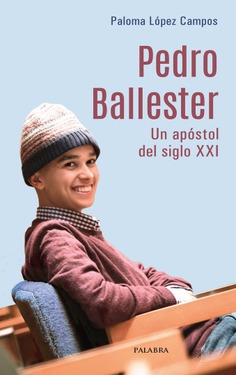
Pedro Ballester. An apostle of the XXI century






 Español
  English
  Italiano
  Français
  Deutsch
  Polski