



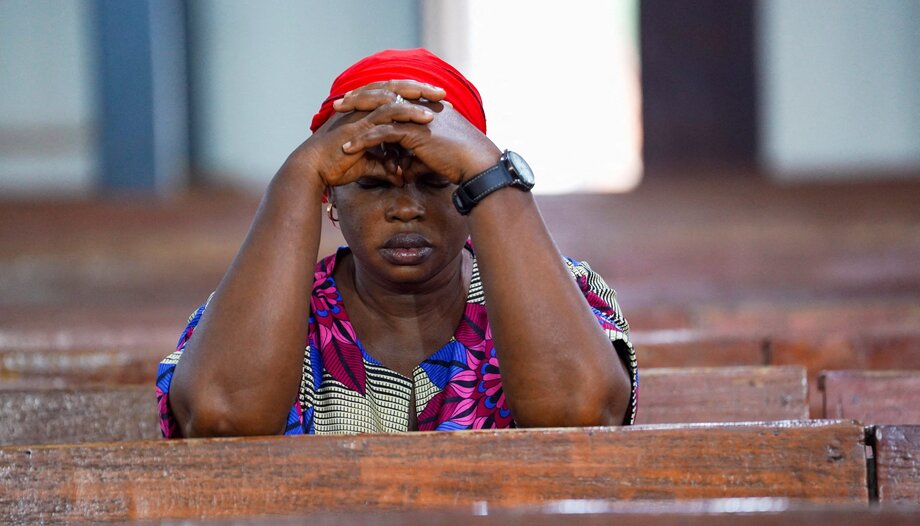
 200 Christians killed in Nigeria and the silence of the Spanish mainstream pressEmmanuel Enwenwen: "Many Nigerians are now missionaries all over the world".
On March 29, gunmen opened fire on residents gathered in the streets of Jos, the capital of Plateau State in north-central Nigeria, as worshippers returned from Palm Sunday services in the predominantly Christian Angwan Rukuba district.
The attack, which struck a densely populated civilian area, reflects the persistent violence that has gripped parts of northern Nigeria, where killings, kidnappings, and limited state protection continue to leave communities highly vulnerable.
As Nigeria mourns the victims, renewed attention is being drawn to a country that, despite having one of the world’s largest Christian populations, is frequently cited among the most dangerous places in the world for Christians.
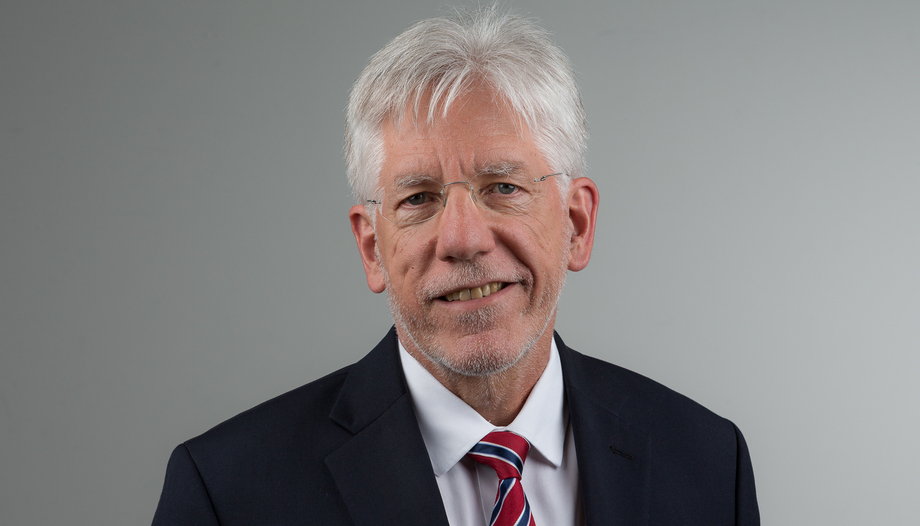
To better understand the crisis, Omnes spoke with Dr. John Eibner, president of Christian Solidarity International, a historian and human rights activist who has spent decades documenting religious persecution across Africa.
Nigeria has a large Christian population yet consistently ranks among the most dangerous countries for Christians. What specific factors make Nigerian Christians so vulnerable despite their numbers?
– Two major factors help explain why Nigerian Christians remain highly vulnerable to ongoing violence, despite their significant population, not only in Nigeria but across Africa as a whole.
The first factor is historical. During its northward expansion, the British colonial administration defeated the Sokoto Caliphate in 1903. It then chose to govern Nigeria through Lord Lugard’s policy of indirect rule. This approach unwittingly created a political structure that favored the Islamic north, often at the expense of the diverse ethnic and tribal groups in the Middle Belt. As a result, the foundation of the Nigerian state was flawed from the outset.
The second factor is ideological. Christians have generally adhered to biblical teachings that emphasize respect for governing authorities, who are expected to protect the vulnerable and ensure justice. Christianity also maintains a distinction between church and state, unlike Islam, which can integrate religious and political authority.
Consequently, many Nigerian Christians have historically avoided active political engagement, with the Church remaining largely apolitical for decades. This disengagement may have had negative consequences, particularly in a context where Islam often operates as a political force.
Who are the main actors carrying out violence against Christian communities and what are their respective motivations?
– The perpetrators of these attacks have been consistently identified by the Nigerian government, Islamic clerics, and victims across affected villages as Fulani Islamist militia groups. In some cases, the attackers themselves have posted videos on platforms like TikTok and Facebook, displaying ransom. Additional evidence, including confessional material released by security agencies, further supports these claims. Their kidnapping operations and propaganda videos also reveal the scale of their weaponry and their capacity to invade communities.
These attacks do not resemble spontaneous clashes between herders and farmers. The assailants do not arrive as pastoralists engaged in grazing disputes; rather, they enter villages in large numbers on motorcycles, heavily armed and organized, resembling coordinated military incursions. This undermines the characterization of the violence as mere “herder–farmer clashes.”
The Nigerian government has also acknowledged the presence of terrorist groups such as Ansaru, Lakurawa, and Jama'at Nasr al-Islam wal Muslimin (JNIM), an Al Qaeda affiliated organization operating in the Sahel, which are involved in attacks in Nigeria’s Middle Belt region.
In this region, Christian communities are specifically targeted. In several instances, in Plateau State, attacks have focused on Christians while Muslim in the same communities were left unharmed. There are also reports of Muslim neighbors, many of whom are farmers themselves, protecting Christian neighbors during these attacks. Taken together, these patterns suggest a deliberate and targeted campaign against Christian populations.
Attacks on Christians in Nigeria are often described as ethnic or land-related rather than purely religious. Does that distinction matter for how the international community responds?
– Describing the attacks as “ethnic” or “land-related” can obscure the extent to which religious ideology may also be a motivating factor. Critics argue that framing the violence primarily as “herder-farmer clashes” or resource competition reduces the perceived need for international intervention and can shield both perpetrators and state authorities from greater scrutiny.
Fulani Islamist militia groups have been accused of targeting Christian villages in Nigeria’s Middle Belt, and many local communities view these attacks not as isolated incidents but as part of a longer historical pattern. Oral histories recount similar 19th-century raids in which villages were attacked, populations displaced, and individuals captured into slavery. For communities that resisted Islam and later adopted Christianity, current violence is often interpreted as a continuation of these earlier conflicts.
Observers who emphasize this perspective argue that massacre of Christians by these armed groups differ significantly from the commonly cited image of pastoral herders engaged in spontaneous disputes with farmers. Instead, they describe this as a well-organized militias equipped with advanced weaponry, including drones, night-vision equipment, high-caliber rifles, and rocket-propelled grenades. These groups are said to be capable of coordinated attacks on multiple villages, often carried out at night, with limited intervention or response from state security forces.
This distinction matters because how the violence is characterized directly influences international policy responses. If viewed primarily as criminality or resource conflict, the crisis is more likely to be treated as a domestic governance issue. If recognized as organized ideological or sectarian violence, it may prompt stronger diplomatic pressure, targeted sanctions, or greater scrutiny of the Nigerian government’s response.
Among many affected Christian communities, the continued use of resource-conflict narratives reinforces the perception that both domestic and international actors have failed to fully acknowledge the nature of the threat they face.
Nigeria’s Middle Belt region has become the epicenter of anti-Christian violence. What is it about that region specifically that makes it so volatile?
– It is important to place this issue in context. The region not only resisted the spread of Islam and the 19th-century jihad movements, but states such as Benue and Plateau have also, for decades, consistently demanded greater regional autonomy. Rather than identifying with the constitutionally recognized “North Central Nigeria,” the region has resisted this classification.
Since independence, this designation has often been perceived as a political tool used by the northern establishment, historically linked to the Sokoto Caliphate, to consolidate electoral strength in the National Assembly in response to what is seen as southern political dominance.
Within this context, efforts to assert control over the Middle Belt, particularly its predominantly Christian communities, can be interpreted in two ways: historically, as a continuation of earlier jihadist ambitions that were curtailed during British colonial rule, and contemporarily, as part of a struggle to maintain political and demographic influence.
In this light, tensions in the Middle Belt are sometimes framed as a broader contest over values and governance, with some supporters of Sharia governance viewing Christian institutions and Western-influenced civic structures as incompatible with their religious and social framework.
Some analysts cite Fulani expansion into Christian farming areas as a driver of violence in the Middle Belt. To what extent are land and resource disputes a root cause, and how does religion shape the conflict?
– Many analysts do not critically examine the historical context or antecedents of these issues. Instead, they often approach them from an academic perspective based on published research or journal articles, or they rely on media platforms that seek commentators to discuss these developments. In doing so, they frequently adopt the politically convenient conclusion that competition for land resources is the primary cause.
The traditional Fulani herders are a migratory pastoral community and have historically not owned land in the Middle Belt region. As migrants, they do not seek permanent land ownership and do not remain in one location for extended periods. Historically, conflicts between herders and farmers have occurred when cattle encroach on farmland. Traditional leaders have long been responsible for mediating and resolving these disputes, a role they have fulfilled for decades.
Many analysts focus on violence from the year 2000 onward while overlooking the fact that these events are part of a deeper, long-standing religious and political divide inherited from the British colonial administration. Three years after independence in 1960, Nigeria’s political arrangement collapsed, and following three years of unrest, a civil war broke out in 1967. During this conflict, nearly one million people were killed, many of them Christians from the southern region.
The war is often described as reflecting a broader divide between the Muslim north and the Christian south. While some analysts may overlook this history, many Nigerians who lived through the post-independence period remember it vividly. Ignoring this context in addressing current crises risks misdiagnosing the problem and pursuing solutions that are unlikely to be effective.
How is the international community responding to the violence, and what would a meaningful response look like?
– The hope, resilience, and sustenance that Christians have received over the past decade have largely come from international churches, Christian organizations, and individual believers. Much of this support has been lifesaving for many families. It has included emergency food aid, medical supplies and payment of medical bills, educational materials, and, importantly, economic empowerment projects that have helped families begin to rebuild their lives after their losses. In addition, psychosocial support has also played a critical role.
Western governments have provided military support to the Nigerian army, particularly in efforts against Boko Haram in the north-east. However, little of this support, as far as local communities are aware, has been directed toward assisting communities in the Middle Belt.
A meaningful response from the Nigerian government would involve setting aside federal funds for the rebuilding and rehabilitation of villages destroyed in the Middle Belt region. These rebuilding projects should be implemented by local community development associations and monitored by the communities themselves. This approach would promote transparency and allow the government to oversee the process, reducing opportunities for corruption among some officials.
The government should also establish a special court to try cases of terrorism, so that justice can be seen to be done. History shows that peace and closure are unlikely where justice has not been served. Without accountability, there is a significant risk that such violence will resurface in the future.
Author’s Note: The interview responses have been condensed for length and readability while preserving their original intent and substance.
Journalist and essayist born in the United Arab Emirates and based in Lithuania. He is a contributor to Omnes, EWTN News and CNA Deutsch.






 Español
  English
  Italiano
  Français
  Deutsch
  Polski