



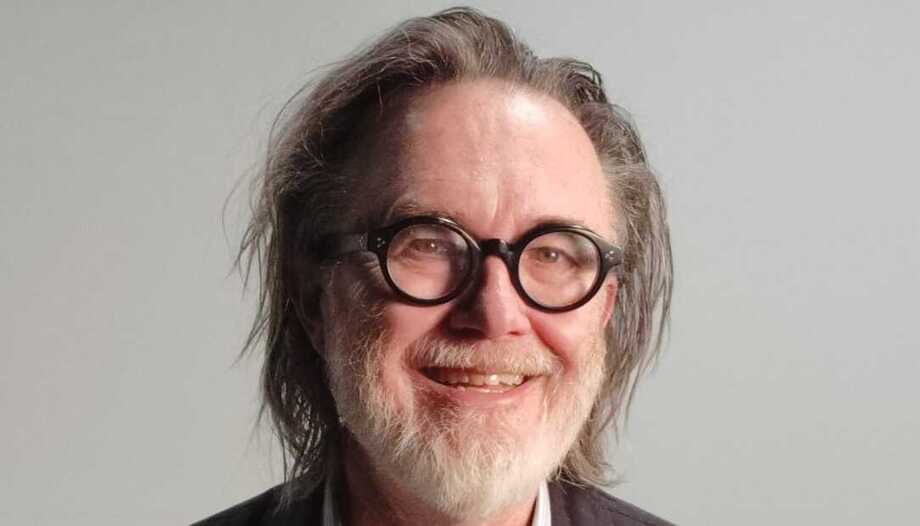
Rod Dreher (Louisiana, 1967) is one of the most influential Christian intellectuals in the Anglo-Saxon world. An American journalist and writer based in Europe, he was among the first to investigate the sexual abuse scandal in the Catholic Church in the United States. That experience had such an impact on him that it caused him to abandon the Catholic faith and led him to move to Eastern Orthodoxy.
Author of three “New York Times” bestsellers -including “The Benedictine Option”His latest book, “Vivir en el asombro”, published in Encuentro, deals with the return of the supernatural in a society that thought it had overcome religion, and the urgent need for Christians to recover an incarnated faith, not just an intellectual one. After having lost almost everything, he continues to find God in the everyday. Dreher has attended Omnes in Madrid.
You've written extensively about wonder, but I wanted to start with something more concrete. When was the last time you personally experienced it?
- Almost every day there is some small sign that God is with me, helping me find people who need my help-or that I need in some way I hadn't anticipated⎯. That's why I try to always cultivate a willingness to be open to God acting in my life.
But the first time I really experienced awe was when I was 17, in 1984, on a trip to Europe. I wasn't sure if I believed in God or anything. I was on a bus full of older American tourists - I was the only young person in the group - but I didn't care: I was going to Paris. We made a stop about an hour out of town to visit a church. I thought: another old church. We went in, and it was Chartres Cathedral. There was nothing in my life - I grew up in small-town America at the turn of the 20th century - that would have prepared me for Chartres. There I was overwhelmed with awe and knew, somehow, that God really exists. I wanted to know the God who had inspired men, eight hundred years ago, to build such a beautiful temple in his honor. I did not leave that church as a Christian, but I went on a quest. And that search finally led me to Christ.
In the book he argues that the new atheists of twenty years ago did not create a world without God, but a vacuum, and that it is now being filled by the old gods-Baal, Ishtar, Moloch-returning in new forms. How does that manifest itself today in concrete terms?
- I'm 59 years old and my generation didn't see this. But four years ago I was in Oxford, at a conference, and I was approached by a young 27-year-old seminarian who asked me, “What do you think is the greatest threat to Christianity?” I replied, “Atheism.” He replied, “No, that was true for your generation. For mine, most people don't think about atheism. The threat is occultism".
He told me that in London, where he had worked before entering the seminary, he was the only Christian in his office. But there were no atheists: everyone had some link with the occult: astrology, tarot, crystals, Wicca, etc. There were even two people who argued that Satanism was the best way to be fully human. The seminarian he told me, “I know that when I become a priest I will have to deal with this for the rest of my life. But your generation doesn't even know it exists. That shocked me.
When I returned home I looked into the social sciences, and it is absolutely true. Chesterton said that when man stops believing in God, he believes in anything. And that is what we are living today. Young people - the twenty-somethings, the teenagers - are looking for mystery, transcendence and meaning. But they do not always want Christianity. Some think that they cannot find it in the Church, because many Churches try to downplay the importance of mystery in order to appear more modern. Others know that becoming a Christian implies surrendering one's life to Jesus Christ and losing the freedom to do whatever they want. Occultism tells them that they can do whatever they want. The problem is that it will cost them their soul.
He devotes a whole chapter to what he calls “dark enchantment”: people who go through experiences that we could call demonic (witchcraft, psychedelics). Why do you think this change occurred, from not believing in anything to wanting to go into that darkness?
- Because people cannot live without a sense of mystery, without believing that there is something beyond the material world. It is something we need as human beings. From the Christian faith, I believe that St. Augustine was right: our heart is restless until it rests in God. Well, they seek him, but they choose a false god: the god of occultism.
Throughout history there has always been the practice of discernment: trying to distinguish what is truly of God from what is not. But in the book you write that today many people are attracted to Artificial Intelligence and UFOs almost as if they were supernatural entities, new sources of transcendent wisdom. Do you think most believers have lost the ability to discern what they are dealing with spiritually?
- In general, almost no one today is prepared to discern. It is taken for granted that if something mysterious or supernatural happens, it must be good, or at least neutral. The Church offers serious criteria for discernment, but many people do not want to listen to her - they think they know better. And they can get caught before they realize it.
We also live in a culture that is open to all kinds of experiences and that believes that the only authority is oneself: not the Church, nor the Bible. This is a very dangerous thing, and one that our culture encourages. We live in a religious environment in which people - even many Christians - believe they have the right to choose for themselves what is true and what is false. That freedom is an illusion. You can do drugs if you want, but they will kill you. If you follow the Church's wisdom on the matter, you'll stay away. The same goes for spirituality: in the Bible we find all kinds of warnings against it. The Church has two thousand years of experience in these realities.
In the book I talk about how in the modern Western world we are what they call “WEIRD”: “Western”, “Educated”, “Industrialized”, “Rich”, “Democratic” -Western, educated, industrialized, rich and democratic. That is the West today. In that world we do not perceive the spiritual dimension of life in the same way as most people in the rest of the world, nor in the same way as our ancestors before the modern era. This is, in a sense, good news. If we think that we know it all and that those who live in other countries are simply superstitious, we are wrong. There is superstition, yes, but they perceive aspects of reality that we are blind to, because of our materialistic culture and the myth of progress, which states that each generation is smarter than the last. In science and technology, that may be so. But in spiritual matters, we are becoming more and more stupid.
Some readers felt that “The Benedict Option” was a withdrawal from the world, almost like closing doors. And in “Living in Awe,” on the other hand, there seems to be an openness to spiritual experience. Would you say that this new book qualifies or corrects that perception?
- Yes, I heard that a lot from critics of “The Benedict Option,” many of whom had not read the book. In it I explain that there is no escape from the modern world; we cannot run for the hills and hide. But if we are to live in this world as faithful Christians, we need to set certain boundaries in order to cultivate the faith, grow in it and pass it on to our children, so that when we go out into the world we can be faithful disciples of Jesus Christ. I never said “retreat to the mountain,” but I think a lot of people wanted to understand it that way, because that way it is easier to reject the message.
In this new book I say: we live in a world that paradoxically is becoming more and more esoteric. That is why we have to go back to what the Church has taught us about spiritual discernment and raise those barriers, not to run away from everything, but to know how to say no when we encounter it.
In the book he talks about prayer for deliverance, family estrangement, his divorce, and says that what he left was a dark cloud he had carried with him all his adult life. Did he hesitate before publishing something so personal?
- I did hesitate, because it was very personal. But at the same time, in everything I have written I have found that people come up to me and say: “Thank you for saying these things; I have lived it too and it gave me hope”. And I thought: if God did this for me through the prayers of my priest - who is also an exorcist - I can't keep quiet, because there may be someone reading this who needs exactly that help. Of course, many people will laugh at me for writing something like this. I don't care. I'm 59 years old and I've lived too long. My wife divorced me, I lost my Catholic faith, I'm estranged from my family in the U.S., who have their own problems. And Christ carried me through it all. I have published three books on the “New York Times” bestseller list, so I'm not worried about people laughing at me. I feel like I want to bear witness to what the Lord has done in my life.
Since my divorce, I have never spoken publicly about why it happened because it is too intimate. However, there are Christian men I don't know who write to me saying, “I'm sorry you are going through the divorce. This is what I'm going through. Can you help me?”. And I tell them everything I can to help them.
Would you say then that all those painful things and that vision of wonder that you describe in the book fit together? Or is it sometimes complicated?
- They fit, although it is often complicated. In my previous book, “Living Without Lies,” I tell the story of a Christian in the Soviet Union-Alexander Ogorodnikov. He was from a prominent Communist family, but converted to Christianity in the early 1970s. The young men began meeting in his Moscow apartment to pray and praise God together. Eventually, the KGB arrested them all and sent them to prison. Ogorodnikov was put on death row, not because he was sentenced to death, but because, coming from a known communist family, he was put among the worst prisoners in Russia to suffer. He began to evangelize them, and some were converted. The guards, furious at the conversions, put him in solitary confinement. There he began to really suffer and to doubt his faith. I interviewed him once in Moscow, and he told me - crying - that one night he was awakened by an angel who shook him. He raised his eyes and saw the angel, who showed him a vision of a man, a prisoner, with his hands behind his back, being led to his execution. This was repeated night after night. And Ogorodnikov eventually understood what it meant: all the men he saw (who were murderers), who were being led to execution, had accepted Christ because of his preaching. The angel was telling him: through your suffering, these men are today in paradise with the Lord, because they repented. And Ogorodnikov told me: “I recovered all my faith and all my hope from that experience”.
When I hear a story like this - and I know it is true - when I feel depressed and full of despair about what has happened to me, I am reminded of Ogorodnikov's testimony: suffering is not the end. If we continue to persevere without losing faith - with the conviction that Christ allows this for a mysterious reason and that we only have to cooperate with the Holy Spirit, maintain hope and show God's love to others in spite of suffering - in the end we are fulfilling God's will.






 Español
  English
  Italiano
  Français
  Deutsch
  Polski
  简体中文
简体中文