


This morning, at the Pontifical University of the Holy Cross, the results of the survey were presented. Footprints: Values, Hopes and Expectations of Young People. The research, conducted between January and February 2026, was carried out with a sample of 9,000 young people (18-29 years old) from 9 countries (Argentina, Brazil, Italy, Kenya, Mexico, the Philippines, the United Kingdom, Spain and the United States), which allows us to see a redefinition of the concept of work, well-being and personal fulfillment among Generation Z and the Millennials.
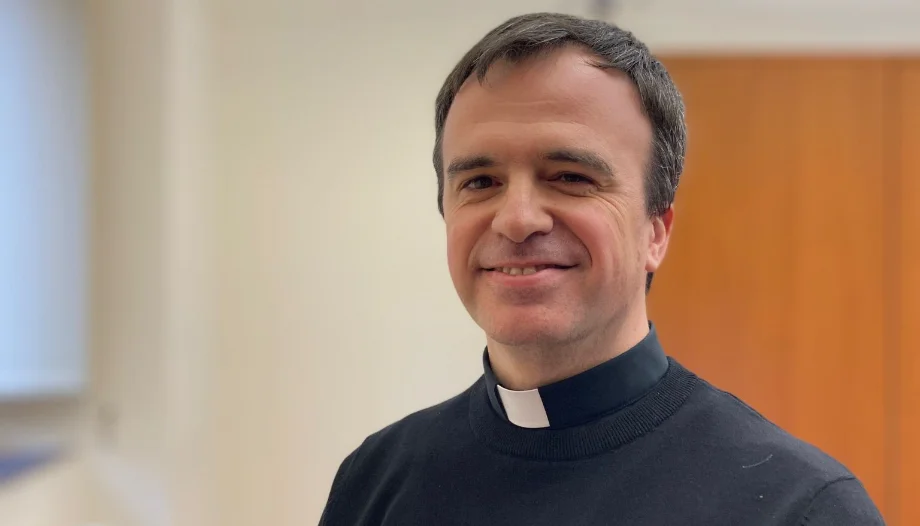
We talked to José María Díaz-Dorronsoro, coordinator of the research group Footprints, which has carried out a new edition of the study.
What are the main conclusions of the study?
What is most impressive about the results of this second wave of Footprints is that the 9,000 young people aged 18 to 29 that we listened to in nine countries are telling us something that does not fit the clichés: work is no longer a “contract” between effort and remuneration but an existential space where young people hope to fulfill themselves, relate to others and, in many cases, also find a transcendent dimension.
The data speak for themselves. Some 48% of young people would leave a stable, well-paid job if the work environment is toxic - and that figure rises to 53% among women. Salary remains the first priority declared for 29%, but alongside it emerges strongly what we call the «emotional wage»: the quality of the environment, psychological well-being, the coherence of values between the person and the company. The 25% would leave if he does not share his employer's ethics; the 23%, if the job is incompatible with having a family.
Another key finding: 90% of respondents consider rest essential for a balanced work life, but more than 60% feel constant pressure to keep producing even when exhausted. That tension is very telling of the world we live in.
And then there is the dimension of faith. 66% of global youth identify themselves as believers, and those who do have consistently higher levels of happiness, civic engagement and job optimism than non-believers. The happiness gap is 0.8 points out of 10 - 7.1 on average for believers versus 6.3 for non-believers - and more than 60% of young believers report that their work also has spiritual meaning.
What changes have you detected with respect to the last study you did?
The first survey of Footprints, in 2023, addressed faith and religion in eight countries. This second - with nine countries and 9,000 respondents - focuses on work and civic engagement. They are not identical questions, so a direct comparison is not possible.
That said, the most important common thread between the two phases is precisely that of faith, since we have maintained a series of basic questions in which we ask about beliefs and the level of practice. What we detected in 2023-that spirituality had not disappeared, but had evolved toward more personal, less institutional forms-we see confirmed and expanded in 2026. Faith has not secularized at the pace that certain dominant narratives presuppose. In European countries in the process of secularization, there are fewer believers, yes, but those who keep the faith do so in a more conscious and committed way.
What is genuinely new in this second phase is evidence of how spirituality permeates the world of work. Almost half of the believers - 48% - turn to God when they face difficulties at work; 14% cite a spiritual guide as a reference that has influenced their concept of work; 54% perceive work as a space for spiritual search or expression. These data show that faith is not a compartment separate from professional life: it inhabits and orients it.
And there is a new trend that we could not anticipate in 2023: the role of artificial intelligence. In Italy, for example, the percentage of young believers who turn to AI when facing work difficulties is identical to those who turn to God: 21% in both cases. We do not interpret this as a substitution of the spiritual for the technological, but as a pragmatic integration that invites serious reflection on the new mediation of meaning that AI exercises in the lives of young people.
Has the weight of faith fallen? Is religion less relevant today?
There is no generalized collapse of faith; there are very different geographies, and to confuse them would be a serious methodological error.
81% of young believers - who make up 66% of the global total - consider their faith to be an important guide in everyday decisions. And that influence extends explicitly to the world of work: more than 60% of believers state that their work has spiritual significance, and 54% consider it a space for spiritual searching.
In Kenya, the Philippines and Brazil, faith remains the most visible driver of career decisions. In Kenya, 90% of youth identify themselves as believers, 66% attend religious services weekly, 69% pray daily, and 97% of Kenyan believers rate faith as an important guide in their lives.
This spiritual substratum translates directly into their view of work: they associate it with service to others in a much higher proportion than average, they are the most optimistic in the study about the future of work, and more than half turn to God when they face difficulties at work.
The Philippines, with 82% of believers and 94% who consider faith as a guide, presents a similar profile. Brazil stands out for the highest happiness rate in the study - 7.5 out of 10 on average - a figure that correlates strongly with its high religious practice.
At the opposite extreme are Italy and Spain. Spain has only 46% of believers among young people, 16% attend Mass weekly, the same percentage prays daily. Italy, with 38% of believers and 10% of weekly attendance, is one of the scenarios of greatest progress in secularization, although faith in Italy has not disappeared but seems to run as if through a subway channel, less visible on the social surface, because it emerges with force when certain issues are touched upon: the relationship with colleagues, the search for meaning at work, compatibility with the family.
Are today's young people more or less civically active than those of previous generations?
The question requires nuance, because youth activism has changed in form rather than intensity. Institutional commitment-party affiliation, formal membership in organizations-is low: 53% do not belong to any association. But indifference is another matter. 72% vote when there are elections, 44% express their opinions on political issues on social networks, 37% participate in campaigns and petitions.
What is a solid and recurrent finding in all countries is the difference between believers and non-believers in terms of civic engagement. Young believers vote more - 74% vs. 69% of non-believers; they participate more in awareness campaigns - 41% vs. 29%; they express more of their opinions in public spaces - 47% vs. 39%.
In religious community participation, 32% of believers belong to a religious organization and 21% to a civil association, both figures higher than those of non-believers.
The activism gap - more than 12 percentage points - is particularly striking. And it is true in all countries: in the United Kingdom, in Kenya, in Argentina, in Spain. Faith, far from being a retreat into the private sphere, seems to function as an accelerator of commitment to the public sphere. This fact invites serious reflection on the role of religious communities as schools of active citizenship.
Is teleworking a non-negotiable requirement or is there a desire to return to the office?
Neither one nor the other absolutely. 71% of young people have worked or studied remotely at some point - COVID's most enduring legacy - and a third do so regularly. But attitudes toward telecommuting are deeply ambivalent.
What they value most is flexible working hours and work-life balance. They are most concerned about social isolation - especially in the UK, where 50% report this - and deteriorating communication with the team - 39% globally, up to 46% in the Philippines. Only 10% of respondents would point to the inability to telecommute as a reason for leaving a well-paying job, indicating that remote work is appreciated but not central to their demands.
The emerging model is clearly hybrid. Young people want autonomy to organize their time, but not at the expense of the human link with their colleagues. In Italy, the qualitative data are particularly interesting: young believers endure the isolation of teleworking better than non-believers - only 36% suffer from it, compared to 44% of non-believers - but at the same time they are more sensitive to the quality of relationships with colleagues. This suggests that a robust spiritual life can be a real resource for managing enforced loneliness, without giving up relationships as a constitutive value.
What is behind this data?
A young Italian man, in a focus group prior to the elaboration of the questionnaire put it this way: «work gives you the freedom not to ask» - he was talking about economic independence - but another added that the same work «cannot come before your primary needs». Young people are not giving up being economically demanding; they are adding an additional layer of demand that has to do with the whole person.
The most relevant thing for an employer is this: young people do not want to separate their life from work; they want to integrate it. They are not looking for a «work-life balance» understood as a separation of spheres, but what we call in the study «work-life integration»: that work does not destroy their relationships, that it respects their rest, that it is consistent with their values.
In Spain, specifically, the most valued aspect of teleworking is the time saved in travel, but 39% points out the deterioration of communication with the team as the main drawback. Flexibility yes, but with real human presence.
Is there a direct relationship in the data between having a «vocation» and suffering less job anxiety?
This is one of the most powerful findings of all the research. We did not measure clinical anxiety directly, but reported subjective well-being shows a very robust correlation with the presence or absence of professional vocation. Young people who say they have a clear vocation report being happy in 55% of cases; among those who do not perceive one, that figure drops to 27%. This is practically double.
Vocation also acts as a buffer against uncertainty. In Italy, young believers - who tend to integrate spiritual and professional vocation - show significantly lower levels of job stress than non-believers: 25% vs. 33%. And they are more able to see failures as learning opportunities, to plan their trajectory and to trust in the future.
Three out of four young people report having some kind of professional vocation, although in many cases it is not fully defined. The sectors where the sense of calling is strongest are health and education -with 84% in both- and the field of engineering and technical sciences. These are precisely the fields that demand the greatest personal commitment, and those that generate the most meaning. I don't think this is a coincidence.
The question for formators, educators and pastors is how to help young people articulate and sustain this vocation in work contexts that do not always favor it.
Anything else relevant to add?
Yes, I would like to place this study in the larger picture of youth research, because I think it is an aspect that deserves more attention than it usually receives.
Most of the institutional studies -OCSE, Eurofound, the major national reports- photograph the objective conditions of young people in the labor market: unemployment rates, average wages,
types of contracts, access difficulties. These are crucial data, but they don't tell the whole story. Footprints deliberately investigates the submerged part of the iceberg: what young people believe, desire, hope and fear in a deeper dimension. Not «what's going on» with young people, but «what they think and dream about» in relation to their professional lives.
One of the results that most challenges me is the image they have of work: 15% associate it with «passion» as the first meaning -in Italy this figure rises to 22%-, followed by «career» (14%). The words «duty», «service» and «sacrifice» are the least chosen.
For those who work in human or pastoral formation, this is an important sign: young people do not need us to talk to them about work as an obligation or as a crucis; they need us to accompany them in discovering how their specific way of working can also be a response to a deeper call.
We are living, as Pope Francis said, not a time of change, but a change of era. The young people we have heard in nine countries are neither the lost generation portrayed in some headlines nor the idealized generation of hopeful speeches.
They are a real, complex generation, full of fertile contradictions, that needs to be listened to with rigor and respect before being judged or questioned. That's what Footprints is trying to do, and I think it's worth pursuing: in 2028, when we publish the results of the third phase on personal relationships and family, we will have the most complete portrait ever constructed of an entire generation on an international scale.






 Español
  English
  Italiano
  Français
  Deutsch
  Polski
  简体中文
简体中文