


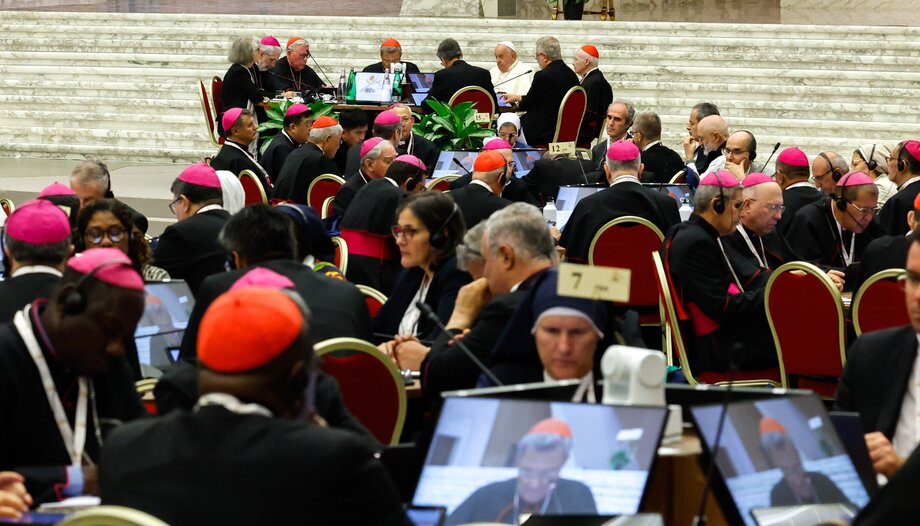
The document of the General Secretariat of the Synod of Bishops on the Assemblies The subtitle of the document, which will be held in 2027 and 2028, specifies what is involved in this implementation phase of the Synod: “Stages, criteria and instruments for the preparation” of these phases.
The headings of each of the four phases of the next two years define the scope and the people:
It is successively about:
- ‘Memory’(stage of local churches or eparchies, first half of 2027);
- ‘interpret’ (stage of the local Churches of an Episcopal Conference, second half of 2027);
- ‘guide www.’(stage of the local Churches of each continent, first quarter of 2028).
- y ‘celebrate’ (October 2028). It is the climax of the ecclesial assembly at the Vatican, “where the whole Church is called to recognize, celebrate and revitalize the fruits achieved in the Synod's implementation journey.».
Key question
In light of the road traveled since the conclusion of Synod 2021-2024, notes the text of the General Secretariat led by Cardinal Mario Grech, and “with a view to offering its fruits as a gift to the other Churches and to the Holy Father,” the key question is the following:
“What concrete face of missionary synodal Church and what new paths of synodality are emerging in your community?”
The question is posed in the introduction, and also at the end of the text, when referring to the celebratory dimension: “Each group will be invited to offer its own contribution based on the question that animates the whole process”.
Evangelical roots
The General Secretariat anchors its introduction in the Gospel, in texts from St. Luke and the Acts of the Apostles.
In this way, he recalls that “gathering the Church together to reflect communally on what has happened and to share the wonders worked by the Lord is a practice rooted in the experience of the return from the mission recounted in the Gospel: after being sent out two by two, “the seventy-two returned full of joy” (Lk 10:17), recounting what the Lord had accomplished through them.
Later, he adds, “the apostolic Church also took up this same practice, as we read in the book of the Acts of the Apostles: ‘When we arrived in Jerusalem, the brethren welcomed us. The next day Paul went with us to see James, along with all the elders. After greeting them, he began to tell them in detail what God had done among the Gentiles through his ministry» (Acts 21:17-19; cf. Acts 14:27 and 15:4.12).”.
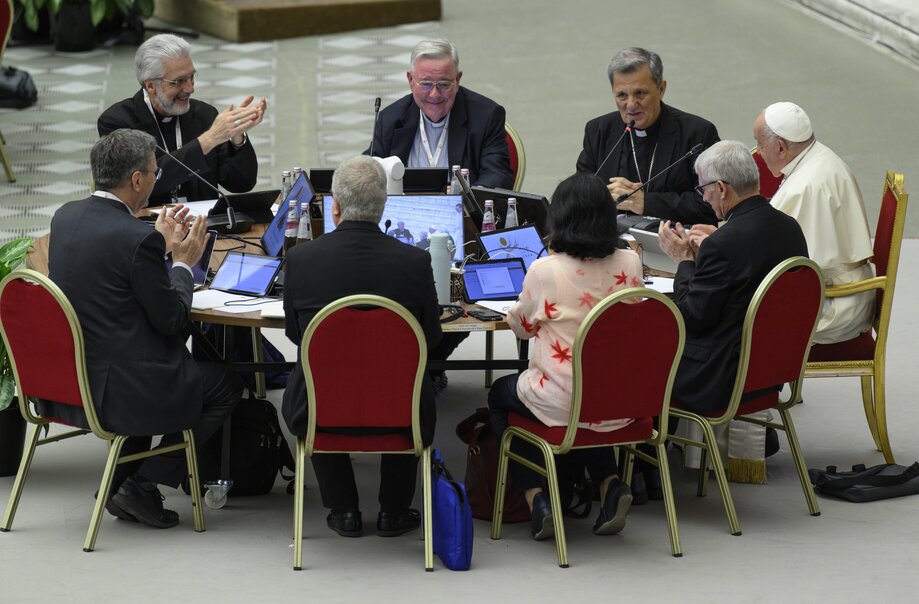
Third stage of the process, after the consultation and the two sessions in Rome
The document states textually that “the 2027-2028 Assemblies, to whose preparation this text is dedicated, are part of the implementation phase of the Synod, which constitutes the third stage of the process outlined by the apostolic constitution Episcopalis communio, after the consultation and listening of the People of God (2021-2023) and the celebration phase, finalized in the two sessions of the XVI Ordinary General Assembly of the Synod of Bishops in October 2023 and October 2024.”.
Final document, and stage confirmed by Pope Leo
With the delivery of the Final Document, Pope Francis inaugurated this new stage, later confirmed and promoted by Pope Leo XIV, the text states.
The Tracks for the Implementation Phase of the Synod (dated June 29, 2025 and available on the website www.synod.va) “delineated with greater precision the horizon and style of this path, offering initial criteria and orientations”.
Now, “the reflections presented here seek to give a more concrete form to the ongoing process, clarifying the participation of the local Churches and the various spheres of ecclesial communion”.
Role of the Assemblies: decisive step, maturation
The Assemblies planned for the next few years “constitute a decisive step in the implementation of the Synod”, says the preparatory document.
As already highlighted in the Tracks, It is not a question of adding a formal step or repeating what has been experienced in similar phases of Synod 2021-2024, but of helping the Churches to transform their experience into shared wisdom“.
“What is at stake is not simply the continuity of a process, but its maturation,” he adds.
The purpose is “both simple and demanding: to recognize what the Holy Spirit has accomplished, to understand the challenges that still mark the way and to identify, with realism and confidence, the steps to follow.”
In this sense, the text clarifies, “the Assemblies are not a technical verification, but opportunities for discernment, co-responsibility and thanksgiving, within a process shared by the whole Church”.
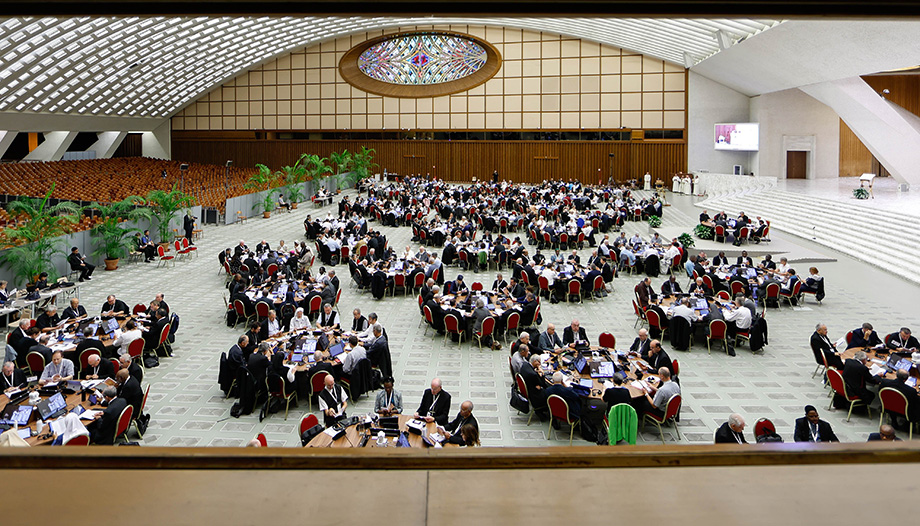
Further clarification: the consultation phase is not to be repeated.
The Assemblies and their preparation “do not consist in repeating the consultation phase of the Synod, but in learning from lived experience, recognizing the fruits and difficulties, readjusting priorities and processes in the light of careful discernment, strengthening co-responsibility among ecclesial entities, and fostering an authentic exchange of gifts among the Churches.”.
Listening to the voice of the Holy Spirit
In all this, the text continues, “it remains crucial to maintain an attentive listening to the voice of the Holy Spirit in the light of the Word of God: the Assemblies are not a sociological consultation or a deliberative dynamism.
The quality of prayer, listening and sharing is more important than the quantity of materials produced, which must be essential and with well-focused objectives”.
Responsibility: the diocesan bishop, a key player
As could be imagined, the greatest responsibility for the process falls on the diocesan or eparchial bishop for diocesan and eparchial Assemblies, on the president of the Episcopal Conference for national or regional Assemblies, and on the heads of continental bodies for Assemblies at that level, the document points out.
It is also clarified that the synod teams “are not simply operational structures, but bodies that have developed an experience of listening and co-responsibility that must be preserved and developed”.
Therefore, “where this has not yet been done, it is essential to reactivate and support the diocesan, national and continental synodal teams, communicating their composition to the General Secretariat of the Synod.”.
As a footnote, the text indicates that “registration for the registration of diocesan, national and continental synodal teams is available”.” here.
Composition of the assemblies
The text stresses that “the composition of the Assemblies must be consistent with their purpose. It is not simply a matter of representing a diocese or the Church of a country or region, but of ensuring the presence of persons knowledgeable about the processes underway and capable of interpreting them theologically and pastorally.”.
The selection of participants, he adds, “must ensure adequate attention to the relationships between men and women and between different generations, cultural and ecclesial diversity - including priests, deacons, consecrated men and women, members of associations, movements and new communities, as well as faithful not integrated into organized structures - and the presence of people in situations of vulnerability or marginalization.”.
Particular attention should be paid to the participation of pastors, he said, and it is important to value “the voices that do not come directly from ecclesial structures and, where appropriate, to include the participation of representatives of other Churches and Christian communities or other religions”.
About the 2028 Church Assembly
More than a point of arrival, “the Ecclesial Assembly is the moment in which the road travelled is redirected towards unity, opened to new developments and entrusted to the discernment of the whole Church, under the responsibility of the Holy Father”.”
A specific Instrumentum laboris will propose the content and method of work in light of the path undertaken.
At this stage, therefore, “Eucharistic action and discernment are intertwined: what has been lived is recognized as a gift, shared with joy and entrusted to the responsibility of the whole Church, so that it may continue to generate life under the guidance of the Holy Father”.






 Español
  English
  Italiano
  Français
  Deutsch
  Polski
  简体中文
简体中文