


- Charlie Camosy, OSV News
Kristin Collier, a physician and associate professor of Internal Medicine at the University of Michigan at Ann Arbor. is also director of the Health, Spirituality and Religion Program at the University of Michigan Medical School in Ann Arbor. In the interview, she talks with OSV News about the ethical concerns at stake, and how Catholics can respond to arguments in favor of physician-assisted suicide.
Charlie Camosy: I must say that the recent decisions of the American Medical Association (AMA), which not only strongly confirm its rejection of physician-assisted euthanasia, but also reject the use of euphemisms such as «medical aid in dying,» seem momentous to me. What are your thoughts on this?
Kristin Collier: I share your enthusiasm and am encouraged by the recent WADA decisions. These decisions are important for many reasons, but a key one is this. To have a coherent debate on complex issues, we must first be able to talk honestly about what is really going on.
In this recent decision, the AMA Board of Trustees rightly noted that “terms such as Medical Aid in Dying (MAID), medical assistance in dying, and dignified death could be applied to palliative care and compassionate end-of-life care practices that do not include the intent to bring about the death of patients...This degree of ambiguity is unacceptable for providing ethical guidance.”.
I would like to remind your readers that we assist and accompany our patients through the dying process at all times. That is the goal of good hospice and palliative care. However, this is categorically different from attempting to end a patient's life (which is the goal of physician-assisted suicide).
Camosy: The state of Michigan has been in the spotlight regarding euthanasia since the controversial debate over Dr. Jack Kevorkian's illegal killing of some patients in the early 1990s. How has the debate evolved since then? What are your colleagues and medical school students' thoughts on the issue?
Collier: I remember a colleague remarking to me a few years ago that he predicted that once the cultural memory of Jack Kevorkian faded in the state of Michigan, efforts would be made to try to get a physician-assisted suicide law passed in the state, and that is exactly what is happening.
The pro-physician-assisted suicide group, Compassion and Choices, has been very active in the state of Michigan with the goal of generating public support for this practice. They have been active in speaking at events aimed especially at seniors.
As for my colleagues, of course I haven't done any formal surveys, but in my conversations with them, I would say that most of the people I've talked to on the subject put it this way: that while they may have reservations about physician-assisted suicide and probably wouldn't choose it for themselves, they don't feel strongly enough about it to say that it shouldn't be available to others.
Distortion: pretending to alleviate suffering by eliminating the patient.
Camosy: What factors or arguments do you insist on the most?
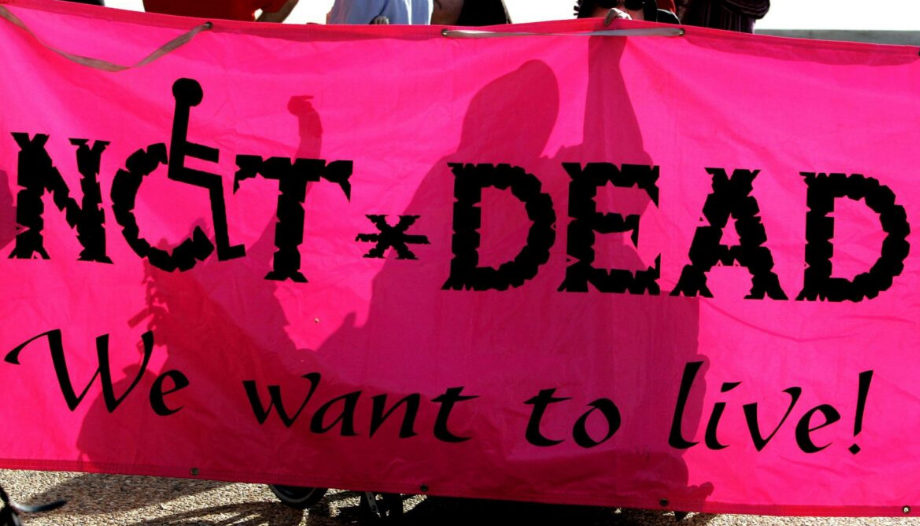
Collier: In our conversations, my colleagues often emphasize medicine's goal of relieving suffering. Then I remind them that intractable physical pain and suffering are not even among the main reasons people request physician-assisted suicide. And that even if they were, purporting to relieve suffering by eliminating the patient is a deeply distorted and impoverished model of medical care.
I am grateful to groups like the Patients' Rights Action Fund, who are helping to foster conversations about the reality of physician-assisted suicide, and who are building a coalition of their own made up of people from diverse backgrounds with the common goal of resisting the practice of physician-assisted suicide. This practice is an affront to both human dignity and the integrity of the medical profession.
Camosy: It is interesting that there now seems to be a significant push, beyond political differences, to limit PAK. To what do you attribute this?
Collier: I am heartened to see that several states governed by Democrats have recently rejected or stalled physician-assisted suicide legislation. The reasons are likely multifactorial, but it seems that people across the political spectrum are clear about what is at stake. That practices such as physician-assisted suicide put at risk the lives of some of the most vulnerable members of our humanity - those with advanced age, serious illness and disabilities, to name a few - in a society that has decided, under a physician-assisted suicide regime, that their lives are expendable.
If we agree that all members of humanity possess intrinsic worth and inviolable dignity, then it is always wrong to seek their death. Physician-assisted suicide is an affront to human dignity and, therefore, a matter of justice that transcends political affiliations.
The importance of household and family decisions
Camosy: In what ways can the church, both in small groups and in larger institutions, effectively resist PAK?
Collier: I think here of (Stanley) Hauerwas, who said that the church must be the church and that the best way to achieve this is to live in a way that reflects the story of Jesus as a faithful, distinctive and often counter-cultural community.
In rejecting physician-assisted suicide, we must live in a way that demonstrates what a dignified death means. This begins with the decisions we make in our homes and families about the care of our sick and dying loved ones, while advocating for better systems and policies that enable them to cope with this situation with dignity. This will undoubtedly involve taking on additional responsibilities.
Camosy: Tell us about that care and carrying burdens.
Collier: Today's dominant cultural narrative proposes to avoid carrying burdens at all costs, conveying a subtle, if not so subtle, message that carrying burdens is ugly, something to be avoided and, frankly, pathetic for both parties. But we, as Christians, must recognize that this is an ugly and harmful lie. Nowhere in Scripture is burden-bearing presented as something to be avoided; on the contrary, I think of Simon, who was asked to carry Jesus' cross, and what a great privilege that was.
Of course, carrying a burden can be hard or arduous, but it can also be a beautiful privilege to help carry another's cross, and it is a responsibility that no one should have to bear alone.
This reminds me of an icon that shows Jesus, as the Good Samaritan, literally carrying us on his shoulders. I believe that, as Christians, this work of resistance to physician-assisted suicide reflects the gift of Christian hospitality, where we contribute to forging a culture in which burden-sharing is not avoided at all costs, but is seen as a gift so that we can support one another.
For further reflections on this important topic, I recommend to readers the book “Living and Dying Well: A Catholic Plan to Resist Euthanasia.”.
————
- Charlie Camosy is a professor of medical humanities at Creighton Medical School in Omaha, Nebraska, and a moral theology fellow at St. Joseph's Seminary in New York.






 Español
  English
  Italiano
  Français
  Deutsch
  Polski