


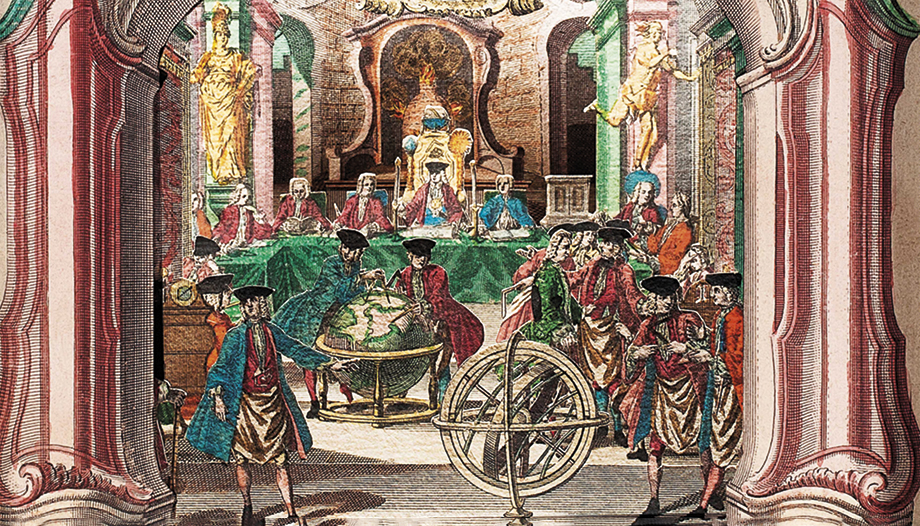
Speaking about religious persecution in Spain during the Second Republic and the Spanish Civil War, scholar Octavio Ruiz Manjón asserted that historians have always faced a serious problem when discussing the history of Freemasonry and its actual influence on the life of the Church and on civil society; and that problem is, quite simply, the scarcity of reliable documents.
The root of the problem lies, as Francisco de Vitoria so aptly noted—whose 500th anniversary of the founding of the School of Salamanca we are celebrating (1526–2026)—in the famous Reflections on Civil Power [and ecclesiastical power]. According to this view, just as it is very important and desirable that there be a single spiritual authority in the world centered in Rome and in the Holy Father, it is simply impossible—as Vitoria explains—to achieve a single civil, social, and economic power. This is due to the existence of human passions, especially selfishness and pride—passions that afflict human beings both as persons and as “a social animal by nature”.
The fact that God has chosen to entrust the resolution of human, social, and economic problems to the established civil authorities constantly implies the need for dialogue among the various nations currently united within the United Nations.
Indeed, during the Enlightenment—as was to be expected—ideas regarding lobbies or pressure groups that, characterized by a devotion to reason and progress, driven by a vague desire for universal brotherhood and worship of a distant God, —the God of deism as expressed by Voltaire (1694–1778) and other Enlightenment thinkers—ultimately gave rise to Freemasonry.
Certainly, the notion that God was the “architect of the universe” implied that He had created the world and established its laws, only to then wash His hands of the day-to-day lives of humankind, since He had no personal relationship with them. Therefore, humanity was to be governed by the respective monarchs, by revolution, by the communist utopia, or by all of these at once, depending on what the people—who held the power—chose to obey in order to live in peace and freedom.
Historical origins
It stands to reason that some financially powerful men with influential social connections would decide to form a power group—a lobby, as we call it today—in England in 1717 and in France in 1773. This group emerged from a deist religious background, but with a genuine spiritual concern and a desire to shape the broad outlines of society, politics, and universal brotherhood. We must not forget that, in those days, the country was ruled by enlightened monarchs who eventually became so despotic that they paved the way for the revolutionary cycle of the nineteenth century. Certainly, the influence of Freemasonry in this process is a key factor to consider.
Behind that altruism lay a desire to protect their economic and social interests in a globalized world, where trade routes from the East and the Americas had already supplanted the small-scale trade of the Mediterranean. In other words, globalization was a reality, and it was necessary to protect the interests of the great families of a bourgeoisie that was replacing the nobility and the monarchy to become the true masters of the world.
In fact, multinational corporations currently manage budgets far larger than those of most countries and directly influence governments, which, in turn, rely on the taxes they collect from these corporations to function.
Organizational Structure
Beginning in 1774, the first Masonic lodges began to form and divide into major obediences: the English, the French, the Scottish, the Irish, the Spanish, and the American. As can be seen, Francisco de Vitoria’s predictions came true, and since then, Freemasonry has undergone constant divisions.
However, this is of little consequence to the organization, since true Freemasonry is structured in several concentric circles. This is how José Antonio Ferrer Benimeli—professor of Contemporary History at the University of Zaragoza, member of the Royal Academy of History, and Jesuit—explains it, whose extensive body of work on Freemasonry he himself summarized in a successful paperback published by Alianza Editorial, which remains a standard reference work (Madrid, 2019, 392 pp.).
Detailed accounts of these Masonic orders can be found in Ferrer Benimeli’s writings. These chronicles have been compiled based on the testimonies of individuals who left the lodges, documents released by the lodges themselves in accordance with transparency policies, and the findings of meticulous research. As intermediary entities, they have their own ranks, disclosure requirements, disputes, and internal difficulties. For this reason, stories of betrayals or of financial and political support will always come to light; intermediate Freemasonry does not become directly involved, as an institution, in political parties or in ecclesiastical and social structures, but rather it is its individual members who receive instructions “from above.”.
The Secret Core and Its Political Influence
According to this structure, true Freemasonry consists of a very small core group: a few highly intelligent, extremely wealthy, and powerful individuals. The fact that they remain anonymous lends the organization an air of secrecy that is crucial to its interests. They are the ones who truly set the course for addressing major global issues in various nations.
For example, it has been claimed that this group used its financial resources and influence to support the left in Spain in order to strengthen the democratic center championed by Manuel Azaña; however, the situation got out of hand and led to the Spanish Civil War. Because of this, General Franco persecuted them, accusing them of distorting liberal politics. As is to be expected, there are no official documents, specific names, or denunciations regarding this hard core.
The Spiritual and Philosophical Dimension
There is, of course, a very significant religious dimension at the core of Freemasonry. It has even been claimed that to gain access to this level, one must publicly make a pact with the devil, although this is impossible to verify. What is evident, however, is that a deep desire for spirituality continues to thrive both within much of that inner circle and in many of its intermediate lodges and obediences.
In fact, they are the ones who currently determine the spiritual direction society should take, promoting the publication of certain texts. Hence the enormous importance that these circles attribute to philosophers such as Baruch Spinoza and Georg Wilhelm Friedrich Hegel, or to movements such as the “New Age,” among other thinkers whose works fill the shelves of the world’s most important bookstores. This strategy is understandable, since these movements delve deeply into the search for a religion that satisfies the spiritual need inherent in the human heart and that, in turn, can foster universal brotherhood.
To understand this approach, it is worth recalling that the Masonic concept of religion originally comes from Cicero, who believed that the word derived from “relegere” (that is, a “reinterpretation” of the world and its organization based on the existence of a deist God). This view stands in opposition to the Christian concept of religion admirably described by Lactantius in the early centuries of Christianity; moved by the example of the martyrs, Lactantius argued that religion stems from “religare”, that is, the act of “binding oneself” to God, uniting and intertwining human beings with the divine.
The Catholic Church's Response
For this reason, there has always been a deep sense of unease within the inner circle of Freemasonry in the face of the constant condemnations that popes have directed against them and their intermediate organizations throughout history.






 Español
  English
  Italiano
  Français
  Deutsch
  Polski
  简体中文
简体中文