


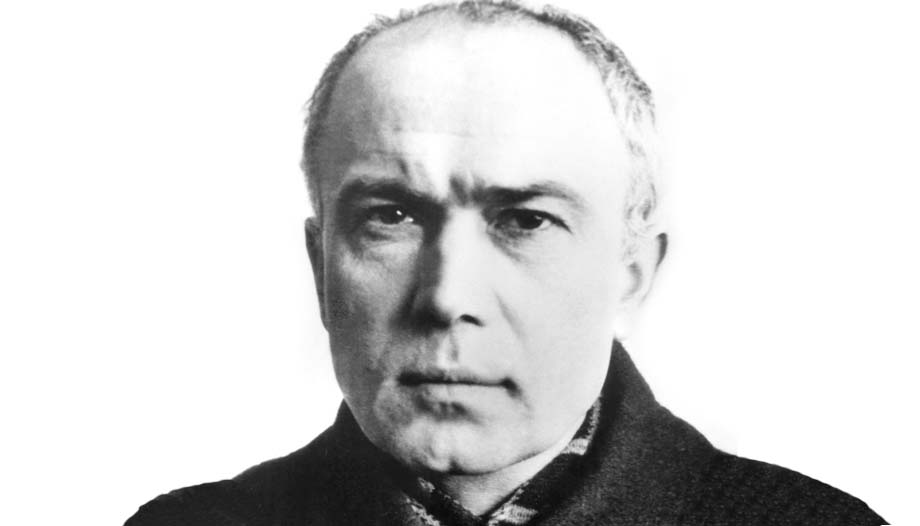
One night in 1941, a prisoner escaped from the Auschwitz concentration camp, and according to the Nazis, for every man who escaped, ten others were to be put to death. The first to be chosen was 41-year-old Polish Sergeant Franciszek Gajowniczek. Amid the silence, he began to weep and say, “My God, I have a wife and children. Who will take care of them?” Maximilian Kolbe volunteered to take his place, saying, “I volunteer to take this man’s place; I am a Catholic priest and a Pole, and I am not married.”.
The officer agreed, and Father Kolbe was sent, along with the other nine, to a cell where they would receive neither food nor water. On the second or third day, some of them began to die. Meanwhile, prayers and hymns to the Virgin Mary could be heard coming from that dungeon.
August 14, 1941
The Germans had a Polish guard in charge of removing the bodies of those who died and emptying the latrine in the cell. He has recounted this, and his account is on file with the courts and in the Vatican archives. Kolbe and three others survived until the fifteenth, Pedro Estaún has said. The commander needed the cell for a new group of prisoners and ordered the camp doctor to administer an injection of carbolic acid to extinguish the last breath of their lives. It was August 14, 1941. Kolbe was 47 years old.
Kolbe's sacrifice was not an isolated act of heroism. His life was filled with surrender to God. At the age of thirteen, he entered the seminary of the Conventual Franciscan Friars in Leopolis. In 1931, the Pope called for missionaries to evangelize Asia. Maximilian volunteered and was sent to Japan, where he remained for five years.
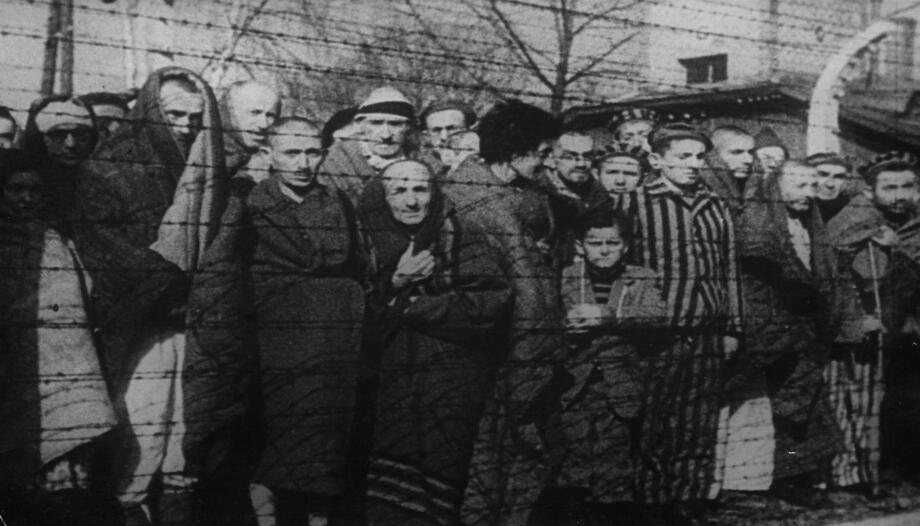
At the Nazi extermination camp, he was sent to forced-labor camps, and, like his fellow prisoners, he endured humiliation, beatings, insults, dog bites, and jets of ice-cold water when he was racked with fever, thirst, and hunger, as well as the endless back-and-forth of dragging corpses from the cells to the crematorium… Auschwitz was the antechamber to hell, Estaún recounts.
Beatified by St. Paul VI, canonized by St. John Paul II
Pope Saint Paul VI declared him blessed in 1971. Among the pilgrims who came from Poland was an elderly man named Franciszek Gajowniczek: he was the man for whom Kolbe had offered his own life thirty years earlier.
Years later, St. John Paul II, following his election as Pope, visited Auschwitz and said, “Maximilian Kobe followed Jesus” example; he did not suffer death but gave his life.” On October 10, 1982, the Polish pope canonized him before a crowd in St. Peter’s Square.
The Auschwitz State Museum, where approximately 1.3 million people were deported and about 1.1 million were murdered, documents that as many as 149 male Catholic priests and religious were exterminated at the camp; they belonged to 23 different religious congregations, in addition to diocesan priests.
Just as well known as Maximilian Kolbe—or perhaps even more so—is the Carmelite nun Saint Teresa Benedicta of the Cross (Edith Stein), about whom the Argentine spoke on the 9th Irene Chikiar, author of the biography “Edith Stein: Jew, Philosopher, Saint,” in an interview titled “The Saint Teresa of Our Time.”.
Leo XIV: “victims of persecution by totalitarian regimes”
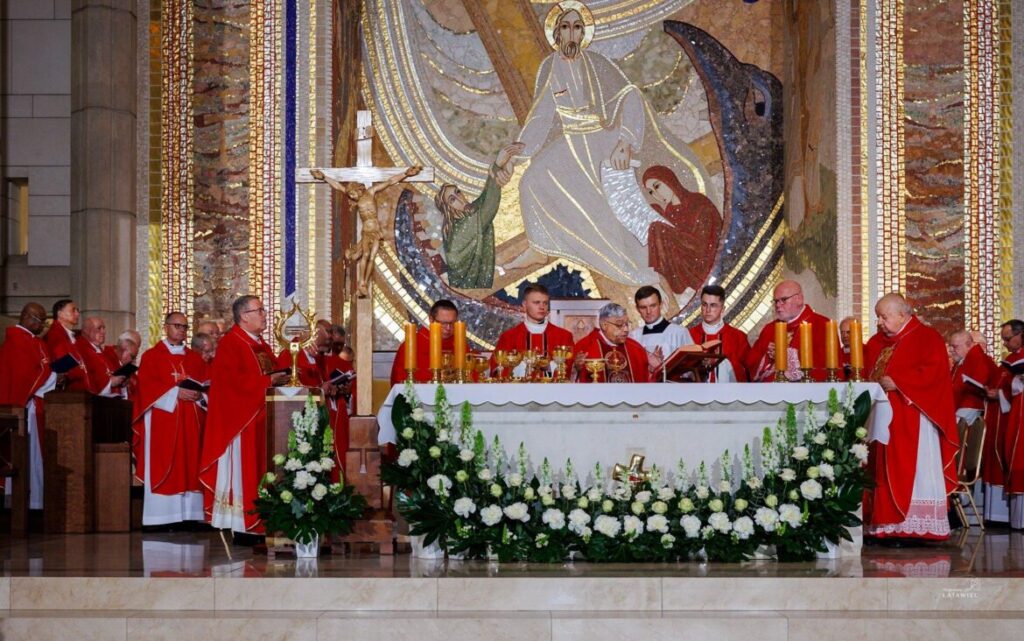
Nine Polish Salesian priests, who were murdered in Auschwitz and Dachau, were beatified at the Shrine of St. John Paul II in Kraków, during a Mass presided over by Cardinal Marcello Semeraro, prefect of the Dicastery for the Causes of Saints, on June 6 of this year.
The ceremony highlighted not only their martyrdom, but also their lives as educators, pastors, and mentors to young people.
Pope Leo XIV, after leading the Angelus prayer on June 14, remembered those who had recently been beatified, and said: “They were all beatified as martyrs, as victims of persecution by totalitarian regimes because of their faithfulness to Christ.”.
“They gave their lives to educate young people, and that is why they posed a threat to the occupying forces,”, told OSV News Father Dariusz Bartocha, provincial superior of the Salesian Province of Kraków.
Destroying Education
Father Bartocha stated that the Nazi occupation authorities viewed the Polish clergy, teachers, and intellectuals as obstacles to their plans to destroy national identity and suppress the resistance.
In fact, Dachau became the main concentration camp for imprisoned Catholic clergy. Nearly 2,800 clergymen were held there during the war, including some 1,780 Poles, according to Poland’s Institute of National Remembrance. These clergymen ranged in age from 30 to 60. Some were parish priests, others were teachers, seminary professors, school administrators, and youth ministry coordinators.
The True Winners
For Father Pierluigi Cameroni, Postulator General of the Salesians, the significance of the new martyrs goes far beyond the history of the war.
Citing St. John Paul II’s description of the 20th-century martyrs as “anonymous soldiers in God’s great cause,” Father Cameroni told OSV News that the nine Salesians demonstrate that “when death seems to have triumphed, the true victors are those who, by suffering for the faith, share in an extraordinary way in the Cross of Christ and adhere to his plan of salvation.”.
Stanislawa Leszczynska, a midwife at Auschwitz
Among the people on whom the Church has focused its attention are also married women with children, such as the midwife Stanislawa Leszczynska.
Since the Nazis executed pregnant women, Stanislawa She had to improvise a “delivery room” next to the boilers, which were full of insects and damp.
That place, however, became a refuge for thousands of mothers and unborn children. The midwife’s Catholic faith led her to baptize every newborn by making the sign of the cross on their foreheads. “Mutti,” as she was called, remained in Auschwitz until its liberation by Soviet troops on January 26, 1945; she died in 1974, and her cause for canonization has been introduced in the Diocese of Łódź.






 Español
  English
  Italiano
  Français
  Deutsch
  Polski
  简体中文
简体中文