



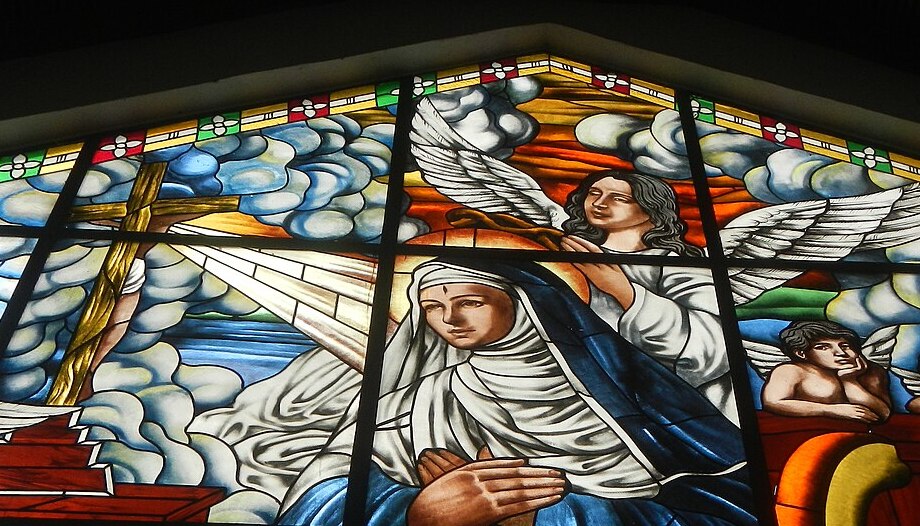
We could talk about the Blessed Virgin Mary, Saint Joseph, or the many saints and martyrs to whom Christians turn in prayer. But on this occasion, we’ll focus on some patron saints and intercessors who are invoked on certain occasions—and who might be called “unusual” or “less well-known”—because they are invoked for a wide variety of reasons, some of which may seem unusual.
The common people have expressed these requests to the saints in a few phrases, asking them to help when things get tough or when there is a real need.
For example, remembering to Santa Bárbara When It Thunders, Blessed Saint Anthony, help me find what I have lost. Saint Rita, advocate for the impossible, pray for us. By Saint Blaise, you’ll see the stork. By Saint Andrew, snow at your feet. Let nothing trouble you, let nothing frighten you (to attain peace, from Saint Teresa of Jesus), until Saint Anthony, it’s Easter, and so on.
Saints Rita, Barbara, Bibiana, and Clare of Assisi
Saint Rita of Cascia, patron saint of impossible causes, whose feast day is celebrated on May 22. She was born in 1381, lost her husband (who was murdered) and her children, forgave them, and was admitted to the Augustinian convent of St. Mary Magdalene in Cascia. She asked the Lord to allow her to share in His Passion, and she bore the stigmata for 15 years.
She is called the saint of roses because, while bedridden before her death, she asked a cousin to bring her two figs and a rose from the garden of her parents’ home. It was January. The woman thought she was delirious. However, to her astonishment, she found the figs and the rose, and brought them to Casia. Saint Rita He died in 1447.
Saint Barbara, patron saint against storms, thunder, and lightning. This virgin martyr was born in the 3rd century in Nicomedia (Asia Minor, present-day Turkey). Her father was a tyrant named Dioscorus, who imprisoned his daughter when she converted to Christianity. He then had her executed. After killing his daughter, he died when he was struck by lightning. Saint Barbara is the patron saint of artillerymen in Spain and Europe, as well as of professions related to explosives and fire.
Saint Bibiana, patron saint of epilepsy and headaches. She lived in the second half of the 4th century. She was arrested and martyred along with her sister Demetria, who is also a saint.
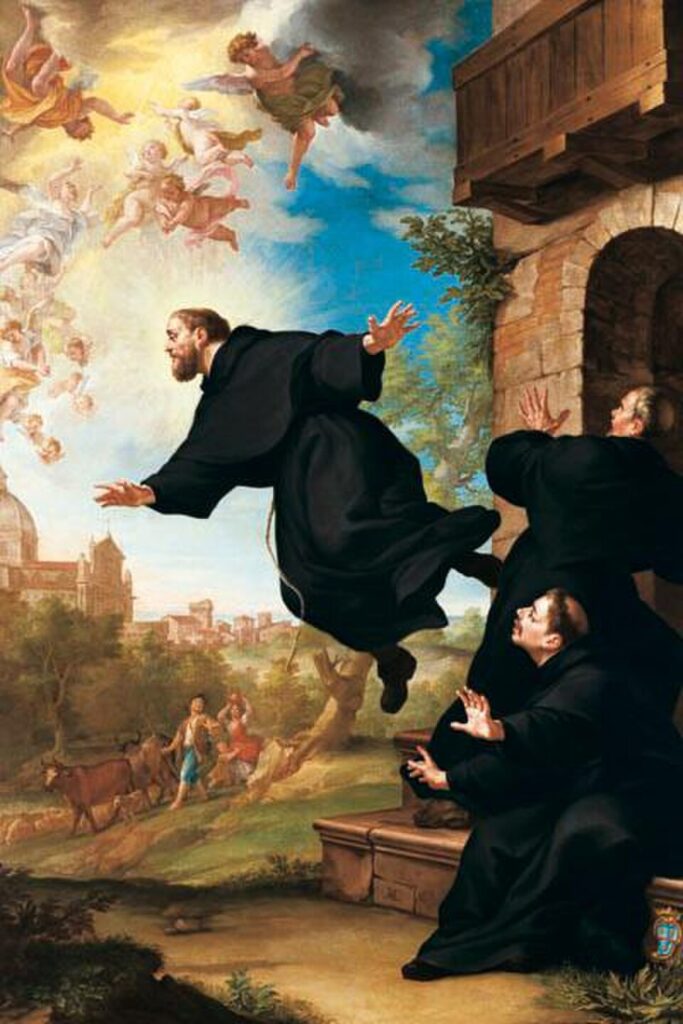
Saint Joseph of Cupertino, pattern of airline passengers and pilots, and students with difficulties. He had the gift of levitation, and he is depicted flying.
Saint Clare of Assisi, patron saint of good weather, people pray that Let's hope it doesn't rain on the wedding day, among other reasons. In 1958, Pope Pius XII declared her the patron saint of television and telecommunications. Saint Clare of Assisi was the founder, along with St. Francis of Assisi, of the Order of St. Clare.
Saint Magnus of Füssen, insect repellent and other ‘harmful’ animals, and caterpillars.
San Sebastian, patron saint of archers and protector against poisoned arrows. The holy martyrs Sebastian, born in Milan, and Fabian were imprisoned during the persecutions of Christians under Diocletian and Decius. Saint Sebastian helped Christians in prison. He survived being shot with arrows but died after being beaten. Saint Fabian served as pope for 14 years.
Santos Drogón, Friard, Cristóbal, Antonio Abad…
Saint Drogón. Patron Saint of the Ugly, as they say, and the midwives.
Saint Joseph of Arimathea. Patron saint of mourners and funeral homes.
The evangelist Saint John recounts that Joseph of Arimathea, a disciple of Jesus—though secretly, for fear of the Jews—asked Pilate to allow him to take Jesus’ body, and Pilate granted his request. So he came and took the body.
Together with Nicodemus, they took Jesus' body and wrapped it in linen cloths with spices, according to the Jewish burial custom. At the place where he was crucified there was a garden, and in the garden a new tomb in which no one had ever been laid to rest. There they laid Jesus.
Saint Friard. A Pattern to Overcome Fear of Wasps.
St. Thomas Aquinas. Patron saint of students. St. Paul VI called him “a light for the Church and the whole world.” St. John Paul II called him “a master of thought.” Benedict XVI highlighted his work in fostering “harmony between faith and reason,” and Pope Francis encouraged us to place ourselves “in his school” as he launched three years of celebrations.
Saint Simeon “Salus”, the madman. Patron saint of puppeteers.
San Julián. Patron saint of clowns.
San Cristobal, patron saint of drivers. The saint began as the patron saint of muleteers, who were responsible for transporting goods using animals.
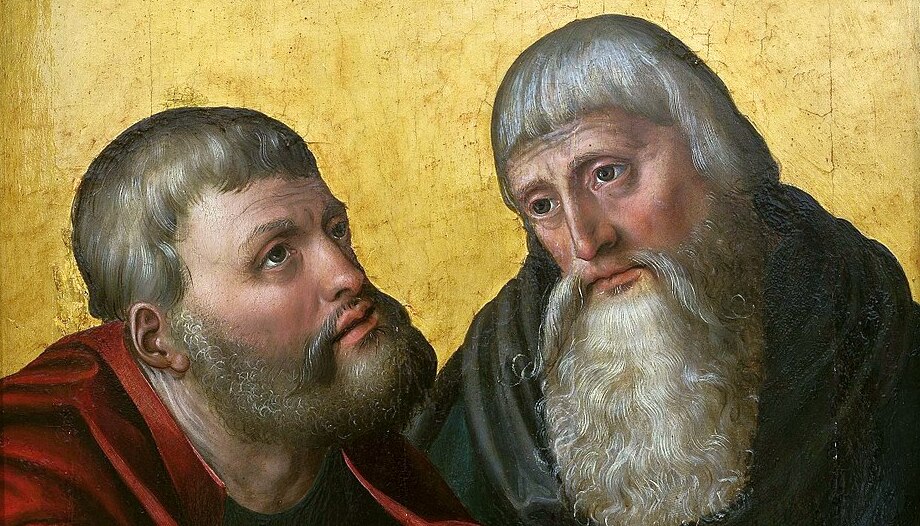
San Antón, patron saint of animals and numerous tradesSt. Born in Egypt around the year 250, in the 3rd century, St. Anthony the Abbot is considered father of monasticism, that is, the communal life led by monks and nuns. In addition, on January 17, he is invoked to protect those who earn their living through livestock-related businesses, and pets and companion animals are blessed.






 Español
  English
  Italiano
  Français
  Deutsch
  Polski
  简体中文
简体中文