



 Confirmation to be "beginning, growth" and not "goodbye", Pope urgesMaterial element, human gestures and words in the sacraments of Baptism and Confirmation.
The moment they ask you to be the godfather of Confirmation It’s usually accompanied by a certain surprise, a bit of pride, perhaps, but also—and this is the most revealing part—a certain tension when asking the question. It’s not easy to ask for it, and when someone offers it to you, you can clearly sense that sense of embarrassment. But why does this happen? It happens because that person has just revealed a very private aspect of their mind: the confession that they have great admiration for you.
That is why surprise, pride, and tension arise all at once. Realizing that someone views you in a special way among all others reminds you that you are good and worthy, since they are entrusting you with the responsibility of watching over their soul and their desire for salvation.
A genuine commitment
In those early moments, there’s a danger that you, as a newly chosen godfather, might focus solely on that healthy sense of pride. With that in mind, I wanted to take the time to share my thoughts on the true greatness of this role. My point is that the pride of being a godfather does not stem from mere social praise, but is rooted in the profound responsibility that this choice entails.
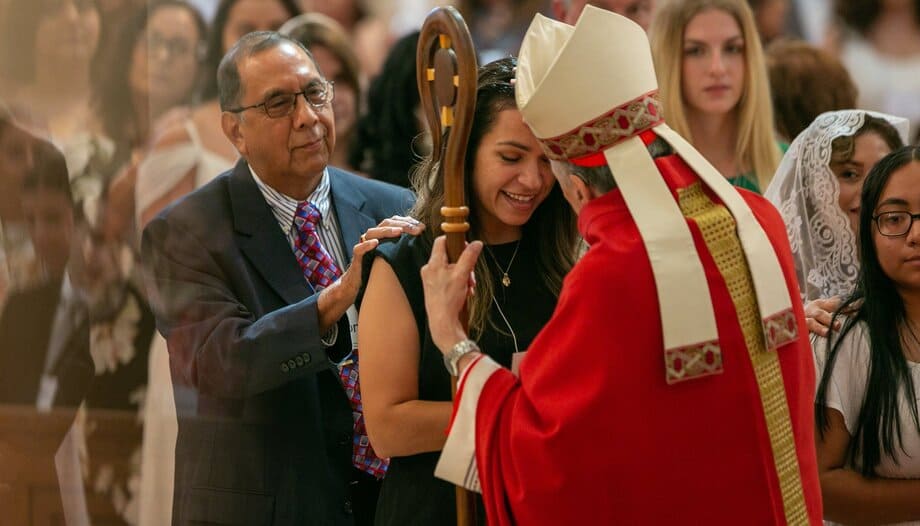
Being a godparent is not just an emotional role—it is a role within the Church. Your specific role is to present your godchild before the bishop, —who is the head of the community—so that they can become fully integrated into that community. Ultimately, you’re introducing someone to a life that you yourself are living. And that’s the question that’s really worth asking before you agree: Am I interested in living with Christ and being an active part of his Church? It’s not about being perfect—because nobody is—but about genuinely caring about it. After all, you can’t invite someone into a home that you yourself don’t enter.”.
The Rugby Analogy
Since all of this might sound a little simplistic and may not be entirely clear, I'm going to try to explain the dynamics of the godparent role using an analogy.
A while back, I happened to watch two groups of brothers play a rugby match side by side for the first time. It’s worth explaining the context: at the school where I work, there’s a rugby club that students can join once they graduate; in other words, it’s an alumni club. That’s how, over time, brothers from different generations at the school end up playing together on the same team.
The scene was surprising in and of itself. Seeing the pride they felt for their younger brother, who was beginning to participate alongside them, brought them genuine joy. More than anything, because that pride reflected not only the affection one could have for the other, but—and this is the most interesting part—the fact that now the younger brother will be able to take part in something that has made his older brother so happy. Being part of that rugby team isn’t just about playing a sport; it’s about being part of a community of people who are pursuing the same goals as you. In this way, the younger brother joins a community in which his older brother already has a role and is valued.
The Integration Process
If you look closely at the dynamics between siblings, certain natural roles begin to emerge. To start with, it’s very likely that the younger sibling started playing rugby because the older one did. So, that’s the initial invitation. However, as the two continue to play, the older brother will have taught him things, sharing the «tips» that he himself learned over time, and in the process, he will have fostered a love for the game in him.
Furthermore, without the younger brother knowing it, the person inviting him to join will likely speak highly of him to the coach and the other team members so that they will accept and welcome him. As this process unfolds, the brothers« worlds will begin to converge: their friends already know »whose brother he is« and celebrate, precisely, that connection. And when the younger brother finally starts playing side by side with his older brother at the same club, it’s seen as the natural culmination of a plan that had been taking shape for some time. It’s simply the fulfillment of a process. The moment they go to their first game together serves to »sanctify” a relationship that had been developing for years.
However, it doesn’t end there. Now that the younger brother is part of the club, the advice that follows takes a different turn. The older brother will teach him the inner workings of the team. Corrections and advice will be offered in a different tone, because they’re now on equal footing. They’ll stand up for each other, speak highly of one another to the coach, and make sure they’re both happy playing rugby together at the club.
From the Court to Confirmation
Confirmation involves exactly these same dynamics. A godparent is not chosen simply because you get along well, nor to fulfill a social obligation. You are chosen because they see in you a good Christian who has inspired the other person to live a more elevated life. They are asking you to bring to fulfillment what was once merely a project: to introduce them to the fullness of Christian life so that this young person may fully share in the treasures of the Church.
The godfather is expected to guide and correct his godson in the same spirit that a rugby-playing brother does with his younger brother: because he loves his club and wants his brother to be the best. In our analogy, «talking to the coach» means praying for him; that is, speaking to God about your godson to ask Him to pay attention to him and help him become better. He will also lead him to participate in the life of the Church—perhaps through a work of mercy or a pilgrimage—but always with the spirit of someone who invites others to share in the joy he himself is experiencing. Just as the brother proudly takes the other to his rugby club, the godfather should proudly lead his godson to the fullness of the Church.
An opportunity to renew one's faith
For all these reasons, being a godparent leads to a new reflection on one’s own Christian vocation, which requires maturity. It is a new opportunity to start over in your own Christian life.
That pride in being chosen must reach its fullest potential through fulfilling your role well. This simply means wanting to be holy, making the most of the gifts you already have—and that your godchild will receive—loving your godchild deeply (but wanting him or her to be holy), and never ceasing to pray for him or her.







 Español
  English
  Italiano
  Français
  Deutsch
  Polski
  简体中文
简体中文