


– Jonathan Evans and Kirsten Lesage
According to various indicators, the population of the Philippines tends to be very religious. Nearly all Filipino adults profess a religion, and about 90% say that Religion is very important in their lives.
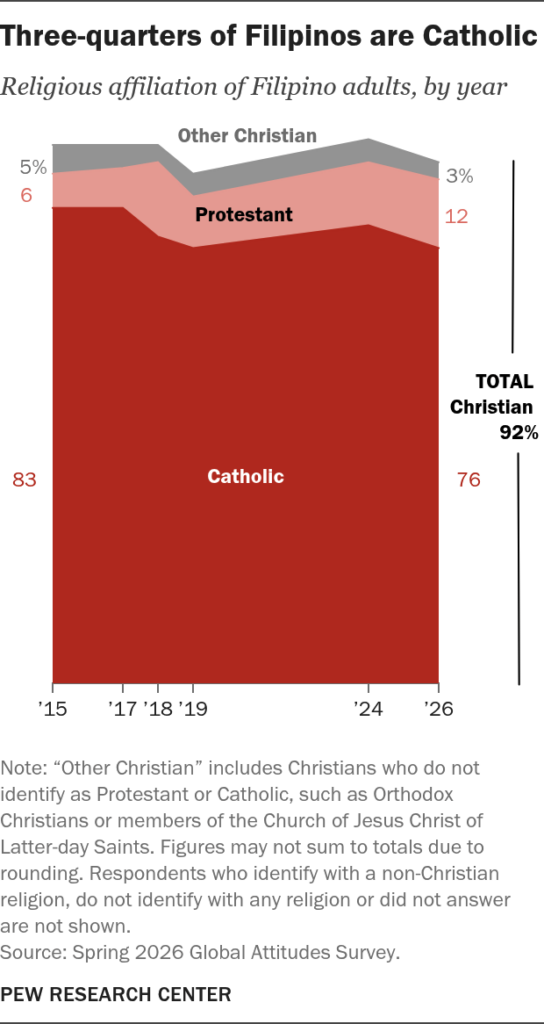
Most Filipino adults—more than 90 million—are Catholic. The country is home to the third-largest Catholic population in the world, behind only Brazil and Mexico, according to the Vatican’s 2021 Statistical Yearbook of the Church. .
Millions of Protestants, other Christians, and Muslims also live in the Philippines, an archipelago of approximately 7,600 islands in Southeast Asia. This analysis focuses on Christians because our recent surveys do not include enough Filipino Muslims to report separately on their attitudes, beliefs, and practices. As always, all religious groups are included in our findings regarding the adult population as a whole.
Here are five facts about religion in the Philippines, based on survey data from the Center.
92 % Christians, 76 % Catholics
1. Most Filipino adults (92%) identify as Christians, including 76% who identify as Catholic. A smaller percentage (12%) identify as Protestant, according to a survey conducted by the Center in the spring of 2026.
According to a survey conducted by the Center in 2024, most Filipino Catholics are for life, which means they were raised in the Catholic faith and continue to identify as such as adults.
Pope Leo's Favorable Opinion (79%)
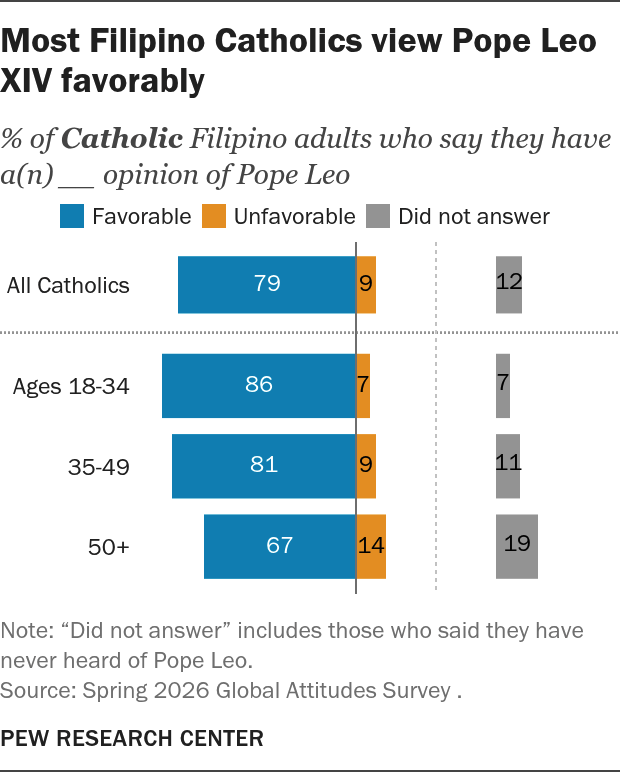
2. The vast majority of Filipino Catholics (79%) say they have a favorable opinion of Pope Leo XIV, sAccording to our 2026 survey. Of these, 43% expressed an opinion very favorable.
Catholics between the ages of 18 and 49 are more likely than those over 50 to say they have an opinion favorable o very favorable view of Pope Leo. However, 19% of Filipino Catholics over the age of 50 say they have never heard of Pope Leo or prefer not to answer, compared with 7% of those between the ages of 18 and 34.
99 % of Filipino adults say they believe in God
3. CThus, all Filipino adults (99%) say they believe in God, according to our 2024 survey. EThis includes the 100% for Protestants and the 99% for Catholics.
However, Filipino Protestants and Catholics differ more in their beliefs about the spirits of their ancestors. While 56% of Catholics believe that the spirits of their ancestors can help or harm them, 26% of Protestants share this view.
8 out of 10 adults pray every day
4. The Philippines has one of the higher prayer rates among the thirty-six countries we surveyed in 2024. About eight out of ten Filipino adults (79%) say they pray every day, including the majority of Catholics (77%) and Protestants (88%).
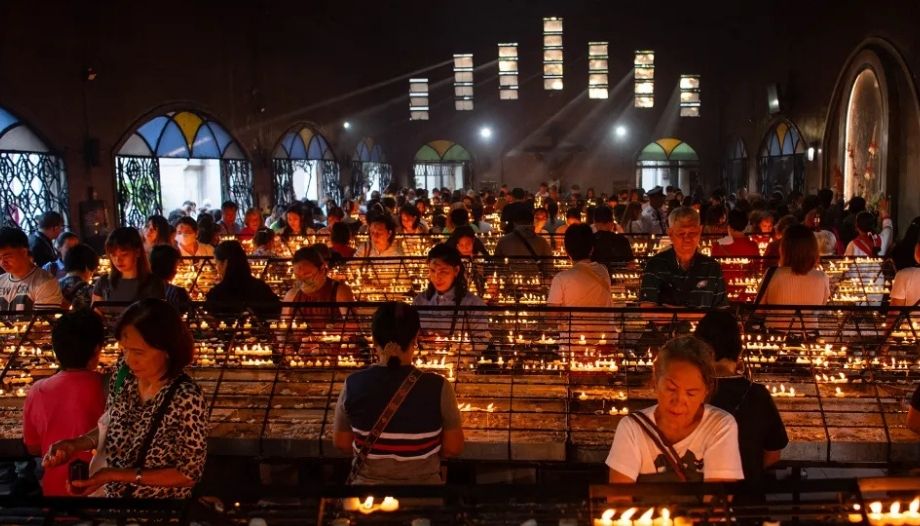
However, more significant differences are observed in other religious practices. For example, Filipino Catholics are approximately three times more likely than Protestants to say that they light incense or candles for spiritual or religious reasons (76 % versus 27 %).
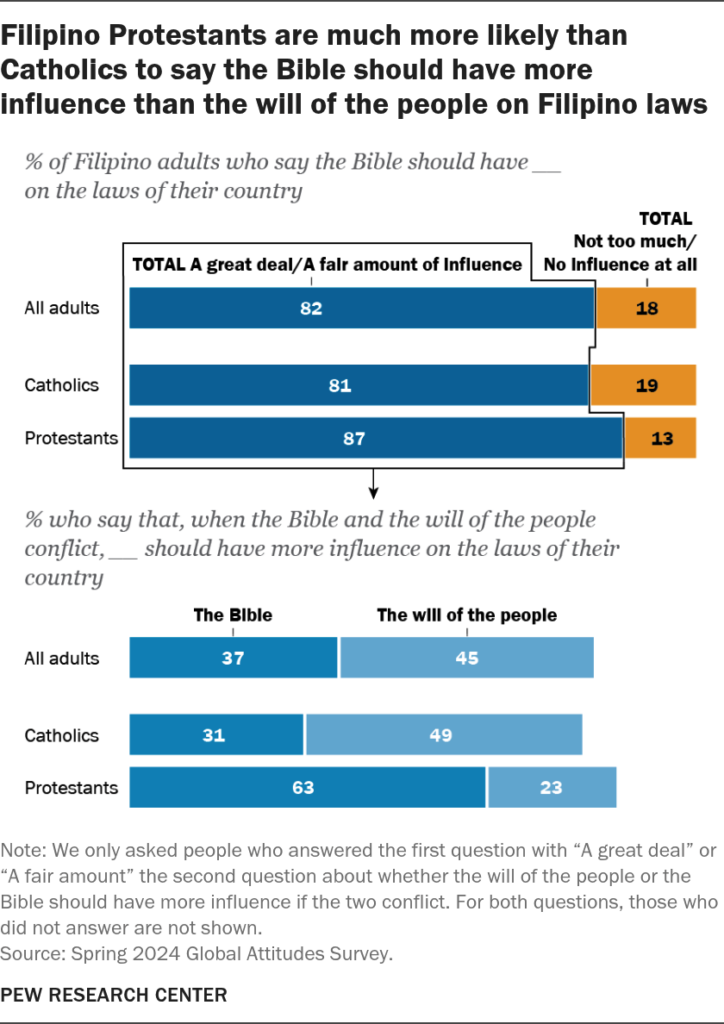
The Bible should have a great deal or a fair amount of influence on the laws (82%)
5. Most Filipinos (82%) say that the Bible should have much o quite influence on Philippine law. This view is shared by large majorities of both Catholics and Protestants.
However, the groups differ on how to proceed when the Bible and the will of the people conflict. When we asked those who believe that the Bible should have at least a considerable influence on national laws how they think this type of conflict should be handled, 63% of Protestants stated that the Bible should have more influence than the will of the people.
Only 31% of Filipino Catholics share this view, while 49% assert that the will of the people must prevail.
Note: Here You will find the questions and answers from the Pew Research survey, as well as the most recent data on religious affiliation in the Philippines, from a survey conducted in 2026.





 Español
  English
  Italiano
  Français
  Deutsch
  Polski
  简体中文
简体中文