


For many families, talking to their children about sexuality remains an unresolved issue. According to psychiatrist and psychotherapist Carlos Chiclana Actis, many parents know the answers to their children’s questions but lack the necessary tools to address them. Meanwhile, social media, pornography, and friends often fill that educational void.
This need gave rise to TheFunSex, a program that aims to train parents and educators to discuss sexuality with clarity, accuracy, and naturalness. It is an initiative that focuses on guidance rather than prohibition and on building a relationship of trust that allows children to turn to their parents when questions arise. To this end, it features 15 experts from various fields—psychiatry, psychology, sexology, medicine, anthropology, and education—including Rafael Lafuente, María Calvo, Alejandro Villena, Pep Borrell, Clara de Cendra and Nuria Ferrer, among others.
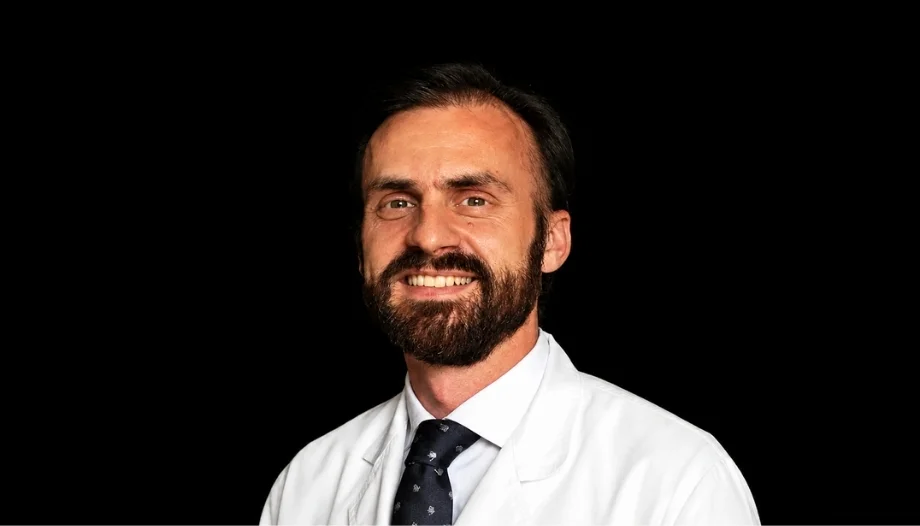
We spoke with Dr. Carlos Chiclana Actis, a leading expert in mental health and sexuality, about the challenges of sex education at home and in school, the impact of screens, and the importance of restoring dialogue at home. He is one of the founders of TheFunSex and the project’s scientific director.
What specific need did you identify that led you to believe TheFunSex needed to be created?
–One specific need was the practical experience of talking with many parents in casual conversations among friends and at gatherings, where they would share stories and ask you basic questions about sexuality, and bring up issues regarding their children—concerns and questions for which they had no answers or didn’t know how to respond, and which they therefore tended to avoid.
The goal was to provide them with practical, experiential content contributed by academic experts (the vast majority of whom are parents themselves), thereby addressing the questions parents had in everyday life—not in a clinical setting, but in a natural way.
The motto reads: «Not to prohibit, but to support.» What exactly does “support” mean in the context of sex education?
–The goal is to provide comprehensive sexuality education and guidance from the very beginning of a child’s life. When parents are present from the start, educating and guiding their children in this area as well, they provide support, set a practical example, and foster an atmosphere of trust. This allows boys and girls to acquire knowledge and feel supported in their discoveries, during the upheaval of adolescence, and later on, as they develop their own life plans.
Thus, the father is not merely a watchdog, nor is the mother a controlling observer, nor is sex education reduced to restrictive moral instruction or a focus on preventing STIs or pregnancies. It is a much broader, more comprehensive, and more natural form of guidance that takes place in an educational context, just as we educate our children in so many other areas of life.
What we want is for sexuality—as a central aspect of the human condition—to be naturally included in the education that a family wishes to provide for its children.
What is the most common mistake parents make when trying to address these issues?
–The first mistake is not doing it. And this isn't just my opinion—it's something the data shows: most parents don't talk to their children about sex education.
The second is not listening—not listening to their needs or the questions they have. This can lead to confusion and a certain degree of distrust in children—not necessarily a negative kind of distrust, but rather the feeling that their parents are not the people they should turn to for guidance and to resolve their doubts, so they will have to look elsewhere for answers.
And the third is to avoid getting personally involved when giving answers. Those would probably be the three main mistakes.
When it comes to pornography, what do you think should be the first reaction of parents who have just discovered that their child is viewing it?
–Your first reaction should be to give them a hug and ask them what they need, how they got to this point, how it makes them feel, and how you can help them get out of this situation. You should also explain that pornography does not represent the natural way of experiencing sexuality; rather, it offers a distorted and confusing view that can be harmful to both their nervous system and their sexual development.
The first message should be: «Son, you have a problem, but we can help you. This isn’t healthy for you. How can we help you? What do you need?».
Second, that pornography has likely been accessed through a device that the parents themselves provided: a cell phone, a tablet, a computer, or a video game console with an internet connection. That’s why this is also a time for parents to ask themselves how they are shaping their digital home.
Just as we try to keep excessive noise out of our home and ensure the temperature is comfortable, and we have alarms to protect it, it’s also worth designing a digital home where the family’s ethical, moral, and health «temperature» is well regulated, and where we set up alarms to keep out the bad guys who want to steal our innocence, sexuality, and money through pornography.
You say, “What TikTok Won’t Teach Your Kids.” How can we compete with TikTok?
–The first thing would be not to give them a cell phone or install TikTok. When faced with this, some people might think, «You’re out of touch; you don’t know what’s going on.» But maybe it’s the other way around: precisely because I’m so immersed in the world, I know what’s going on and I’m aware of the potential negative consequences.
The Spanish Association of Pediatrics strongly recommends that children not have their own cell phones and that, if they do use one—because we don’t want them to be digitally illiterate either—they do so in common areas, away from their bedrooms and bathrooms.
When I talk to parents, I tell them: The Spanish Association of Pediatrics recommends a vaccination schedule. It’s up to you whether or not to follow it. Well, it also offers guidelines on education, training, and cell phone use for your children. You can choose to follow them or not, but it’s important to know that these recommendations aren’t about your children’s morality, but rather about their mental health, neurocognitive development, ability to control impulses, mood, and anxiety.
Every family must decide how they want to raise their children, but it shouldn’t be because they lack the tools to do so. That’s why we’ve created a program where parents can learn to do so in a simple, natural, and confident way, alongside other parents. With short questions you can refer to at any time, straightforward topics we’ve tested in various focus groups to ensure they address parents’ real concerns, weekly live sessions, and a community where you can participate and ask new questions.
What we want is for parents to be able to say, «Now I know how, now I can, and now I’ll get there.».
What do parents need to be able to say, «That’s how I’ll get there»?
–Parents know a lot, and we want to reinforce this idea.
A few days ago, during a summer activity, the children—who were about ten years old—and their parents were divided into two groups. The children were asked to write down the questions they had about sex for their parents. And the parents were asked to write down the questions they thought their children had for them.
The parents came up with extremely complicated questions, while the children’s questions were very simple—and, in reality, the parents knew how to answer them. So, often, it’s about taking that leap of trust: learning to listen, knowing how to join the conversation, and knowing how to be patient. Because, in fact, many parents already have a good grasp of the subject matter. What they need are small tools to guide them, as well as ways and methods for approaching these conversations.
What role should schools play in sex education, and what role is the exclusive responsibility of the family?
–According to the latest National Survey on Sexual Health, which was just published after a 19-year hiatus in surveys of this kind, more than 90 % of the population believes that sex education should be provided in schools.
There’s a very positive side to this: it reflects a clear social awareness of the need for sex education. But there’s also a side to it that strikes me as somewhat negative, because it seems to leave parents out of the picture. It’s true that the survey didn’t ask whether people thought it was necessary for parents to receive sex education as well. Perhaps they simply forgot to include that question.
It seems to me that these two approaches complement each other very well. For example, at school, when a child is five years old, they can be taught that their body belongs to them, how to say no, and how to ask for help if they’re in danger. But by the time that class comes around, their parents should already have spent five years educating them about sexuality and explaining many things to them.
That is why I believe that sex education in school, in collaboration with families, is the best model. We have also confirmed this in an academic study we published this year, in which we interviewed parents, teachers, and students to learn about their perspectives.
This project is designed for both believers and non-believers…
–Yes. We’ve designed the course so that anyone can take it, regardless of whether they have religious beliefs or not, or whether they practice a faith or not. We’ve done this intentionally, ensuring that the material presented is grounded in truth, experience, and science.
That’s why it can be useful for anyone—parents or families alike. It’s true that many of the speakers are publicly known for their faith, but as the program’s academic and scientific director, I’ve taken special care to ensure that the answers aren’t based on faith or any specific moral code, but rather on experience and science. Our hope is that anyone can use TheFunSex.






 Español
  English
  Italiano