



In an age marked by hyperconnectivity, identity crises, and the constant search for quick answers, nurturing our inner life has become a challenge that goes against the grain. How can we find peace, discern God’s will in our daily lives, and move toward holiness amid the noise of everyday life? To answer this, the Church has for centuries safeguarded an immense treasure: spiritual direction.
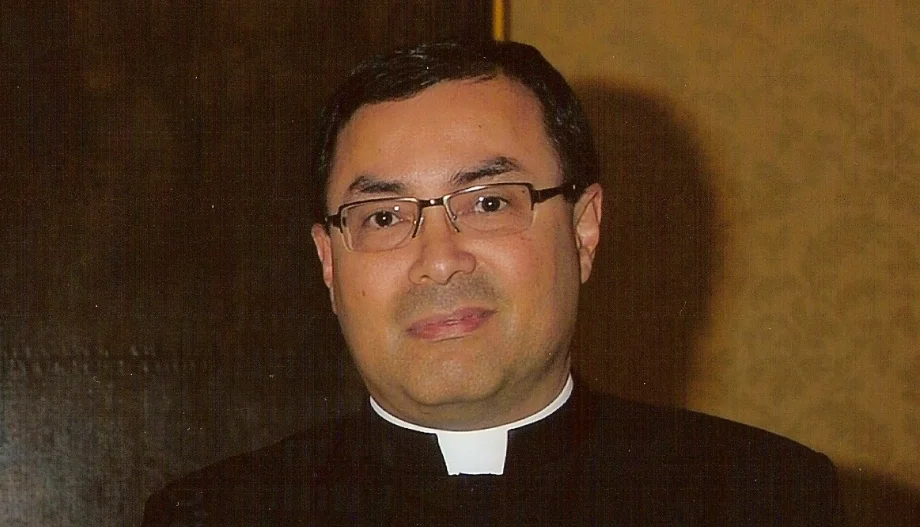
To explore this path further, today we speak with Father Manoel Augusto Santos, a priest of the Archdiocese of Porto Alegre (Brazil) who was ordained in 1990. Father Manoel is a chemical engineer and holds a doctorate in theology from the University of Navarra. Throughout his ministry, in addition to his work as a university professor, he has served the universal Church directly at the Vatican as an official of the Congregation for the Clergy.
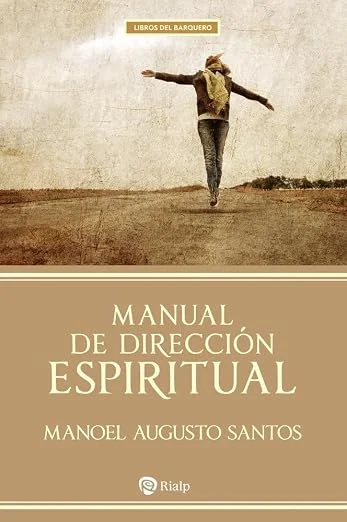
He has captured all of that perspective—both theological and rooted in pastoral experience—in his new book: Spiritual Direction Manual (Rialp), a practical and educational guide designed both for those who have the delicate task of guiding souls and for those being guided who seek to make the most of this means of sanctification.
What prompted you to put your experience into a manual?
–After teaching a course on spiritual direction organized by the National Conference of Bishops of Brazil to the rectors and spiritual directors of the seminaries in the Northeast III Region, the rector of the main seminary in that region, on behalf of the participants, asked me to put what I had presented in writing.
Who is the primary target audience for this book?
–This book is intended for spiritual directors and those receiving spiritual direction, as well as those who wish to become spiritual directors and even those who wish to be good candidates for spiritual direction.
If you had to summarize the main thesis of your manual in a single sentence, what would it be?
–Human beings are not born fully formed, but are shaped—with God’s grace and, in a special way, with the help of spiritual direction.
What are the most common mistakes or pitfalls that a spiritual director should avoid?
–Superficiality, insincerity, and a lack of commitment on the part of the subordinate. Failing to take seriously the fact that the subordinate is a human being; the need to be a good subordinate in order to be a good manager; the temptation to dominate and give orders; and self-sufficiency on the part of the manager.
It seems that, in recent decades, the Church has been shifting its approach to spiritual direction—from, shall we say, a perspective of blind obedience to the spiritual director to one of accompaniment that fosters inner freedom in accordance with God’s will. Is this assessment accurate?
–Yes, we should not try to create remote-controlled robots, devoid of the capacity for choice and opinion, through obedience, but rather to shape minds with discernment, capable of making use of freedom. The most a director can do is suggest, question, and draw attention to certain points, but it is the person being guided who makes the decisions, bearing full responsibility.
These days, many people turn to AI for advice on health or personal development. Some also do so in connection with their spiritual lives. What are your thoughts on this phenomenon?
–AI is becoming increasingly prevalent in academic, legal, medical, and family life, among others. And it’s here to stay. We’re already experiencing what was science fiction just a few years ago. There’s no point in trying to turn back the clock. It can be used prudently and judiciously, while continuing to seek out highly reliable sources. What does the future hold for us?
These days, there’s more talk about spiritual abuse. What are your thoughts on this phenomenon? Is it being properly contextualized?
–It’s a complex problem. Undoubtedly, there have been a number of situations that should have been avoided through training rather than just orders. There is also goodwill, but there is a lack of human and spiritual maturity.
For someone who has never had a spiritual director and feels the desire to find one, what advice would you give them to take that first step?
–Pray, asking the Holy Spirit for the wisdom to recognize someone who is learned and holy, and that he himself take spiritual direction seriously.
Spiritual Direction Manual






 Español
  English
  Italiano